Recognizing Patterns Math Worksheets for Ages 4-5
3 filtered results
-
From - To
Help your child develop essential math skills with our "Recognizing Patterns Math Worksheets" designed for ages 4-5. These fun, colorful worksheets engage young learners by identifying and completing simple patterns using shapes, colors, and objects. By practicing with these worksheets, children can enhance their problem-solving abilities, logical thinking, and early math proficiency. Perfect for preschool and kindergarten students, each activity encourages curiosity and refinement of fine motor skills. Prepare your little one for future math success in a playful and interactive way. Discover the joy of learning patterns with Kids Academy today!
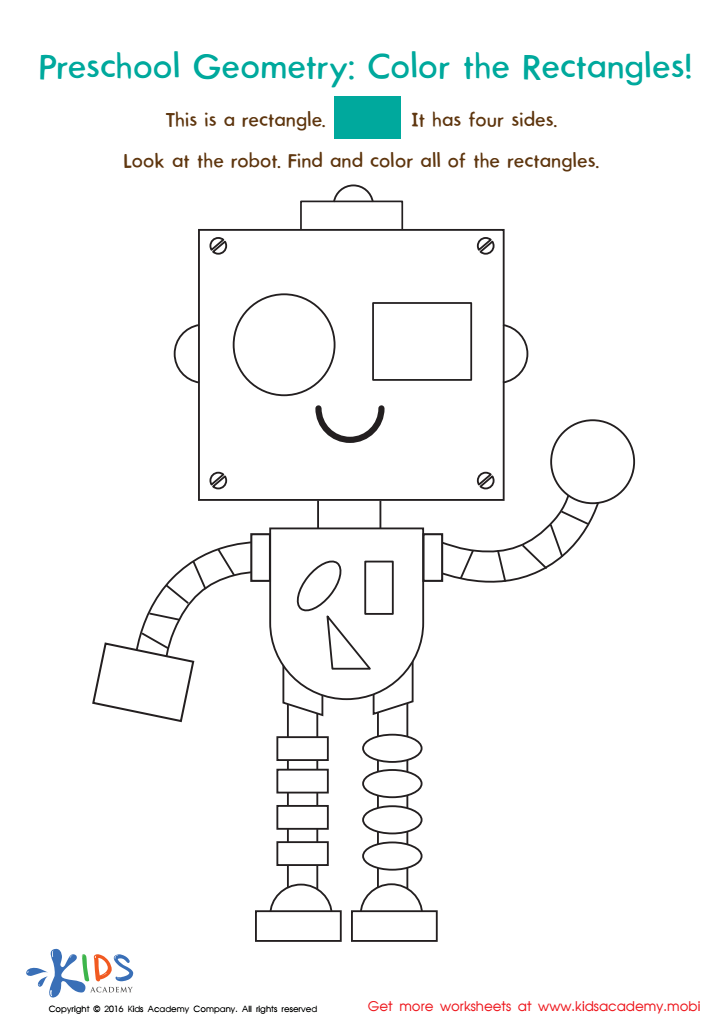
Geometry Worksheet
 Assign to My Students
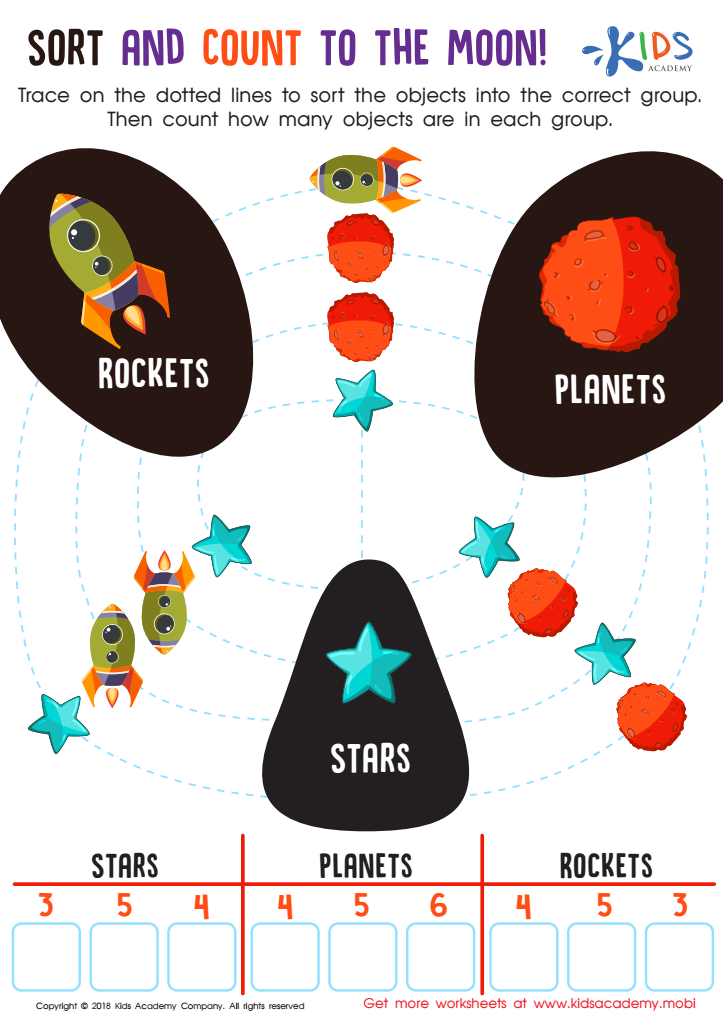
Sort and Count to the Moon Worksheet
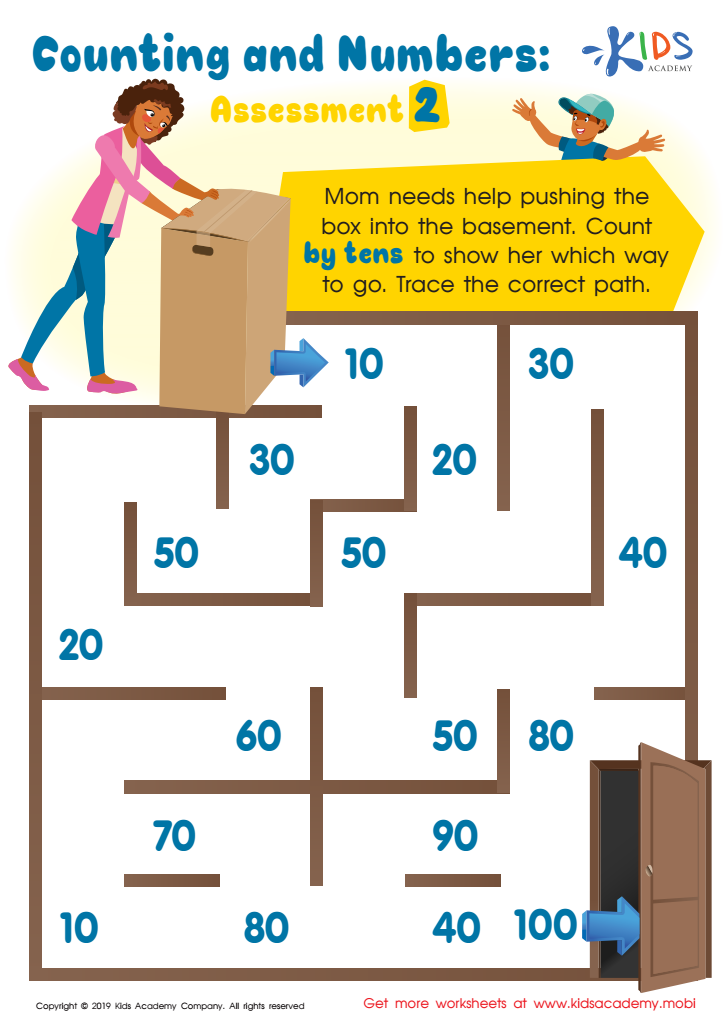
Counting and Numbers: Assessment 2 Worksheet








Recognizing patterns is a foundational mathematical skill crucial for young children's development. At ages 4-5, children are at a critical stage for cognitive development and their brains are highly receptive to learning new concepts. Engaging with patterns helps develop critical thinking and problem-solving skills. Recognizing and predicting patterns, such as sequences of colors, shapes, or numbers, enhances their ability to identify relationships and make connections.
This early exposure to patterns paves the way for understanding more complex mathematical concepts like addition, subtraction, and multiplication in the future. Moreover, engaging with patterns strengthen children's cognitive abilities, particularly in areas such as memory, attention to detail, and logical reasoning. Recognizing patterns also has broader applications outside mathematics, aiding in the development of reading and writing skills, as it encompasses recognizing word patterns and grammatical structures.
Additionally, recognizing patterns helps children stay organized and manage information methodically. This kind of foundational skill-building fosters confidence and a positive attitude towards learning. Thus, parents and teachers should care deeply about incorporating pattern recognition activities into early childhood education, as it equips children with essential skills that serve as building blocks for future academic success and everyday problem-solving.








