Understanding number relationships Math Worksheets for Ages 4-5
4 filtered results
-
From - To
Unlock the world of numbers with our "Understanding Number Relationships" math worksheets, specially designed for children ages 4-5. These engaging and interactive worksheets introduce young learners to essential mathematical concepts such as counting, comparing numbers, and recognizing patterns. By using colorful illustrations and relatable scenarios, we make learning fun and accessible. Our activities encourage critical thinking and problem-solving skills, laying a solid foundation for future math success. Perfect for homeschoolers and classroom settings, these worksheets are an excellent resource for developing early number sense. Help your child embark on an exciting numerical journey today! Explore our collection now!
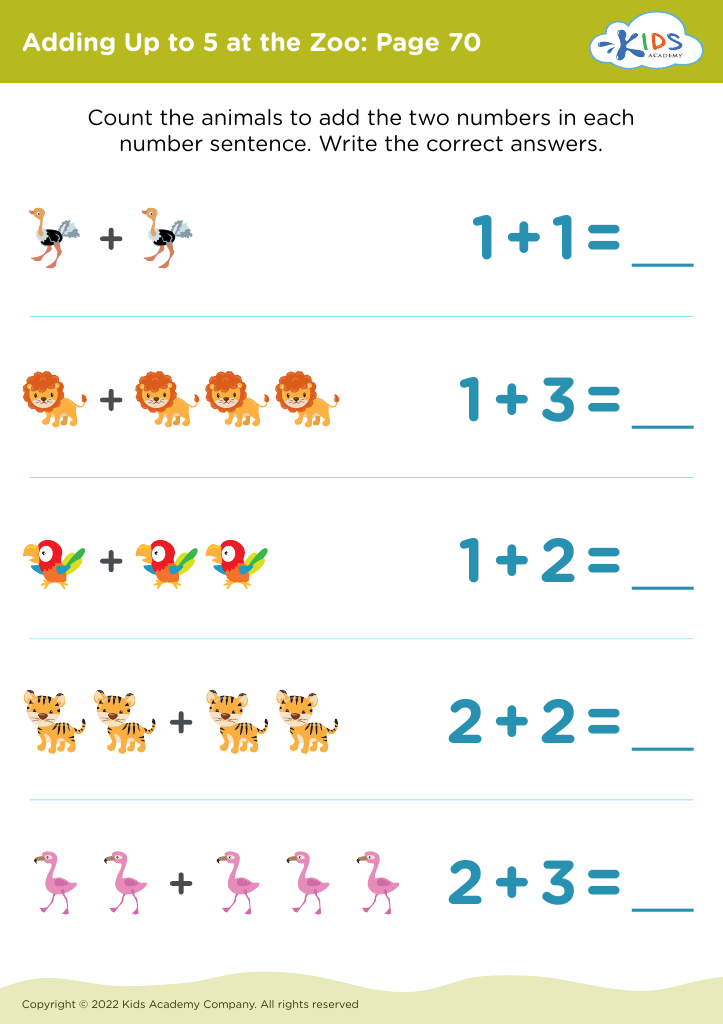
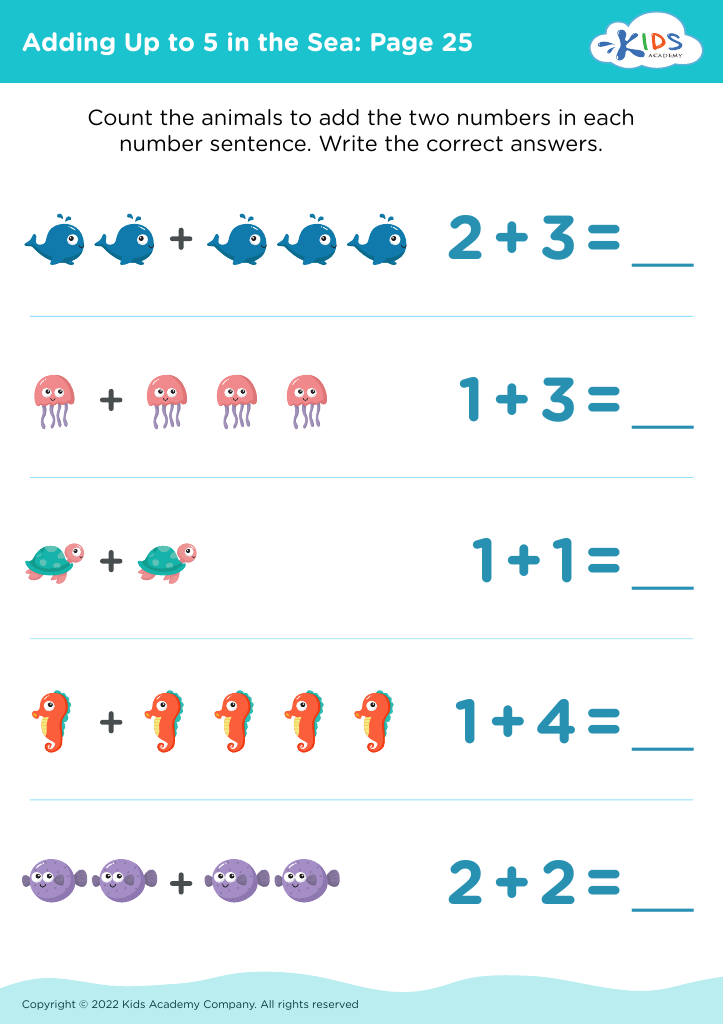
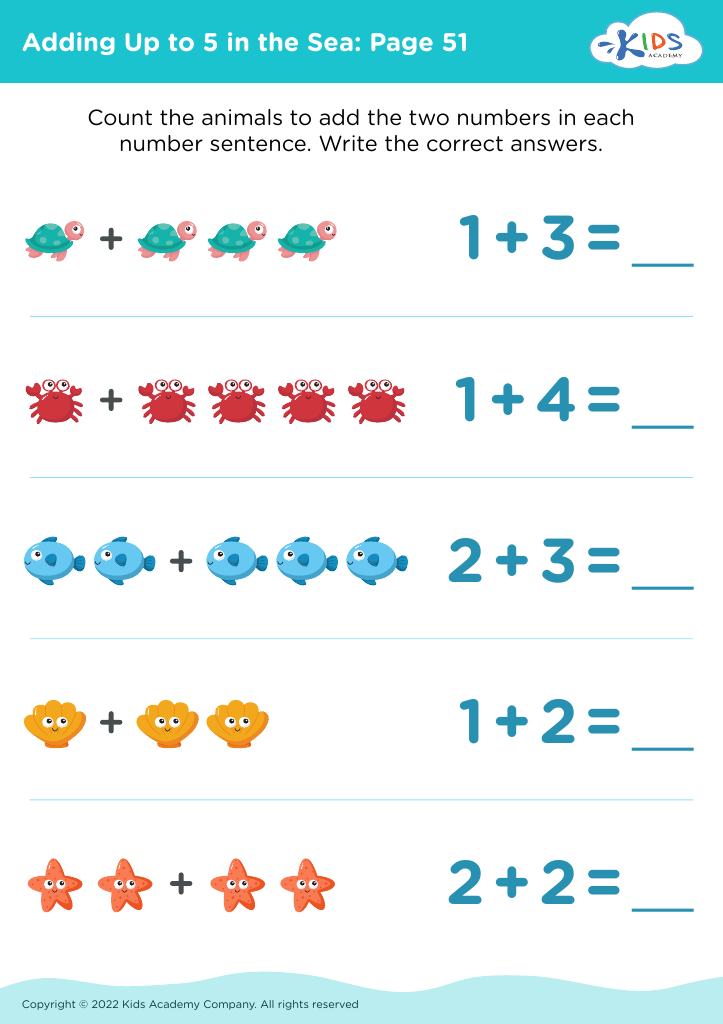
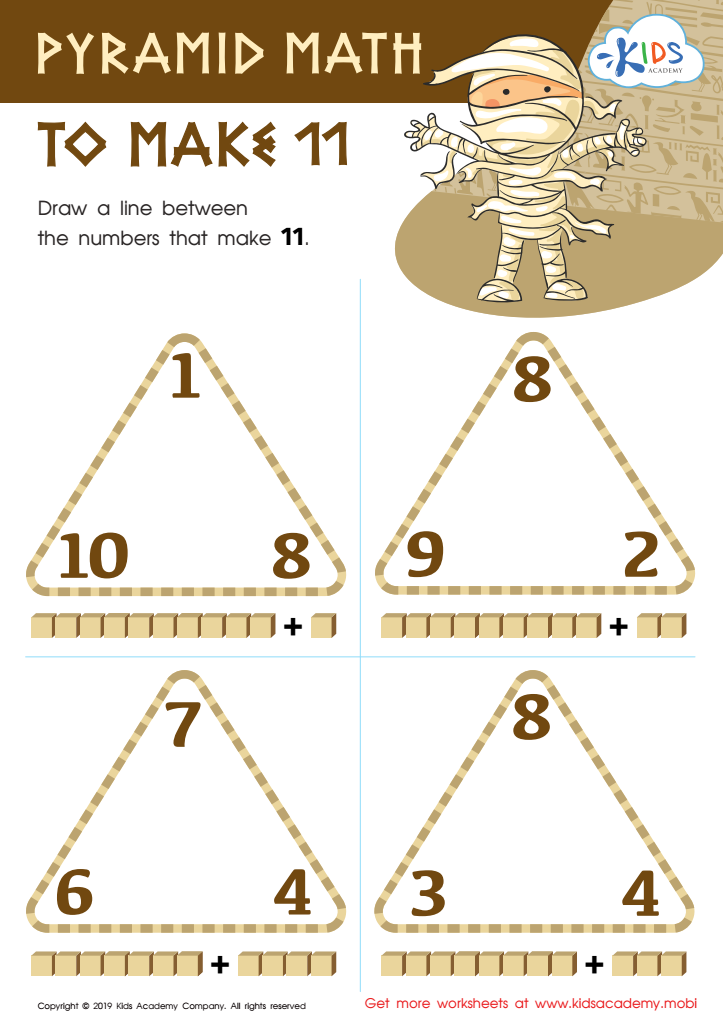
Pyramid Math to Make 11 Worksheet
 Assign to My Students








Understanding number relationships is crucial for children aged 4-5 as it lays the foundation for their mathematical thinking and problem-solving abilities. At this stage, children develop a sense of number magnitude, comparison, and the basic idea of addition and subtraction. By fostering an awareness of how numbers relate to one another—through concepts such as “more than,” “less than,” and “equal to”—children gain confidence in their analytical abilities.
Parents and teachers play a pivotal role in this learning process. Engaging young children in activities that emphasize these relationships, such as sorting objects, counting games, or simple puzzles, enhances their cognitive skills and makes learning fun. This engagement not only promotes mathematical competency but also nurtures critical thinking, allowing children to recognize patterns and make connections in everyday life.
Moreover, a strong understanding of number relationships supports later math learning, facilitating smoother transitions into advanced concepts in elementary school. These early experiences with numbers, when guided thoughtfully, foster a positive attitude towards math, reducing future math anxiety. In essence, prioritizing understanding of number relationships during these formative years is vital for building a strong foundation for lifelong learning and success in mathematics.








