
Basic Counting Numbers 0–10 Worksheets for Ages 4-5
3 filtered results
Difficulty Level
Grade
Age
-
From - To
Subject
Activity
Standards
Discover our engaging "Basic Counting Numbers 0–10 Worksheets" specially designed for ages 4-5 at Kids Academy! Perfect for preschool and kindergarten students, these colorful worksheets help children develop essential counting skills in a fun and interactive way. Through diverse activities like tracing, matching, and coloring, young learners gain confidence in recognizing and writing numbers from 0 to 10. Each worksheet promotes number sense, enhances fine motor skills, and encourages independent practice. Ideal for both classroom and home use, these worksheets provide a solid foundation for early math success. Join now and make learning to count an enjoyable adventure!
Favorites
With answer key
Interactive
 Assign to My Students
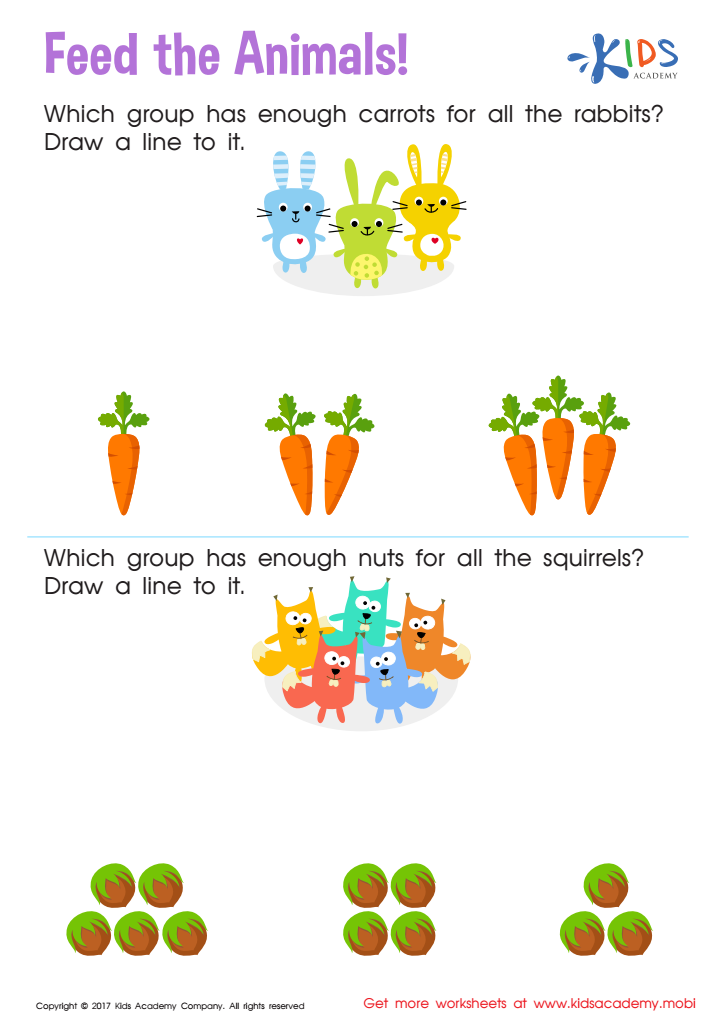
Count and Match: Feed the Animals Worksheet
Learning and growing involves more than just numbers, phonics and comparison. This Feed the Animals worksheet helps kids to exercise their reasoning skills. They must work out how many rabbits and carrots there are, and then repeat the process for the squirrels. This encourages problem solving and counting skills.
Count and Match: Feed the Animals Worksheet
Worksheet
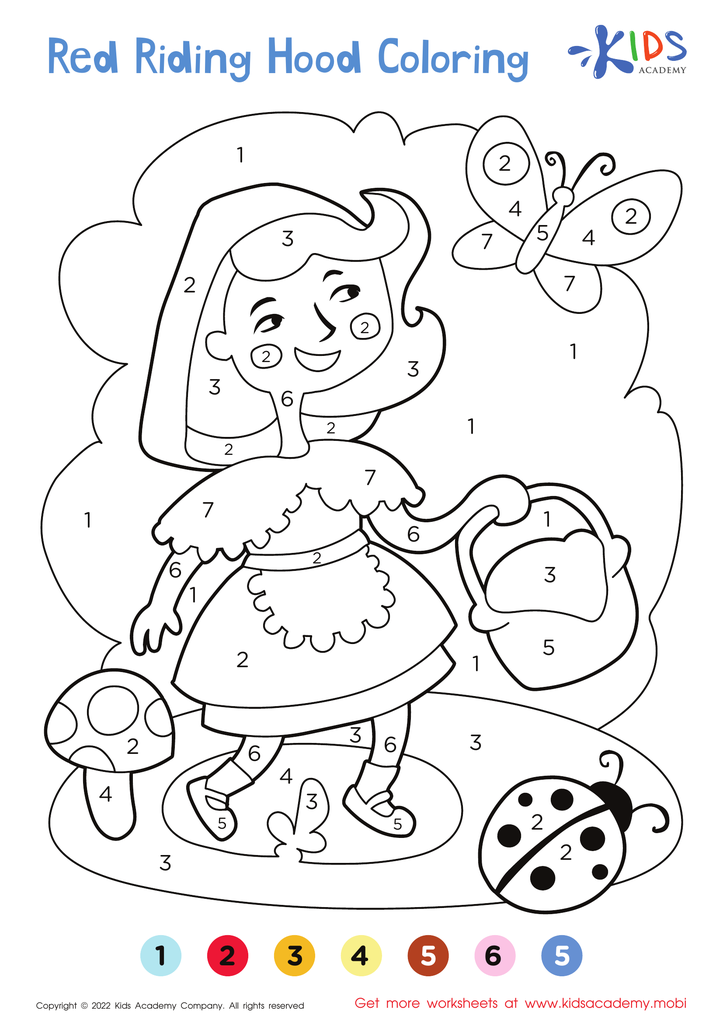
Little Red Riding Hood – Coloring by Numbers
Download this free PDF page and enjoy coloring Little Red Riding Hood. It's an easy and fun activity that everyone can do - just follow the numbers! Get your colored pencils ready and have a blast. 80 words.
Little Red Riding Hood – Coloring by Numbers
Worksheet
Join Kids Academy for Free
Who is primarily going to use this learning content?








Parents and teachers should place a strong emphasis on teaching children ages 4-5 basic counting numbers from 0 to 10 due to its foundational role in early childhood development. Understanding these numbers forms the bedrock for all future mathematical concepts, such as addition, subtraction, and more complex arithmetic operations. At this age, children are highly receptive to learning through visual and interactive methods, which can make grasping the concept of counting both effective and enjoyable.
Learning to count helps in developing a child's numerical cognition and strengthens their memory. It encourages logical thinking and problem-solving skills, which are critical for their overall academic success. Beyond academics, these skills are integral in daily life situations, such as understanding time, handling money, and following sequential instructions.
Moreover, early counting exercises reinforce fine motor skills when children point to or manipulate objects as they count, enhancing their coordination and spatial awareness. Social skills are also developed during collaborative counting games with peers, promoting teamwork and communication. Addressing basic counting early sets a positive tone for lifelong learning, fosters a sense of achievement, and builds a strong foundation for more advanced mathematical concepts. Therefore, integrating basic counting into early education can significantly impact a child’s cognitive and social growth.








