Number comparison Numbers 0–10 Worksheets for Ages 4-5
4 filtered results
-
From - To
Discover engaging "Number Comparison Numbers 0–10" worksheets designed for ages 4-5 at Kids Academy. These educational worksheets help young learners develop essential skills by comparing numbers in a fun, interactive way. Each activity focuses on enhancing a child’s ability to identify, compare, and contrast numbers within the 0-10 range. Perfect for preschoolers and kindergarteners, these printables foster early math confidence and build a strong numeracy foundation. Parents and educators will find these resources invaluable for supporting classroom learning or home practice. Download now to empower your child’s mathematical journey with ease at Kids Academy.
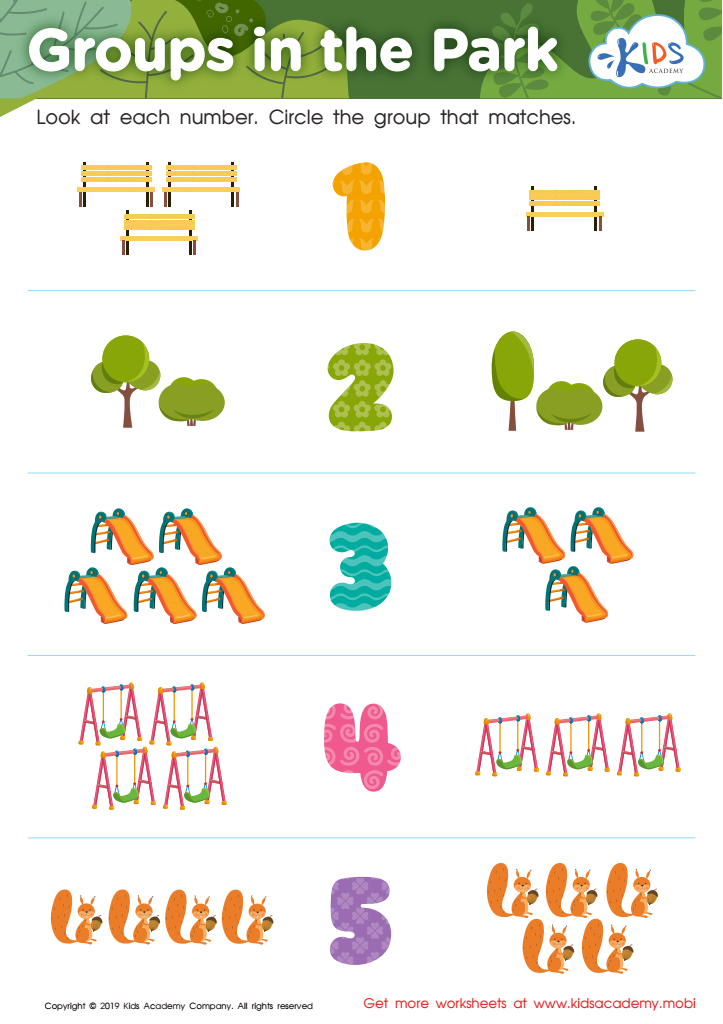
Groups in the Park Worksheet
 Assign to My Students
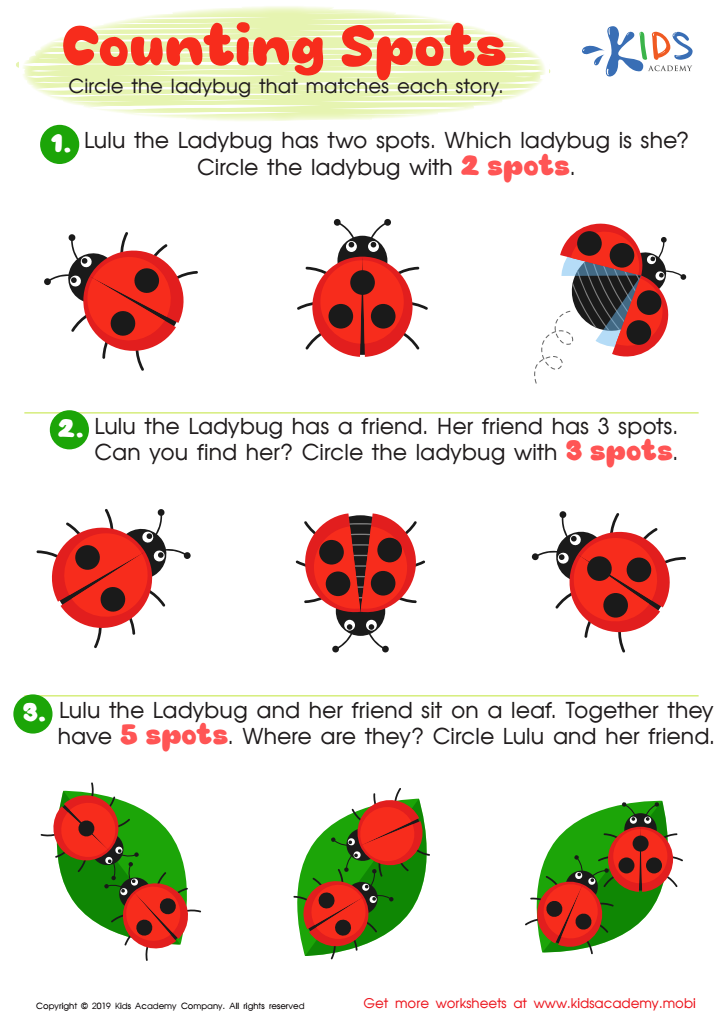
Counting Spots Worksheet
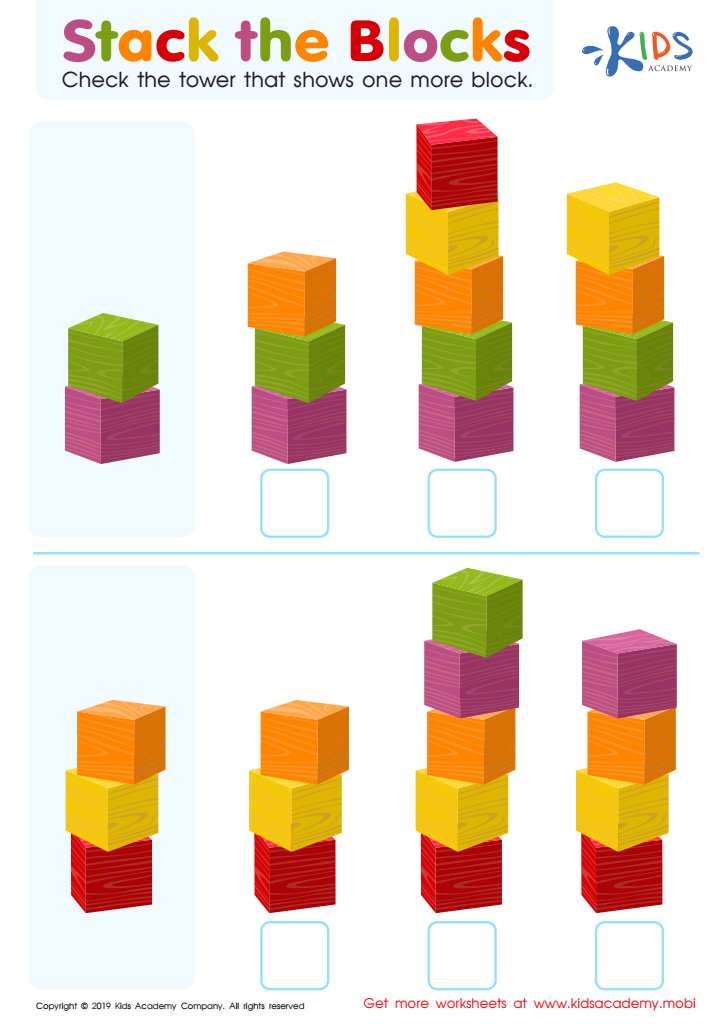
Stack the Blocks Worksheet
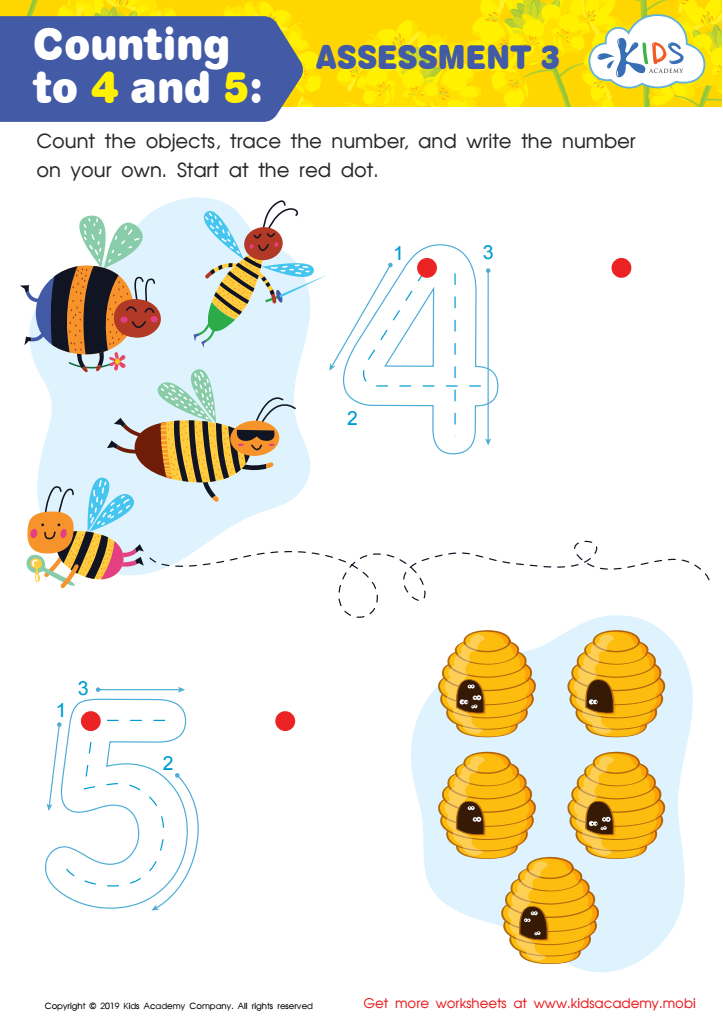
Counting to 4 and 5: Assessment 3 Worksheet








Parents and teachers play a crucial role in helping children develop early math skills, and number comparison for numbers 0-10 is fundamental to building a solid mathematical foundation. At ages 4-5, young children are at a developmental stage where they are beginning to understand basic mathematical concepts, and learning to compare numbers is one of the first steps.
Number comparison involves evaluating and recognizing whether numbers are larger, smaller, or equal to each other. By mastering this skill, children develop number sense which helps them with problem-solving and critical thinking. These early math experiences are essential for daily life scenarios—such as dividing snacks evenly or understanding the concept of more and less. Additionally, comparing numbers enhances cognitive abilities like logical reasoning and aids in the understanding of more complex math topics that will be introduced in later years.
Introducing this concept in a supportive and engaging environment, such as through games and hands-on activities, encourages children to enjoy learning and builds their confidence. When parents and teachers prioritize developing number comparison skills, they provide children with vital cognitive tools that form the foundation for future academic success and everyday functioning. Thus, focusing on number comparison between 0-10 at an early age fosters a strong numerical understanding, setting a positive trajectory for lifelong learning in mathematics.








