Multiplication practice Subtraction Worksheets for Ages 4-5
3 filtered results
-
From - To
Welcome to our dedicated page for "Multiplication Practice Subtraction Worksheets" designed specifically for children aged 4-5! These engaging worksheets provide a fun and interactive way for young learners to develop their understanding of multiplication concepts while reinforcing subtraction skills. Our colorful and age-appropriate activities are crafted to capture children's interest and ignite their enthusiasm for math. By practicing these fundamental skills, your child not only strengthens their numerical comprehension but also builds confidence in problem-solving. Explore our extensive collection of printable worksheets to support your child’s learning journey and make math an enjoyable experience! Start practicing today!
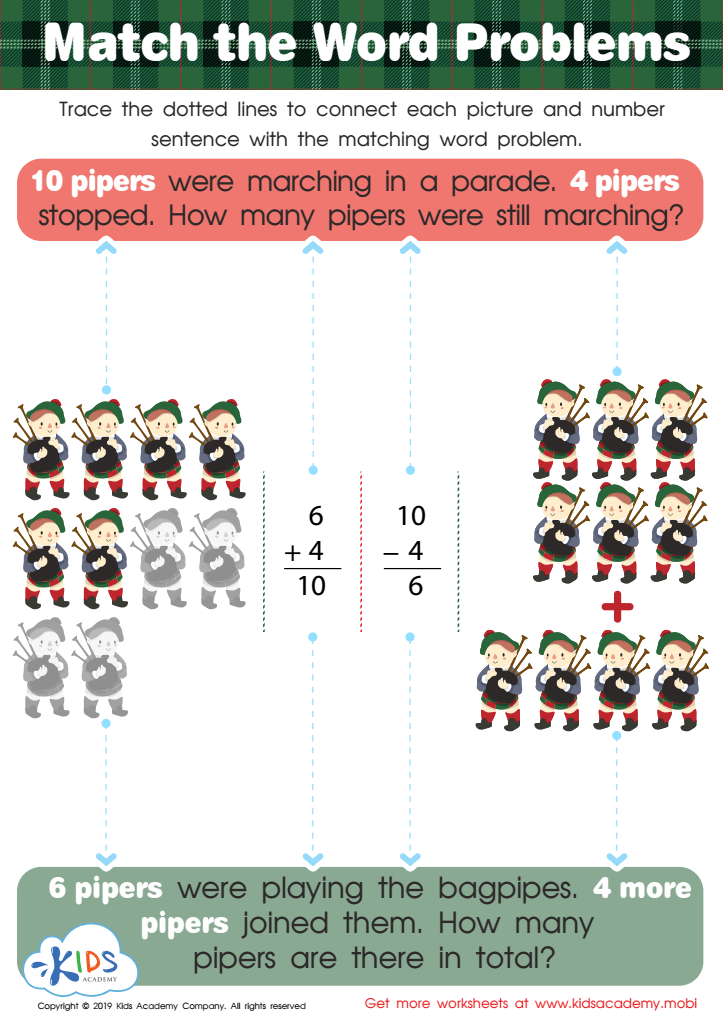
Match the Word Problems Worksheet
 Assign to My Students
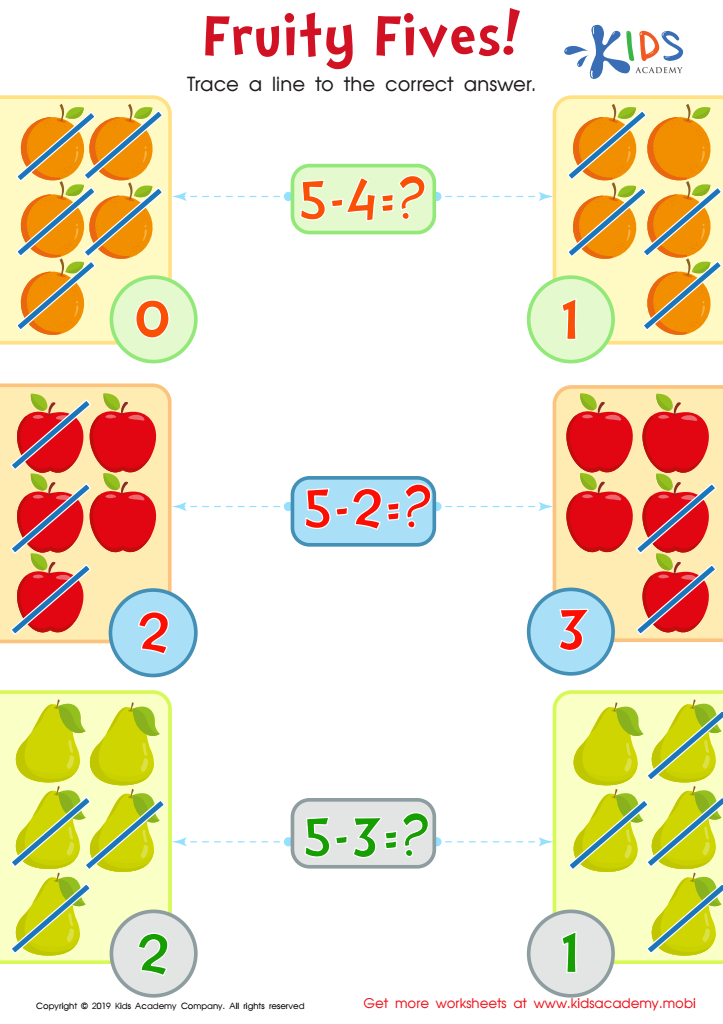
Fruity Fives! Worksheet
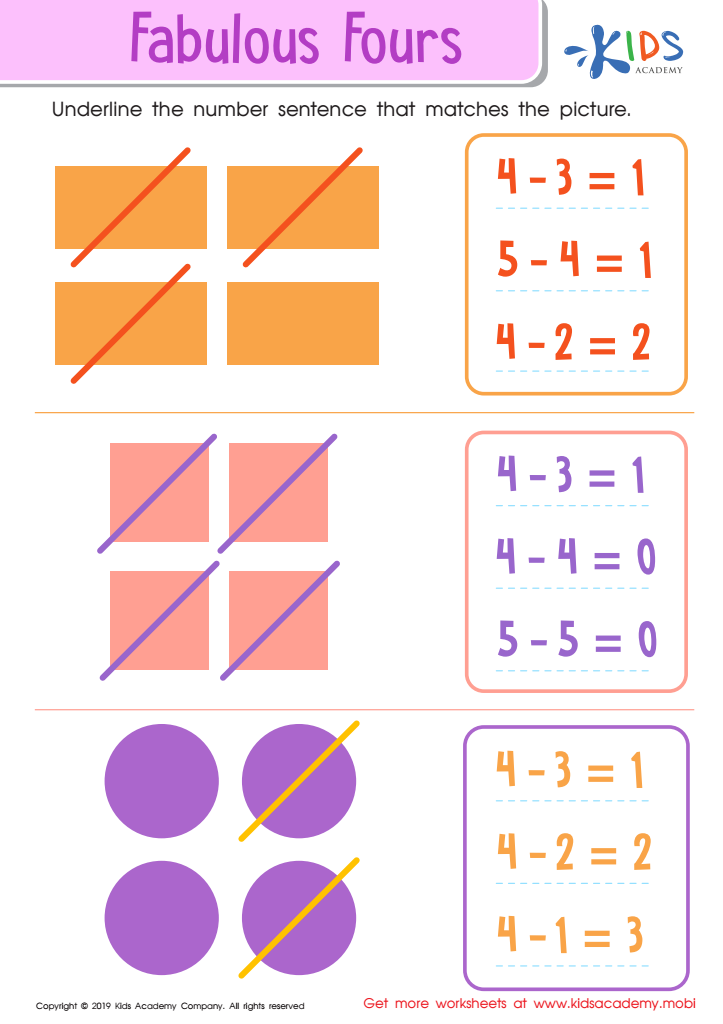
Fabulous Fours Worksheet








Ensuring that children ages 4-5 engage in multiplication practice may seem premature, but incorporating foundational activities that introduce early math concepts can greatly benefit their future learning. During this developmental stage, children are primed to foster essential cognitive skills, including pattern recognition and problem-solving, which are fundamental to understanding multiplication later on.
While direct multiplication may not be introduced explicitly, parents and teachers can employ playful, interactive methods—such as grouping objects or using counting games—to instill early multiplication concepts. This not only supports numerical fluency but also builds confidence in their math abilities.
Subtraction, on the other hand, directly aligns with their current learning stage, where they can grasp the idea of ‘taking away’ through hands-on activities. Mastering basic subtraction lays the groundwork for more advanced arithmetic, as it promotes critical thinking and encourages cognitive growth.
Together, practicing early multiplication concepts alongside subtraction enables children to develop a well-rounded mathematical foundation, fostering an understanding of relationships between numbers. Effective early math practice can spark a lifelong love for the subject, cultivate positive learning experiences, and prepare young learners for their future academic endeavors. Hence, parents and teachers should prioritize these skills in early education efforts.








