Critical Thinking Word Problems Worksheets for Ages 4-5
6 filtered results
-
From - To
Discover the ultimate resource for nurturing young minds with our "Critical Thinking Word Problems Worksheets for Ages 4-5." Skillfully designed to engage and challenge preschool children, these worksheets combine fun with learning by presenting relatable and age-appropriate scenarios. Ideal for developing problem-solving skills, logical reasoning, and the foundation of mathematical thinking, these worksheets encourage active participation and critical thinking. Each set is thoughtfully created to build confidence and promote a love for learning. Perfect for both classroom and home use, these word problems seamlessly integrate education with play, laying a strong groundwork for future academic success.
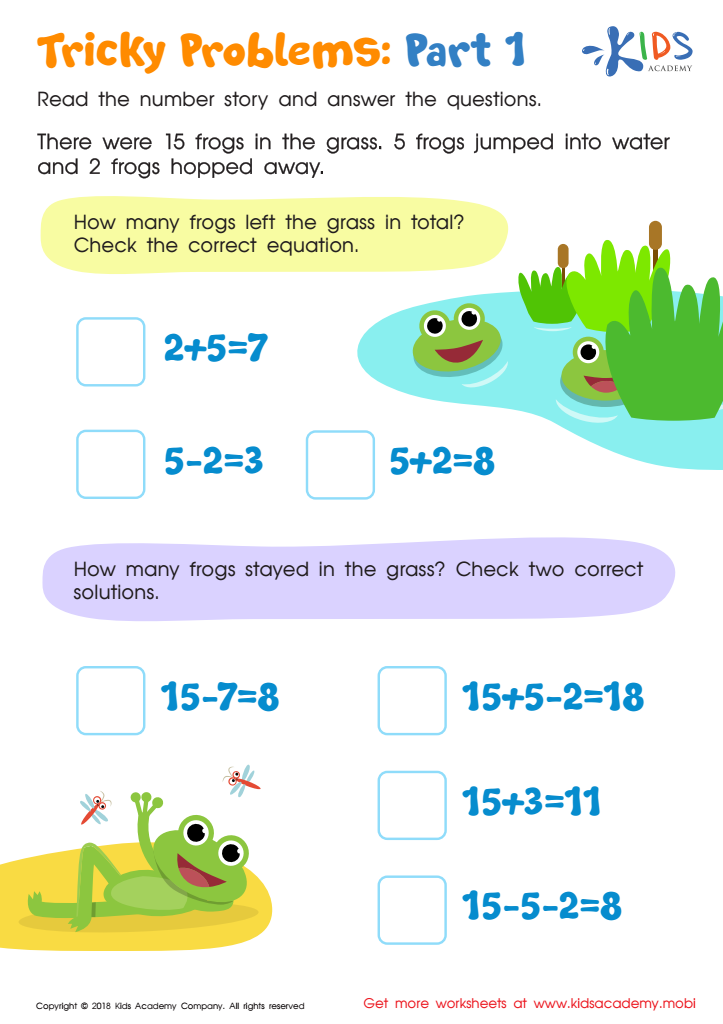
Tricky Problems Worksheet: Part 1
 Assign to My Students
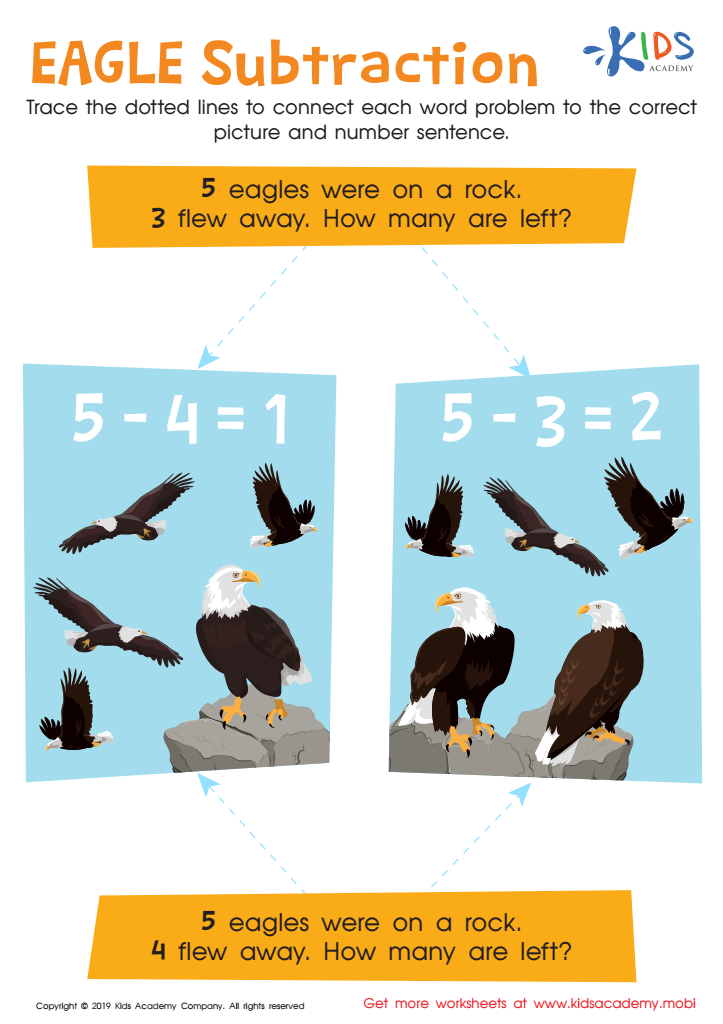
Eagle Subtraction Worksheet
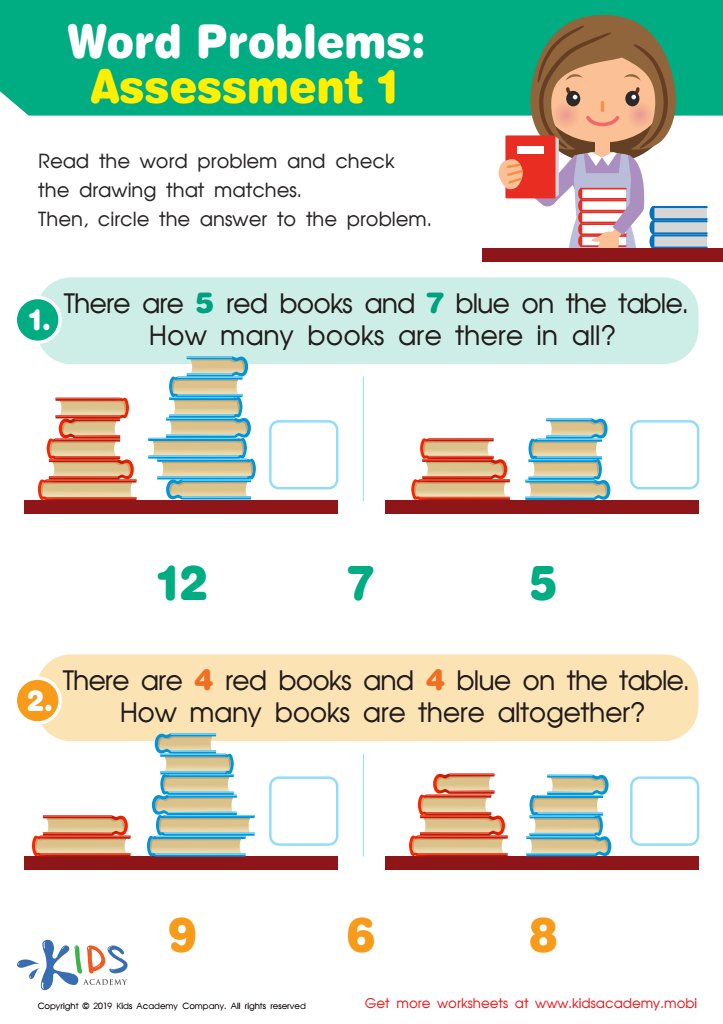
Word Problems: Assessment 1 Worksheet
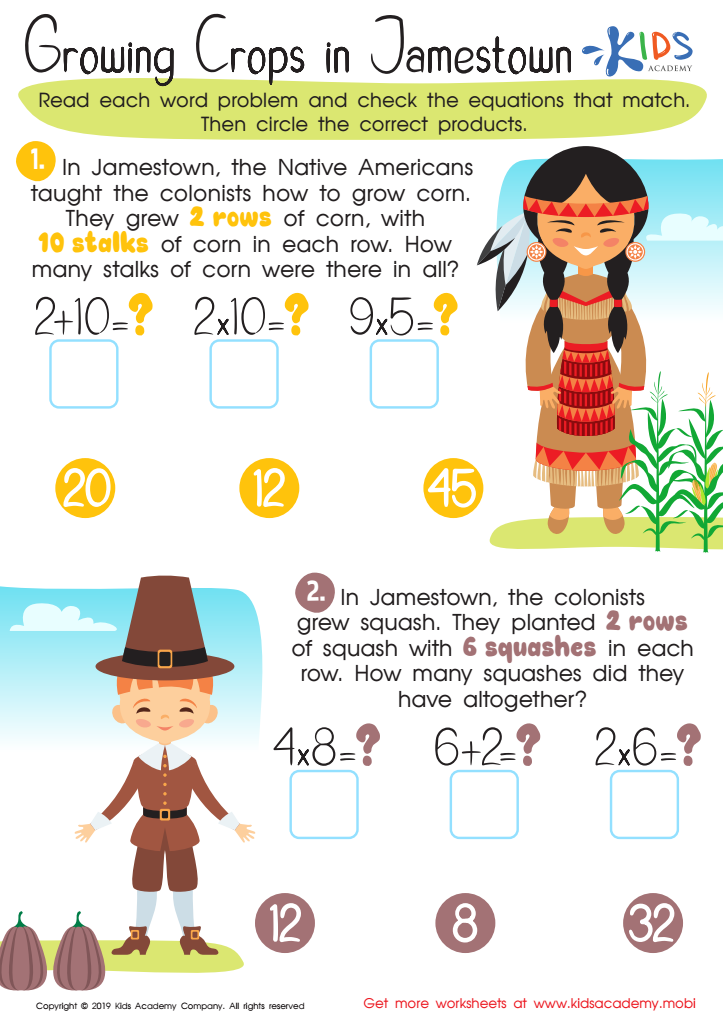
Growing Jamestown Worksheet
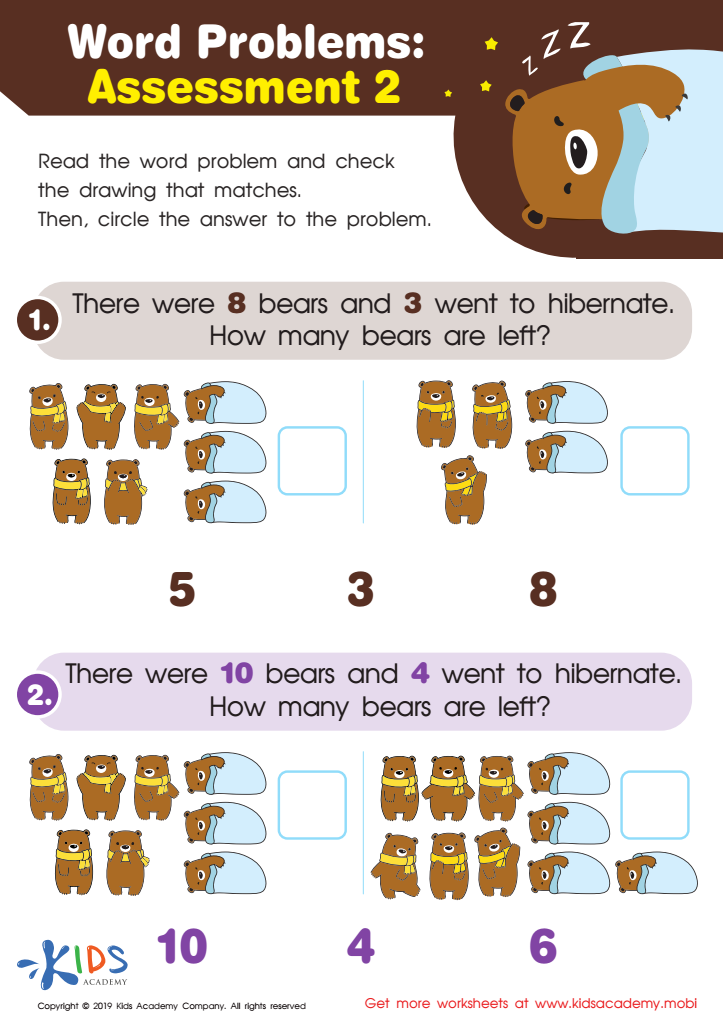
Word Problems: Assessment 2 Worksheet
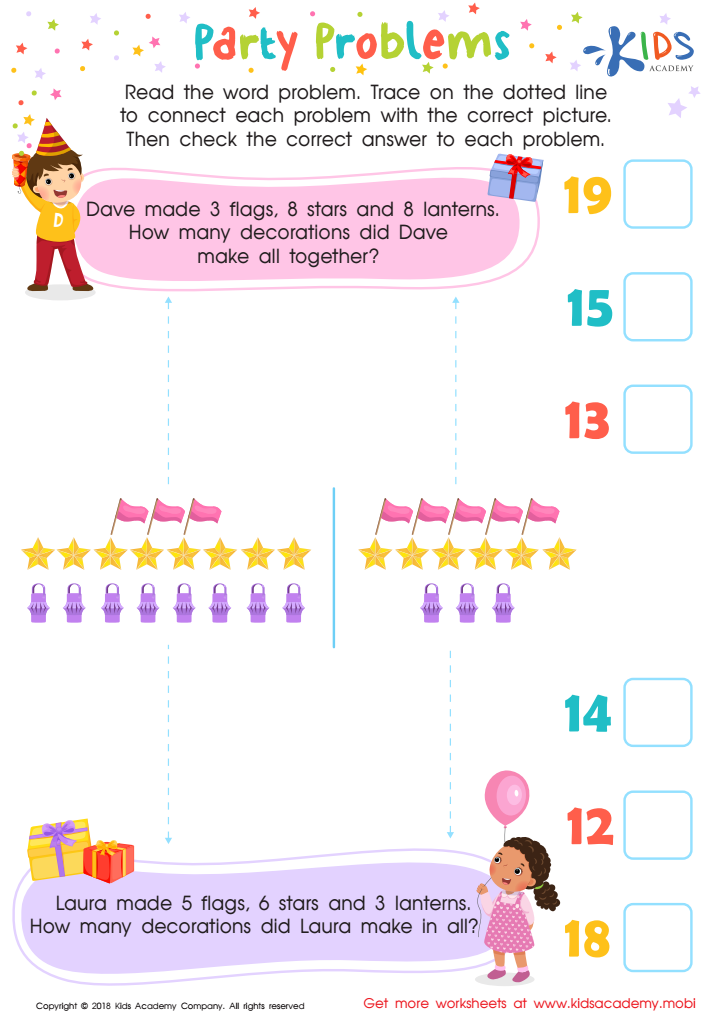
Party Problems Worksheet








Parents and teachers should pay attention to critical thinking word problems for children aged 4-5 because these activities lay the foundation for essential cognitive skills. At this formative stage, children's brains are highly adaptable and primed for learning, making it an opportune time to cultivate critical thinking.
Engaging with word problems helps young children develop problem-solving skills by encouraging them to analyze situations, recognize patterns, and make connections between concepts. These activities go beyond rote memorization, prompting kids to understand and apply information in different contexts. This type of thinking is invaluable for academic success and everyday decision-making.
Furthermore, solving word problems can enhance language development. When children ponder over questions and articulate their reasoning, they expand their vocabulary and improve their ability to express complex ideas. This language proficiency will benefit them in all areas of learning.
In addition, critical thinking tasks promote perseverance and resilience. As kids work through challenges, they learn the importance of effort and adaptability. This positive attitude toward problem-solving can boost their confidence and foster a lifelong love of learning.
In summary, critical thinking word problems support cognitive development, language skills, and emotional resilience, creating a robust foundation for future academic and personal success. Therefore, parents and teachers should prioritize these activities in early education.








