Logical thinking development Word Problems Worksheets for Ages 4-5
3 filtered results
-
From - To
Boost your child's logical thinking skills with our engaging "Logical Thinking Development Word Problems Worksheets" designed specifically for ages 4-5! These worksheets use fun and relatable scenarios that captivate young learners, promoting critical thinking through math challenges. Each activity encourages problem-solving and enhances reasoning abilities, aiding your child's cognitive growth. With vibrant illustrations and age-appropriate content, kids will enjoy unraveling each puzzle while mastering essential math concepts. Perfect for home or classroom use, these worksheets provide a solid foundation for future learning in a playful and interactive way. Help your little one embark on an exciting math adventure today!
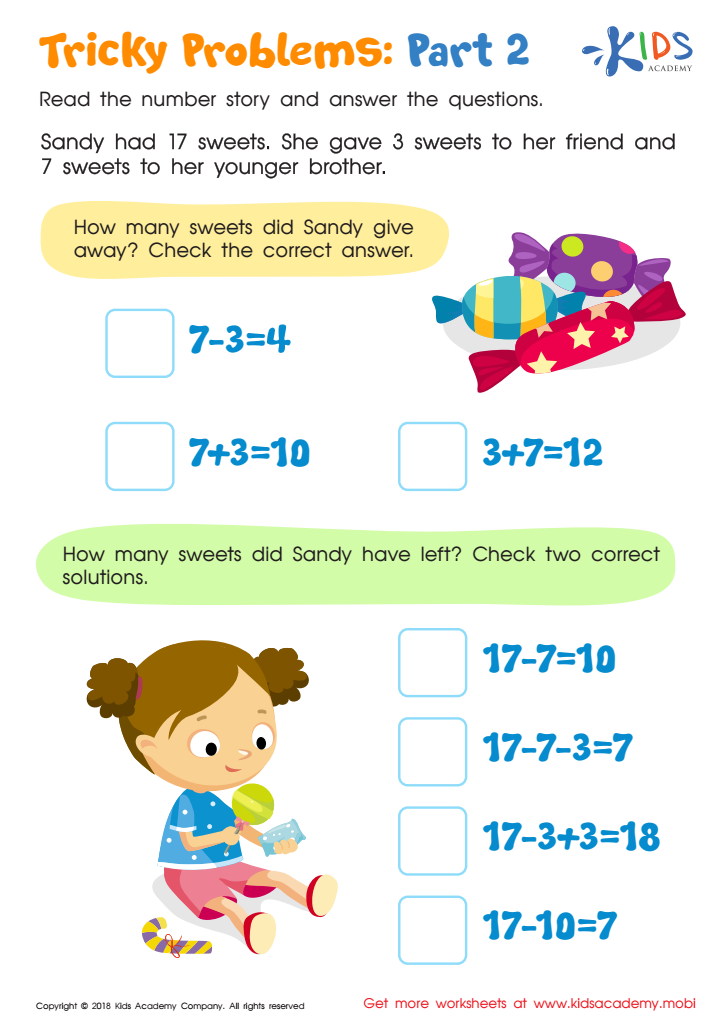
Tricky Problems Worksheet: Part 2
 Assign to My Students
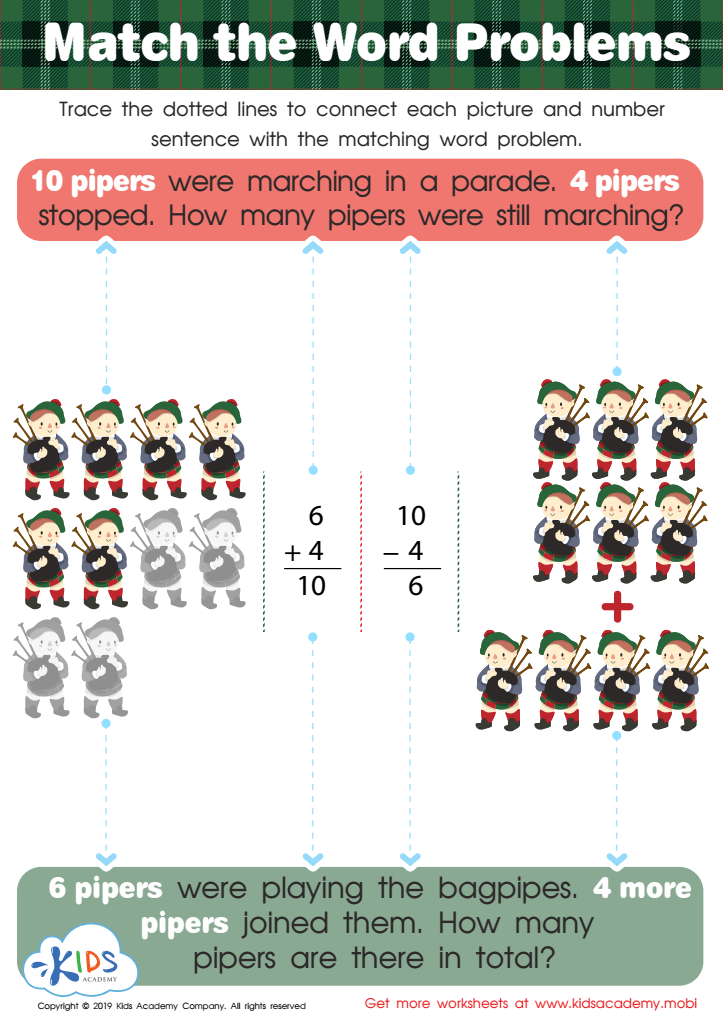
Match the Word Problems Worksheet
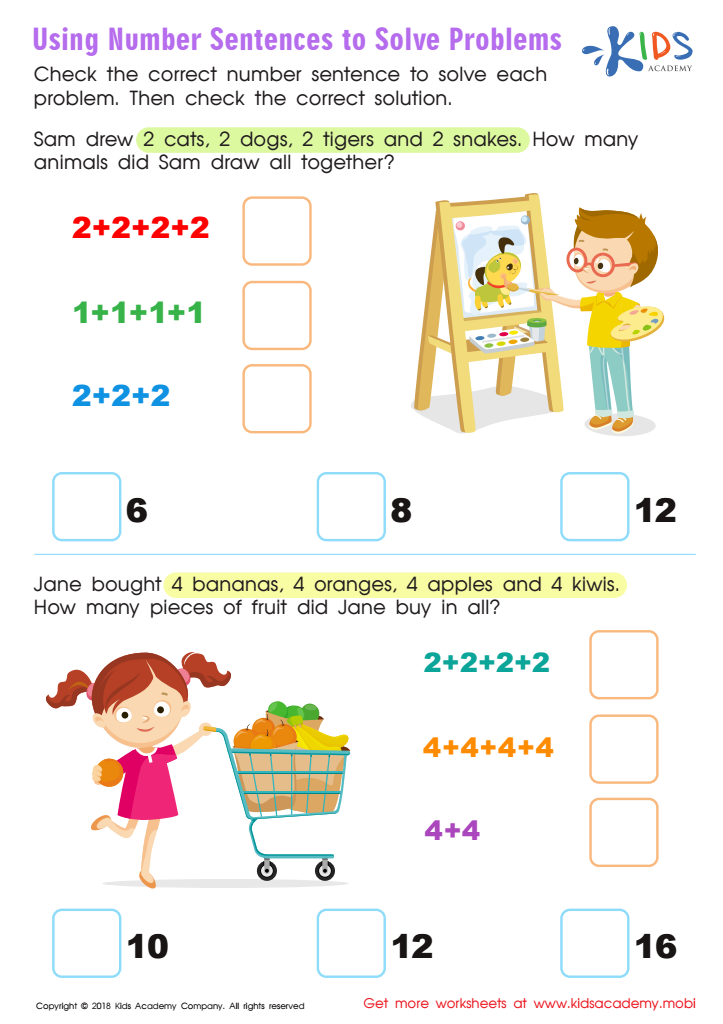
Using Number Sentences to Solve Problems Worksheet








Logical thinking development through word problems is crucial for children ages 4-5 for several reasons. At this age, children experience tremendous brain growth and are beginning to refine their cognitive abilities. Engaging them in word problems encourages critical thinking, problem-solving skills, and helps them grasp mathematical concepts in a fun and relatable way.
Word problems require children to analyze information, identify relevant details, and apply their understanding of numbers to real-life scenarios, enhancing their comprehension and reasoning skills. This form of learning fosters not only mathematical abilities but also boosts language development, as children must communicate their thoughts clearly and verbally articulate their reasoning.
Furthermore, logical thinking nurtures resilience and adaptability. As children encounter challenges in solving problems, they learn to persist, explore various strategies, and understand that mistakes are part of the learning process. This cultivates an innate curiosity and desire to learn that will carry over into their educational journey.
Lastly, early exposure to logical reasoning and word problems sets a strong foundation for future academic success, providing essential skills that extend beyond the classroom into daily life. Parents and teachers should prioritize these activities to empower children with the cognitive tools they need for lifelong learning.








