Coloring skills Building Vocabulary Worksheets for Ages 4-5
3 filtered results
-
From - To
Enhance your child’s vocabulary with our Coloring Skills Building Vocabulary Worksheets, designed specifically for ages 4-5. These fun and interactive worksheets engage young learners through vibrant coloring activities that promote language development. Each worksheet features captivating images that encourage kids to identify objects and practice newly learned words. Children improve their fine motor skills while exploring colors and enhancing their creative expression. Perfect for use at home or in the classroom, our worksheets make learning exciting and effective. Support your child’s early literacy journey with these enjoyable resources and watch their vocabulary bloom!
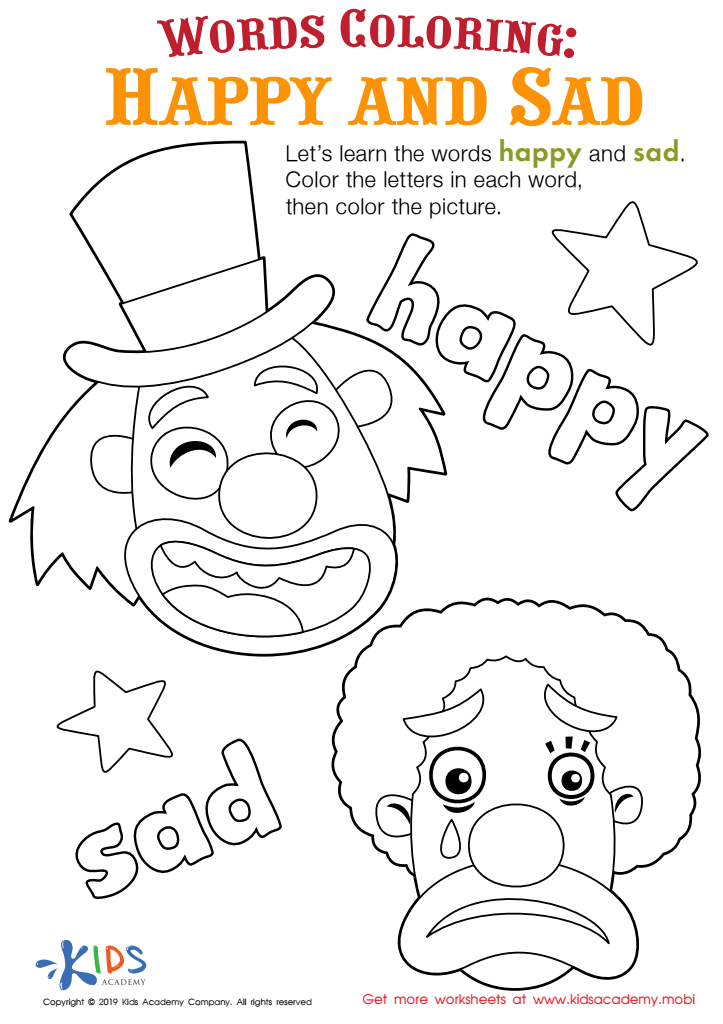
Happy and Sad Words Coloring Worksheet
 Assign to My Students











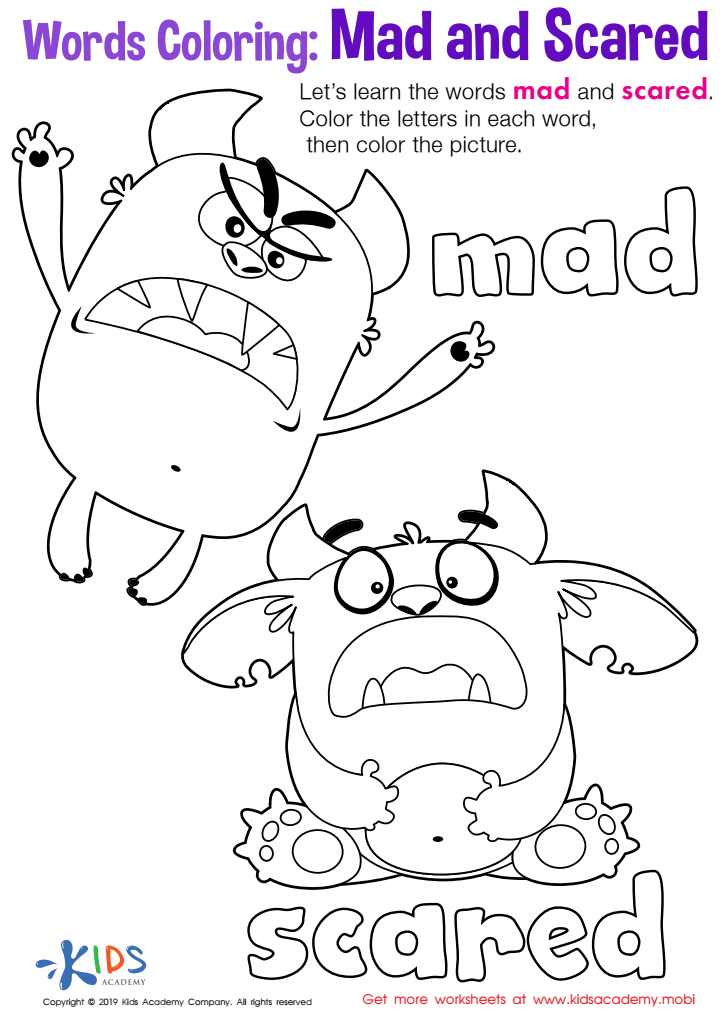
Mad and Scared Words Coloring Worksheet
Assign to My Students
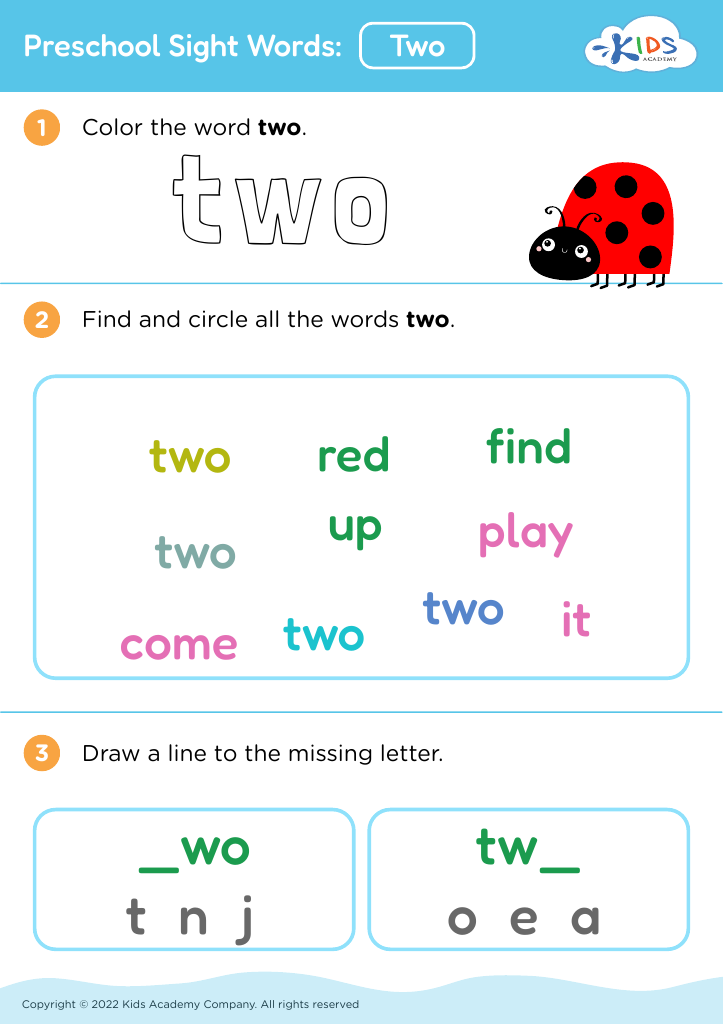








Coloring skills play a crucial role in the early development of children, particularly during ages 4-5, as they significantly contribute to building vocabulary. When children engage in coloring activities, they not only explore their creativity but also enhance fine motor skills that are essential for writing and other academic tasks. This hands-on experience allows them to express their thoughts and feelings visually.
Moreover, coloring often incorporates themes, such as animals, nature, or daily activities, which introduces new words and concepts. As children color, teachers and parents can engage them in discussions about the colors they are using, the objects they are drawing, or stories related to their artwork. This narrative interaction introduces new vocabulary, reinforces language acquisition, and promotes critical thinking.
Additionally, relating vocabulary to visual elements aids memory retention, as visual stimuli enhance understanding. This cumulative exposure to language fosters confidence in communication as children learn to articulate their ideas and ask questions. Thus, encouraging coloring activities is not just about facilitating artistic expression but also a vital step toward enriching language development, comprehension, and effective communication skills. Parents and teachers play pivotal roles in integrating meaningful vocabulary discussions within these playful interactions.








