Cognitive Development Reading Fiction Worksheets for Ages 4-5
3 filtered results
-
From - To
Enhance young minds with our Cognitive Development Reading Fiction Worksheets tailored for ages 4-5. These engaging activities are designed to boost critical thinking, imagination, and comprehension skills through fun, age-appropriate fictional stories. Each worksheet offers vibrant illustrations and thought-provoking questions that encourage kids to follow narratives, recognize characters, and understand story sequences. By integrating playful exercises, our resources help foster a love for reading while promoting cognitive growth. Perfect for parents and educators, these worksheets are a fantastic tool to support early literacy and intellectual development. Unlock your child's potential with our expertly crafted reading fiction worksheets!
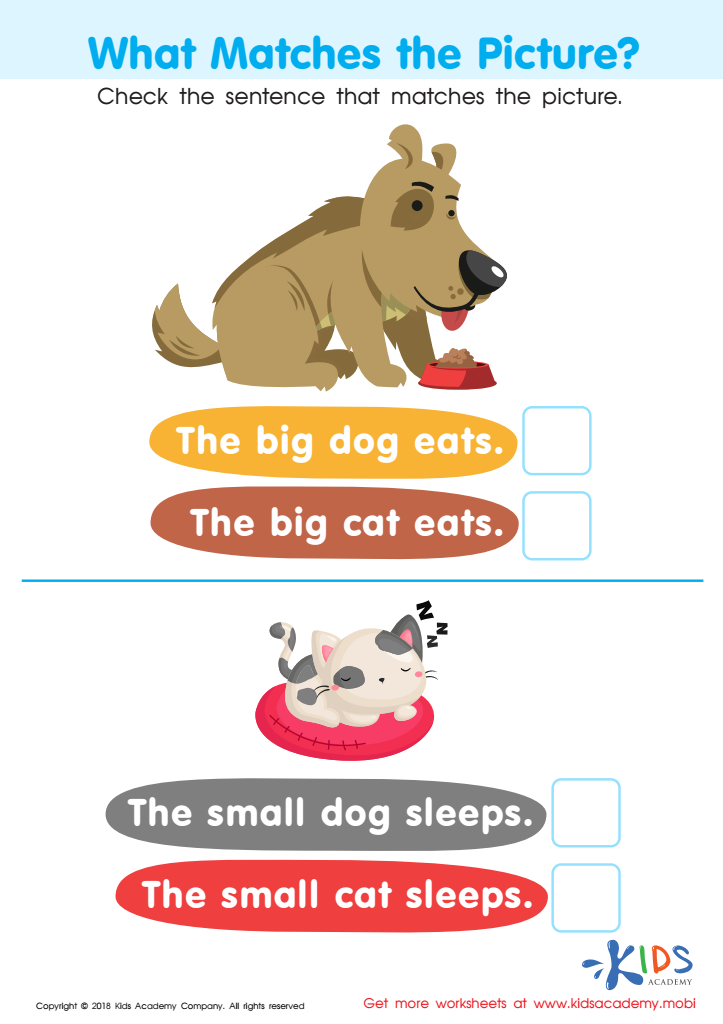
What Matches the Picture? Worksheet
 Assign to My Students
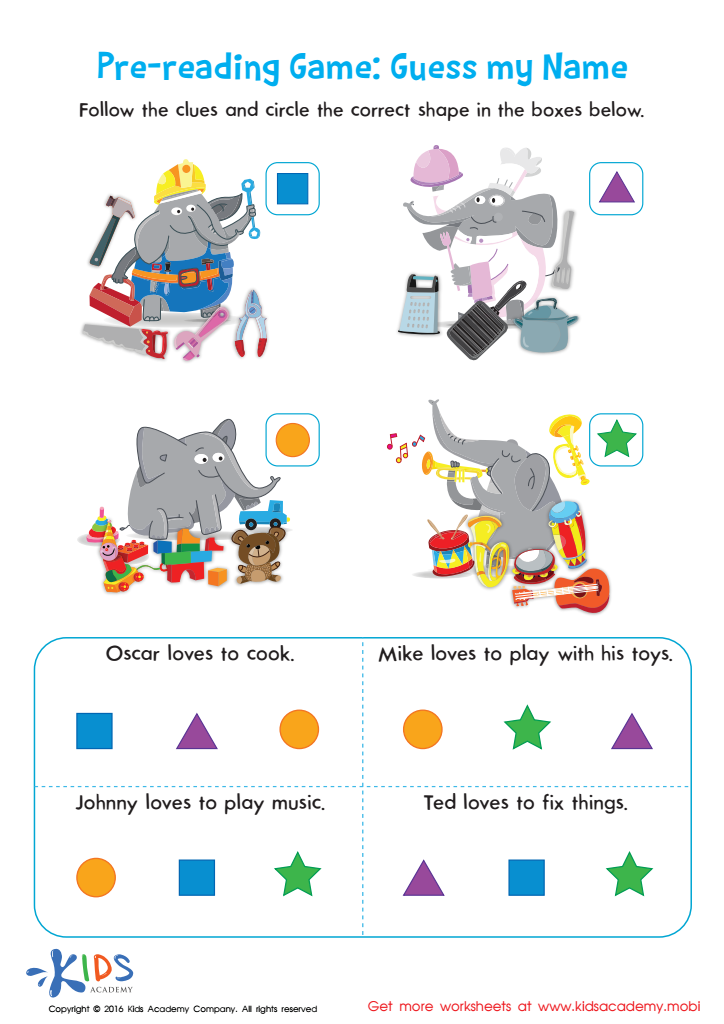
Pre Reading Worksheet Guess My Name
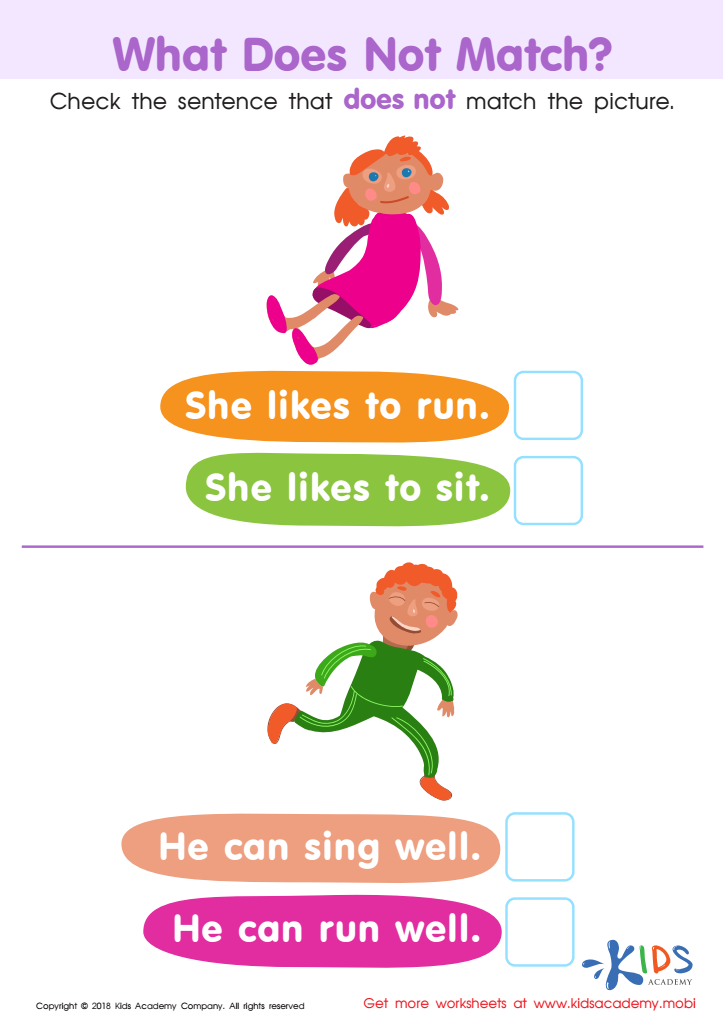
What Does Not Match? Worksheet




.jpg)

.jpg)

Cognitive development is very crucial for children during the ages of 4-5, and reading fiction plays a pivotal role in enhancing these skills. During this formative period, children's brains are developing rapidly, and the cognitive foundations they build will support their learning and thinking abilities throughout life. Reading fiction fosters imagination, critical thinking, and problem-solving by presenting scenarios where characters solve problems or make decisions.
Engaging with fictional stories helps expand a child's vocabulary and comprehension skills. Hearing and discussing stories introduces them to new words and structures of sentences that they might not encounter in everyday conversation. This rich linguistic exposure enhances their communication skills and prepares them for more complex language tasks ahead.
Moreover, fiction often contains varying perspectives and emotional subtleties that aid children in developing empathy and emotional intelligence. By identifying with diverse characters and situations, children learn to see the world from different viewpoints and recognize their own and others' emotions.
Lastly, the structure of fictional stories, with a clear beginning, middle, and end, helps children understand narrative structures, sequencing, and cause-effect relationships. These cognitive skills are critical not only for academic success but also for everyday decision-making and interpersonal interactions. Therefore, fostering a love for fictional reading from an early age can significantly contribute to a child's overall cognitive and emotional development.








