
Fine Motor Skills Reading Fiction Worksheets for Ages 4-5
5 filtered results
Difficulty Level
Grade
Age
-
From - To
Subject
Activity
Standards
Discover our engaging Fine Motor Skills Reading Fiction Worksheets, specifically designed for children ages 4-5. These worksheets seamlessly blend literacy development with fine motor activities, promoting hand-eye coordination and dexterity while sparking a love for storytelling. Your little learners will dive into imaginative narratives, practicing cutting, coloring, and tracing exercises that enhance their grip and pen control. Each worksheet features age-appropriate fiction snippets and character exploration, making learning playful and enjoyable. Perfect for both classroom and home use, these resources help young children build crucial foundational skills while igniting their creativity and curiosity. Start your child’s adventure in reading today!
Favorites
With answer key
Interactive
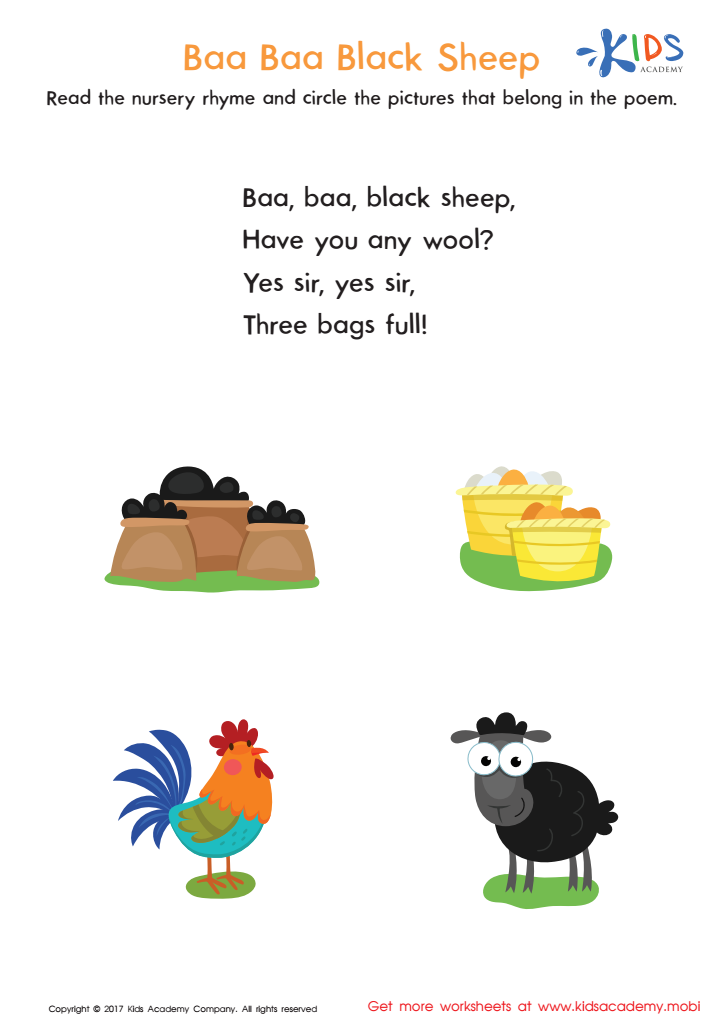
Baa Baa Black Sheep Printable
Jumpstart your child's reading skills with this printable Baa Baa Black Sheep worksheet! Recite the lines with them, then have them select the pictures associated with the poem to test comprehension. Fun and educational!
Baa Baa Black Sheep Printable
Worksheet
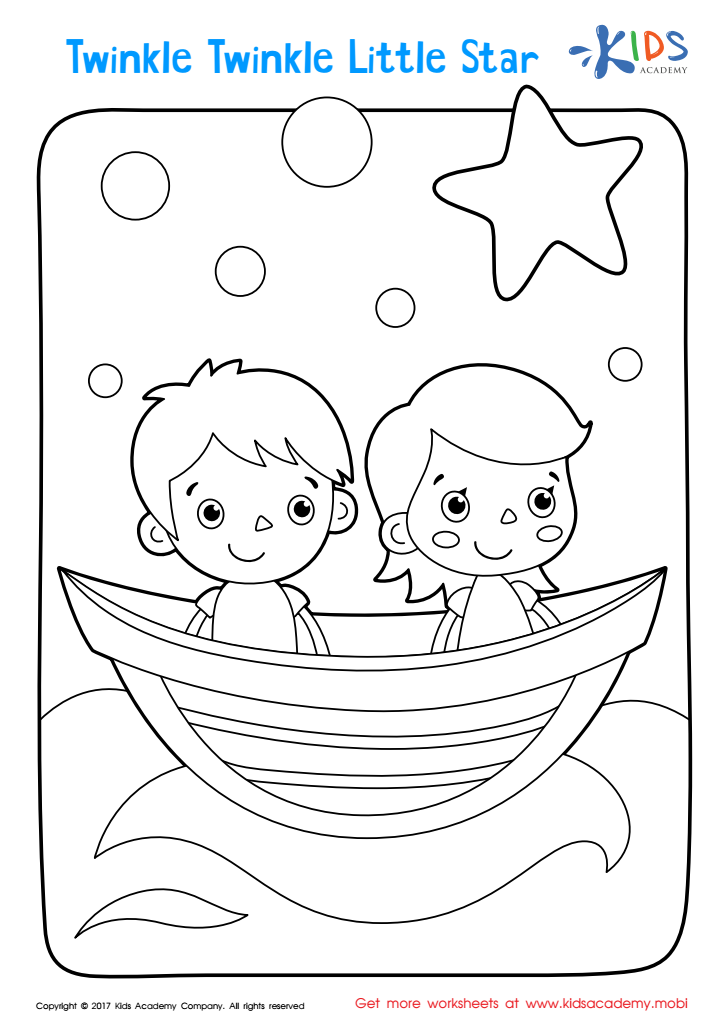
Twinkle Twinkle Little Star Coloring Page
Let your child wish upon a star as they color this scene of boy and girl stargazing. Sing Twinkle Twinkle Little Star while they choose colors to show the star twinkling in the night sky.
Download (PDF)
 Assign to My Students
Assign to My Students
Twinkle Twinkle Little Star Coloring Page
Worksheet
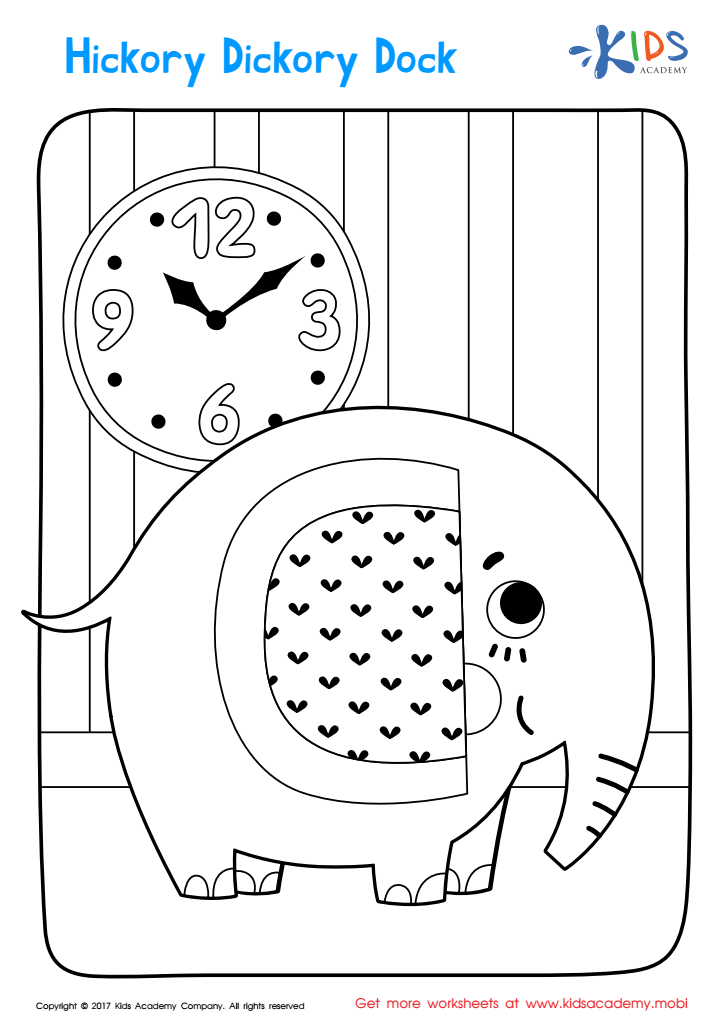
Hickory Dickory Dock Coloring Page
Sing and color with your child! Enjoy the classic nursery rhyme Hickory Dickory Dock as they color this fun printable. Watch the elephant climb and crash down the clock in the final part of the song. It's sure to bring smiles and giggles!
Download (PDF)
Assign to My Students
Assign to My Students
Hickory Dickory Dock Coloring Page
Worksheet
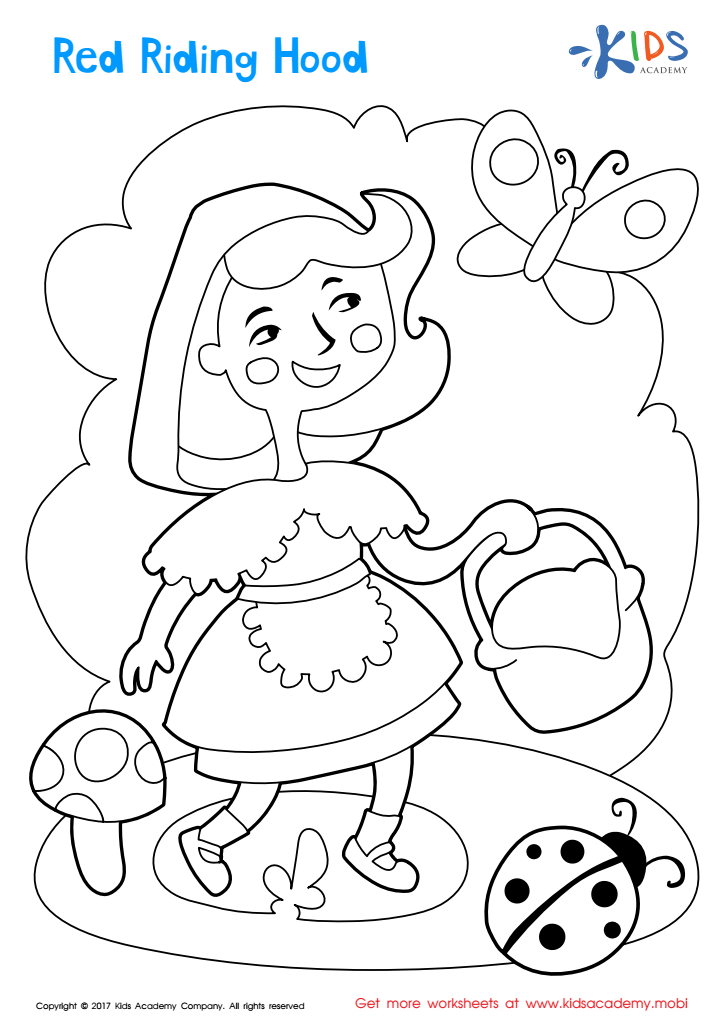
Red Riding Hood Coloring Page
Red Riding Hood awaits in the woods, with a butterfly, mushroom, and ladybug around her. Let your child bring the story to life with this magical printable coloring page. Fairytale fun for all!
Download (PDF)
Assign to My Students
Assign to My Students
Red Riding Hood Coloring Page
Worksheet
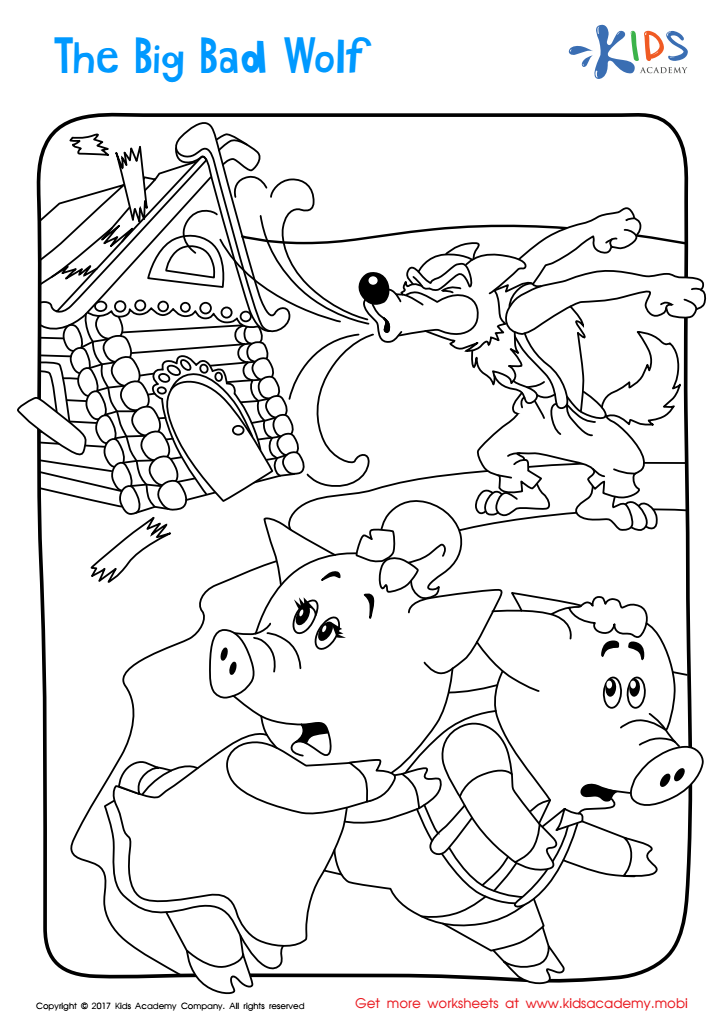
Big Bad Wolf Printable Coloring Page
Let your child have fun coloring the Big Bad Wolf blowing down the little pig's house! This printable coloring page introduces the classic tale, helping to develop reading comprehension skills.
Download (PDF)
Assign to My Students
Assign to My Students
Big Bad Wolf Printable Coloring Page
Worksheet
Join Kids Academy for Free
Who is primarily going to use this learning content?






.jpg)

Fine motor skills are crucial for young children's overall development, especially in the context of reading fiction for ages 4-5. These skills involve the coordination of small muscles in the hands and fingers, essential for tasks like holding a book, turning pages, and eventually writing. Reading fiction at this age enhances these skills by encouraging interactive play, such as pointing to letters and engaging in hands-on activities that come with book characters and stories.
When parents and teachers prioritize activities that promote fine motor skills alongside reading, children gain confidence in their ability to manipulate objects and participate in storytelling. Engaging with fiction fosters creativity and imagination, essential components in developing a love for reading. For example, children may create their own stories or use puppets, which encourages both narrative skills and dexterity.
Additionally, reading fiction introduces them to language-rich contexts, strengthening vocabulary and comprehension. As fine motor skills improve, children often feel more competent, which motivates them to explore books and storytelling further. Ultimately, the combined focus on fine motor development through fictional reading enhances cognitive, imaginative, and physical growth, laying the foundation for future learning and literacy success. Therefore, it’s important for parents and teachers to foster these skills collaboratively.








