Understanding context Reading Fiction Worksheets for Ages 4-5
4 filtered results
-
From - To
Explore our "Understanding Context Reading Fiction Worksheets" designed for ages 4-5! These engaging worksheets help young learners enhance their reading comprehension skills by emphasizing the importance of context in understanding stories. With colorful illustrations and age-appropriate activities, children will connect words to their meanings within various fictional scenarios. Our interactive approach encourages critical thinking and boosts vocabulary, making reading a joyful experience. Perfect for parents and educators, these worksheets aim to foster a love of literature while building foundational skills. Dive into the world of fiction and watch your child's reading abilities flourish with our thoughtfully-crafted resources!
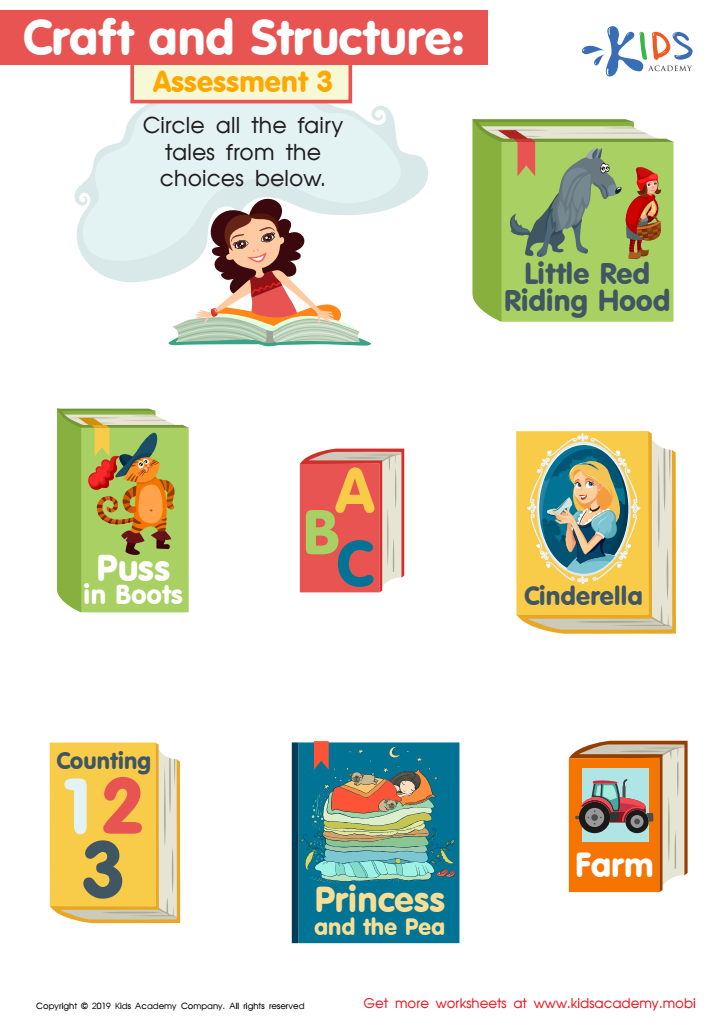
Craft and Structure: Assessment 3 Worksheet
 Assign to My Students
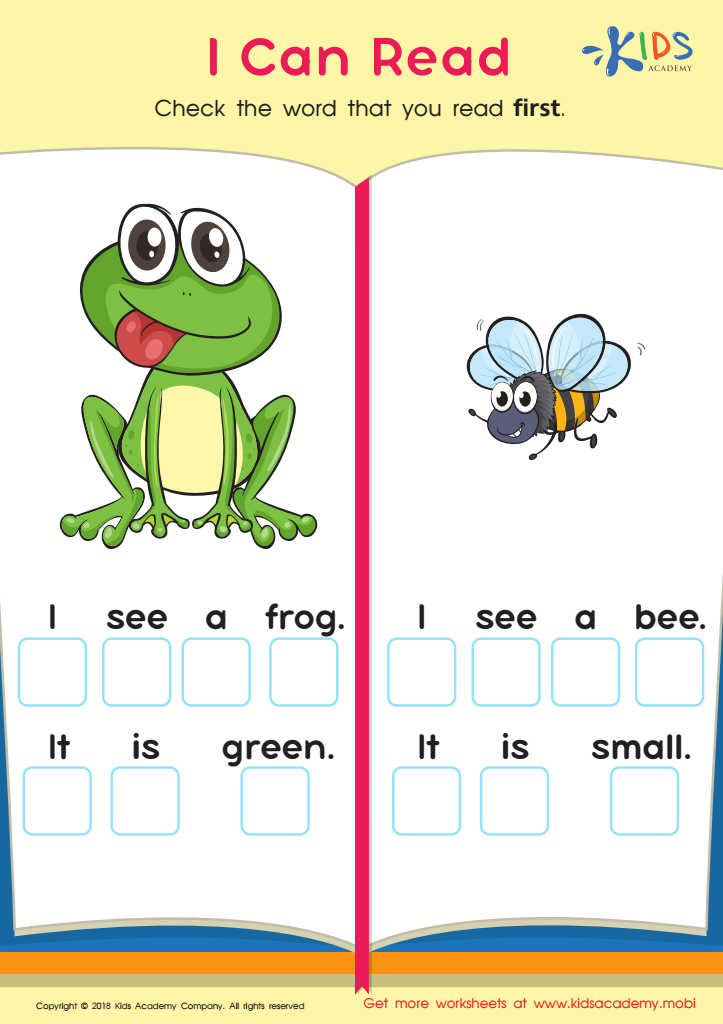
I Can Read Worksheet
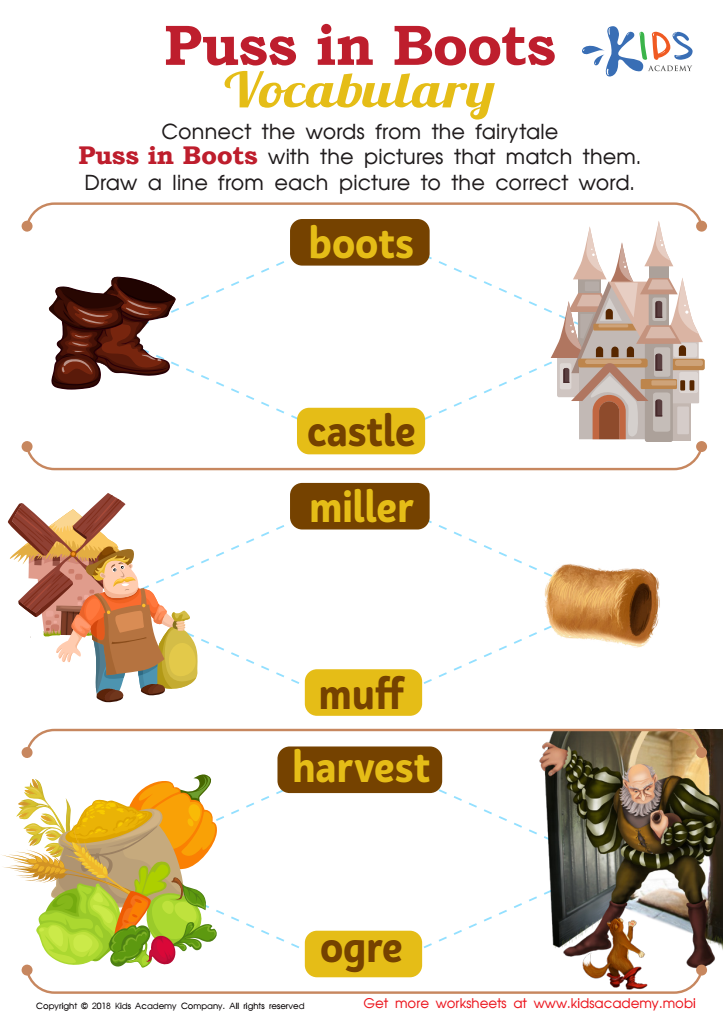
Puss in Boots Vocabulary Worksheet
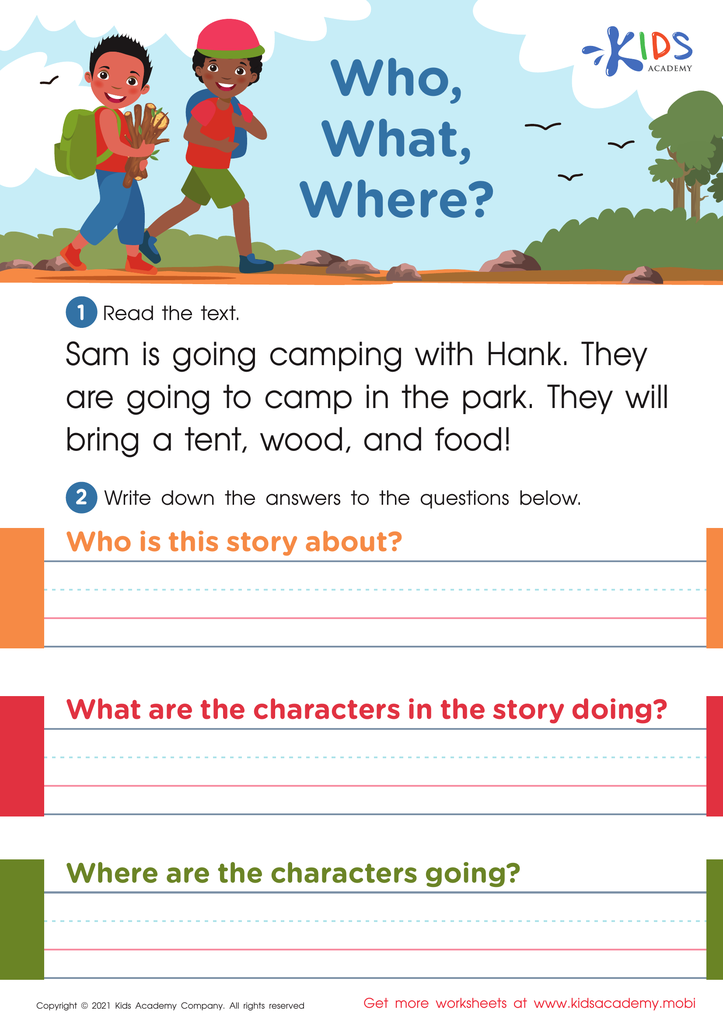
Who, What, Where? Worksheet





.jpg)
.jpg)

Understanding context when reading fiction to children aged 4-5 is vital because it fosters essential cognitive and social skills that contribute to a child's overall development. At this age, children are beginning to grasp the world around them, and stories provide valuable avenues to explore emotions, relationships, and situations. When parents or teachers help children understand the context of a story, they allow young readers to engage more deeply and critically with the narrative.
Contextual understanding helps children relate character experiences to their own lives, enhancing empathy and emotional intelligence. For example, when discussing a character's reaction to losing a toy, children can draw parallels to their feelings when faced with similar situations, helping to validate their emotions. Additionally, context aids in vocabulary development as children encounter new words in meaningful situations, making it easier for them to remember and use these words in appropriate contexts later on.
By nurturing their understanding of context, parents and teachers also encourage imagination and creativity, inviting children to hypothesize about possible outcomes or the motives behind characters' actions. This fosters critical thinking skills and encourages a lifetime love of reading, making storytime an enriched learning experience that goes beyond mere entertainment.








