Reading comprehension Reading Non-Fiction Worksheets for Ages 4-5
5 filtered results
-
From - To
Unlock your child's potential with our engaging Reading Comprehension Non-Fiction Worksheets, specifically designed for ages 4-5! These worksheets introduce young learners to fascinating non-fiction topics that spark curiosity and promote critical thinking. Each activity encourages reading practice while developing essential comprehension skills. Children will explore various subjects, enhancing their vocabulary and understanding of the world around them. Perfect for at-home learning or classroom use, our worksheets also provide colorful illustrations to captivate young minds. Foster a love for reading and knowledge in your preschooler today! Dive into the exciting world of non-fiction and watch their comprehension skills flourish!
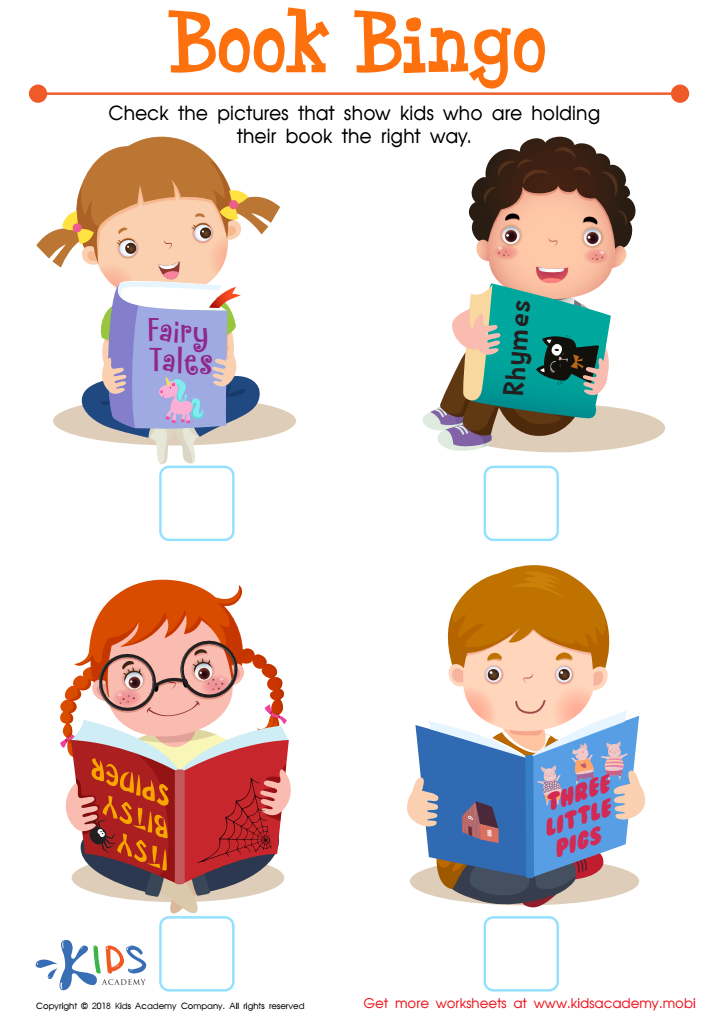
Book Bingo Worksheet
 Assign to My Students
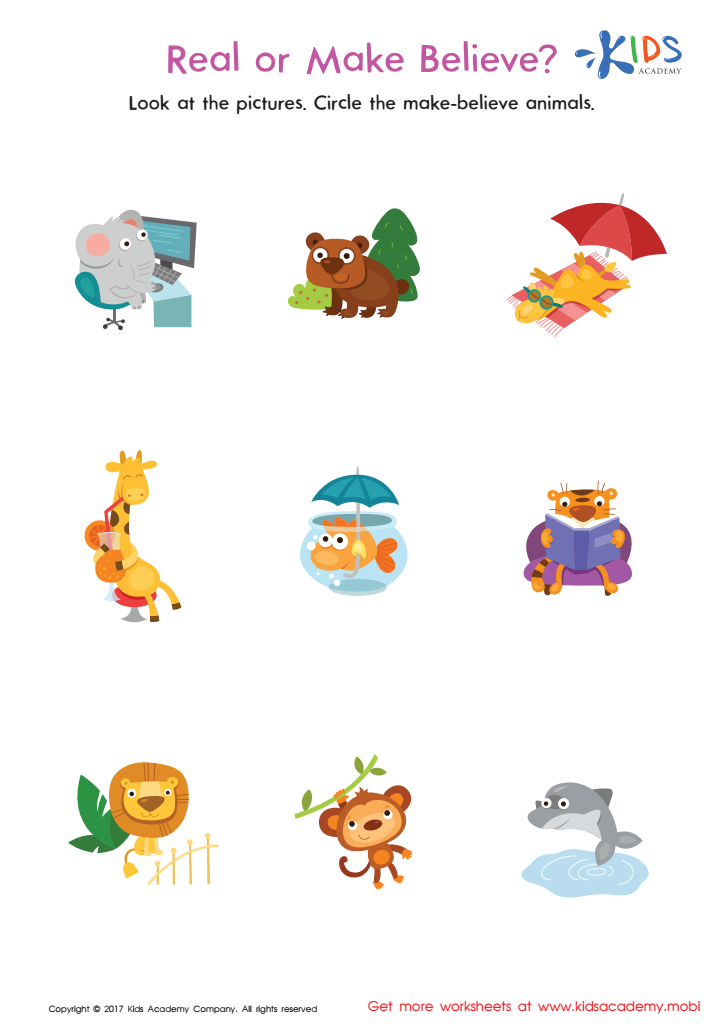
Fact or Make Believe Worksheet
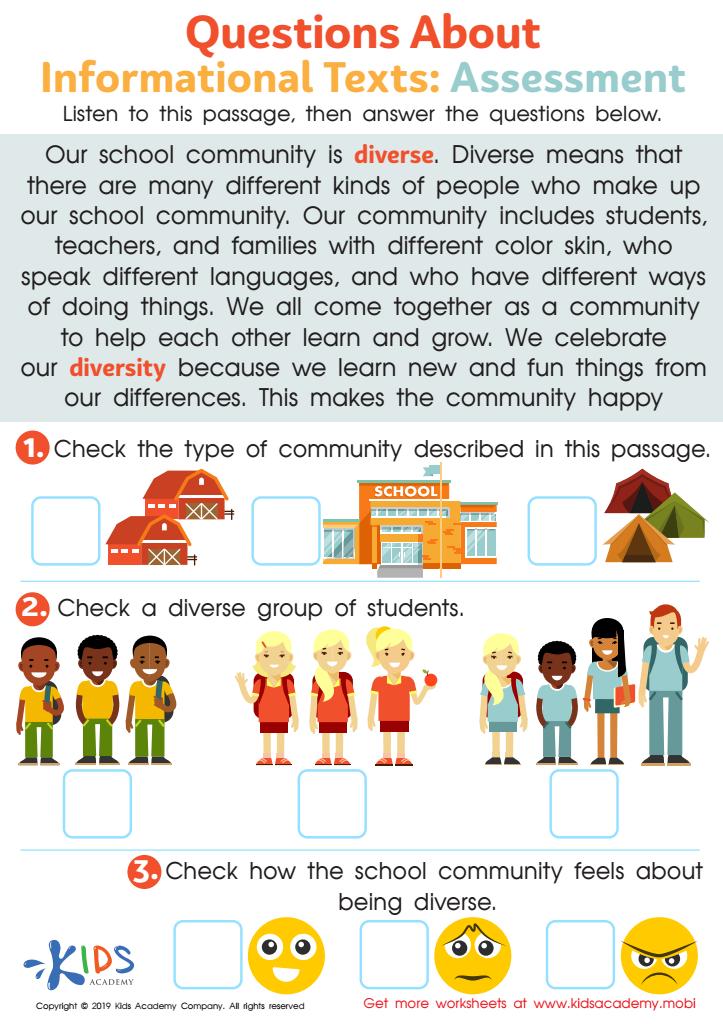
Questions About Informational Texts: Assessment 1 Worksheet
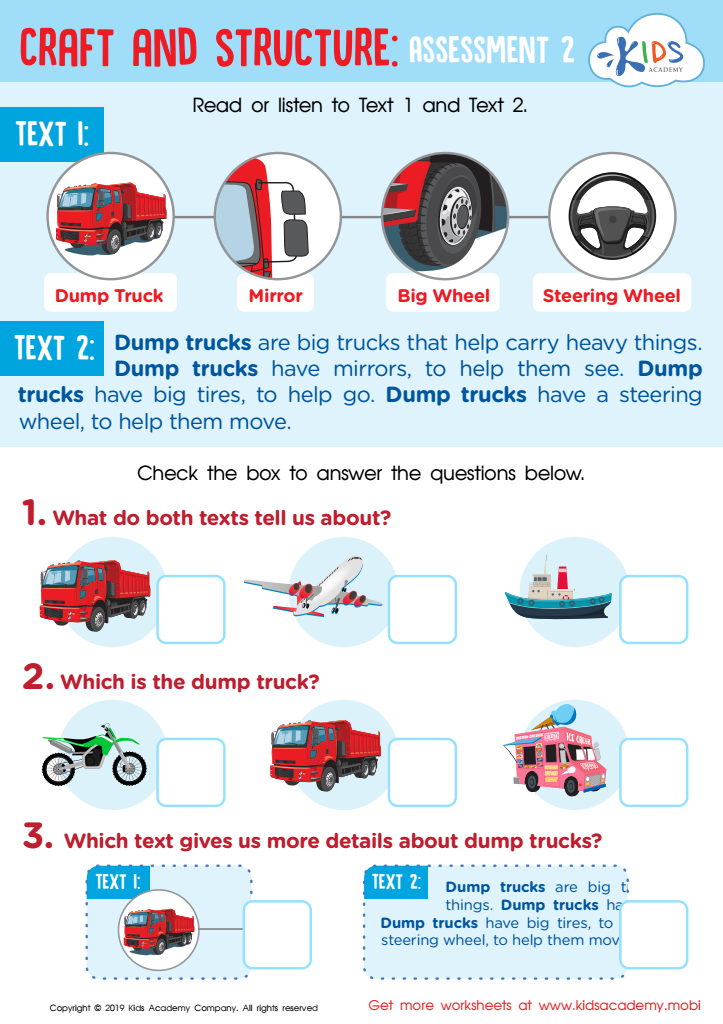
Craft and Structure: Assessment 2 Worksheet
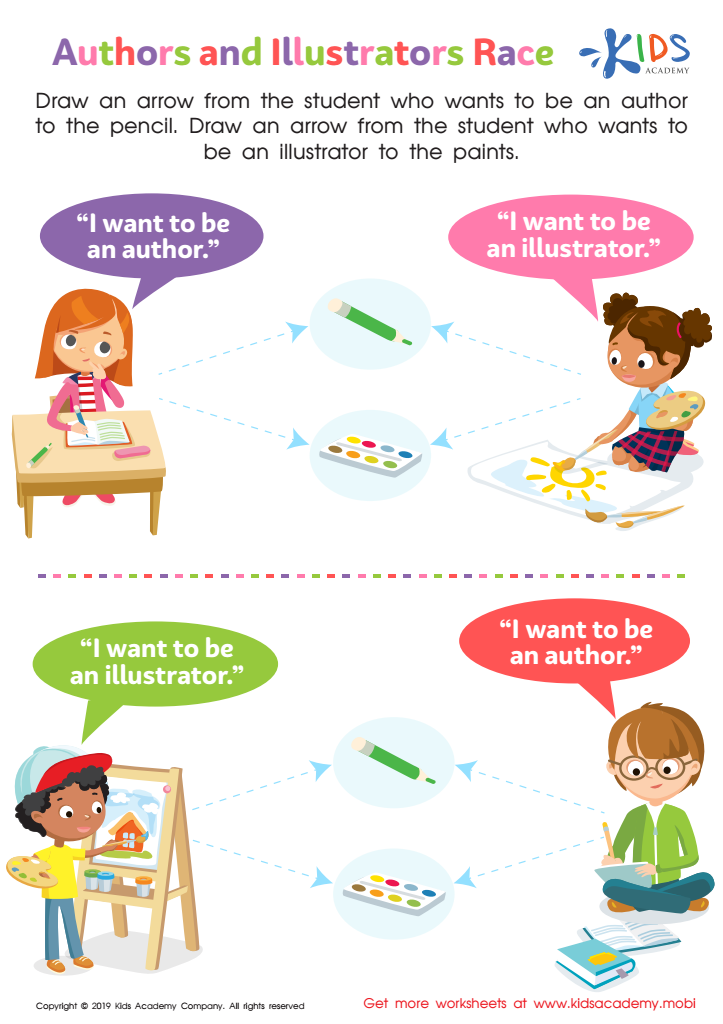
Authors and Illustrators Race Worksheet







Reading comprehension is a vital skill that lays the groundwork for a child's academic success and lifelong learning. For children aged 4-5, engaging with non-fiction texts introduces them to the real world and broadens their understanding of various topics. These texts help build vocabulary, enhance critical thinking, and support language development as children encounter factual information, understand new concepts, and relate them to their own experiences.
Parents and teachers should prioritize reading non-fiction with young learners to cultivate their curiosity and encourage a love for learning. Non-fiction resources in areas like science, nature, or history can spark questions, fostering an inquisitive mindset. Engaging with such texts also aids in developing essential comprehension skills, including the ability to identify main ideas, make connections, and differentiate facts from opinions.
Moreover, these discussions enhance communication skills, encouraging children to express what they’ve learned and share their insights. As they explore the world around them through books, children develop the ability to assimilate and analyze information, paving the way for future academic challenges. By nurturing reading comprehension with non-fiction at an early age, parents and teachers create enthusiastic learners who are well-prepared to navigate the complexities of the information-rich society they live in.








