Recognizing shapes Sight Words Worksheets for Ages 4-5
5 filtered results
-
From - To
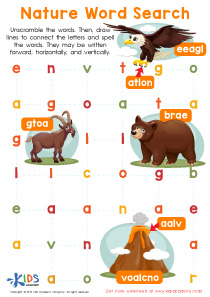
Introduce your little ones to the world of reading with "Recognizing Shapes Sight Words Worksheets for Ages 4-5." These engaging and educational worksheets are designed to make learning fun for preschoolers by combining sight word recognition with shape identification activities. Each colorful worksheet encourages children to match sight words to shapes, promoting early literacy, cognitive development, and fine motor skills. Perfect for parents and teachers, these printables offer a creative way to reinforce foundational reading skills while keeping young learners entertained and eager to learn. Help your child build confidence in reading and shape recognition with our expertly crafted worksheets today!
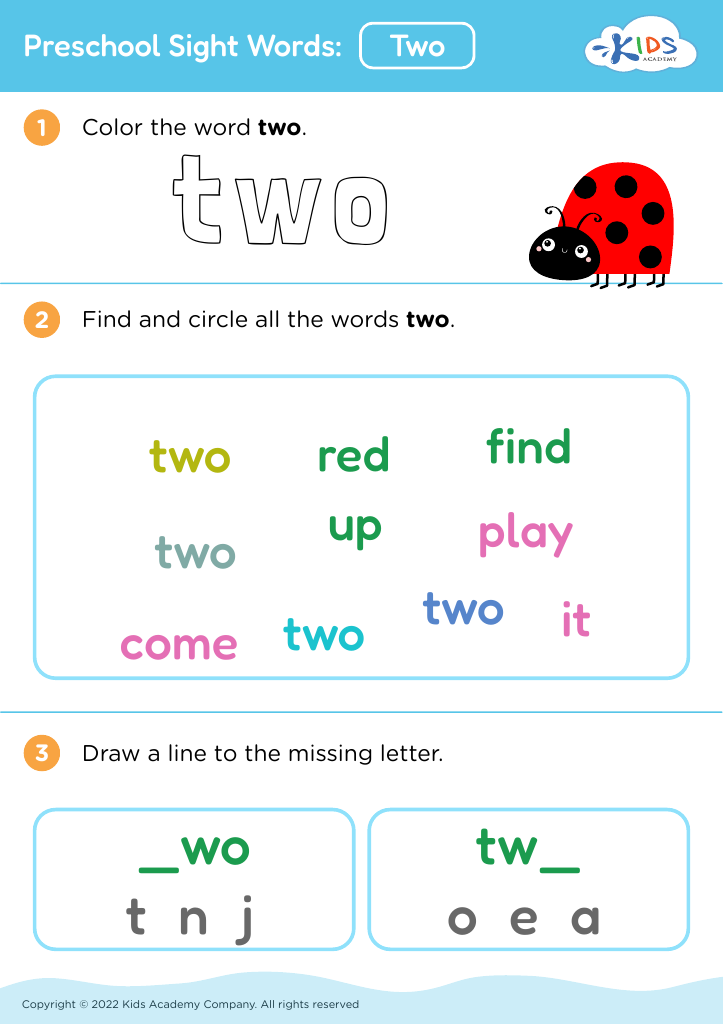







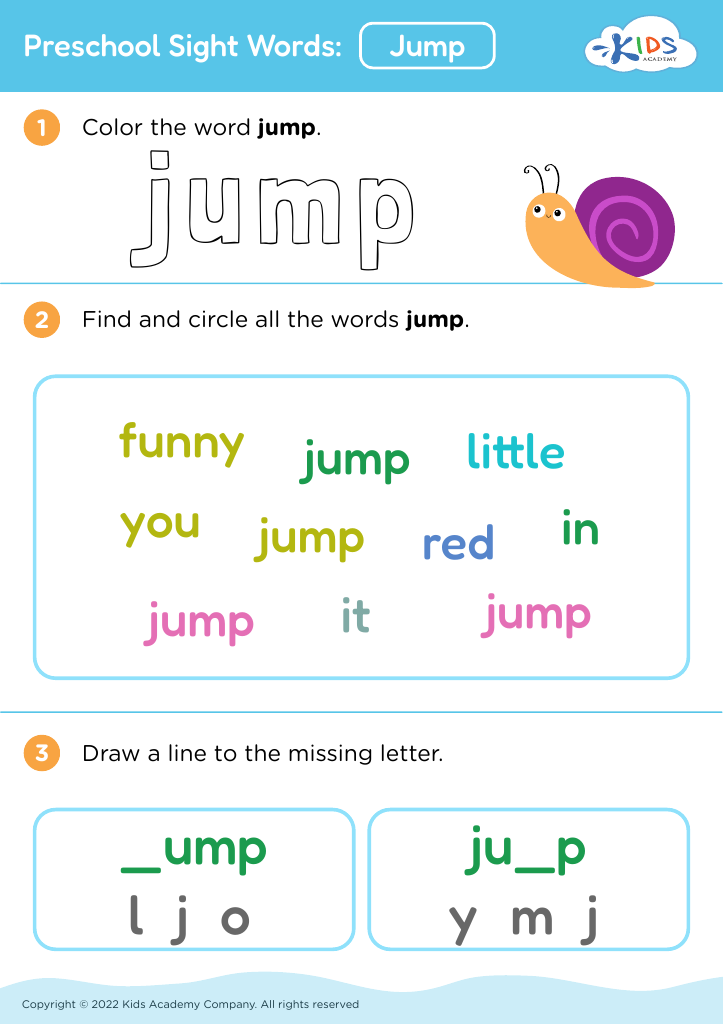
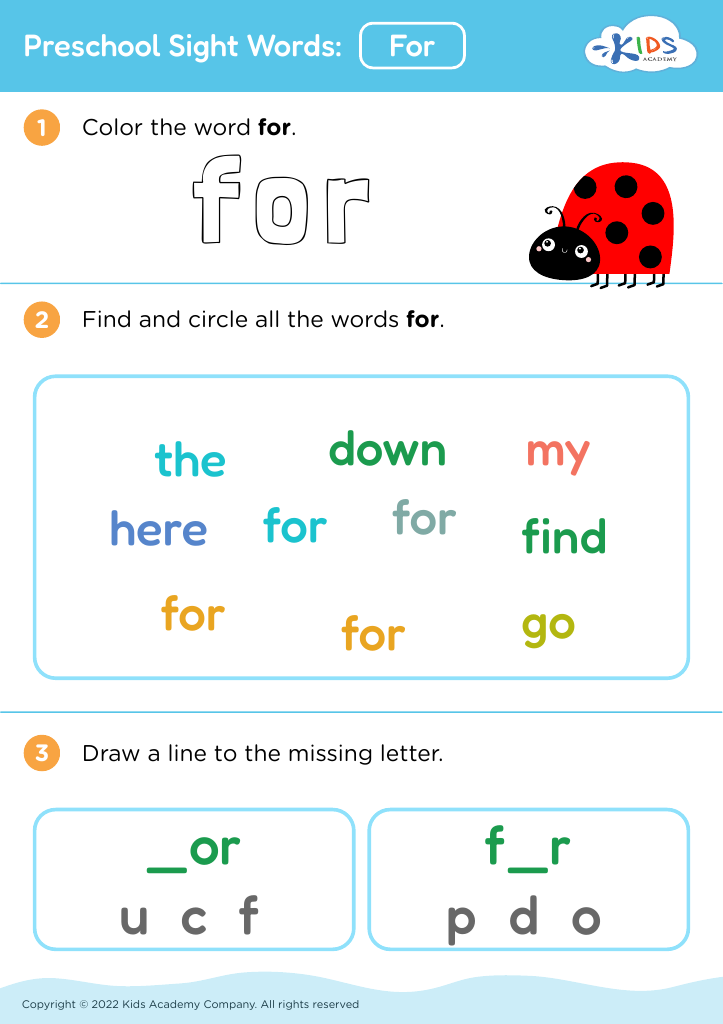
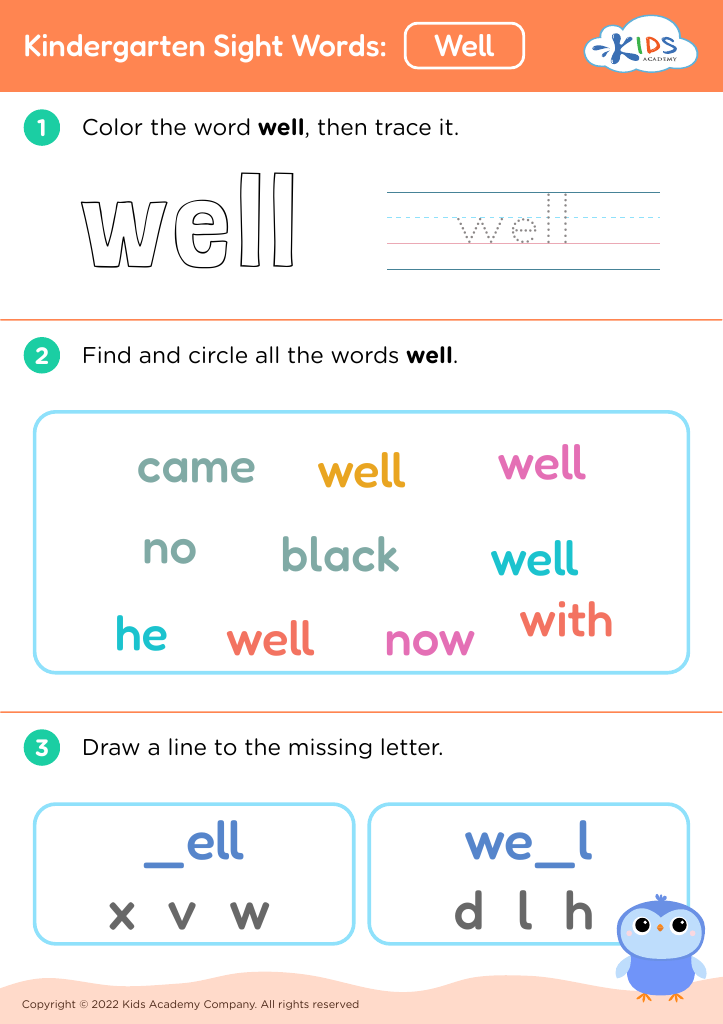
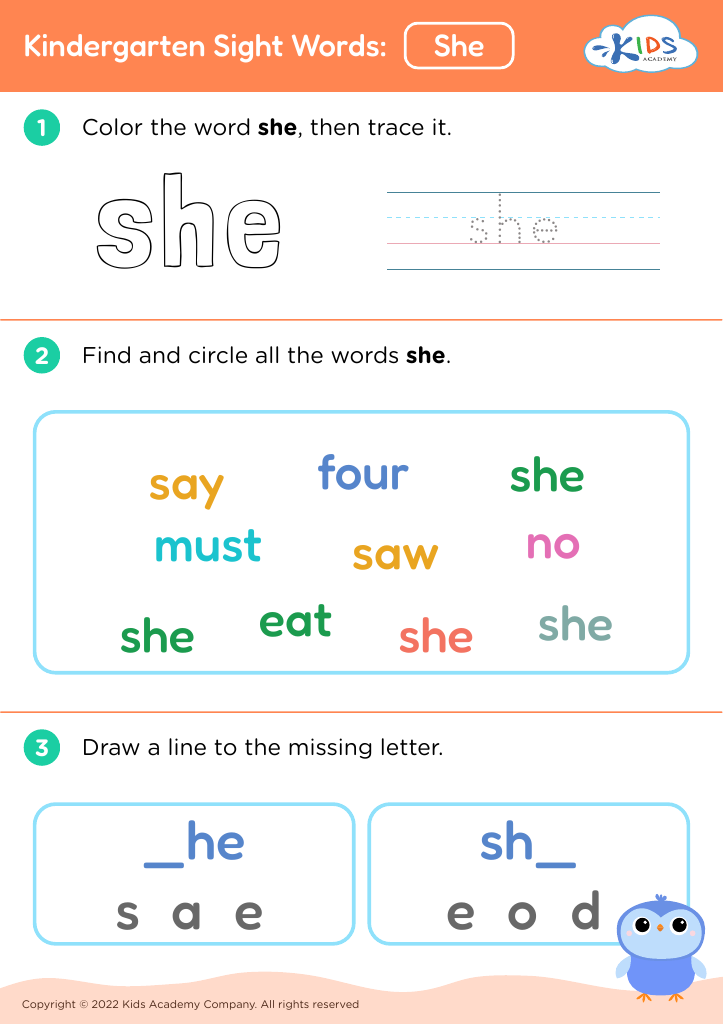








Recognizing shapes and sight words for children ages 4-5 is pivotal for their early cognitive and literacy development. At this formative age, children’s brains are rapidly growing, and the foundational skills they acquire form the basis for future learning and academic success. Understanding shapes is not only about identifying visual forms but also develops spatial awareness and problem-solving abilities. Shapes introduce youngsters to geometry, fostering their ability to categorize and compare items, which is essential for mathematical reasoning.
Sight words, on the other hand, are common words that children should recognize instantly without needing to decode them phonetically. Early mastery of sight words accelerates reading fluency and comprehension, reducing frustration and boosting confidence. This foundational literacy skill allows children to spend more cognitive resources on understanding textual content rather than the mechanical aspects of reading. Furthermore, both shapes and sight words blend visual learning with language development, promoting multitiered cognitive growth.
Parents and teachers should prioritize these areas to provide children with a seamless transition into more complex academic concepts. By engaging with shapes and sight words through games, books, and hands-on activities, caregivers can stimulate a child’s intellectual curiosity and prepare them for a smoother, more successful educational journey.