Categorization skills Animals Worksheets for Ages 4-5
4 filtered results
-
From - To
Enhance your child's learning experience with our "Categorization Skills Animals Worksheets" designed specifically for ages 4-5. These engaging worksheets help young learners identify and classify various animals, fostering critical thinking and observational skills. Children will enjoy sorting animals by type, habitat, and characteristics, making learning both fun and interactive. Each worksheet is carefully crafted to promote creativity and cognitive development, allowing children to explore the diverse world of animals. Perfect for home or classroom use, our worksheets provide a solid foundation in categorization skills, paving the way for future academic success. Download now and watch your child's knowledge grow!
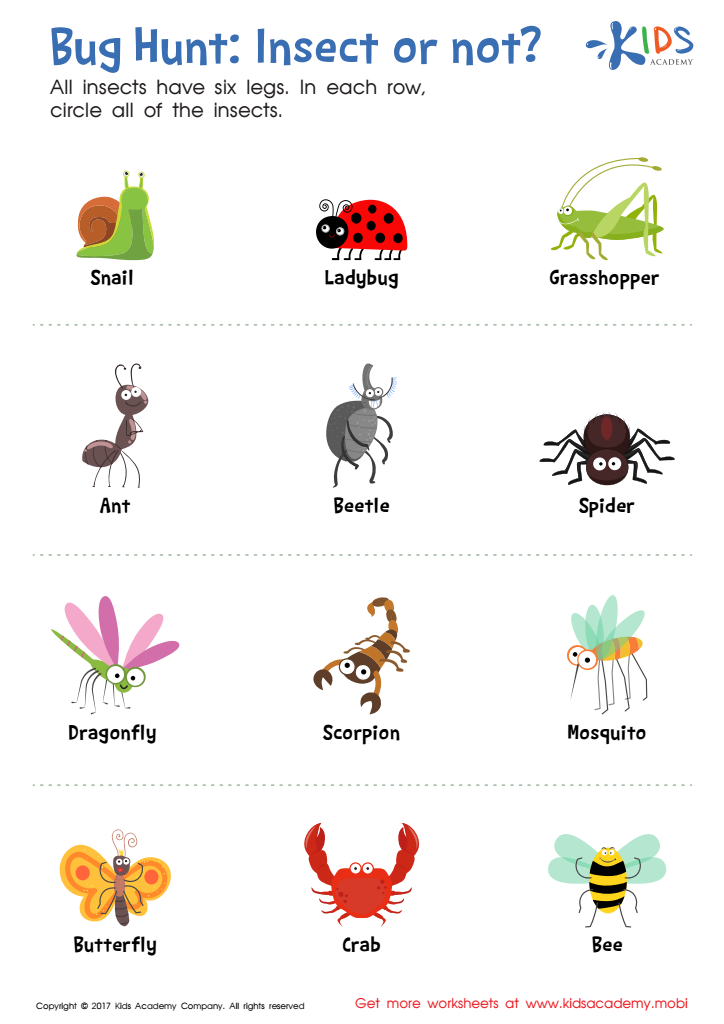
 Assign to My Students
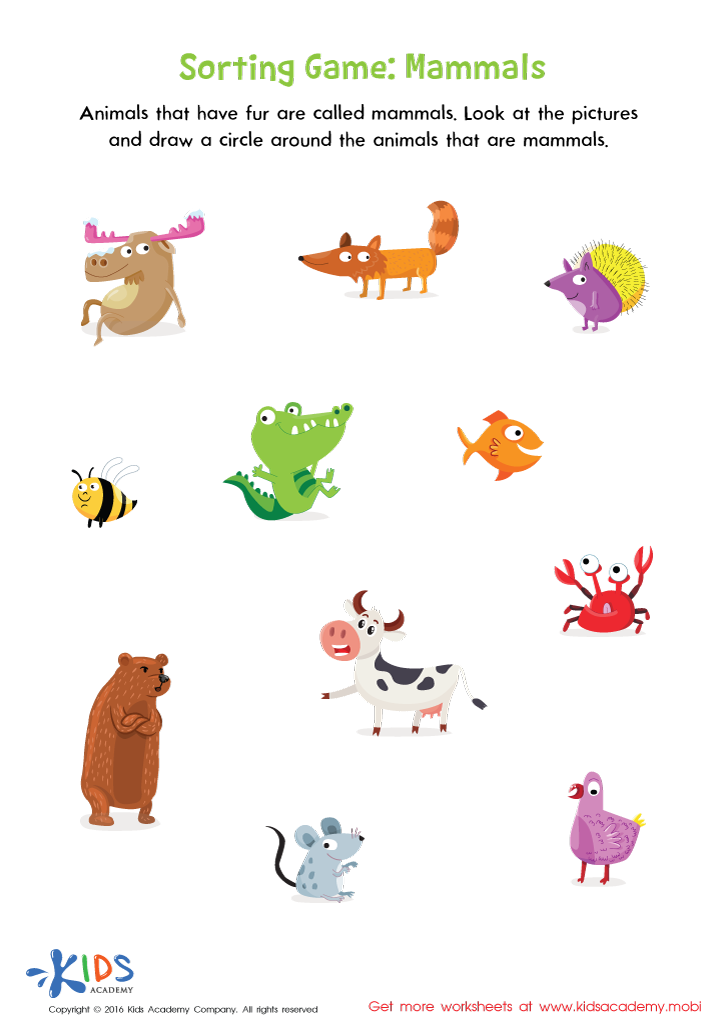
Mammals Sorting Worksheet
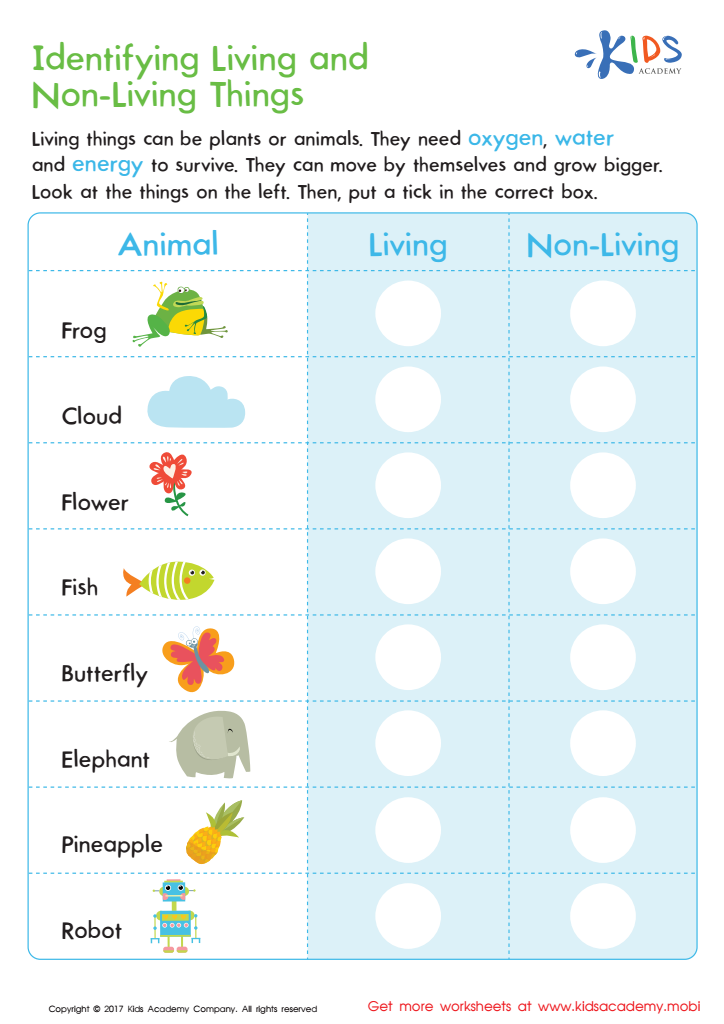
Identifying Living or Non–living Worksheet
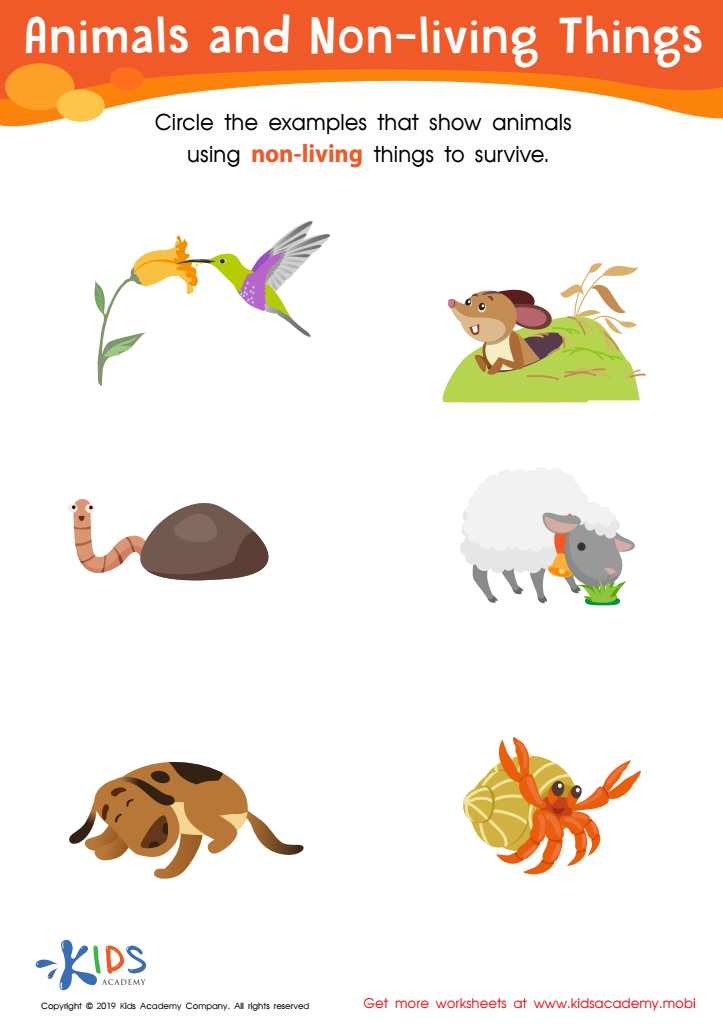
Animals and Non-Living Things Worksheet






Categorization skills are crucial for young children, particularly in the context of understanding animals. For parents and teachers of children aged 4-5, fostering these skills can significantly enhance cognitive, social, and language development. When children learn to categorize animals, they develop critical thinking skills by identifying similarities and differences, which aids in problem-solving processes.
Understanding categories, such as mammals, reptiles, or birds, enriches vocabulary and comprehension, as children learn new terms and concepts. This foundational knowledge not only bolsters language acquisition but also encourages curiosity about the natural world, stimulating further exploration and learning.
Moreover, categorization promotes social skills as children often engage in group activities where they must communicate ideas and collaborate with peers. These interactions help them build relationships and learn teamwork. Lastly, categorization fosters a sense of organization and structure in young minds, providing a framework that supports overall academic success.
Overall, prioritizing categorization skills related to animals can have lasting benefits on a child's educational journey, helping them become not only knowledgeable but also confident learners. Parents and teachers who recognize this importance can create rich, engaging learning experiences that bolster children's growth and enthusiasm for learning.








