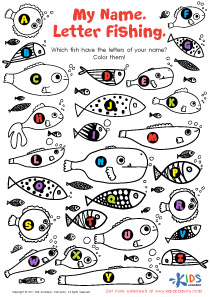
Letter recognition ABC Order Worksheets for Ages 4-6
15 filtered results
Difficulty Level
Grade
Age
-
From - To
Subject
Activity
Standards
Explore our engaging "Letter Recognition ABC Order Worksheets" designed for children aged 4-6. These worksheets provide a fun, interactive way to help young learners master the alphabet and improve their letter recognition skills. Filled with colorful illustrations and captivating activities, they encourage children to practice placing letters in alphabetical order while reinforcing their understanding of each letter. Perfect for homeschooling, early education, or supplemental learning, our worksheets support early literacy development through enjoyable, hands-on exercises. Watch your child's confidence grow as they develop essential reading skills with our meticulously crafted resources. Join us in making learning meaningful and exciting!
Favorites
With answer key
Interactive
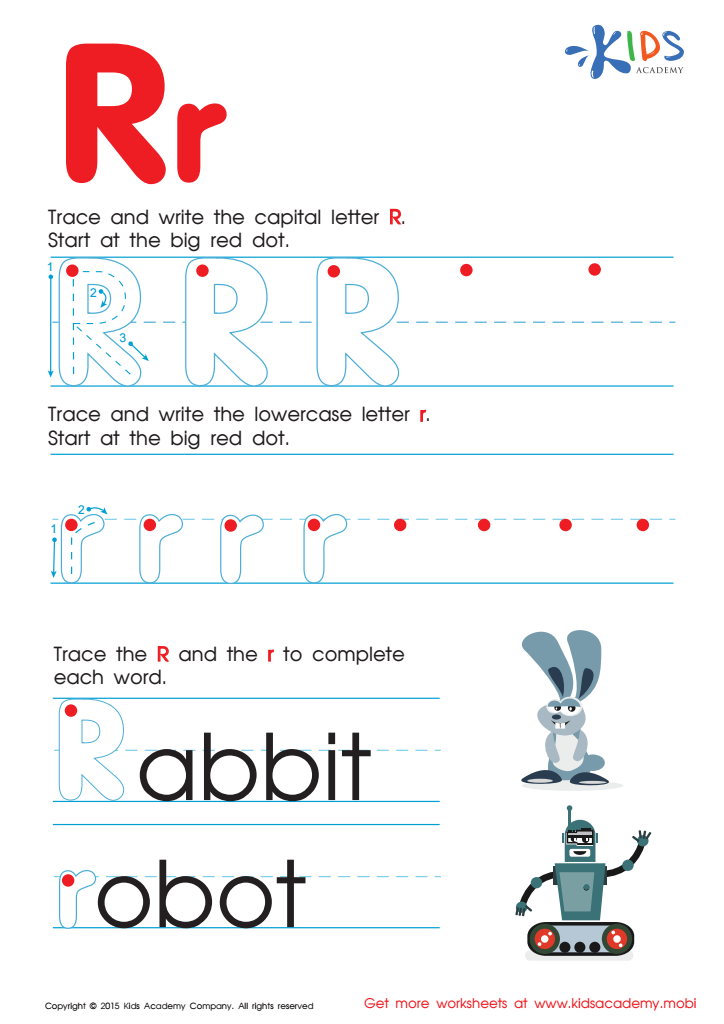
Letter R Tracing Page
Trace and write the letter "R" with this worksheet for kindergarten. Start with the uppercase, then move on to the lowercase. Write the letters several times for practice. Then help complete the words for the rabbit and robot, spelling carefully. More ABC worksheets can be found at Kids Academy.
 Assign to My Students
Letter R Tracing Page
Worksheet


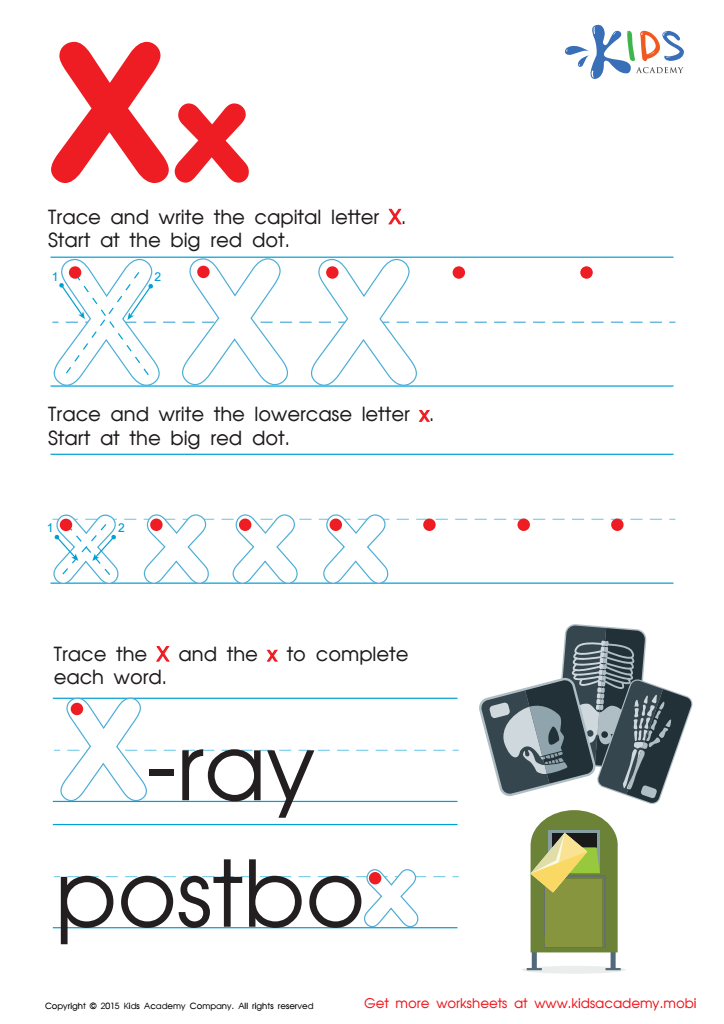
Letter X Tracing Page
Trace the uppercase letter "X" to learn, then write it yourself and practice. Then do the same with the lowercase "x" before completing the words "X-ray" and "postbox". Enjoy our alphabet printables!
Letter X Tracing Page
Worksheet

Letter P Tracing Page
Trace the lines from the red dot to learn to write "P"! Then practice this letter with the fun activities: complete the word "Pig" and "Pumpkin". Check out Kids Academy to get more free ABC worksheets.
Letter P Tracing Page
Worksheet
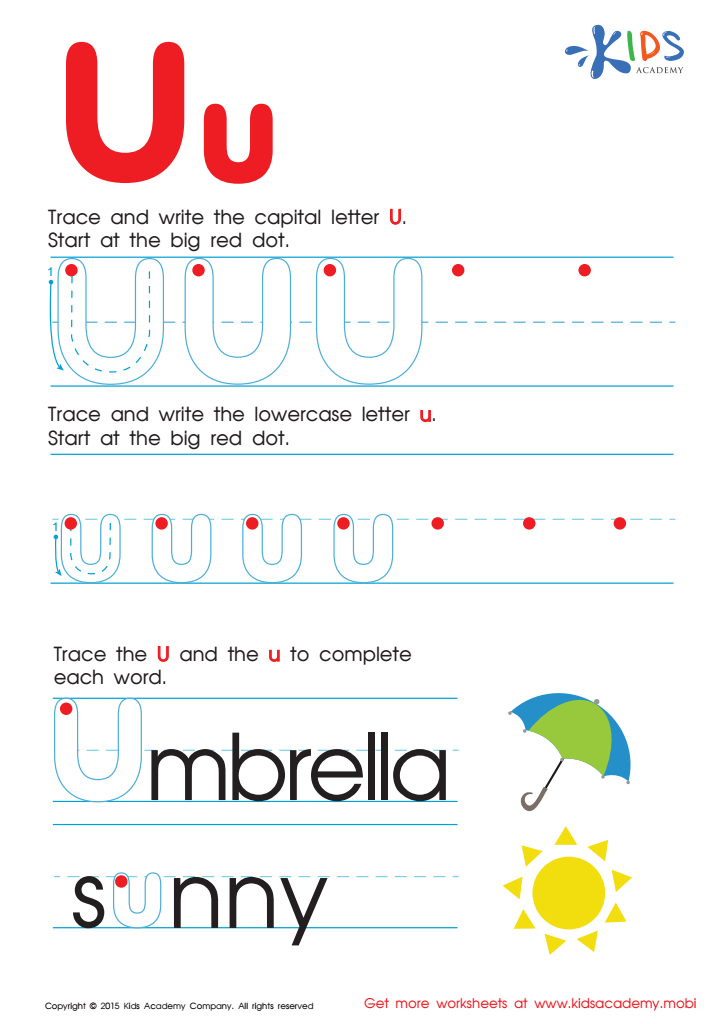
Letter U Tracing Page
Ready to trace and write the letter "U"? Use our worksheet and practice tracing both uppercase and lowercase letters. Complete the words "umbrella" and "sunny" with a capital "U". Check our full collection of alphabet printables for more activities.
Letter U Tracing Page
Worksheet
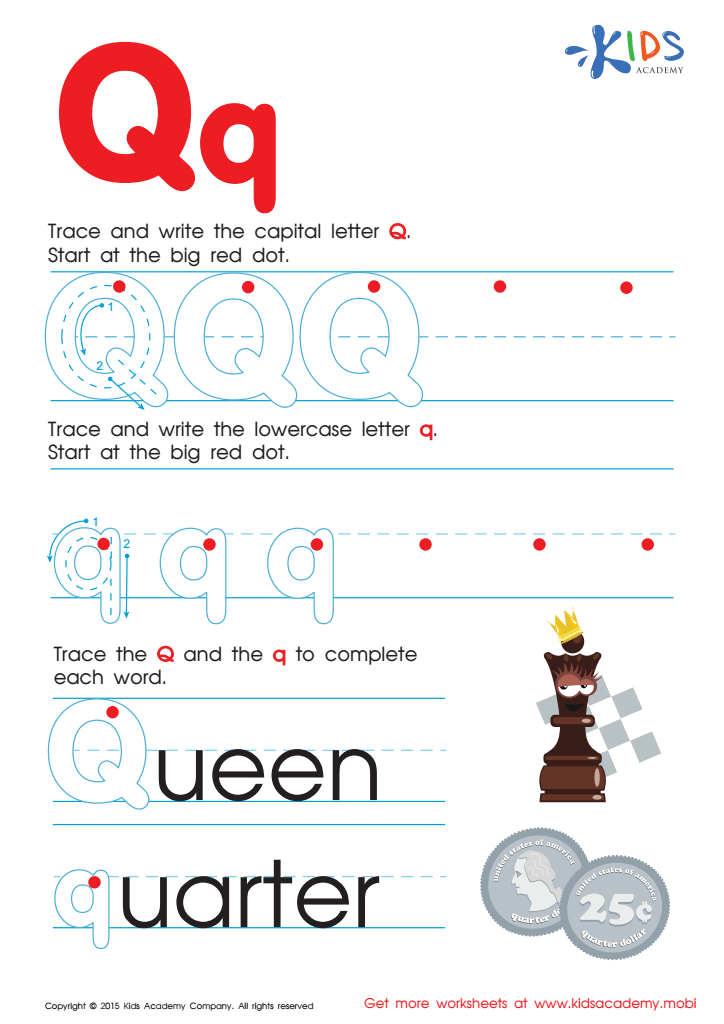
Letter Q Tracing Page
Learn the letter "Q"! Trace and write it a few times in upper and lowercase. Then help the Queen by writing her initial letter. Finally, write "quarters" and practice with more alphabet worksheets.
Letter Q Tracing Page
Worksheet
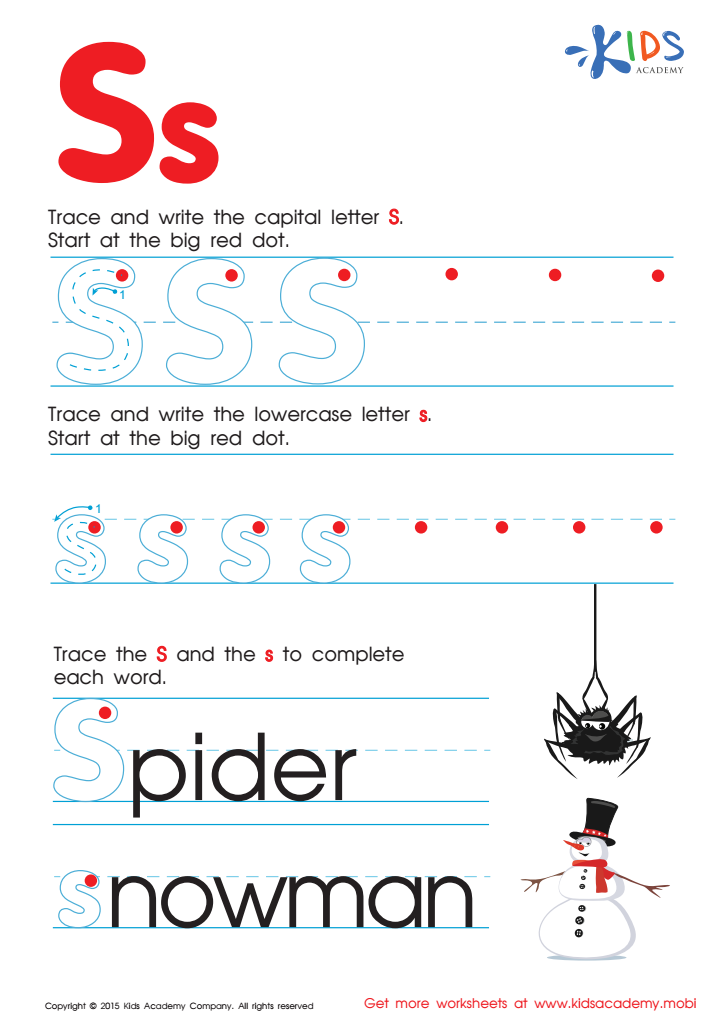
Letter S Tracing Page
Trace and write the capital and lowercase "S" on this ABC worksheet for kindergarten. Start with the big red dot and be careful. When you finish, help the spider and snowman in the pictures restore their words with the capital and lowercase letters. Continue learning the alphabet with Kids Academy.
Letter S Tracing Page
Worksheet
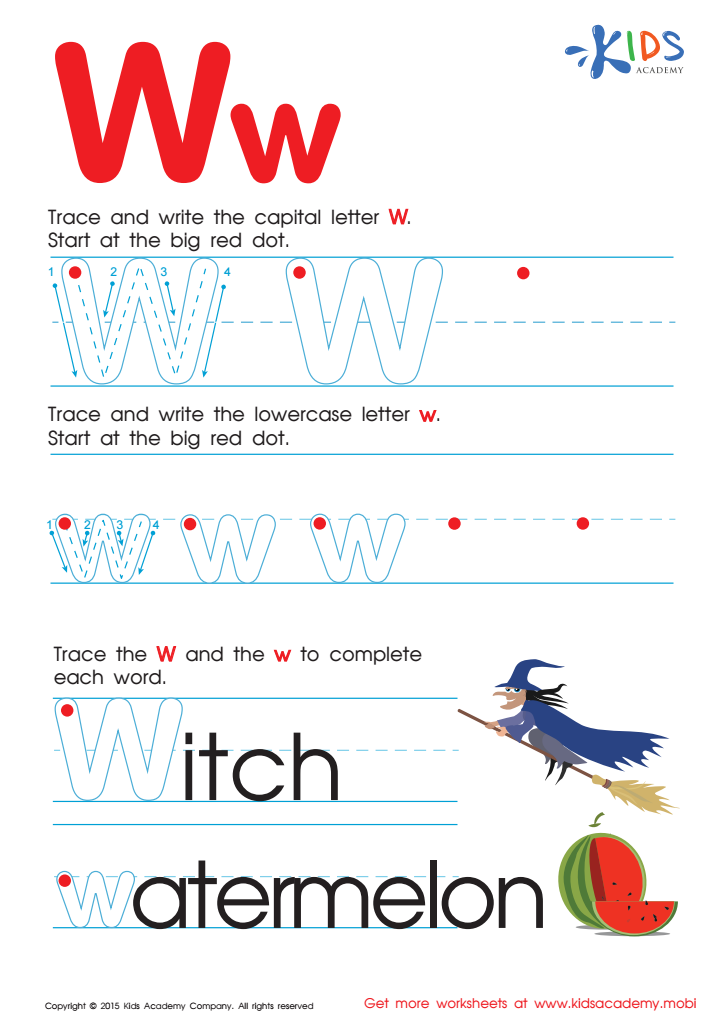
Letter W Tracing Page
Trace and write the capital and lowercase letter W with this free letter tracing worksheet by Kids Academy. Complete the words "Witch" (capital) and "watermelon" (lowercase). Check out our other kindergarten alphabet worksheets!
Letter W Tracing Page
Worksheet

Letter H Tracing Page
Trace the letter "H", then practice writing its lowercase form. Finally, choose your favorite form of transport and ride away! Get our worksheets to make learning fun and easy.
Letter H Tracing Page
Worksheet

Letter G Tracing Page
Get ready to trace the letter "G" – with a big red spot as the starting point, trace the lines and watch the letter appear. Uppercase and lowercase letters are both easy and fun to write. Give it a go and finish the word "go". Play the guitar and say "hello" to a funny ghost!
Letter G Tracing Page
Worksheet
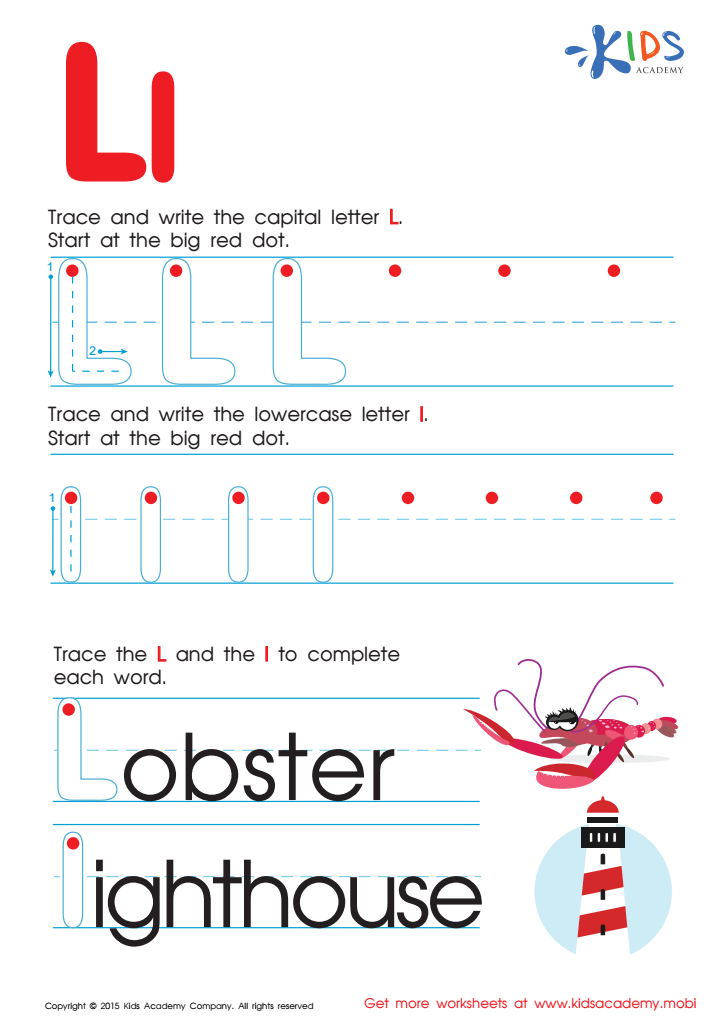
Letter L Tracing Page
Trace uppercase and lowercase letters to practice writing. Pay attention to the lowercase letters, like the "L", that are not as tall as an uppercase "I" or as short as a lowercase "i". Words like "lobster" and "lighthouse" are waiting to be completed. Enjoy!
Letter L Tracing Page
Worksheet
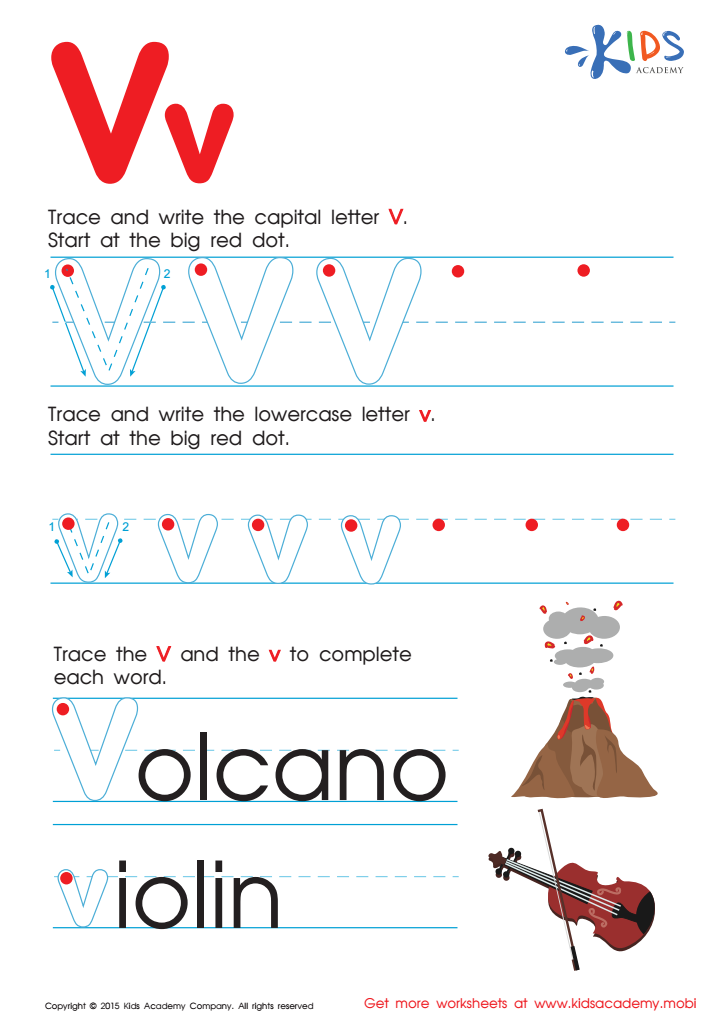
Letter V Tracing Page
Trace the uppercase and lowercase letter "V" with our kindergarten tracing worksheet. Begin at the red dot and follow the lines. Write it several times. Complete the words "Volcano" and "violin". Get more alphabet activities at Kids Academy.
Letter V Tracing Page
Worksheet
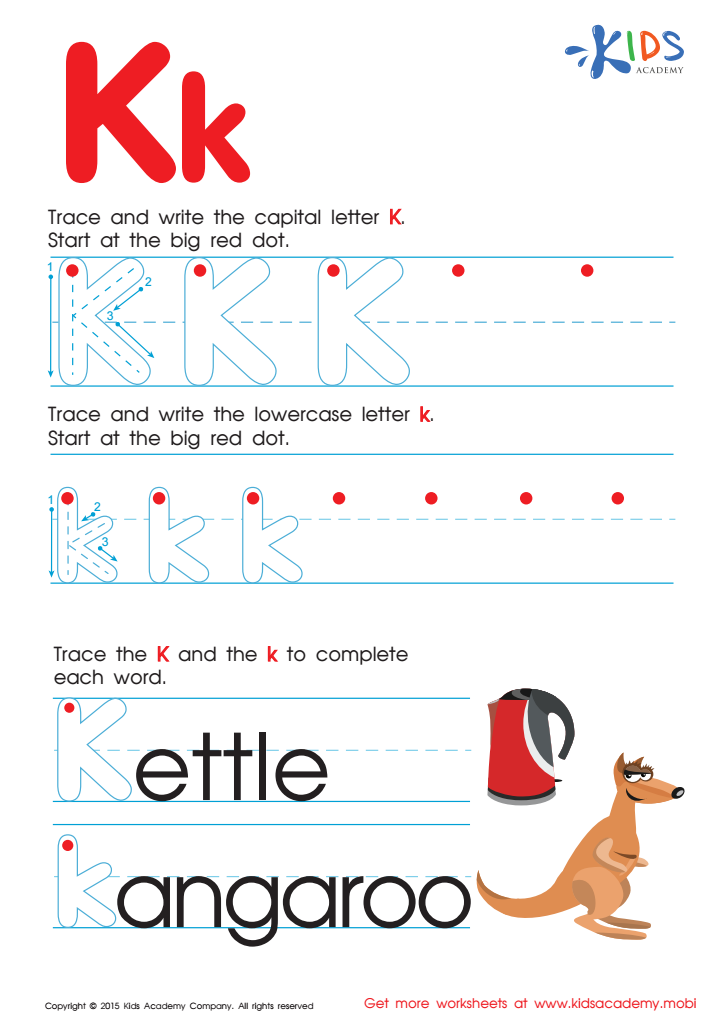
Letter K Tracing Page
Trace and write the letter K; start at the big red dot. Use it to complete words like "Kettle" and "Kangaroo". Visit Kids Academy for more free alphabet worksheets for kindergarten.
Letter K Tracing Page
Worksheet
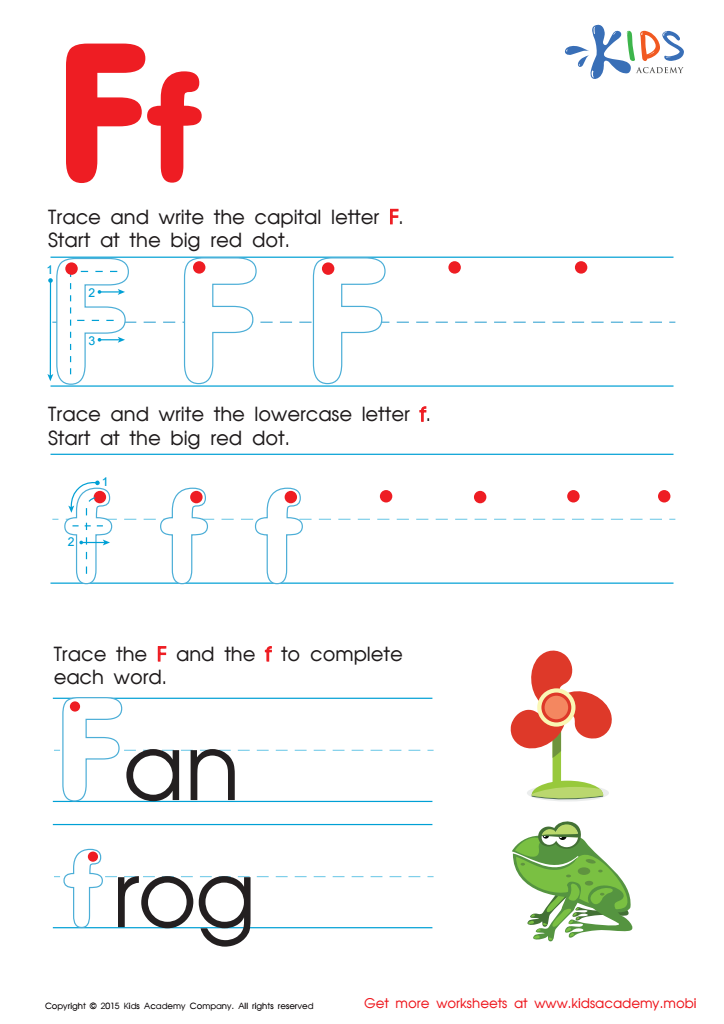
Letter F Tracing Page
Trace "F" with your pencil! Start at the red dot and draw lines — it's fun! Check it out — it looks great! Keep practicing to make it even better. Then, try completing words. Help out the broken fan and funny frog! Get free alphabet worksheets and activities for your kids. Come see our new tracing pages!
Letter F Tracing Page
Worksheet
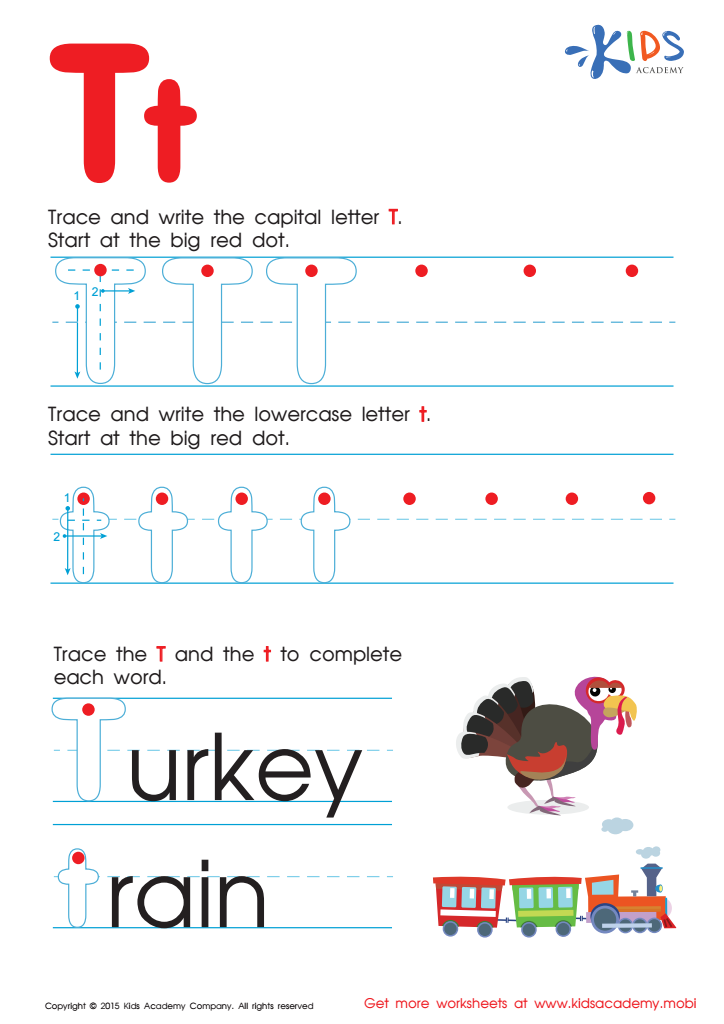
Letter T Tracing Page
Trace letters, complete words, draw pictures and see your kids having fun!
Kids Academy offers alphabet tracing worksheets to learn to write letters. Start with the big red dot, trace the letter, then write it. Practice uppercase and lowercase. Have fun completing words with a Turkey or a rain-train and draw pictures. Get more printable worksheets to make learning enjoyable.
Letter T Tracing Page
Worksheet
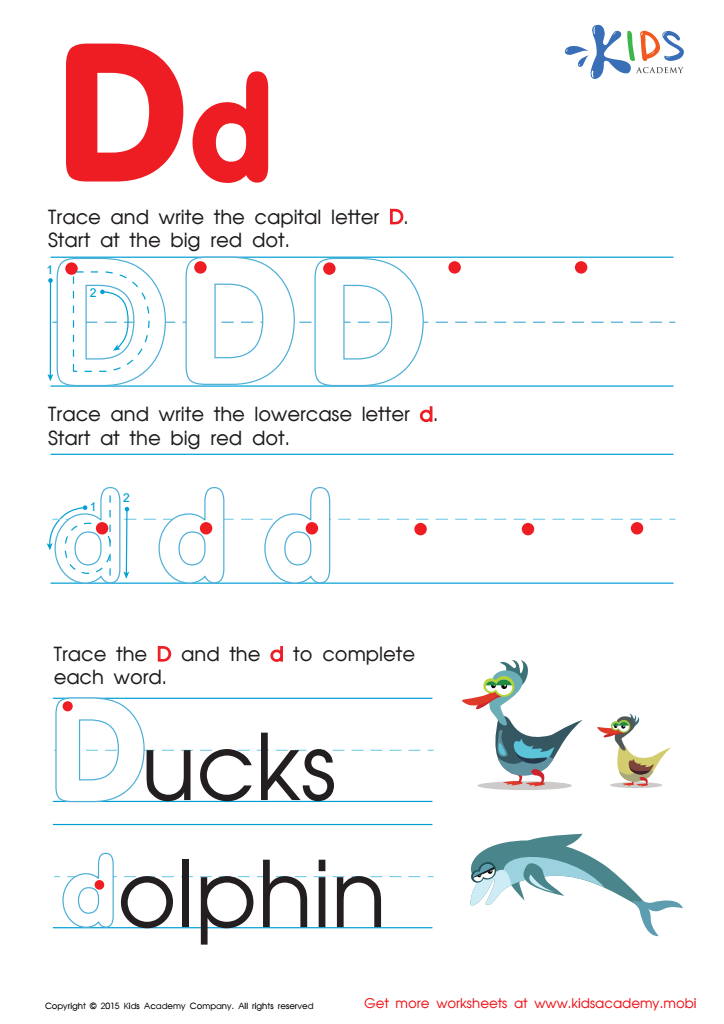
Letter D Tracing Page
Trace and write capital and lowercase letter "D" with our free printable alphabet worksheet! Be careful not to mix up "b" and "d" - just look at the ducks and write their first letter. The dolphin wants to join the fun too - do you like dolphins? Get more fun worksheets and activities at Kids Academy!
Letter D Tracing Page
Worksheet
Join Kids Academy for Free
Who is primarily going to use this learning content?








Letter recognition and understanding the ABC order are foundational skills for young learners aged 4-6. These early literacy skills are crucial as they lay the groundwork for reading and writing. When children can recognize letters, they begin to understand that each letter corresponds to a sound, facilitating phonemic awareness that is vital for decoding words.
Moreover, learning the alphabetical order is integral for organizing information. Children encounter items in a list format in various settings, from libraries to grocery stores. Familiarity with ABC order helps them independently navigate these experiences, fostering confidence and autonomy.
Additionally, mastering letter recognition and order includes social-emotional growth. Engaging in letter-related activities promotes collaboration between parents, teachers, and students, strengthening their bond and encouraging a positive learning environment.
Incorporating these skills into daily routines through playful activities not only makes learning enjoyable but also enhances memory retention. As children progress in their literacy journey, their strong foundation in letter recognition and alphabetical order will enhance their overall academic success. Parents and teachers play a vital role in nurturing these skills, ensuring children are well-prepared for future learning challenges.