Phonological awareness Alphabet Worksheets for Ages 4-6
8 filtered results
-
From - To
Unlock early literacy with our Phonological Awareness Alphabet Worksheets, designed specifically for children aged 4-6! These engaging worksheets help young learners develop crucial phonological skills, such as recognizing sounds, rhymes, and word patterns. With fun and interactive activities, kids will practice letter identification and enhance their listening abilities, laying a strong foundation for reading success. Each worksheet fosters creativity and encourages independent learning through vibrant illustrations and relatable themes. Perfect for home or classroom use, our resources make phonological awareness exciting and enjoyable. Equip your little ones with essential skills and watch their confidence bloom as they embark on their literacy journey!
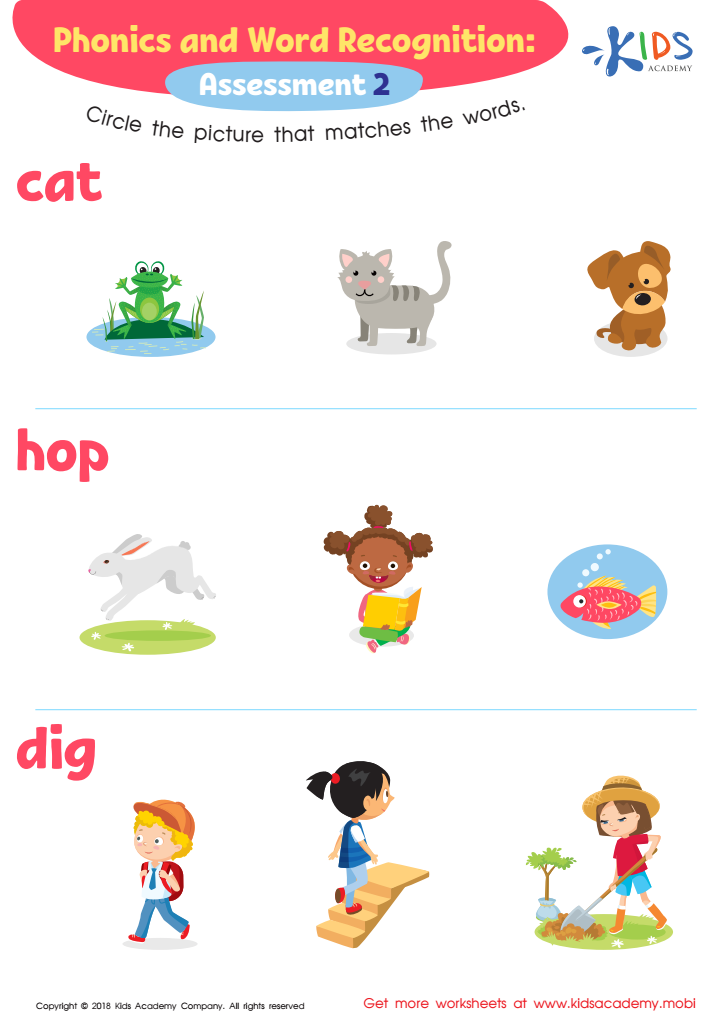
Phonological Awareness: Assessment 2 ELA Worksheet
 Assign to My Students
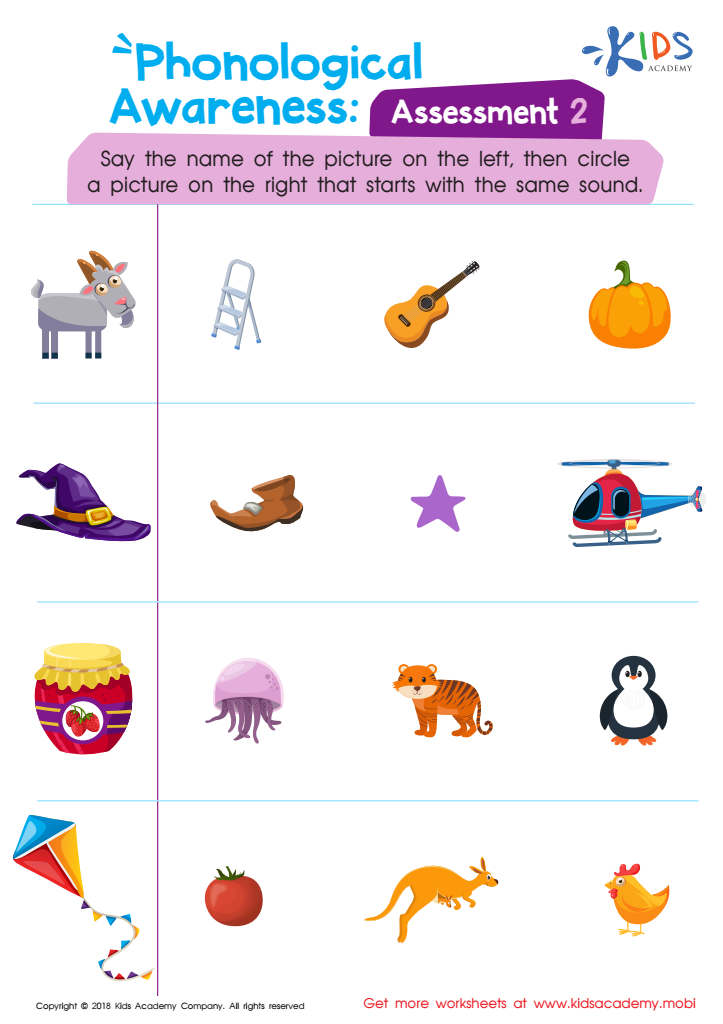
Phonological Awareness: Assessment 2 Worksheet
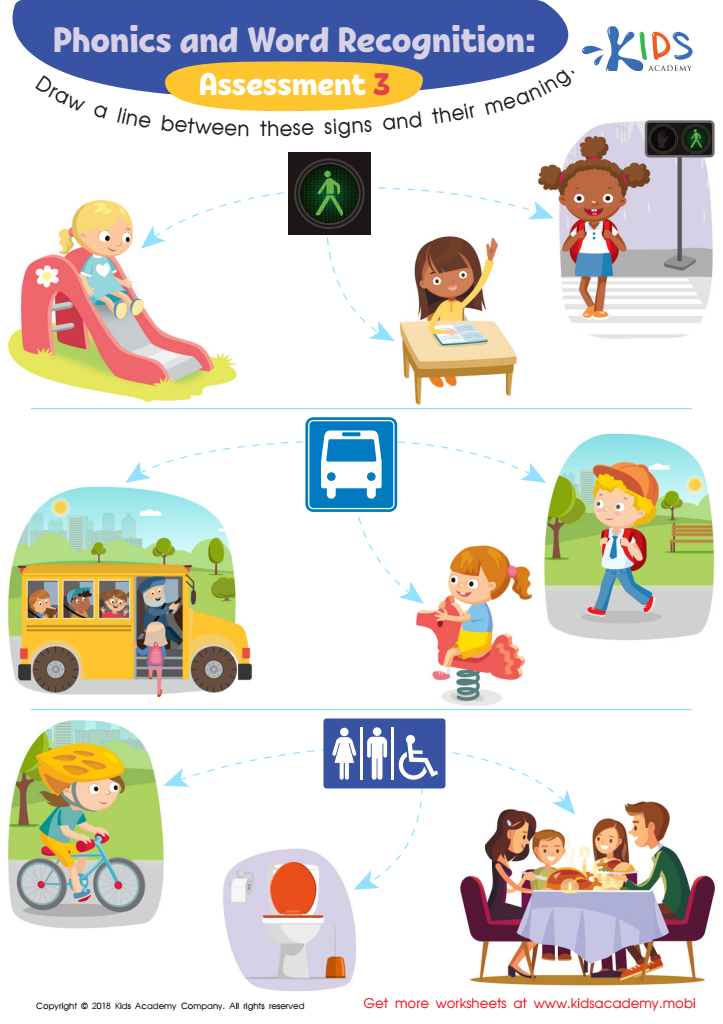
Phonological Awareness: Assessment 3 ELA Worksheet
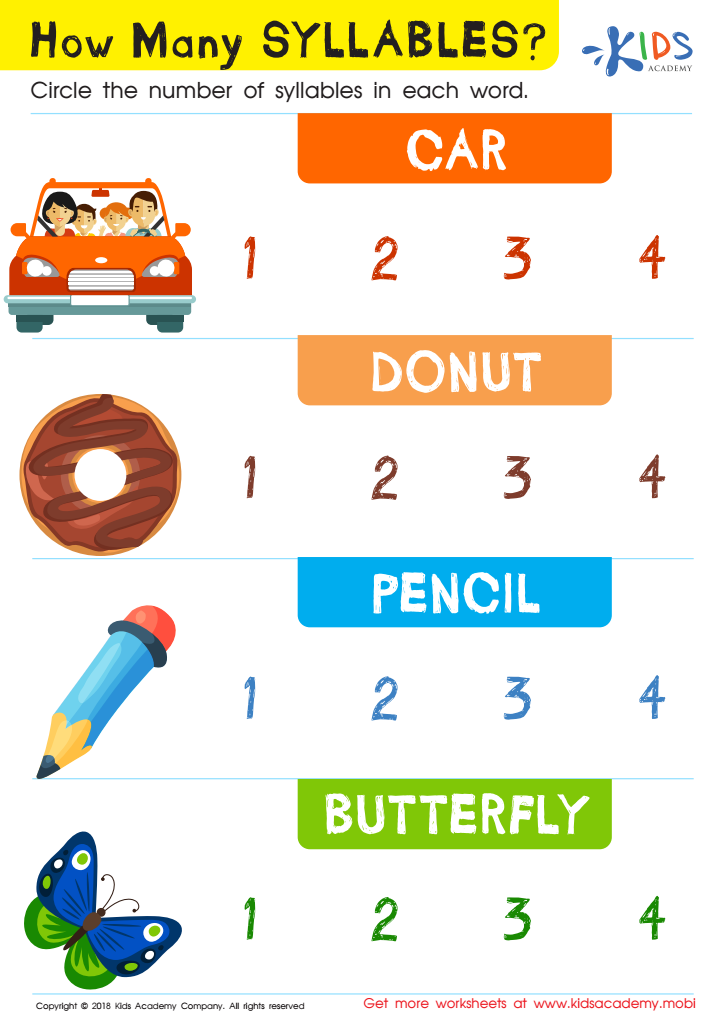
How Many Syllables? Worksheet
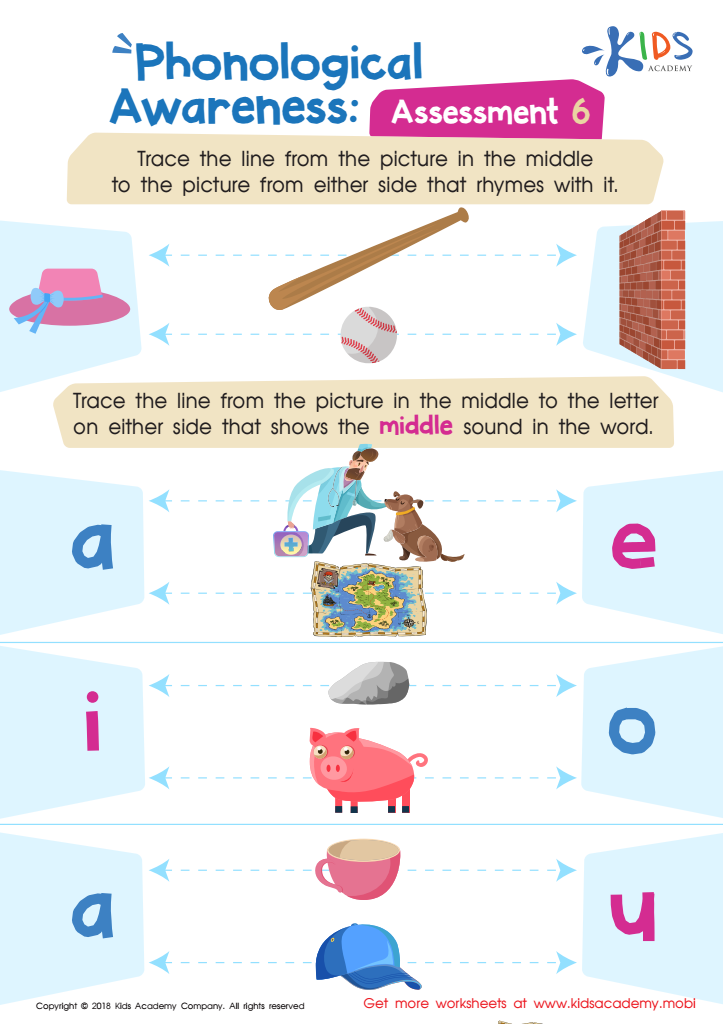
Phonological Awareness: Assessment 6 Worksheet
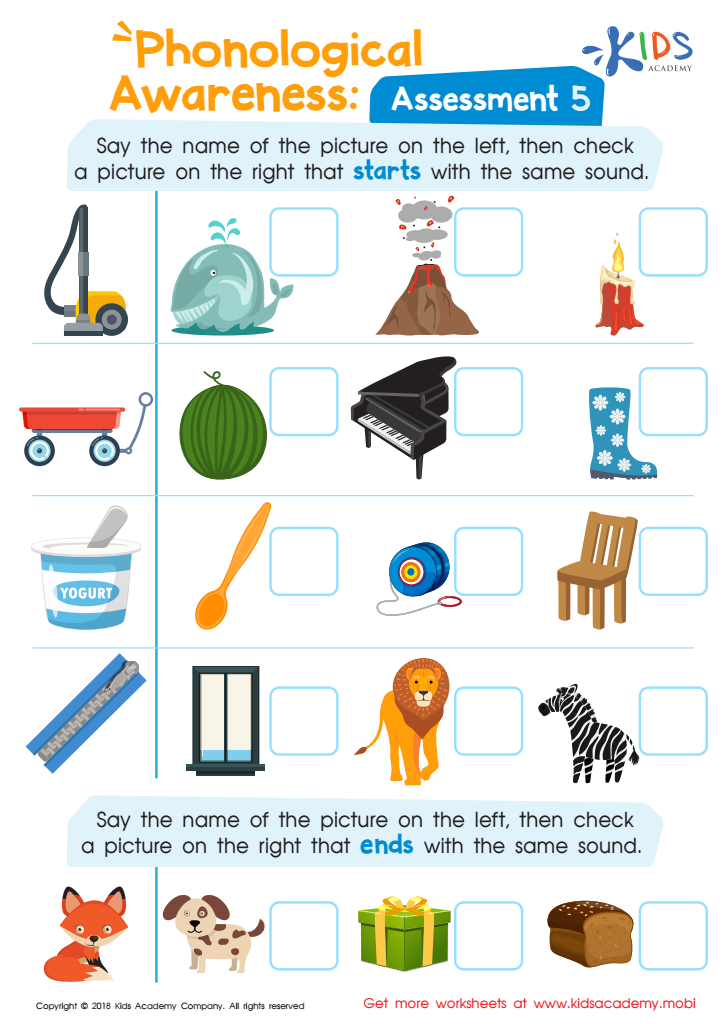
Phonological Awareness: Assessment 5 Worksheet
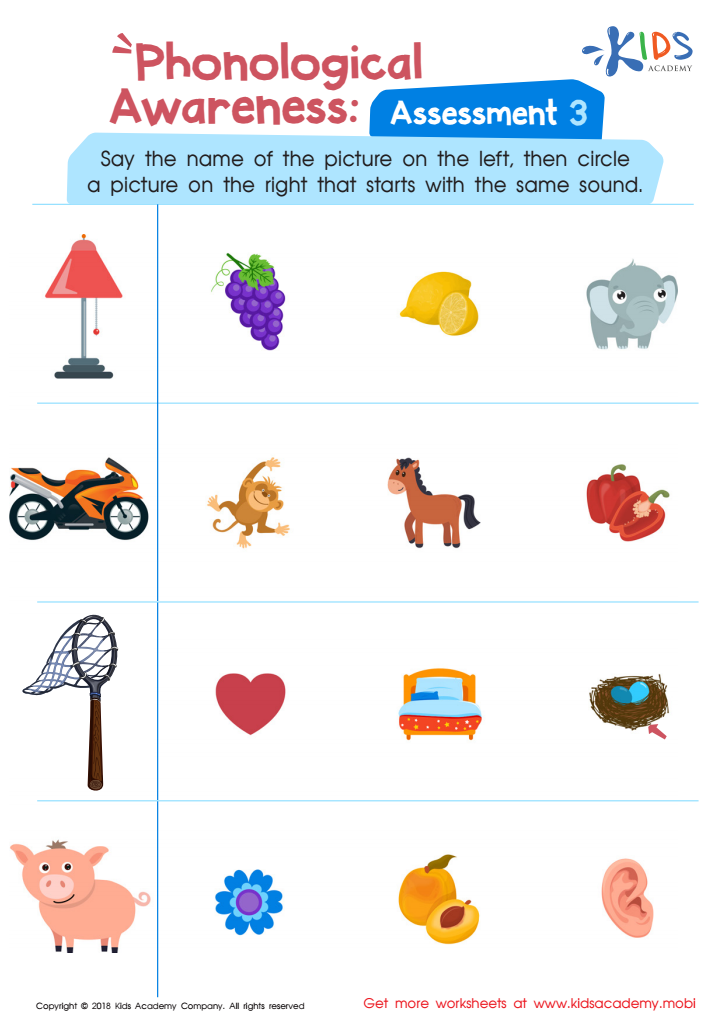
Phonological Awareness: Assessment 3 Worksheet
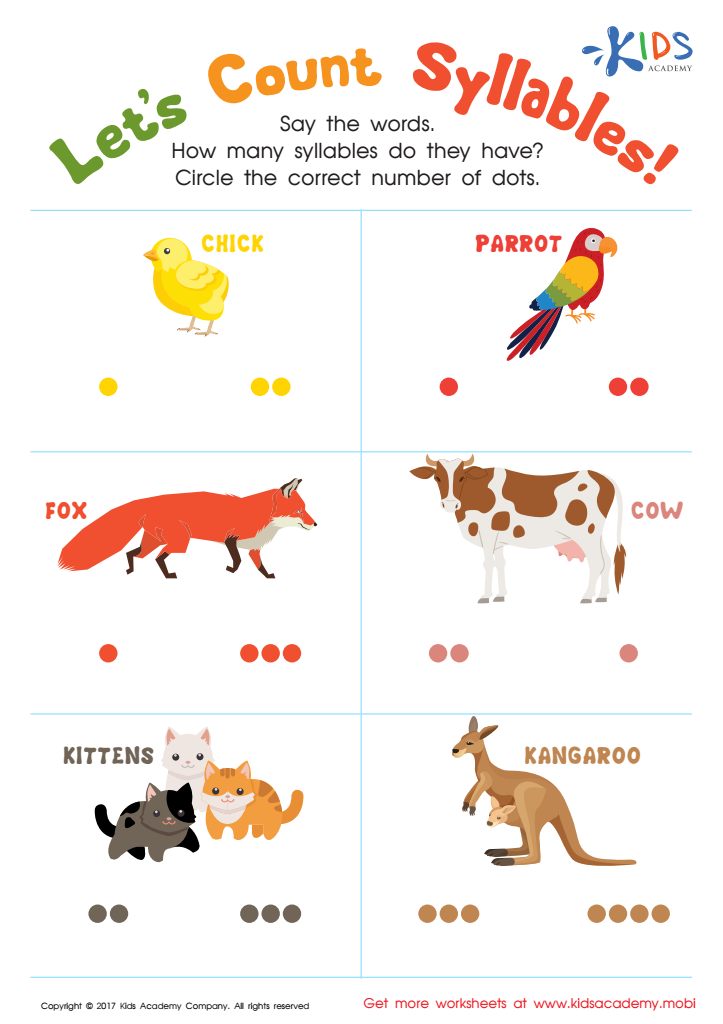
Lets Count Syllables Worksheet








Phonological awareness is a crucial skill for young children, as it lays the foundation for successful reading and writing abilities. For ages 4-6, developing phonological awareness means understanding the sounds in spoken language, which includes recognizing rhymes, syllables, and individual phonemes. Parents and teachers should care about this because it directly influences a child's literacy development.
At this early age, children begin to connect sounds with letters, making it easier for them to decode words as they learn to read. Engaging in activities that promote phonological awareness—like singing songs, playing rhyming games, or reading aloud—can aid in strengthening these skills. These activities not only enhance linguistic proficiency but also foster cognitive development and critical thinking.
Moreover, children who struggle with phonological awareness are more likely to face challenges in learning to read, which can lead to long-term academic difficulties and decreased self-esteem. By focusing on phonological awareness, parents and teachers can create a rich language environment that supports literacy success and encourages enthusiasm for learning. Ultimately, investing in these foundational skills is essential for helping children develop strong communication abilities and lifelong learning habits.







