Letter-sound recognition Phonics Worksheets for Ages 4-6
4 filtered results
-
From - To
Discover engaging letter-sound recognition phonics worksheets designed specifically for ages 4-6. These educational resources from Kids Academy help young learners master the foundational skills of phonics, enabling them to connect letters with their corresponding sounds effectively. Featuring a variety of fun and interactive activities, the worksheets are perfect for developing early literacy skills in a playful and informative way. Each worksheet promotes letter recognition, sound identification, and early reading, ensuring your child has a head start in their educational journey. Ideal for both classroom and home use, these printable activities make learning phonics enjoyable and accessible.
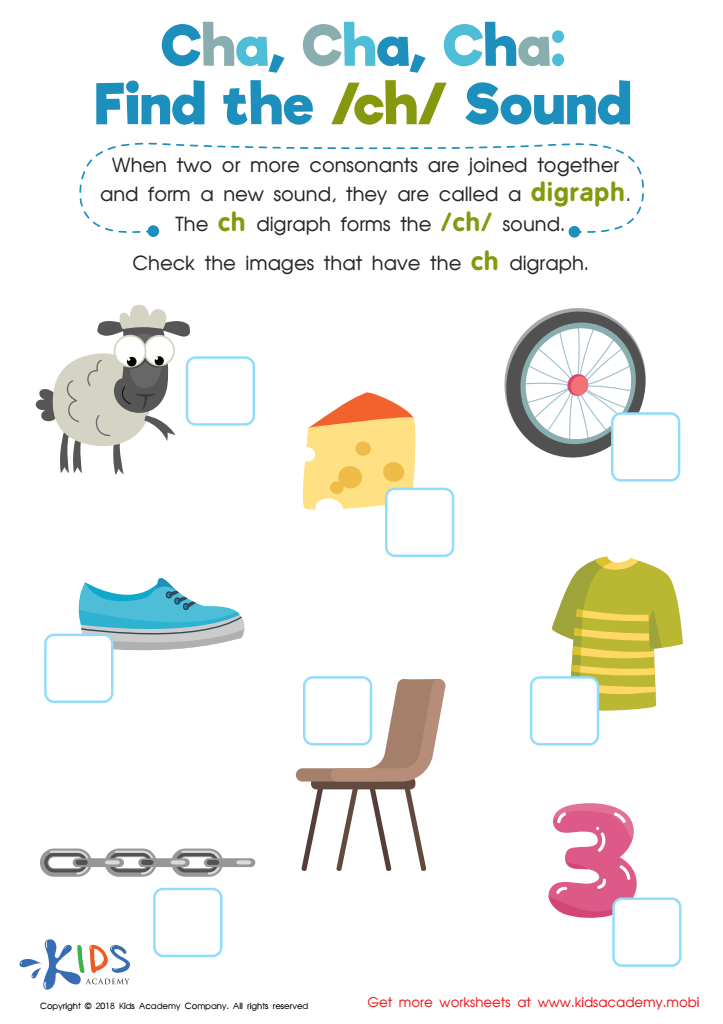
Cha, Cha, Cha: Find the /Ch/ Sound Worksheet
 Assign to My Students
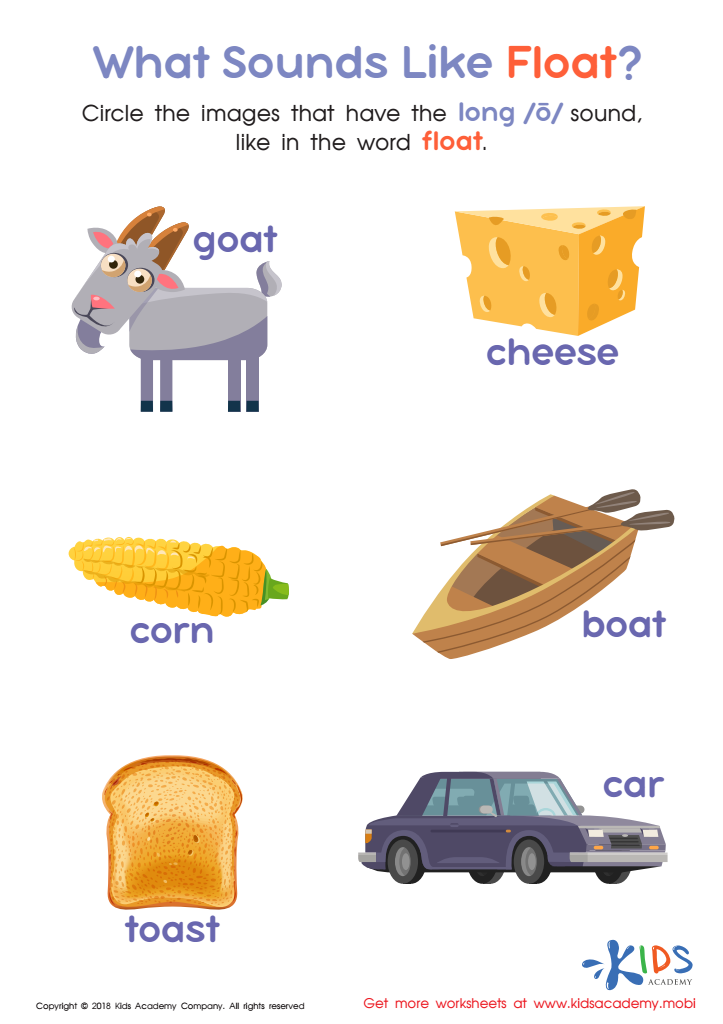
What Sounds Like Float? Worksheet
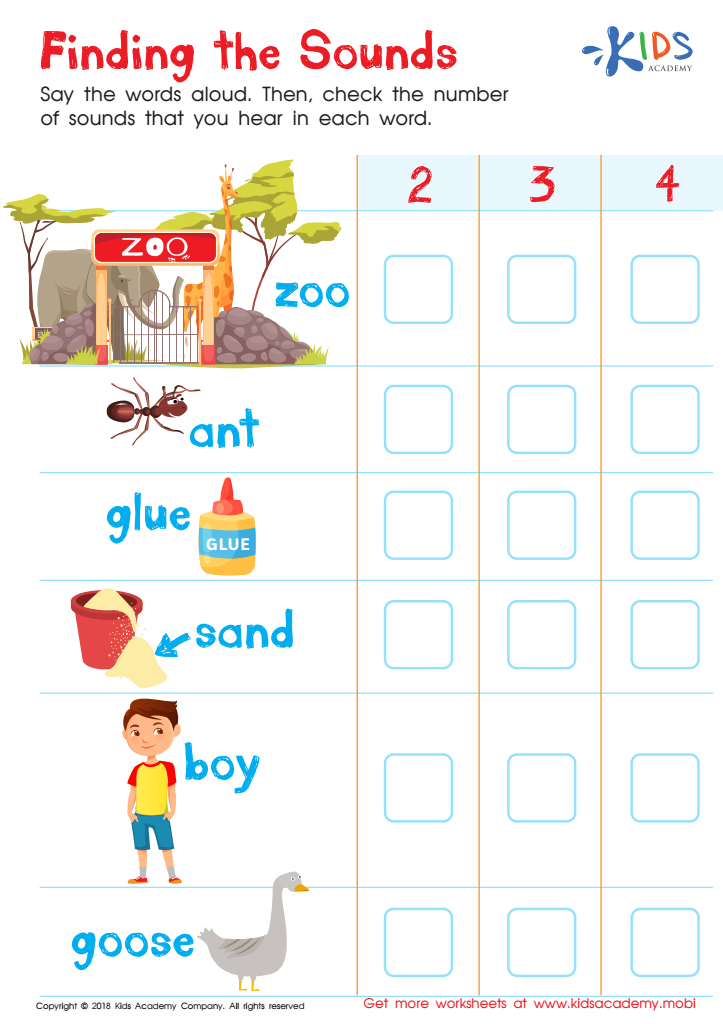
Finding the Sounds Worksheet
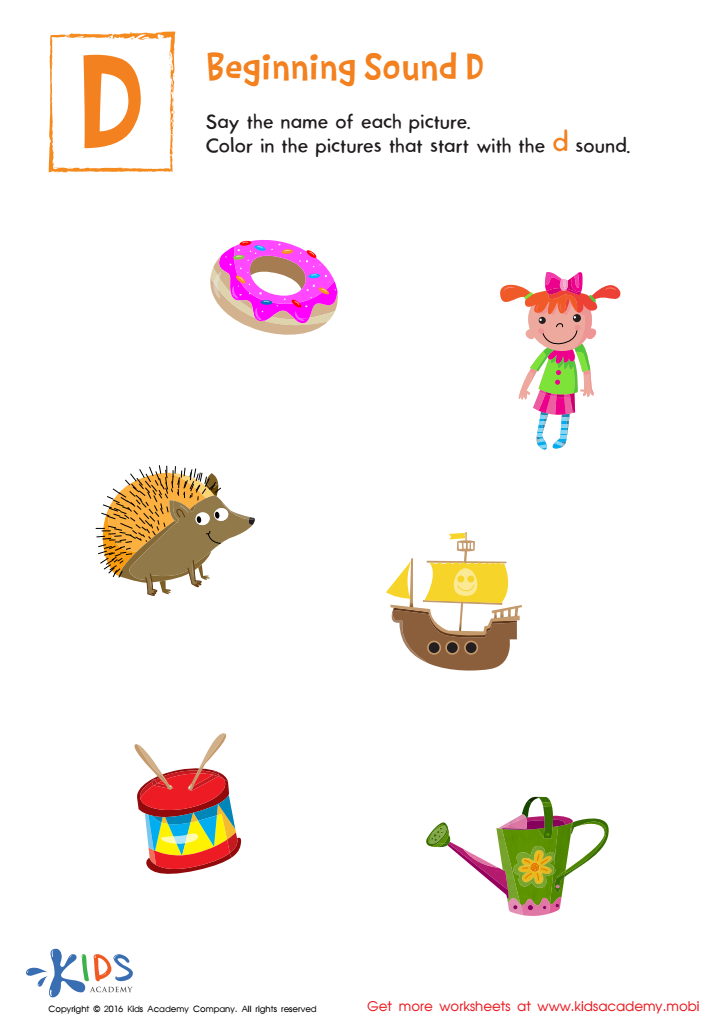
Beginning Sound D Worksheet








Letter-sound recognition and phonics are critical building blocks in early literacy, forming the foundation for reading and writing. For children ages 4-6, mastering these skills opens the door to a lifetime of learning and communication.
Firstly, phonics teaches children to connect letters with their corresponding sounds (phonemes). This understanding is vital for decoding new words, enabling young readers to approach unfamiliar text with confidence. As children's literacy advances, this skill becomes essential for spelling and understanding increasingly complex words.
Secondly, letter-sound recognition promotes phonemic awareness—the ability to hear, identify, and manipulate different sounds in words. This awareness is a core component of effective reading instruction and is linked to early success in reading comprehension. Children who grasp phonemic concepts early can more easily predict and recognize words in varied contexts, contributing to smoother and more fluent reading.
Additionally, consistent engagement with phonics helps reinforce memory and cognitive development. By repeatedly identifying and practicing letter sounds, children strengthen their memory and attention spans, skills that benefit all areas of learning.
In short, parents and teachers should emphasize letter-sound recognition and phonics because these skills form the foundation for proficient reading and writing. Cultivating these abilities early in a child's education fosters long-term academic success and a lifelong love of reading.







