Filters

8 filtered results

Clear all filters
Favorites
With answer key
Interactive

8 filtered results

Difficulty Level

Grade


Welcome to our Phonics Skills Short Vowels Worksheets for Ages 4-6! Designed to enhance your child's literacy foundation, these engaging worksheets focus on short vowel sounds essential for early reading success. Ideal for preschool and kindergarten learners, each activity is crafted to make phonics fun and interactive. Through colorful exercises and word recognition tasks, children will develop essential skills that boost their confidence in reading and writing. Our easy-to-use format allows parents and educators to seamlessly integrate these exercises into daily learning routines. Explore our collection and help your child master short vowels, setting them on the path to reading proficiency!

Check out this FREE Trial Lesson on Short Vowels for age 4-6!

The Short I Sound

Favorites
With answer key
Interactive
  • 4-6
  • Phonics Skills
  • Short Vowels
The Short I Words Reading Worksheet

The Short I Words Reading Worksheet

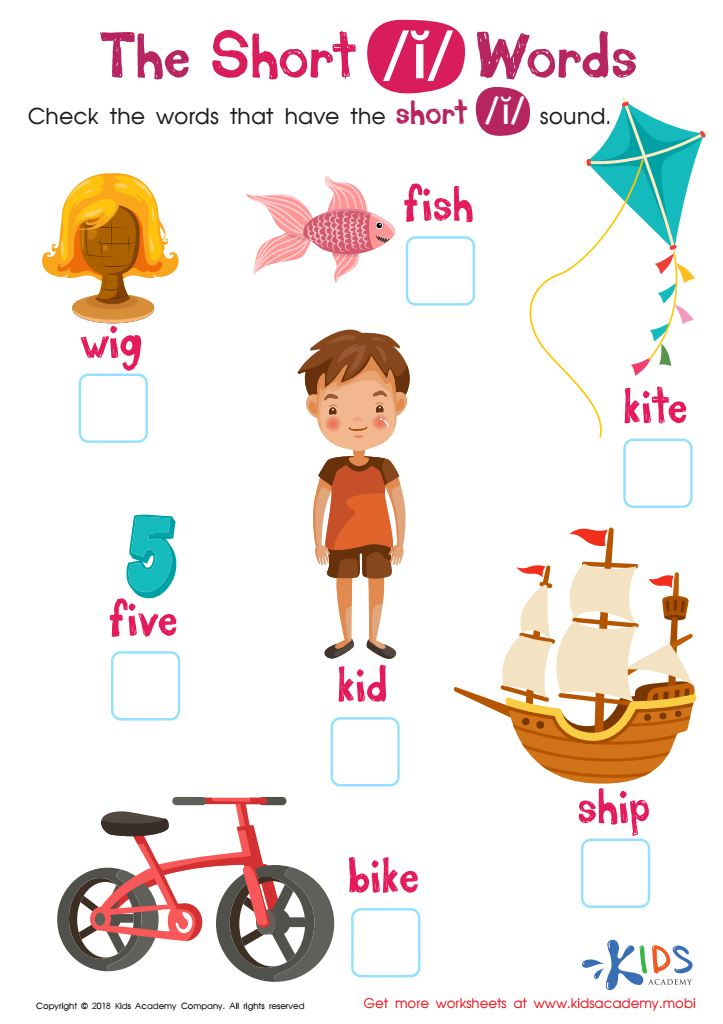
Teach your kindergartner phonics with this printout worksheet! It introduces the short «i» sound and helps them differentiate and articulate sounds and letters of the alphabet. With practice, your child will soon find it easy to classify sounds into long and short vowels.
The Short I Words Reading Worksheet
Worksheet
Phonics for Kids | Short Vowel Sound U | PDF Worksheet 1

Short Vowel Sound U Worksheet Worksheet
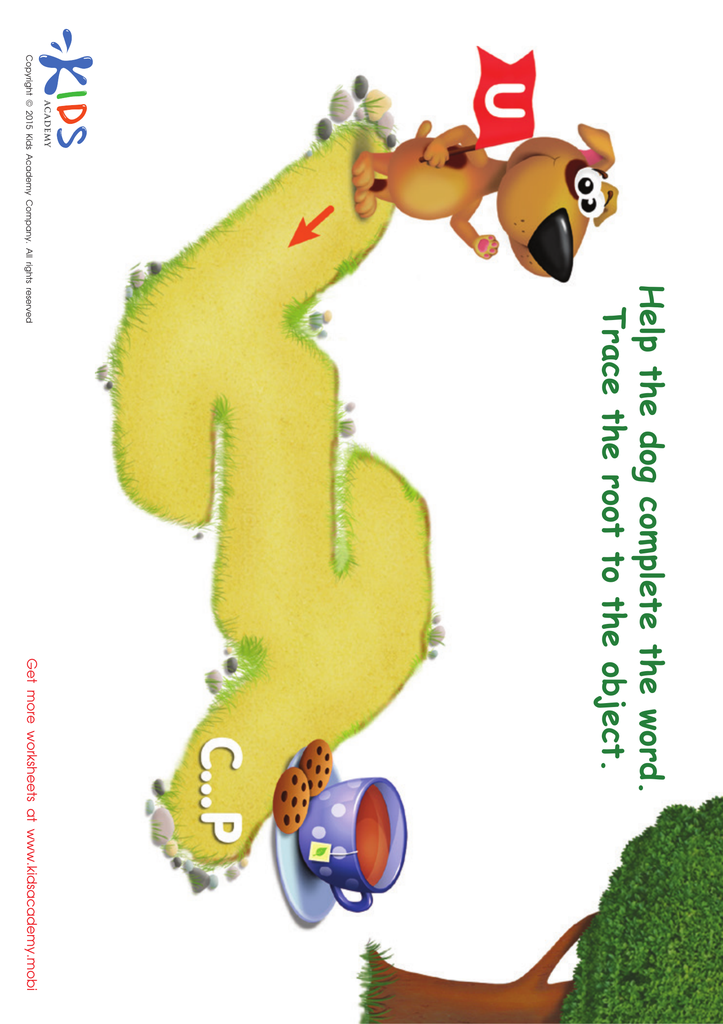
Help your early reader join the adorable dog on his way to the cup of tea with cookies. This traceable worksheet reinforces the short -u sound and strengthens fine motor skills. Kids don't realize they are practicing reading skills while having fun!
Short Vowel Sound U Worksheet Worksheet
Worksheet
Short Vowels /e/, /i/, and /u/ Worksheet

Short Vowels /e/, /i/, and /u/ Worksheet

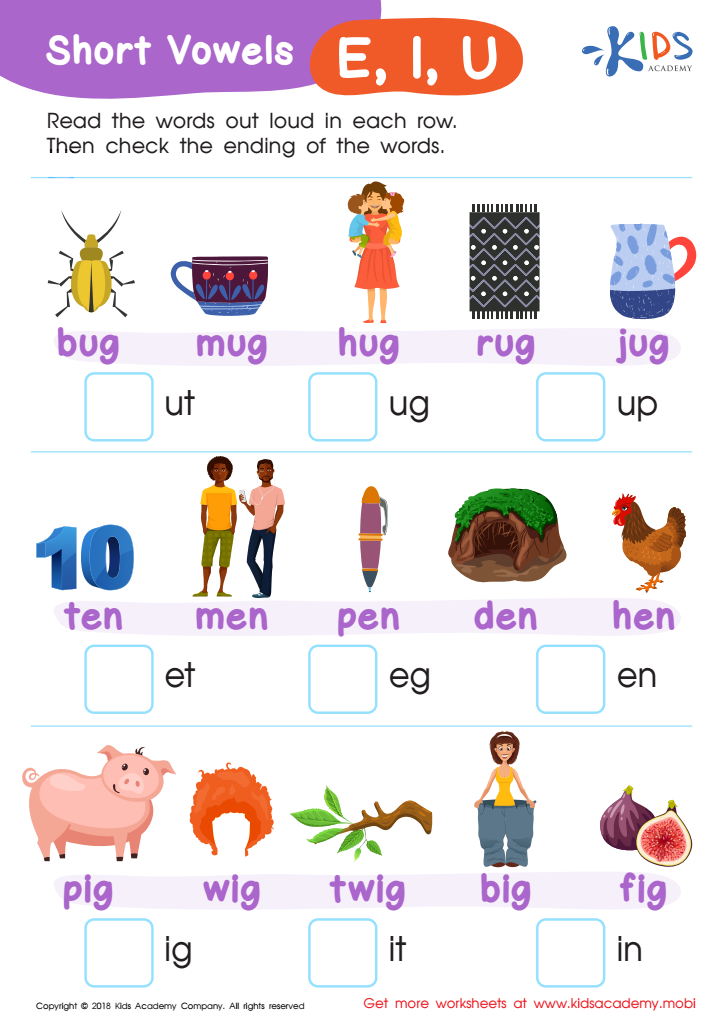
Your emergent reader can have fun while practicing their short vowel sounds with this free, brightly colored worksheet. They'll identify one-syllable words by their pictures, then match the correct ending for each. They'll gain an understanding of how short vowel sounds vary in closed syllables with different endings, without even realizing it!
Short Vowels /e/, /i/, and /u/ Worksheet
Worksheet
Long or Short Reading Worksheet

Long or Short Reading Worksheet

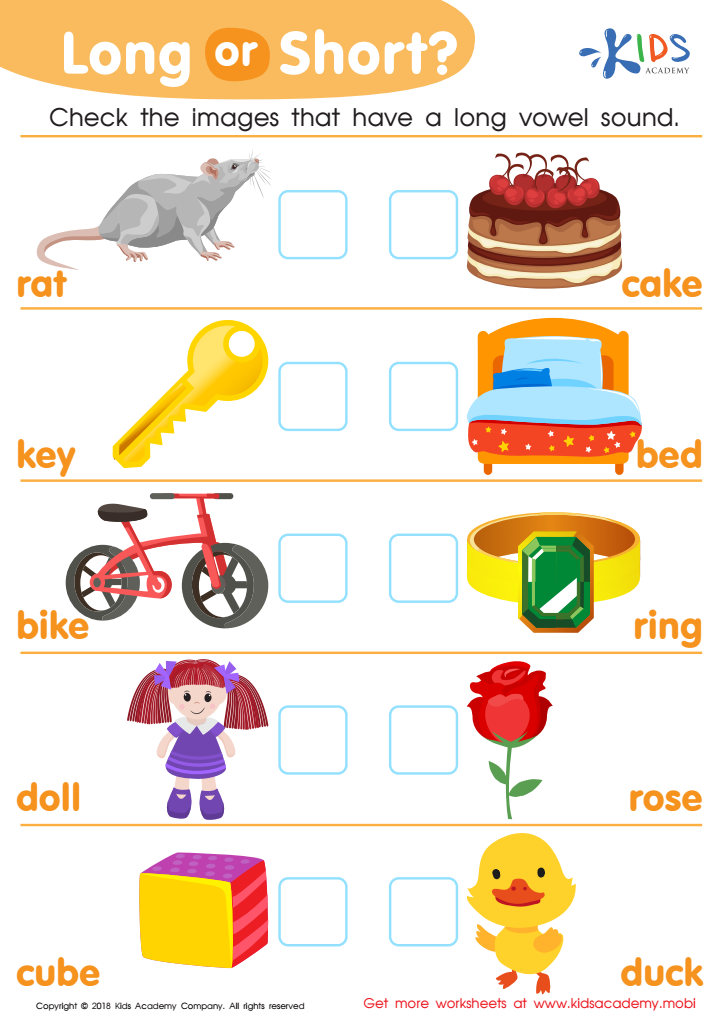
Every new reader needs to learn to recognize long and short vowel sounds. This phonics worksheet uses pictures of high-frequency words to help. Kids read the words and then check off images with long vowel sounds. It helps them learn to decode words and improves fine motor skills.
Long or Short Reading Worksheet
Worksheet
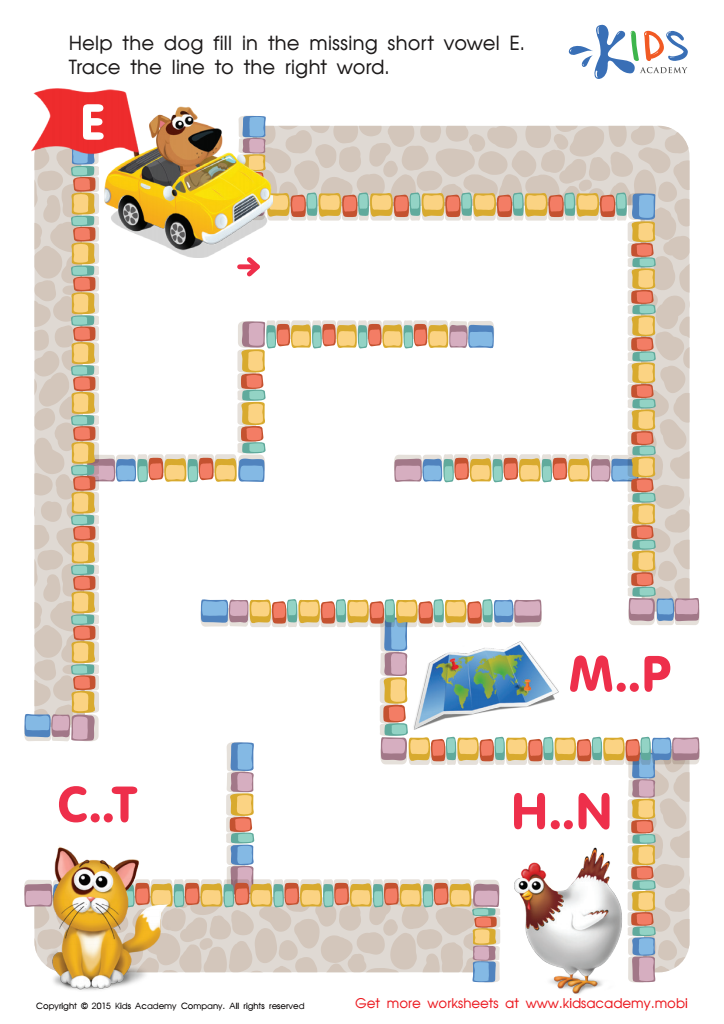
Phonics for Kids | Short Vowel Sound E | PDF Worksheet 1

Short Vowel Sound E Worksheet

This free printable phonics worksheet helps kids learn the short vowel sound E. Kids need to help the dog complete the word “hen” by finding their way through a maze. It teaches kids to see the connection between letters and sounds and also strengthens their writing and spelling skills. Fun and educational, this phonics worksheet is great for kids. Want more? Check out here.
Short Vowel Sound E Worksheet
Worksheet
Phonics for Kids | Short Vowel Sound O | PDF Worksheet 1

Short Vowel Sound O Worksheet

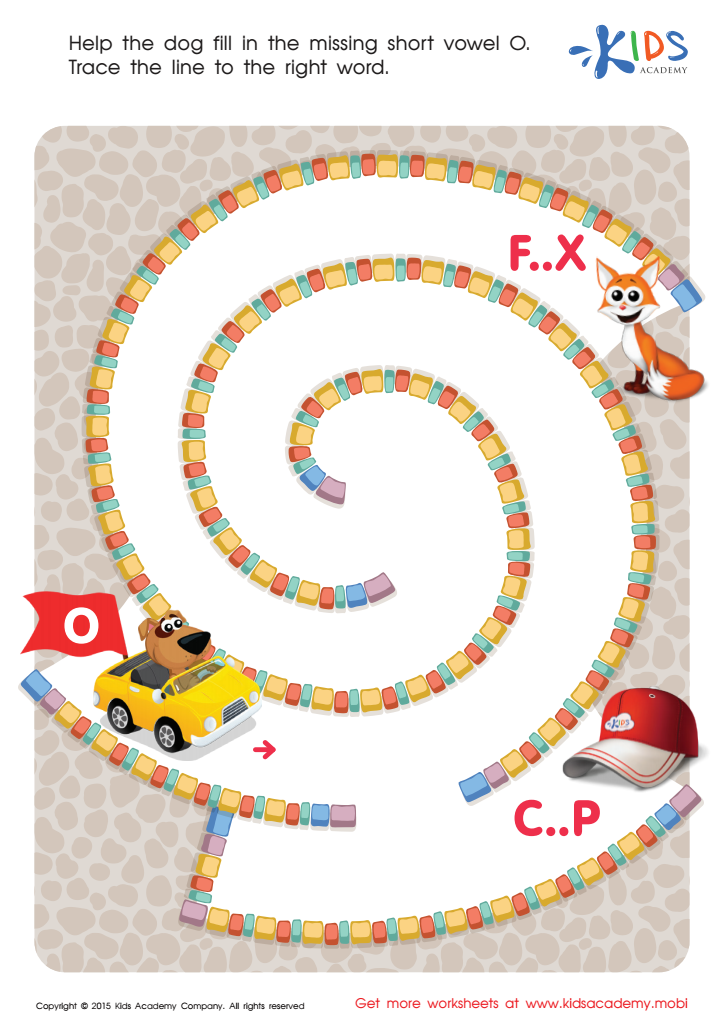
Help your child learn the short vowel sound O with this fun and free printable phonics worksheet! They'll need to complete the maze to help the dog finish the word "fox" with the missing letter O. Engage their fine motor muscles while they color or trace the maze with crayon or pencil. This educational activity is sure to bring a smile to your little learner's face! For more phonics worksheets, check here.
Short Vowel Sound O Worksheet
Worksheet
Long and Short Vowel Sentences: Assessment Worksheet


Long and Short Vowel Sentences: Assessment Worksheet

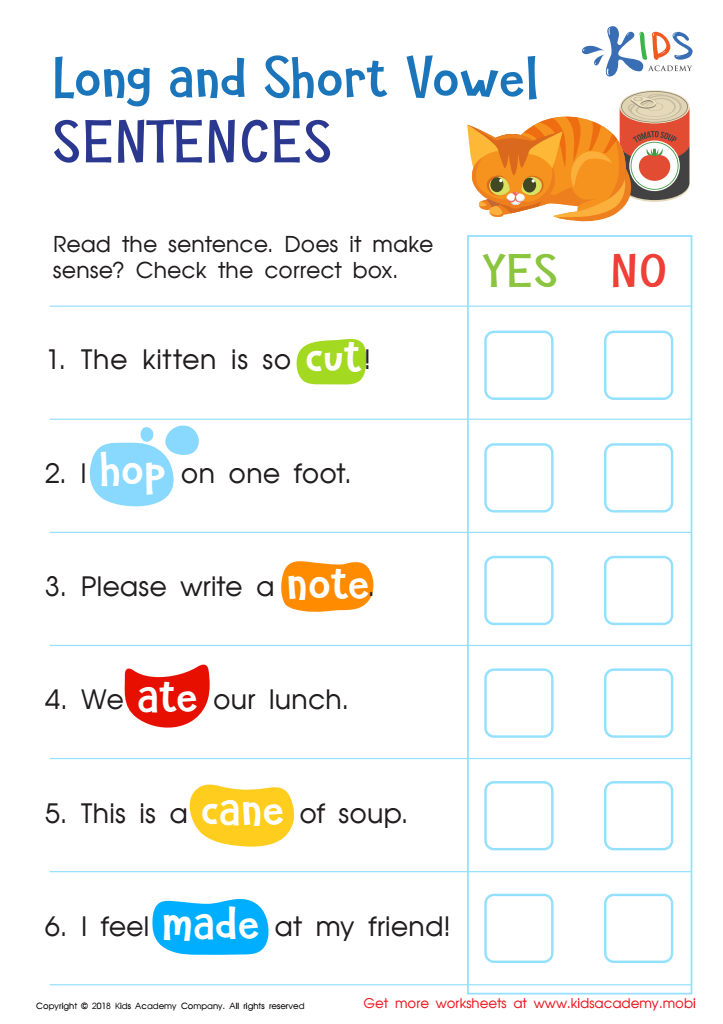
This printable worksheet helps kids practice differentiating between short and long vowel sounds. They'll use context clues to figure out which words make sense in simple sentences. A great way to build reading and writing skills!
Long and Short Vowel Sentences: Assessment Worksheet
Worksheet
Long and Short E Worksheet

Long and Short E Worksheet

This fun printout makes learning phonics enjoyable for Grade 3 students. Get them to read the words “tree” and “bed” to recognize the different sounds of the letter “E”. After hearing the words they can color the words and the pictures to understand differences between long and short vowels.
Download (PDF)
Assign to My Students
Long and Short E Worksheet
Worksheet


Phonics skills, particularly short vowel recognition, are crucial for children aged 4-6 as they form the foundation for reading and writing. Short vowels (a, e, i, o, u) are common sounds in numerous words, making their mastery essential for early literacy development. When children understand the sounds associated with short vowels, they gain the ability to decode simple words, enhancing their reading fluency and comprehension.

Teaching short vowels benefits children's phonemic awareness, allowing them to blend, segment, and manipulate sounds more effectively. These skills directly contribute to spelling and writing as children learn to apply their understanding of vowel sounds to form words correctly. Additionally, a solid grasp of short vowels fosters confidence in young learners, motivating them to explore reading materials independently.

Parents and teachers play a pivotal role in implementing engaging phonics activities, such as singing vowel songs, playing games, or using flashcards. By prioritizing short vowel instruction, they can support children's literacy journey, set them up for academic success, and instill a lifelong love for reading. Thus, nurturing phonics skills, specifically short vowels, is a fundamental element of early education that parents and teachers should actively promote.