Check out this FREE "Animal recognition" Trial Lesson for age 4-6!

Farm Animals and Pets

Favorites
With answer key
Interactive
  • 4-6
  • Animal recognition
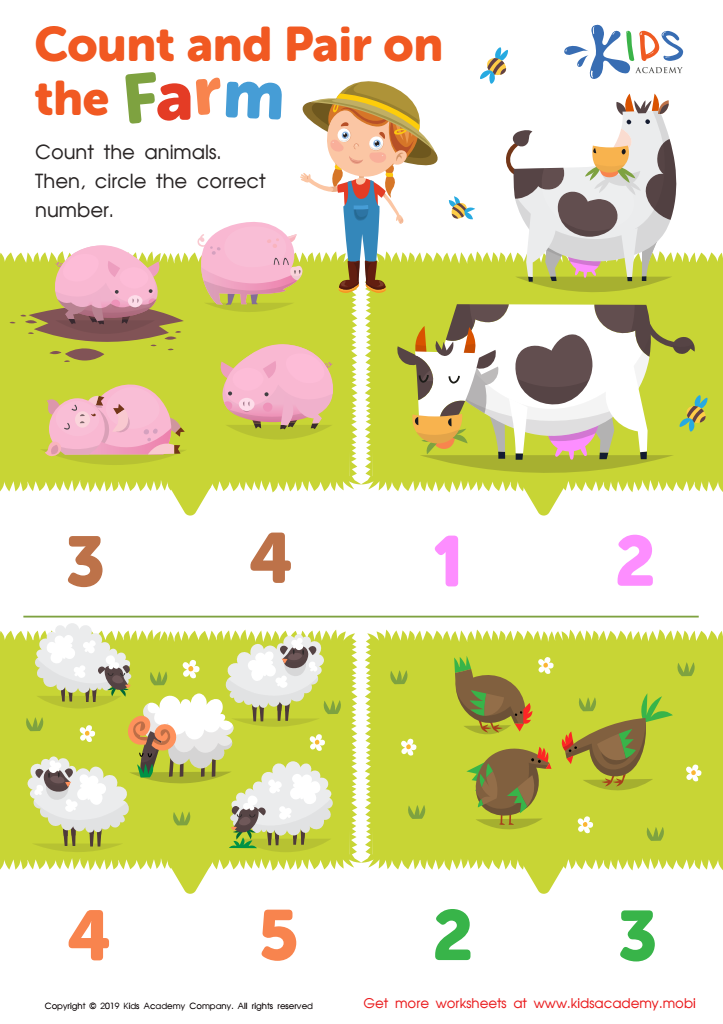
Count and Pair on the Farm Worksheet

Count and Pair on the Farm Worksheet

Farms are essential to our society: they grow food and crops, and raise animals for us to use. Kids can have a great time at a farm, engaging in activities like identifying animals, counting them, and circling the correct number. On this worksheet, ask your kids to try all three!
Count and Pair on the Farm Worksheet
Worksheet
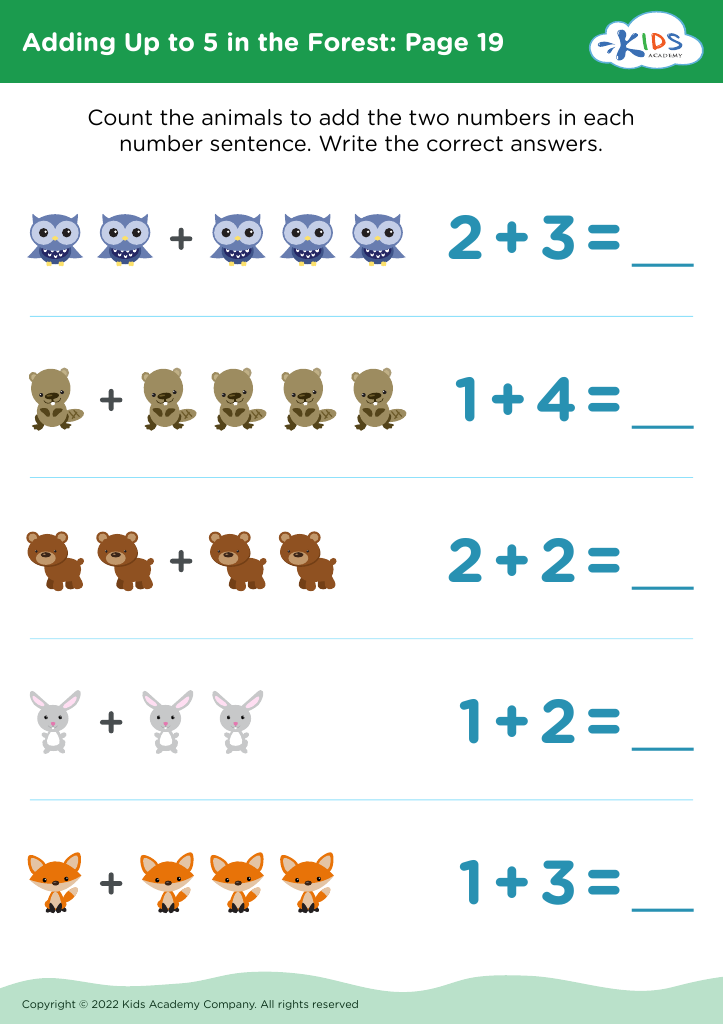
Adding Up to 5 in the Forest: Page 19
Worksheet
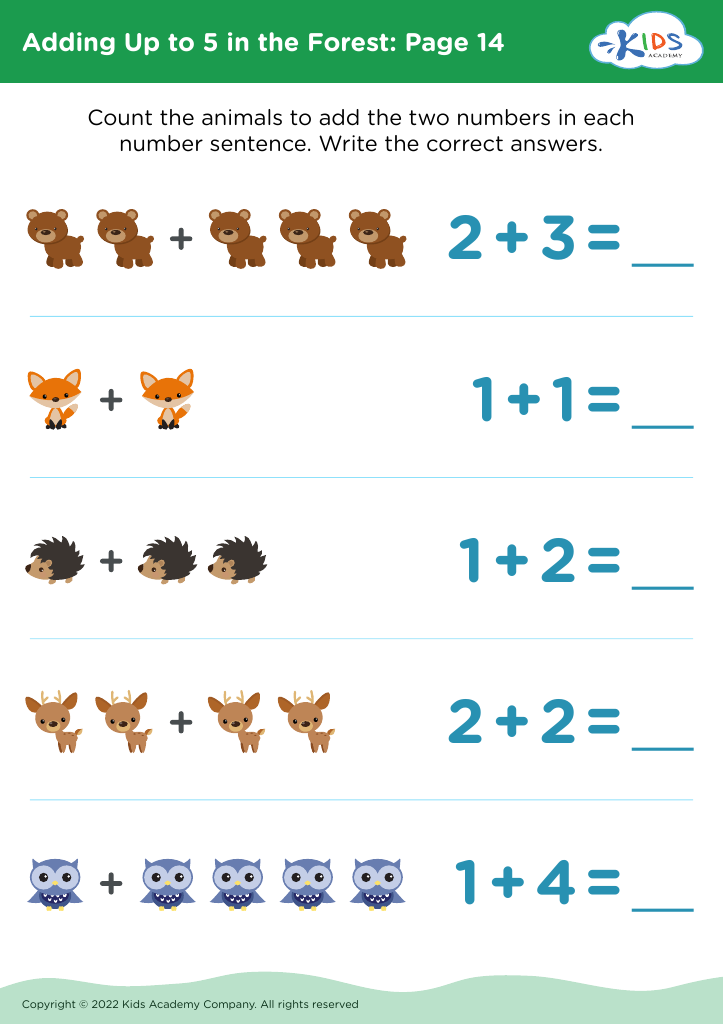
Adding Up to 5 in the Forest: Page 14
Worksheet
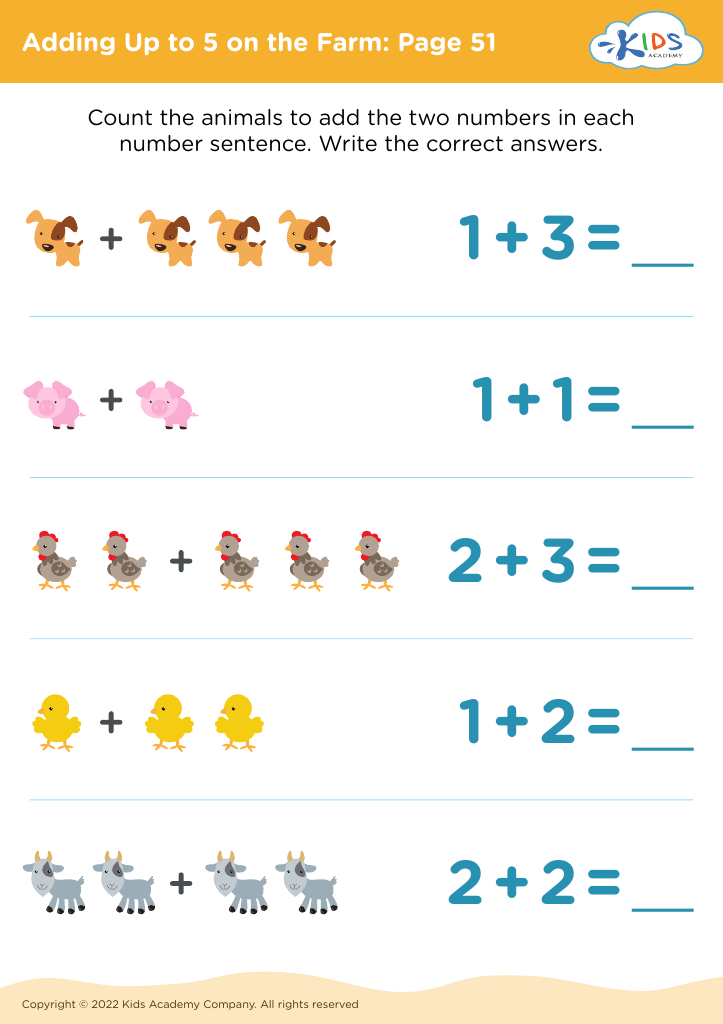
Adding Up to 5 on the Farm: Page 51
Worksheet
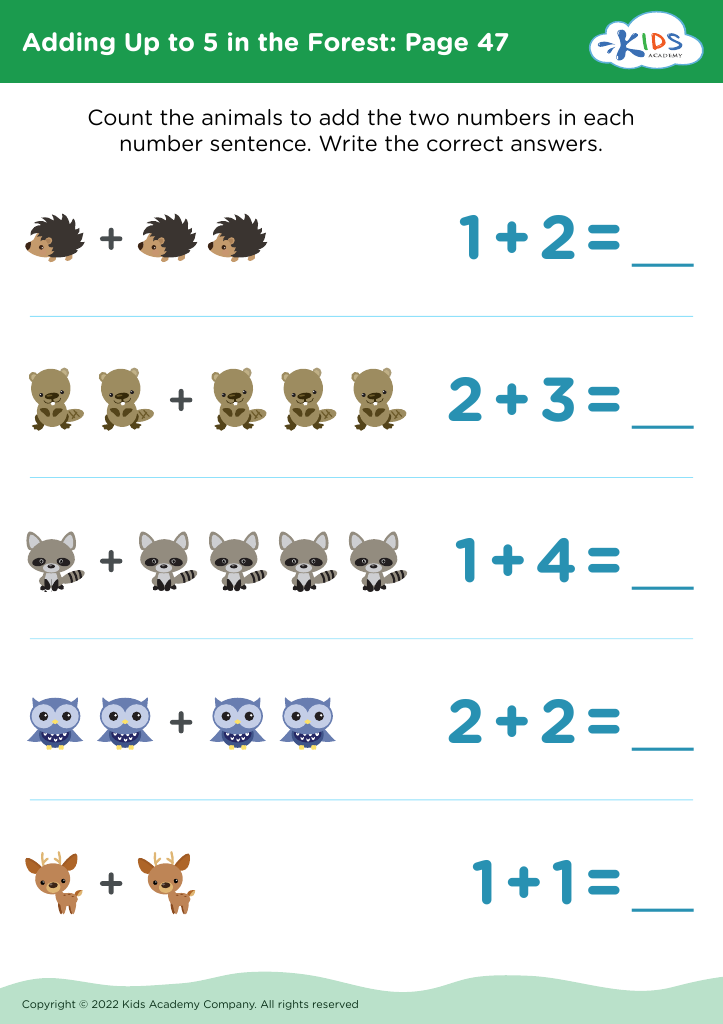
Adding Up to 5 in the Forest: Page 47
Worksheet
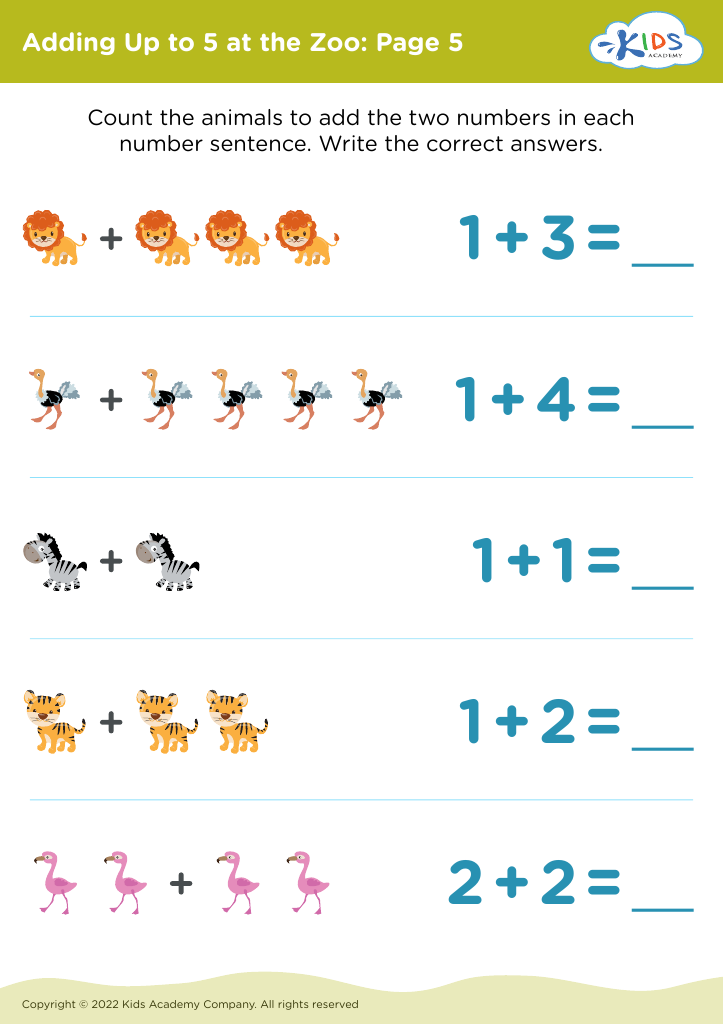
Adding Up to 5 at the Zoo: Page 5

Adding Up to 5 at the Zoo: Page 5

Adding Up to 5 at the Zoo: Page 5
Worksheet
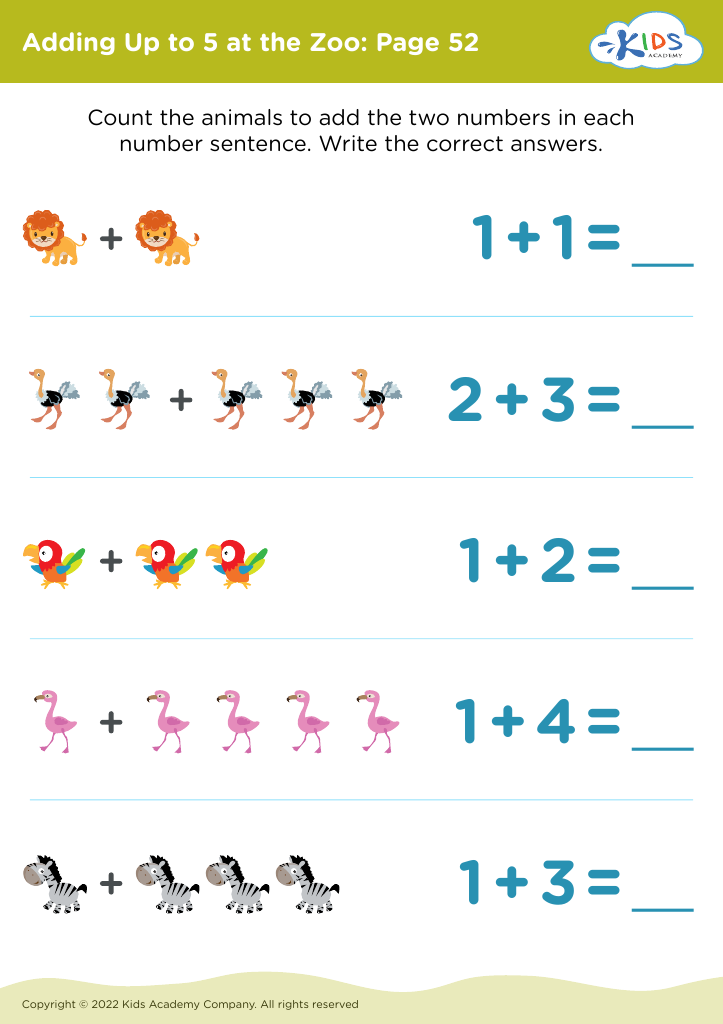
Adding Up to 5 at the Zoo: Page 52
Worksheet
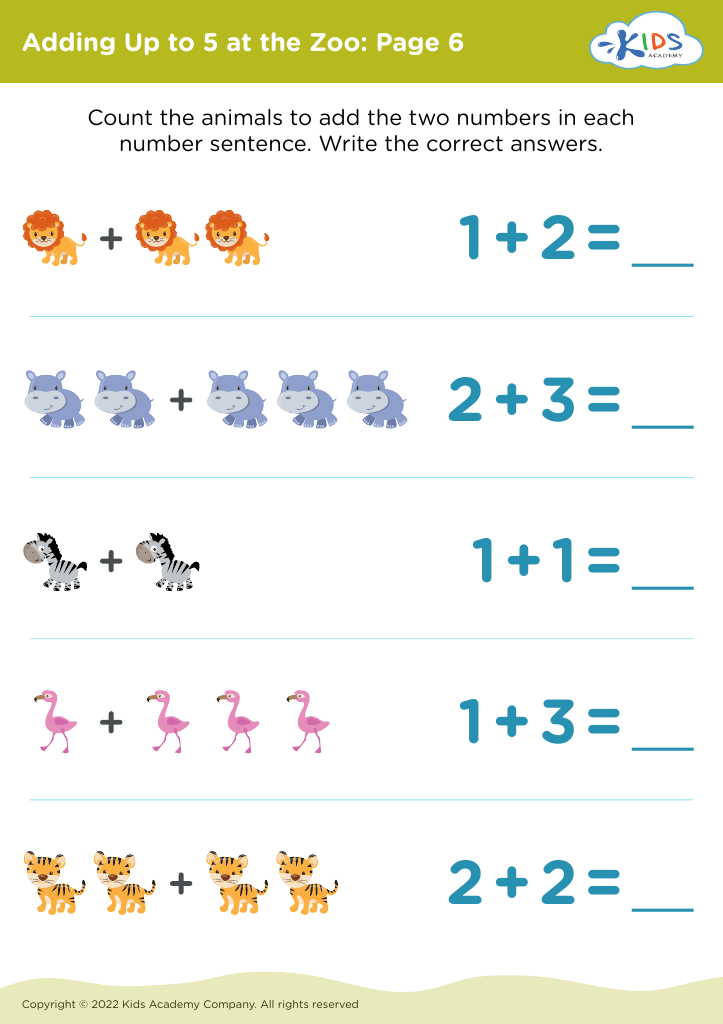
Adding Up to 5 at the Zoo: Page 6

Adding Up to 5 at the Zoo: Page 6

Adding Up to 5 at the Zoo: Page 6
Worksheet
Animals of Amazon Worksheet

Animals of Amazon Worksheet

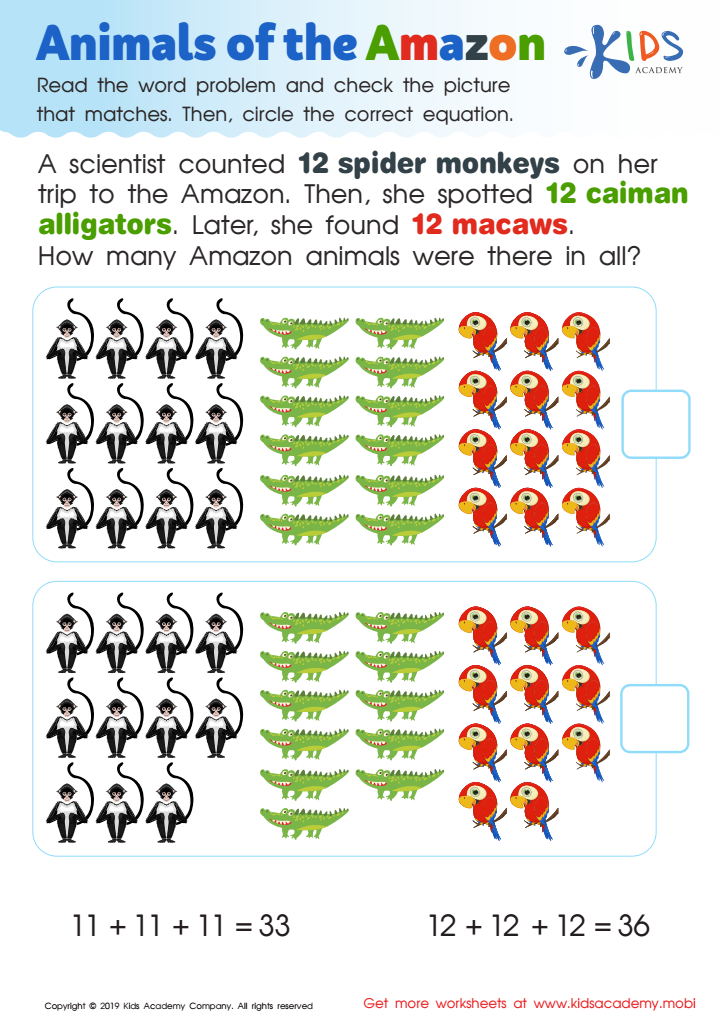
Kids will love exploring the Amazon while solving addition problems on this colorful PDF worksheet. They need to pay attention to the bolded info in each word problem to figure out the equation picture that matches. It's an exciting way to learn about the Amazon and practice adding multiple numbers!
Animals of Amazon Worksheet
Worksheet
Australian Animal Subtraction Worksheet
Australian Animal Subtraction Worksheet
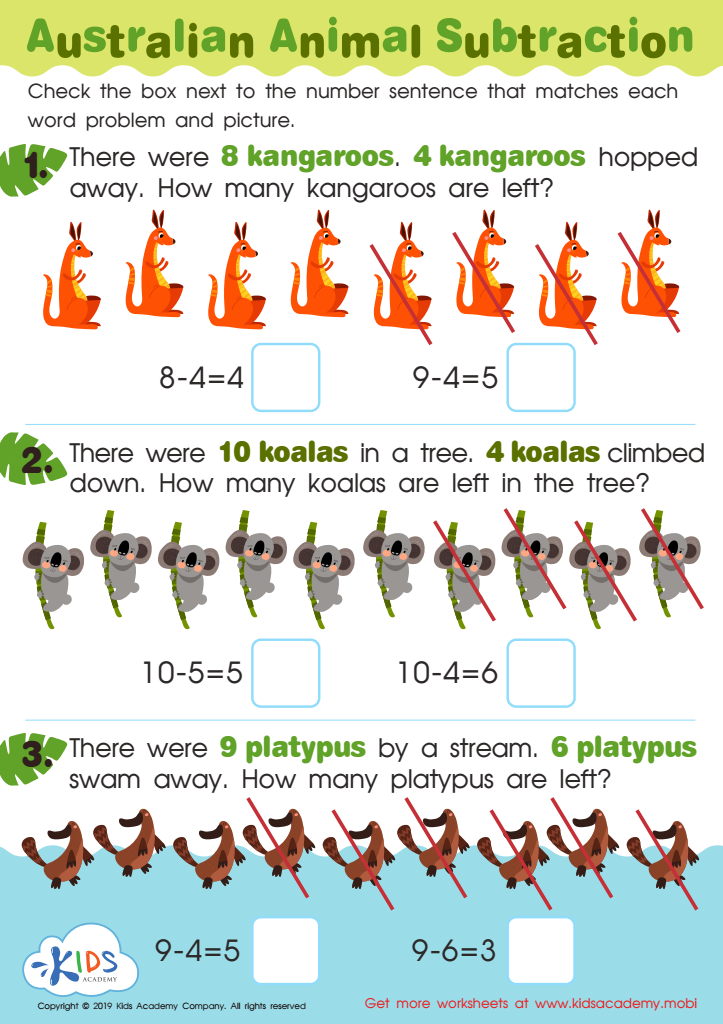
Test your child's wildlife knowledge. Ask them to name animals indigenous to Australia or other countries. Show them the animals in this worksheet and have them match each word problem and picture with the correct number sentence.
Australian Animal Subtraction Worksheet
Worksheet
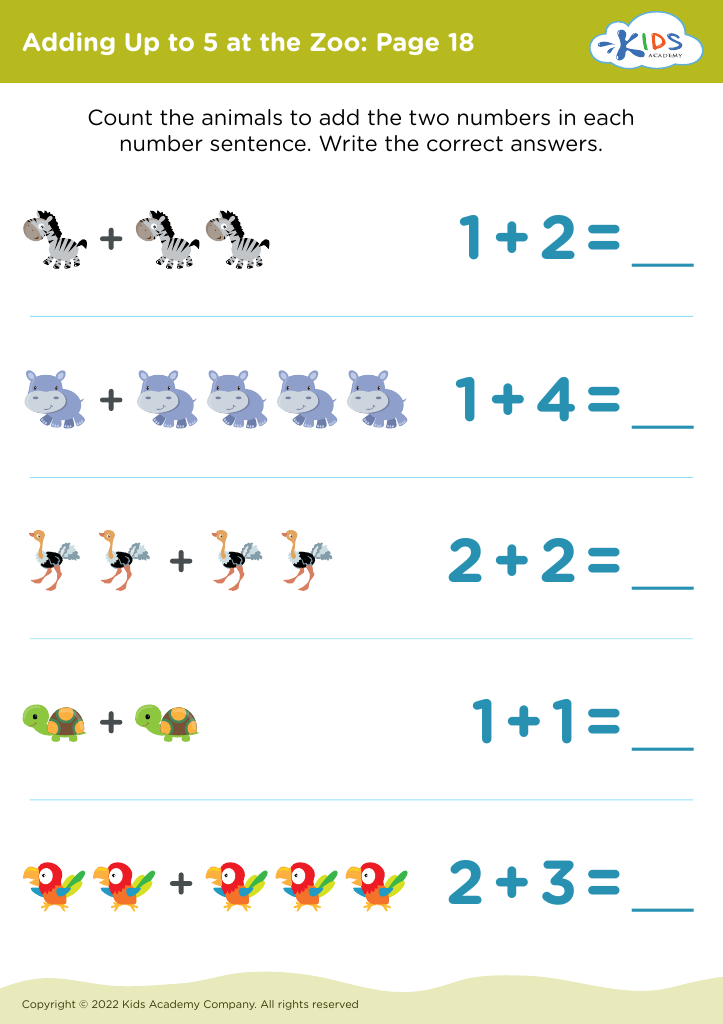
Adding Up to 5 at the Zoo: Page 18
Worksheet
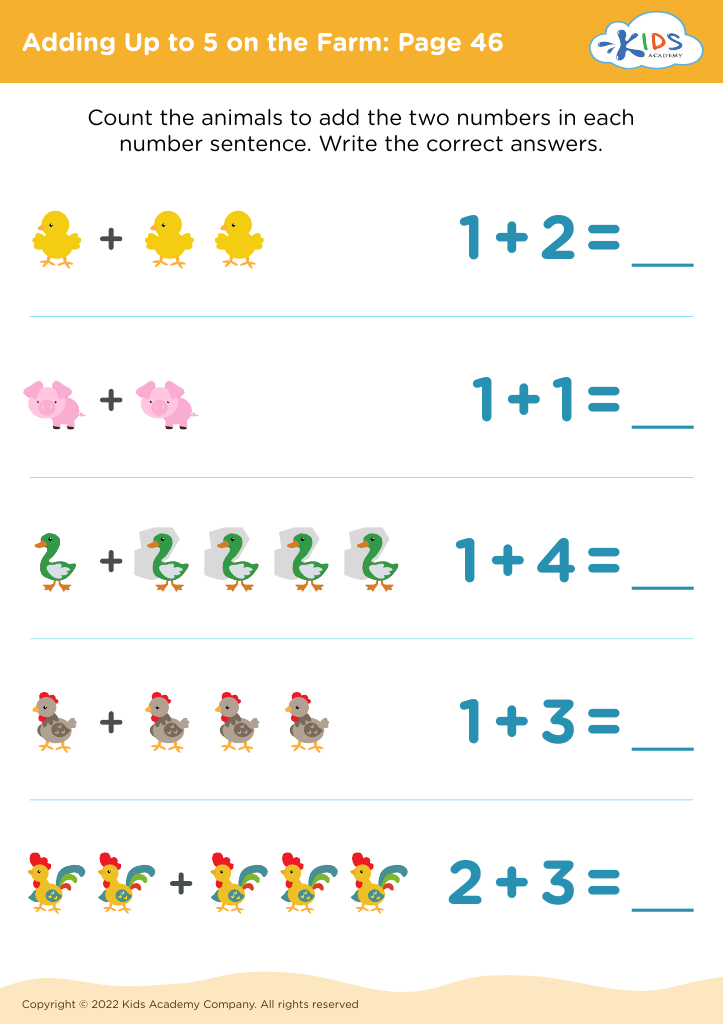
Adding Up to 5 on the Farm: Page 46
Worksheet
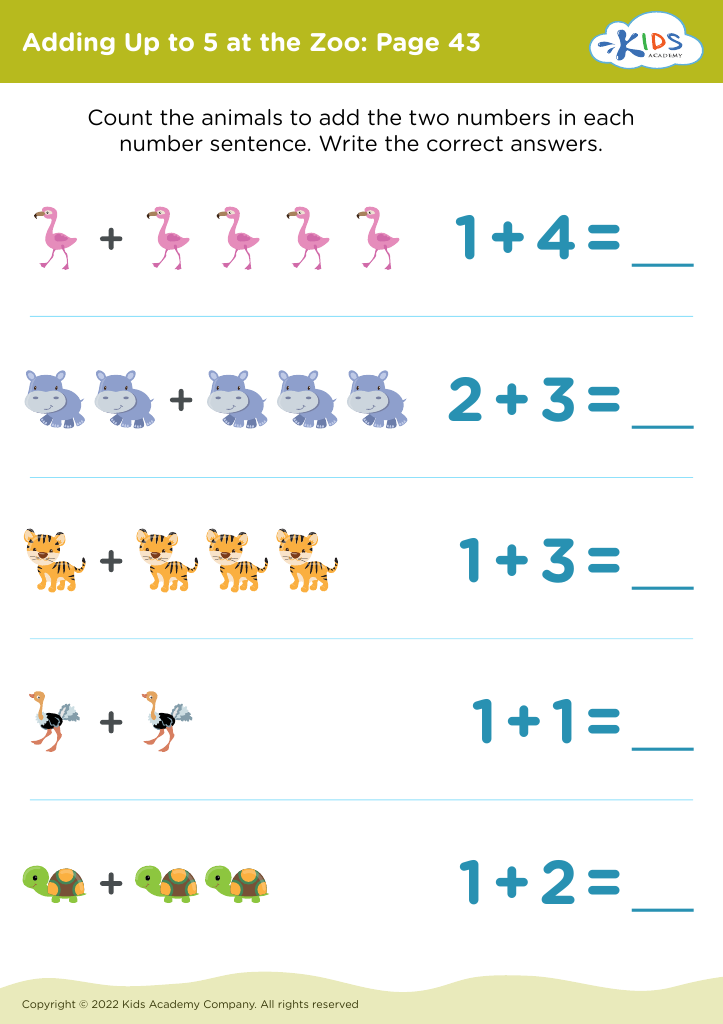
Adding Up to 5 at the Zoo: Page 43
Worksheet
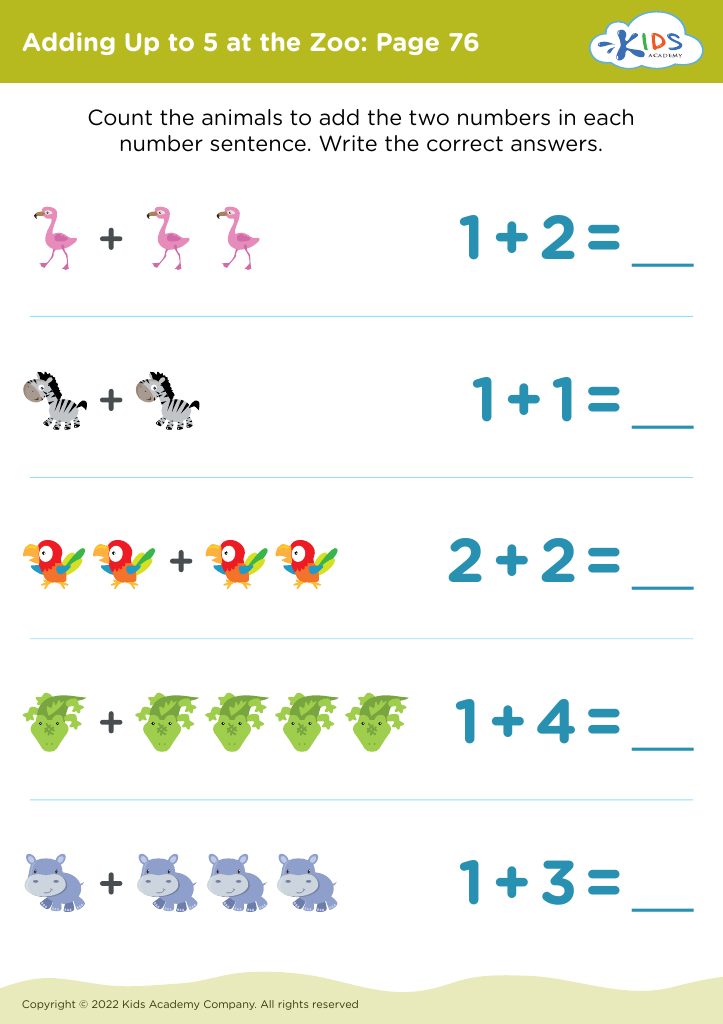
Adding Up to 5 at the Zoo: Page 76
Worksheet
Big Cats and Their Cubs Worksheet
Big Cats and Their Cubs Worksheet
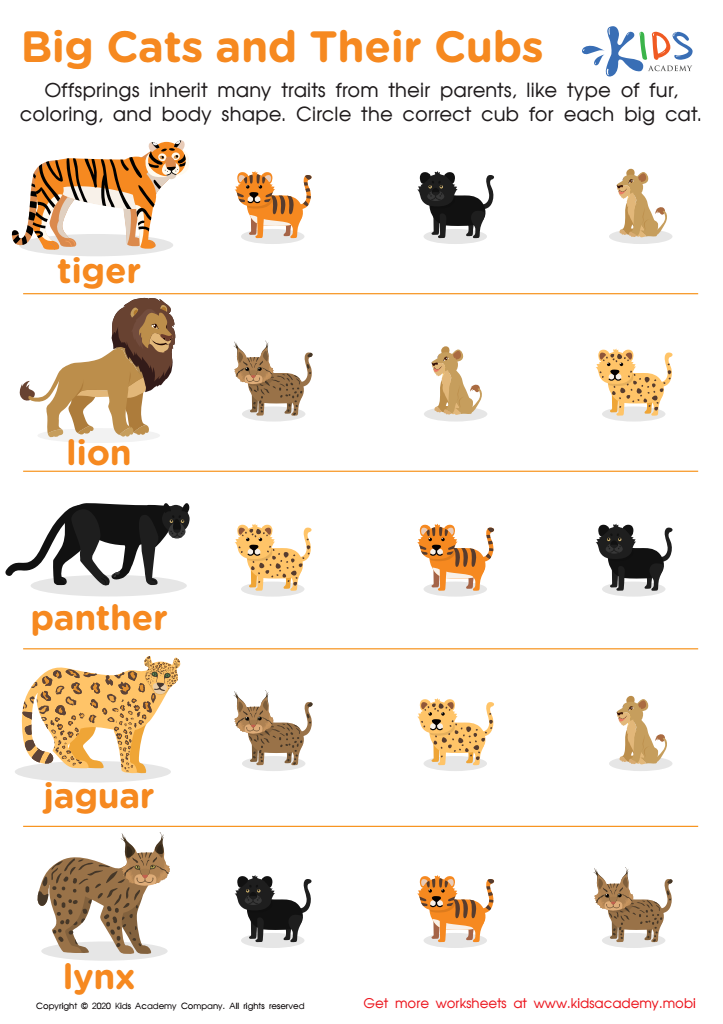
Kids are often like their parents, and the same is true for big cats and their cubs. Introduce your young scientists to genetics with this fun printable worksheet from Kids Academy! Observe the big cats and their cubs, then circle the right cub to complete! It's a great way to teach an early lesson in genetics.
Big Cats and Their Cubs Worksheet
Worksheet
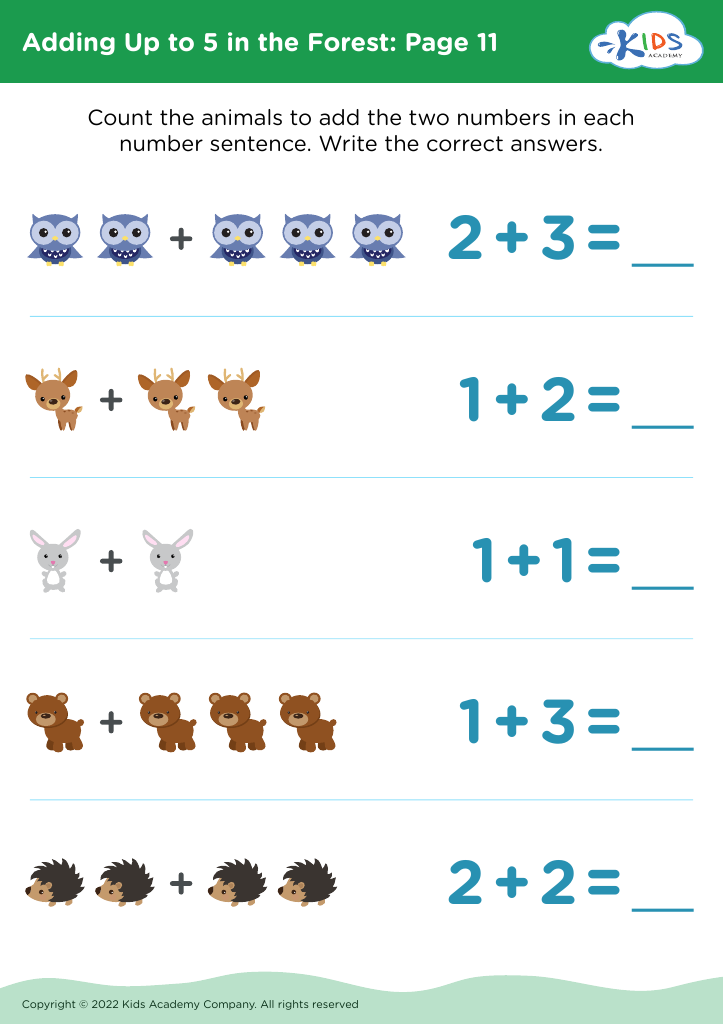
Adding Up to 5 in the Forest: Page 11
Worksheet
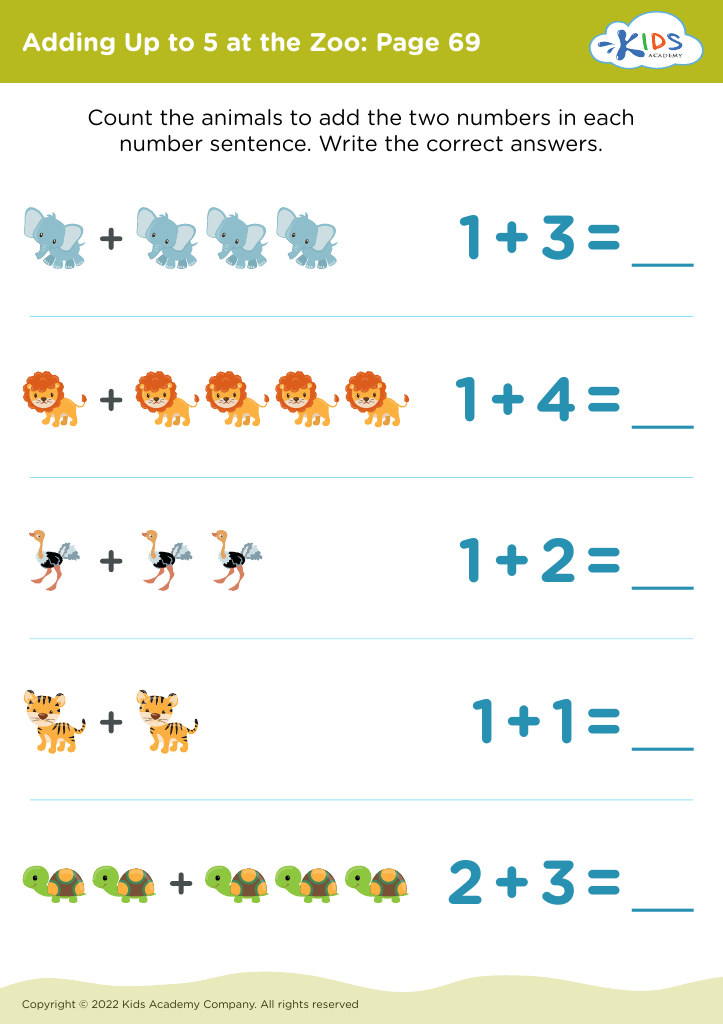
Adding Up to 5 at the Zoo: Page 69
Worksheet
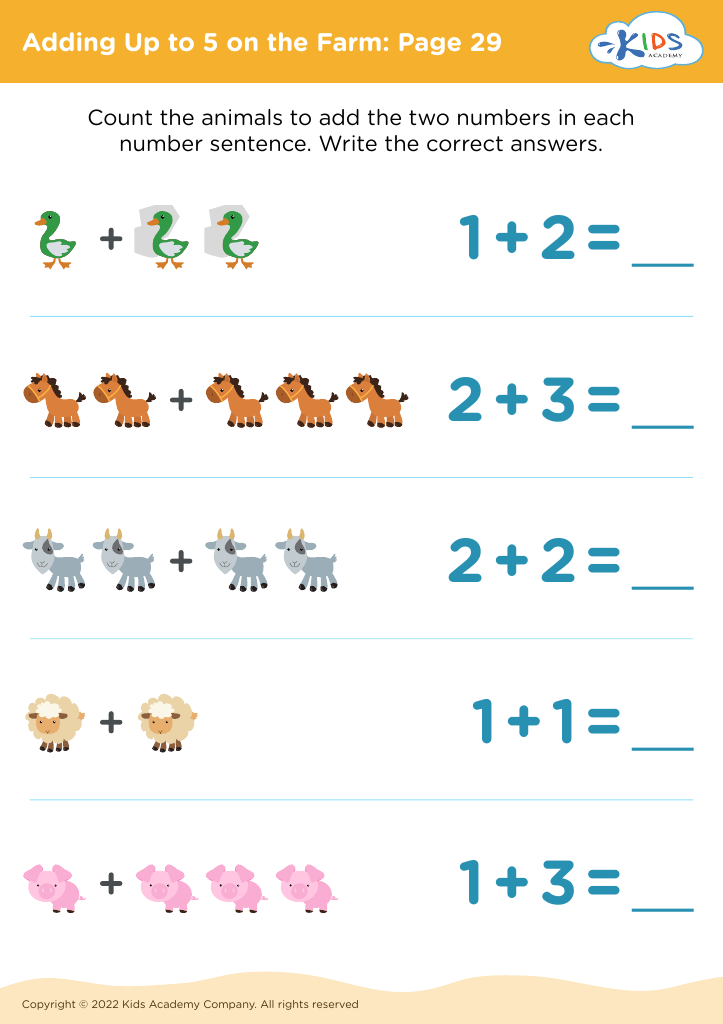
Adding Up to 5 on the Farm: Page 29
Worksheet
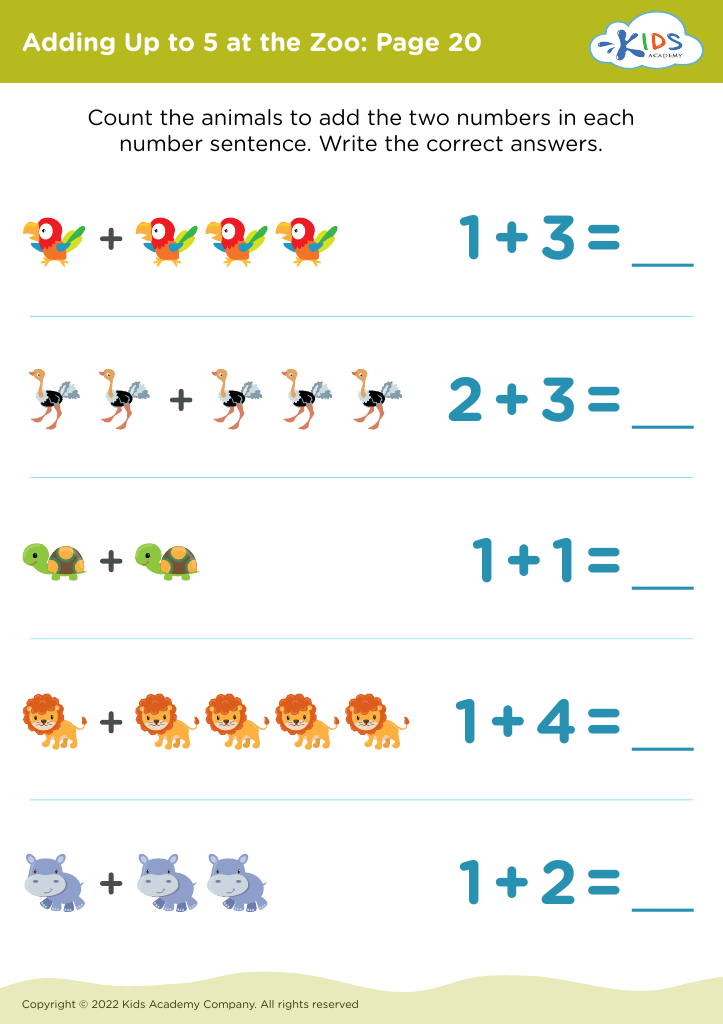
Adding Up to 5 at the Zoo: Page 20
Worksheet
Dot to Dot Numbers 11-20

Ordering 11–20: Chicken & Egg Dot–to–dot Worksheet
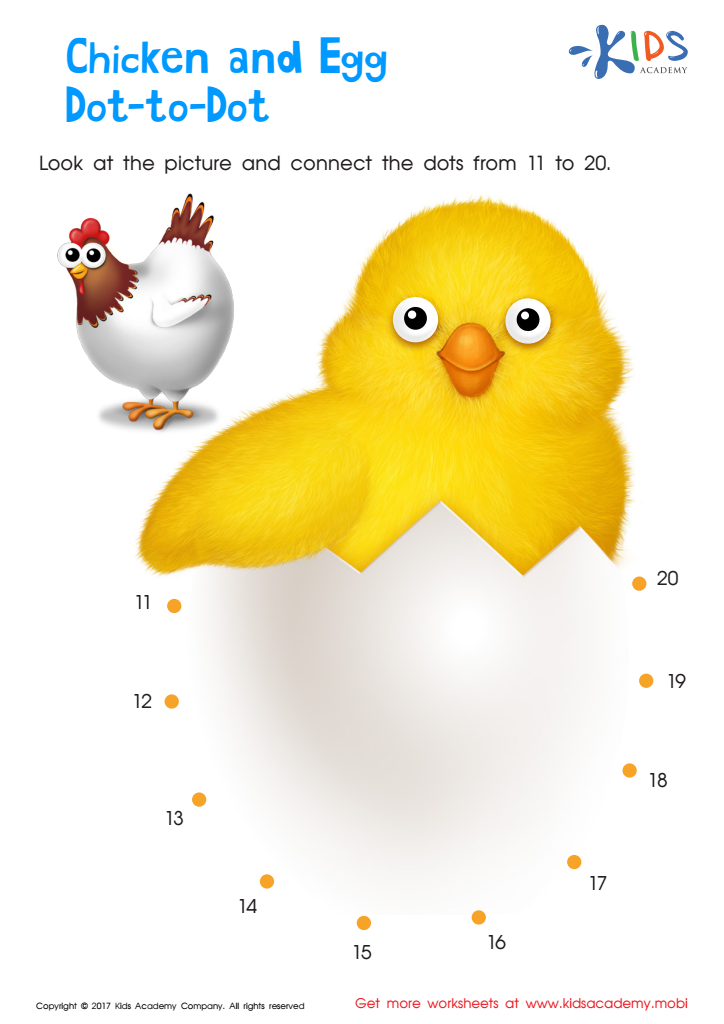
Help your child hatch the chick and practice their counting skills with this dot to dot worksheet – the chicken came first! Connect the dots 11-20 to have fun and learn at the same time. Experience meaningful practice and gain confidence while drawing great pictures.
Ordering 11–20: Chicken & Egg Dot–to–dot Worksheet
Worksheet
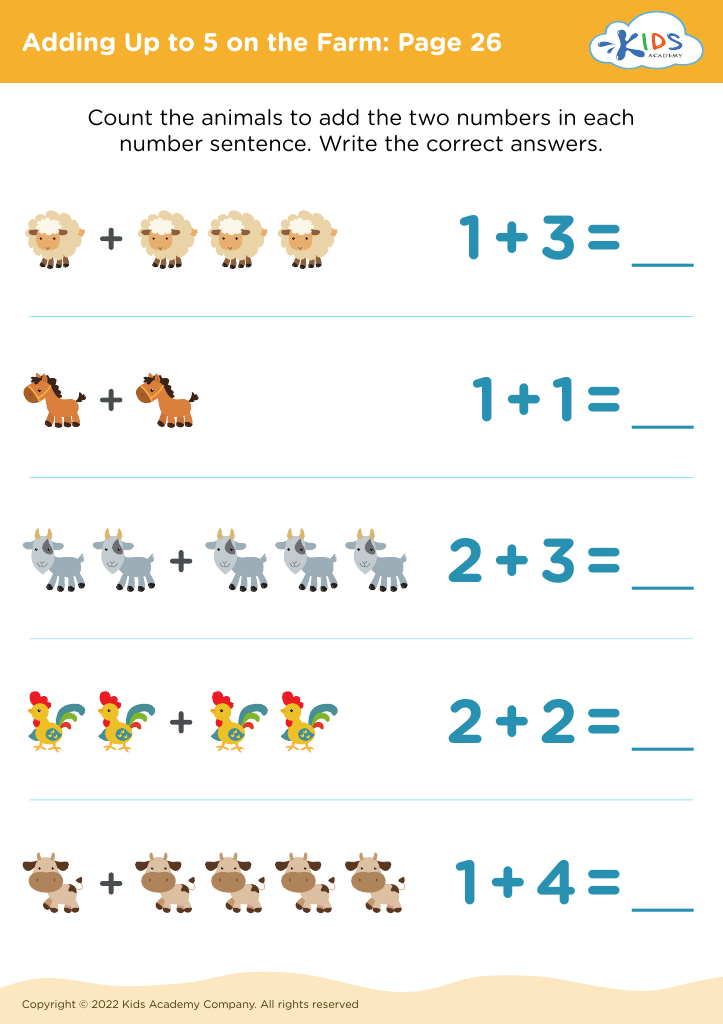
Adding Up to 5 on the Farm: Page 26
Worksheet
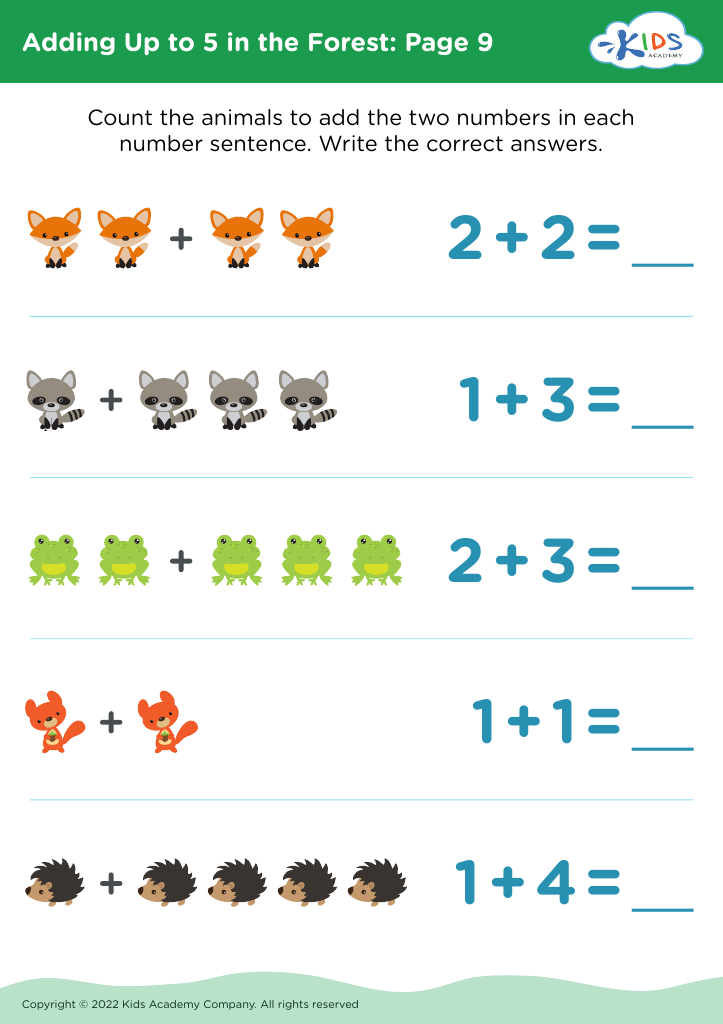
Adding Up to 5 in the Forest: Page 9
Worksheet
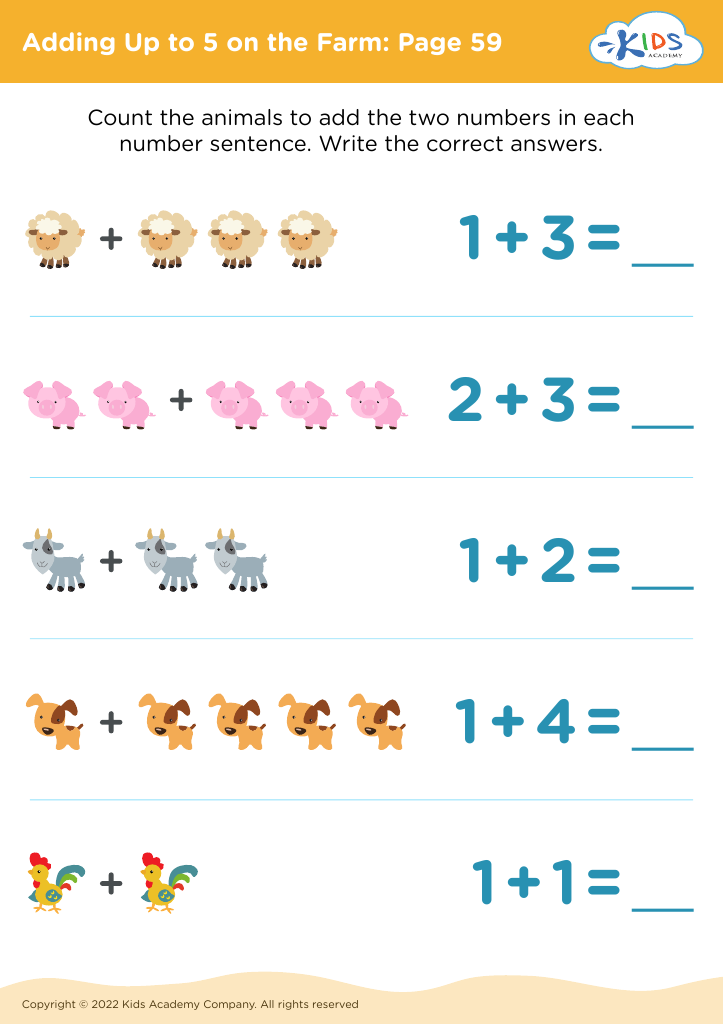
Adding Up to 5 on the Farm: Page 59
Worksheet
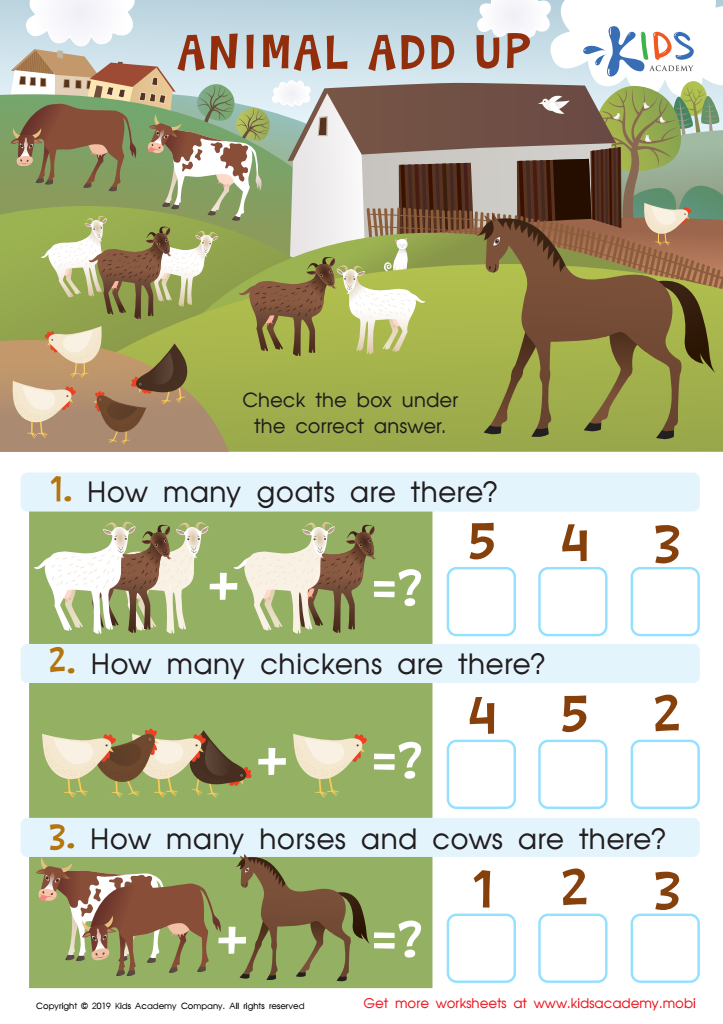
Animal Add Up Worksheet

Animal Add Up Worksheet

Animals are fun to observe and interact with. They can be seen at the zoo, parks, farms and in homes with pets. This worksheet helps kids identify animals, and build addition skills. Look at the picture with them and help name each animal. After that, add the animals up and check the box for the correct answer. 80 words.
Animal Add Up Worksheet
Worksheet


Animal recognition is a vital aspect of early childhood education that fosters cognitive development, emotional understanding, and social skills in children aged 4-6. For parents and teachers, focusing on this learning topic offers a myriad of benefits.

Firstly, recognizing animals enhances language development. Children learn animal names, sounds, and characteristics, enriching their vocabulary and improving communication skills. This early linguistic foundation is crucial for later literacy.

Moreover, learning about animals promotes curiosity and interest in the natural world. Children develop observational skills and learn about habitats, diets, and roles within ecosystems, fostering a sense of wonder and scientific inquiry.

Socially, animal recognition can facilitate discussions about empathy and compassion. As children learn to identify and care for various animals, they cultivate an understanding of feelings and diverse perspectives, nurturing emotional intelligence. Learning about pets or wild animals can also strengthen family bonds, as parents can engage children in conversations and activities centered around these creatures.

Furthermore, integrating animal recognition into play-centered learning can improve fine motor skills, as children engage in related arts and crafts. Overall, prioritizing animal recognition cultivates well-rounded, empathetic, and inquisitive young learners, laying a strong foundation for lifelong learning.