Check out this FREE "Animal recognition" Trial Lesson for age 4-6!

Money Word Problems

Favorites
With answer key
Interactive
  • 4-6
  • Animal recognition
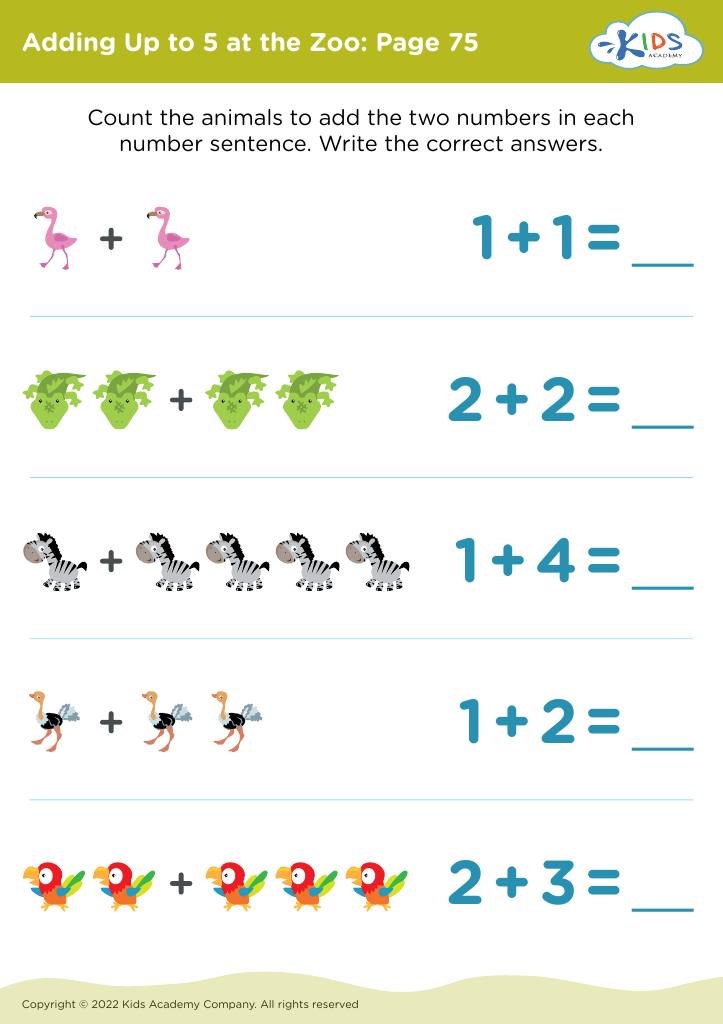
Adding Up to 5 at the Zoo: Page 75
Worksheet
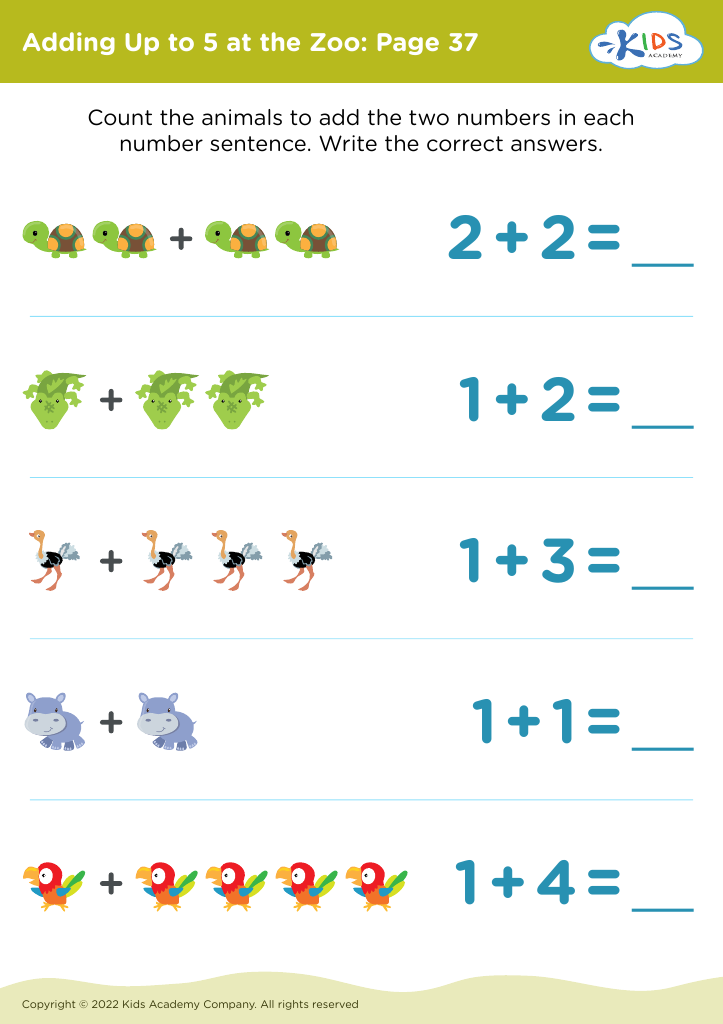
Adding Up to 5 at the Zoo: Page 37
Worksheet
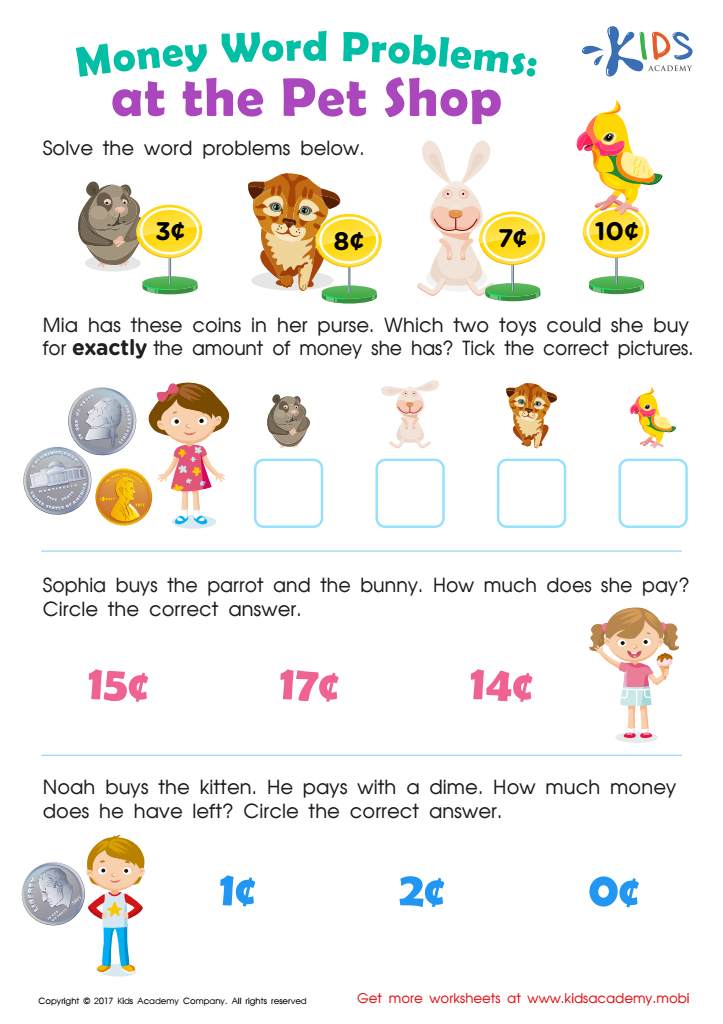
Worksheet: Counting Money

Pet Shop Worksheet

Teach your child a key life skill: counting and managing money. With this worksheet, they'll learn to count coins and calculate purchases at the pet shop. Give them colorful, fun math practice!
Pet Shop Worksheet
Worksheet
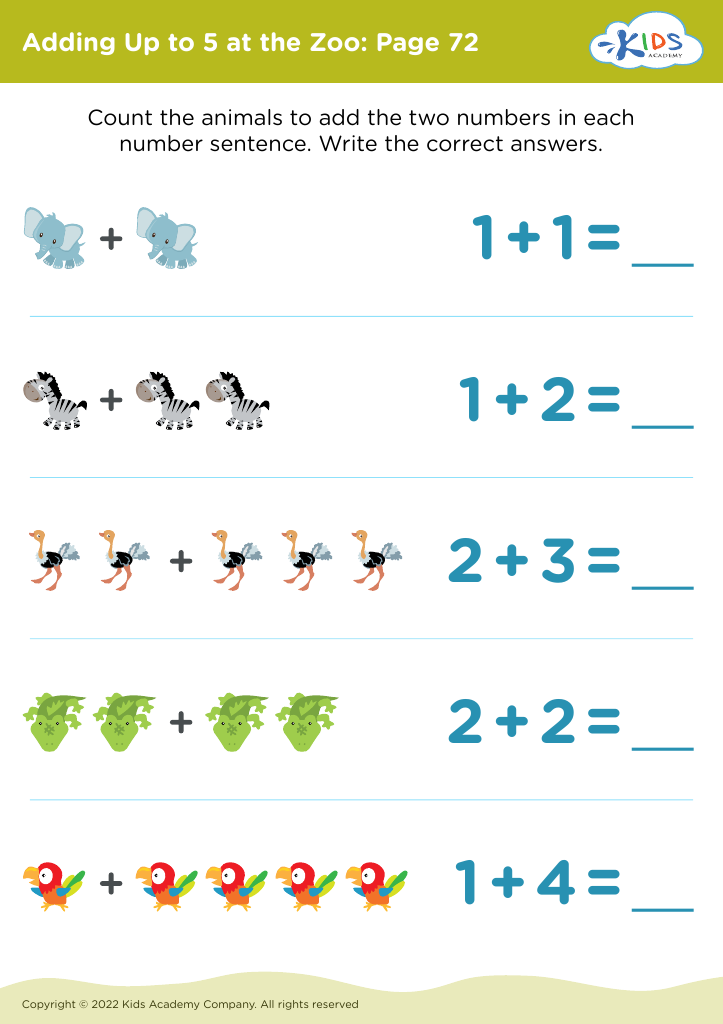
Adding Up to 5 at the Zoo: Page 72
Worksheet
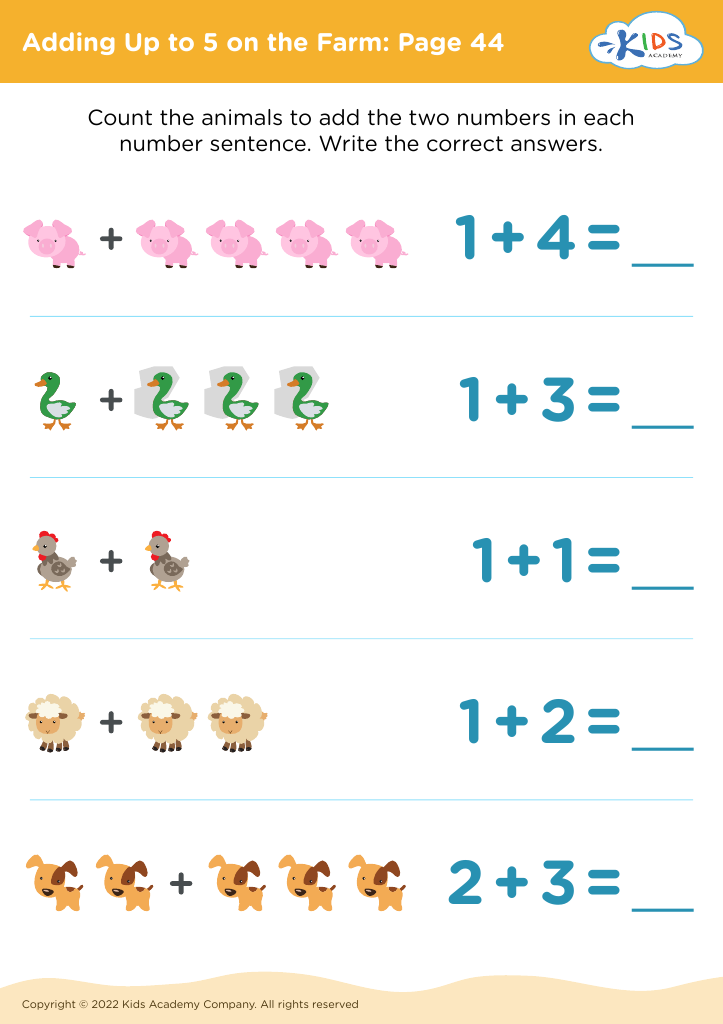
Adding Up to 5 on the Farm: Page 44
Worksheet
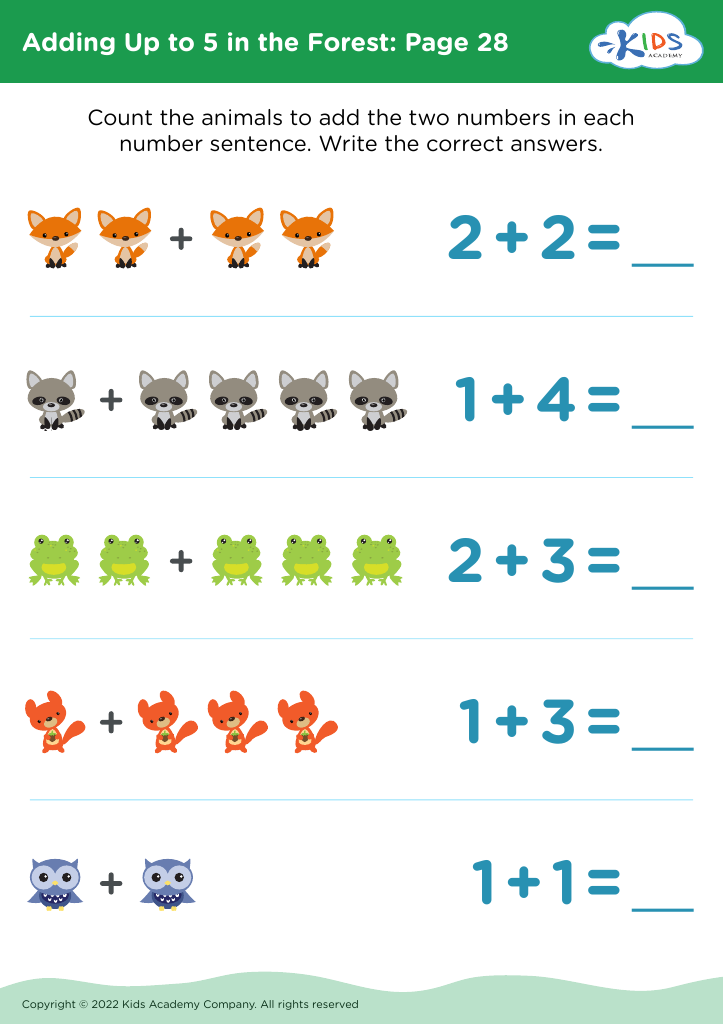
Adding Up to 5 in the Forest: Page 28
Worksheet
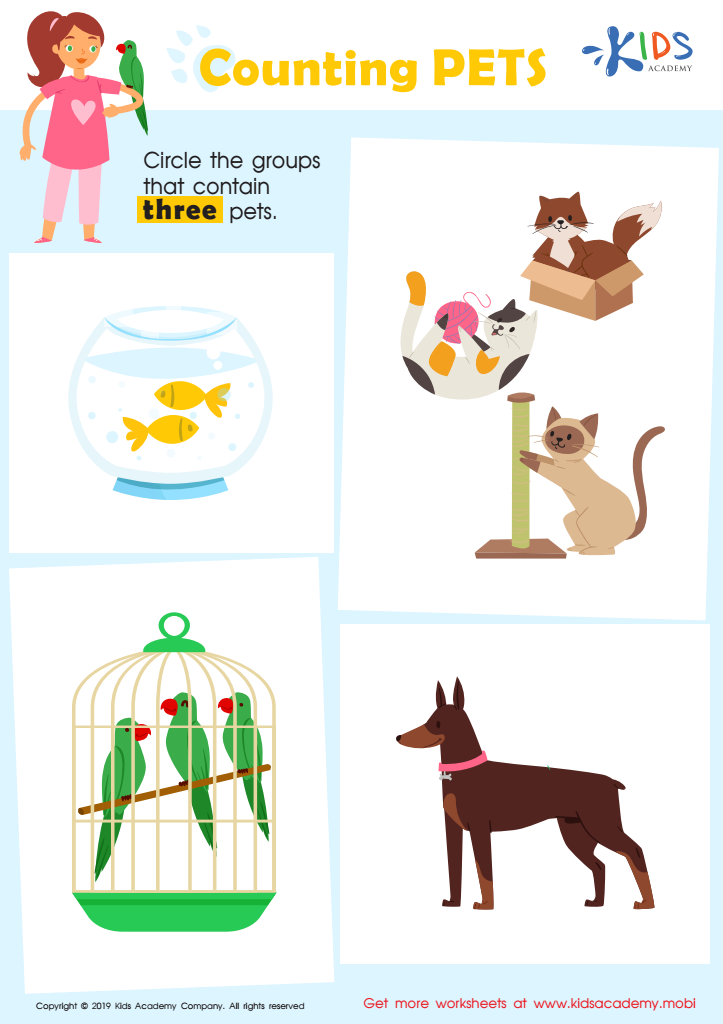
Counting Pets Worksheet

Counting Pets Worksheet

Kids adore their pets, making this free pet counting worksheet the perfect way to combine something they love with math skills. They'll count the number of pets, circle the pictures with three pets, and use one-to-one picture representation to help. This exercise will cultivate their learning and reinforce their love of animals!
Counting Pets Worksheet
Worksheet
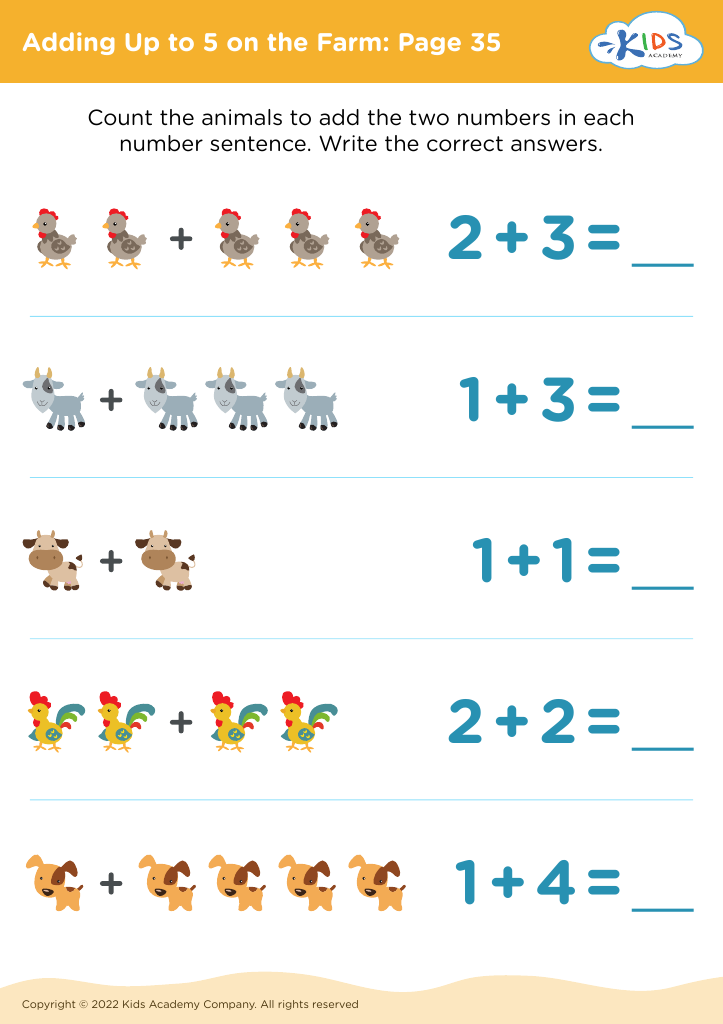
Adding Up to 5 on the Farm: Page 35
Worksheet
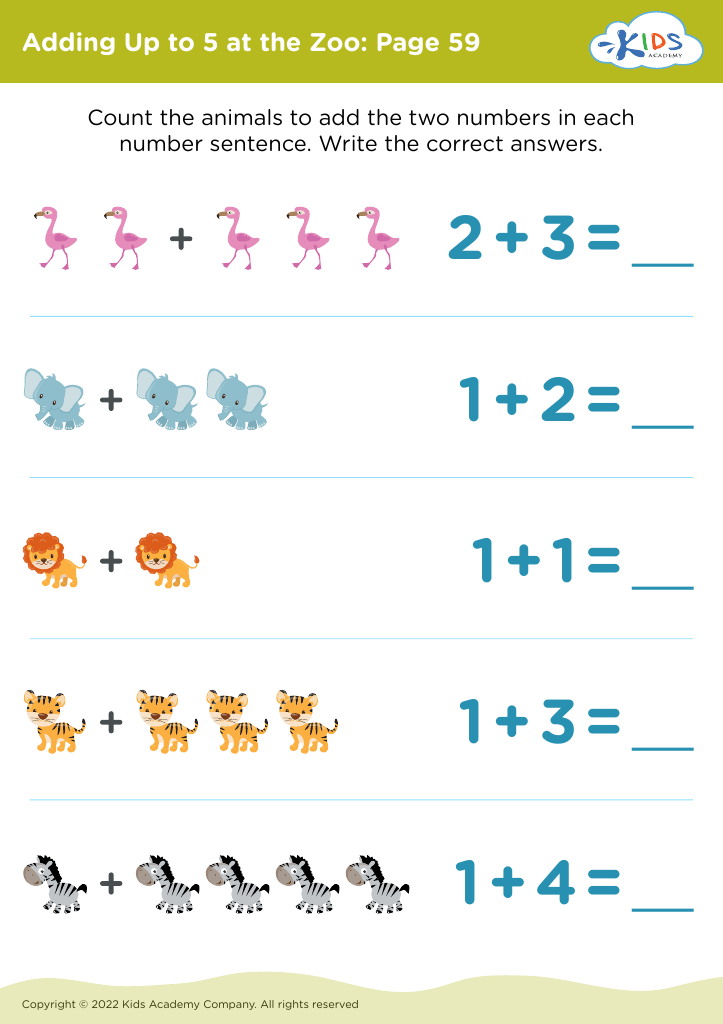
Adding Up to 5 at the Zoo: Page 59
Worksheet
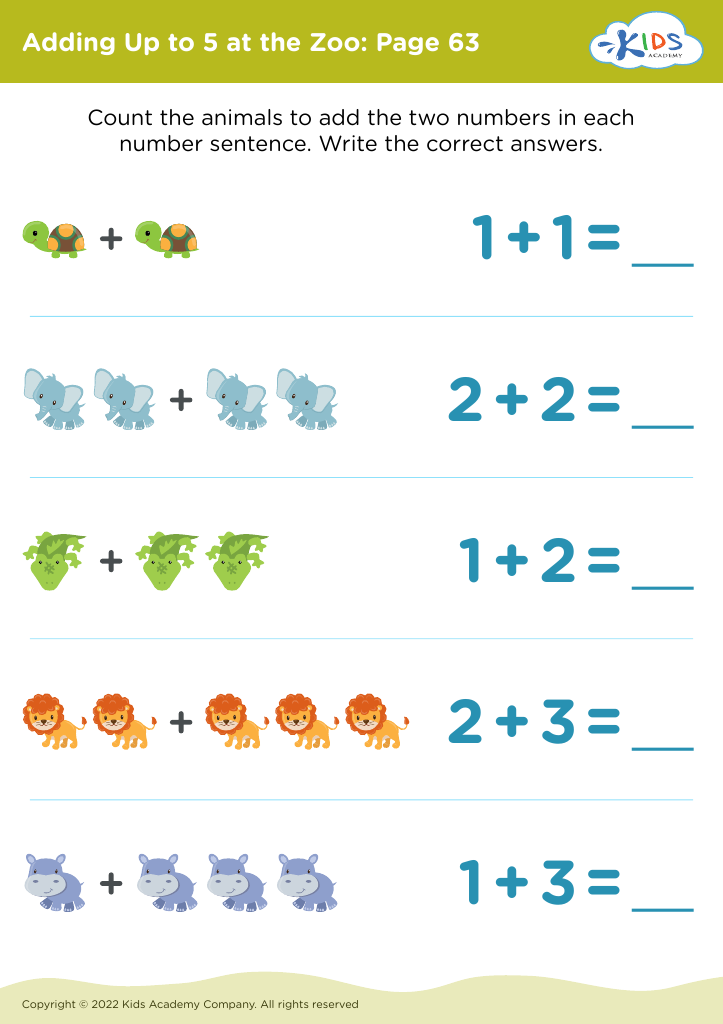
Adding Up to 5 at the Zoo: Page 63
Worksheet
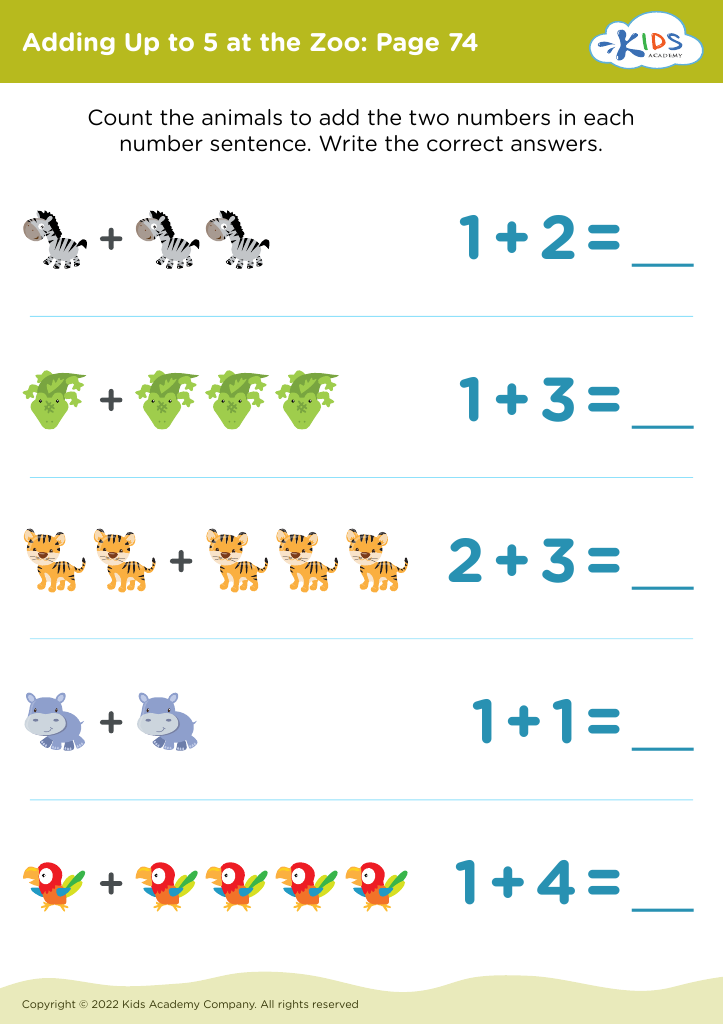
Adding Up to 5 at the Zoo: Page 74
Worksheet
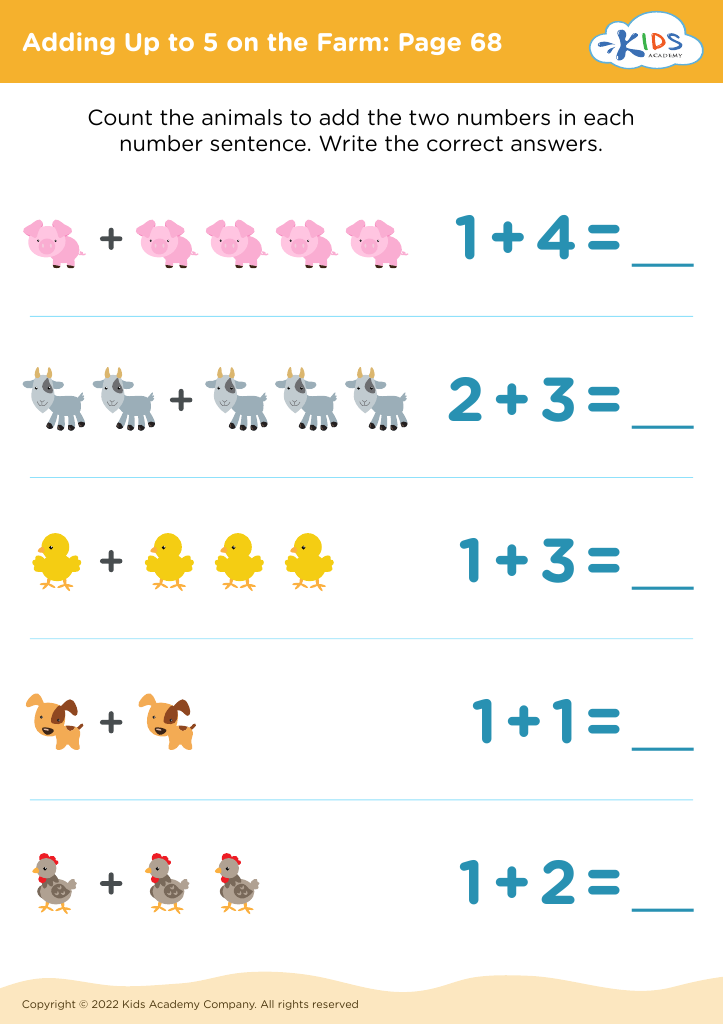
Adding Up to 5 on the Farm: Page 68
Worksheet
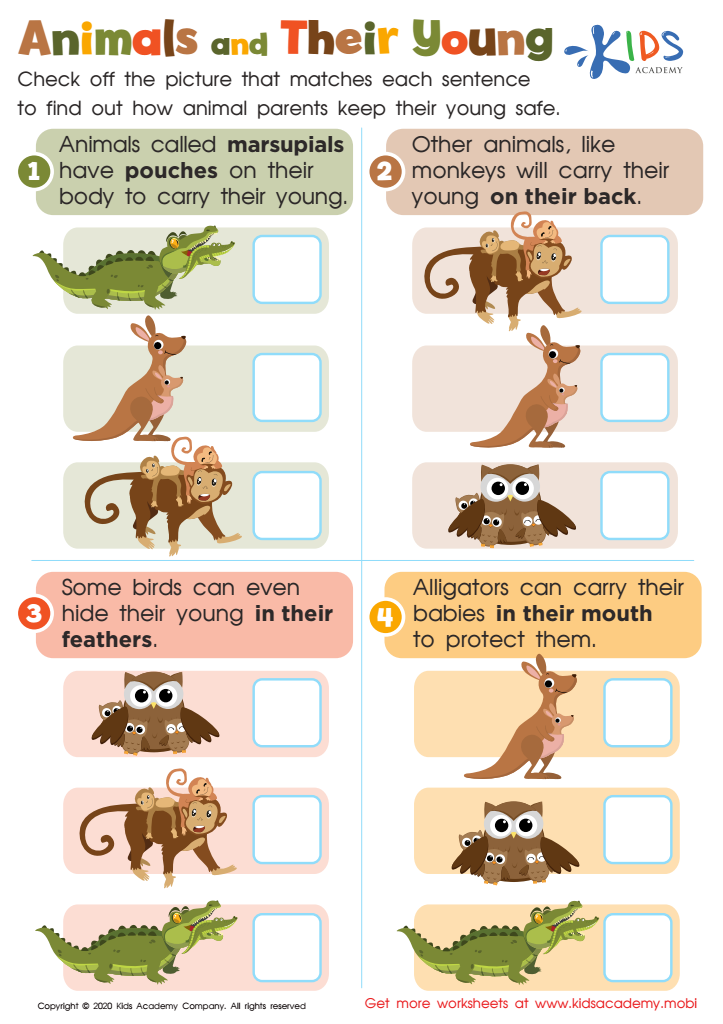
Animals and Their Young Worksheet
Animals and Their Young Worksheet
Help your child learn more about the animal kingdom with this cute science worksheet! They'll find out how animals protect and keep their babies close. From pouches to hitching a ride on mama’s back, they'll read the sentence above each illustration and select the description that fits. Check off the correct description as they go - a fun and educational activity!
Animals and Their Young Worksheet
Worksheet
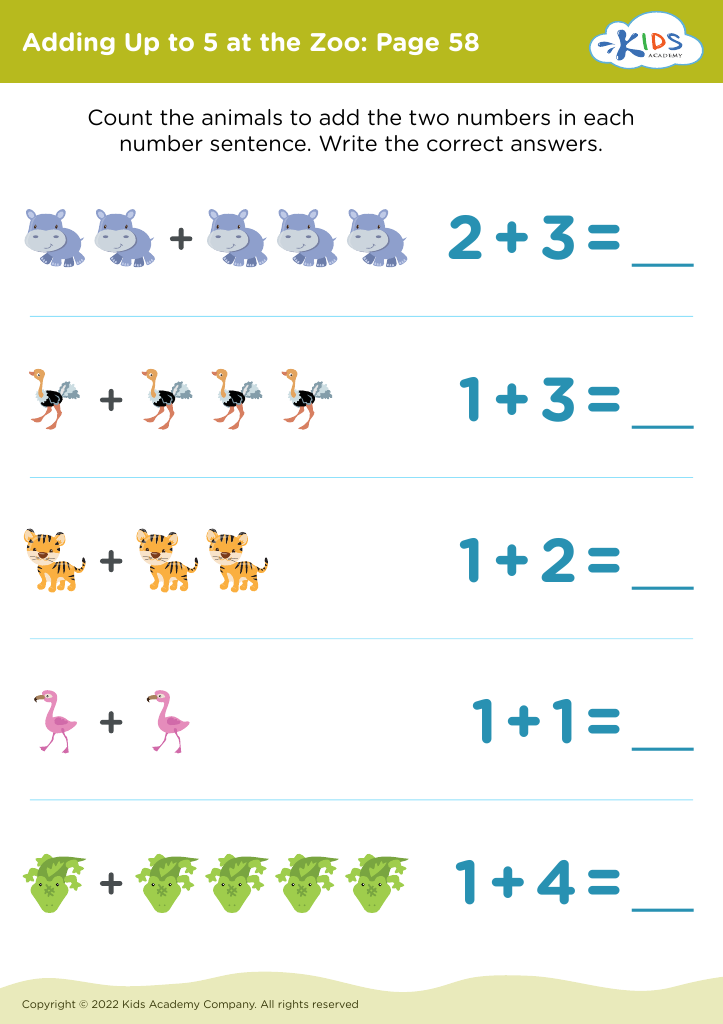
Adding Up to 5 at the Zoo: Page 58
Worksheet
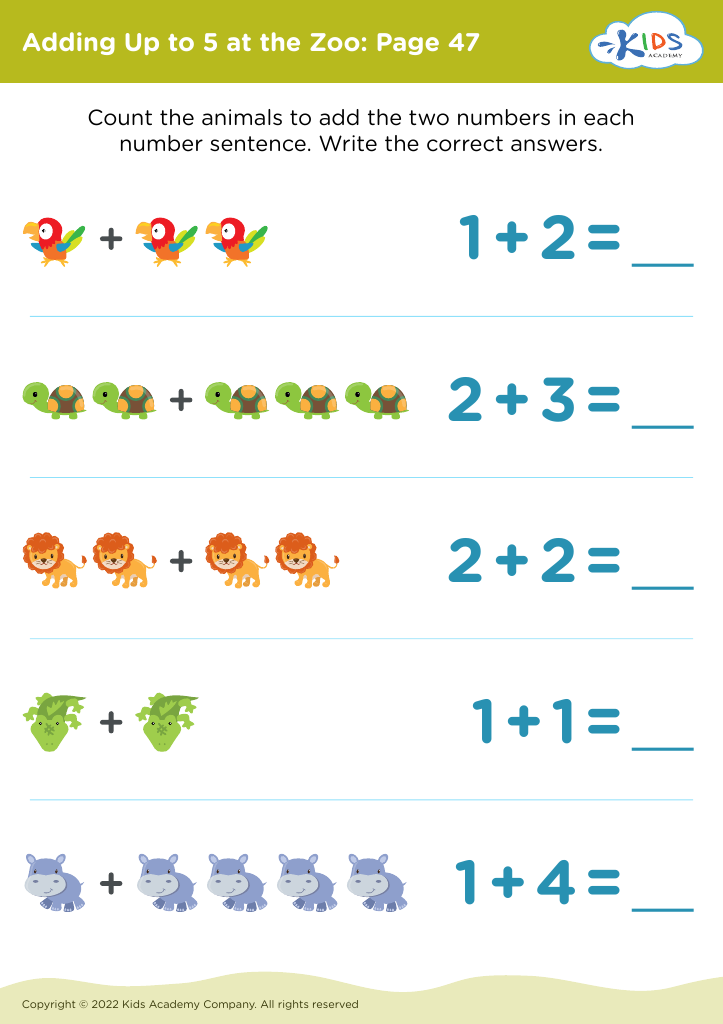
Adding Up to 5 at the Zoo: Page 47
Worksheet
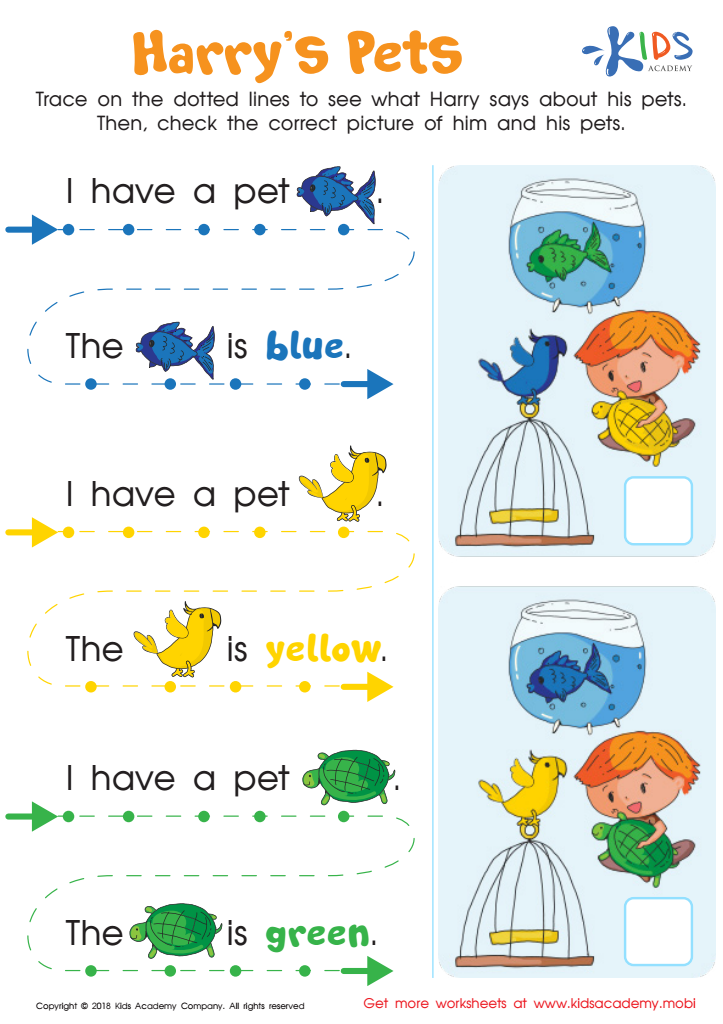
Read from Left to Right: Harry's Pets Worksheet
Read from Left to Right: Harry's Pets Worksheet

Help your child read the sentences on this tracing sheet about Harry and his pets. Point to the dotted lines and follow the sentences to the correct picture. Ask your child to identify which animal corresponds to which color. Check the picture to ensure accuracy. 80 words.
Read from Left to Right: Harry's Pets Worksheet
Worksheet
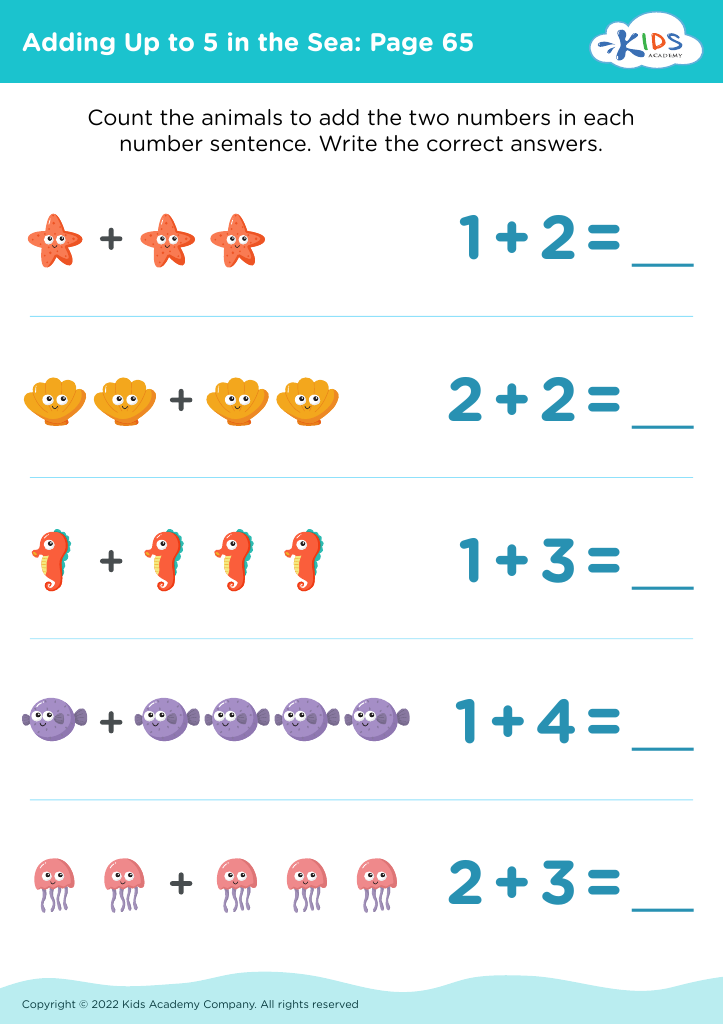
Adding Up to 5 in the Sea: Page 65
Worksheet
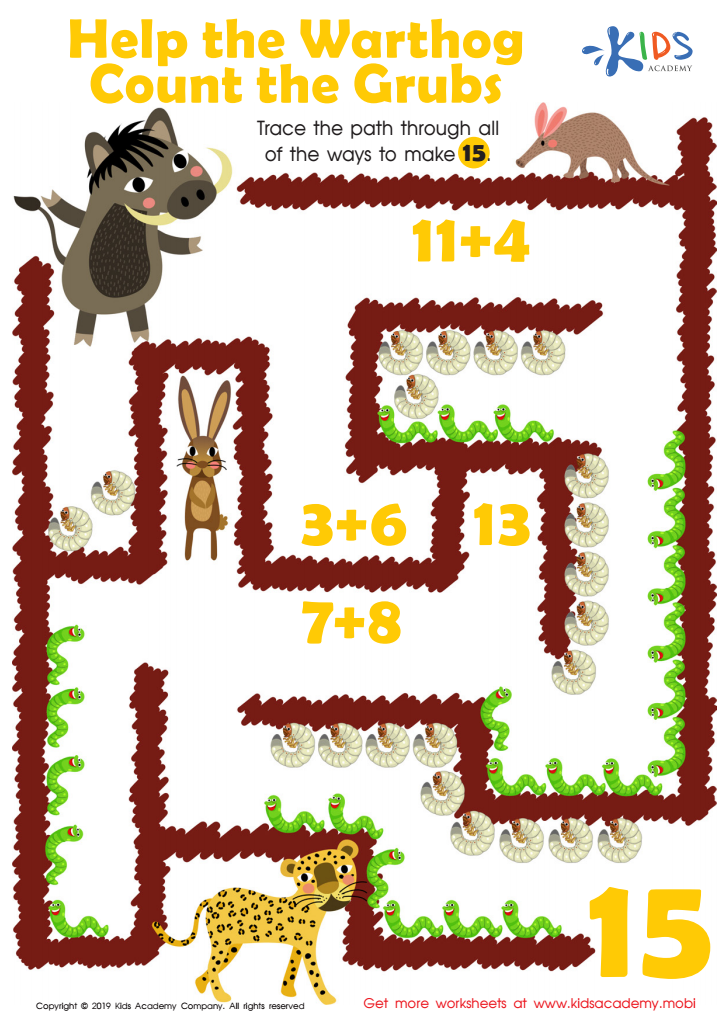
Help the Warthog Count the Grubs Worksheet

Help the Warthog Count the Grubs Worksheet

Test your kids' knowledge of wild animals. Ask them to name some they know, then have them identify the animals on this worksheet. If they can't, take the time to tell them the names. Finally, trace the warthog's path through the maze by solving the equations and going through paths that make 15.
Help the Warthog Count the Grubs Worksheet
Worksheet
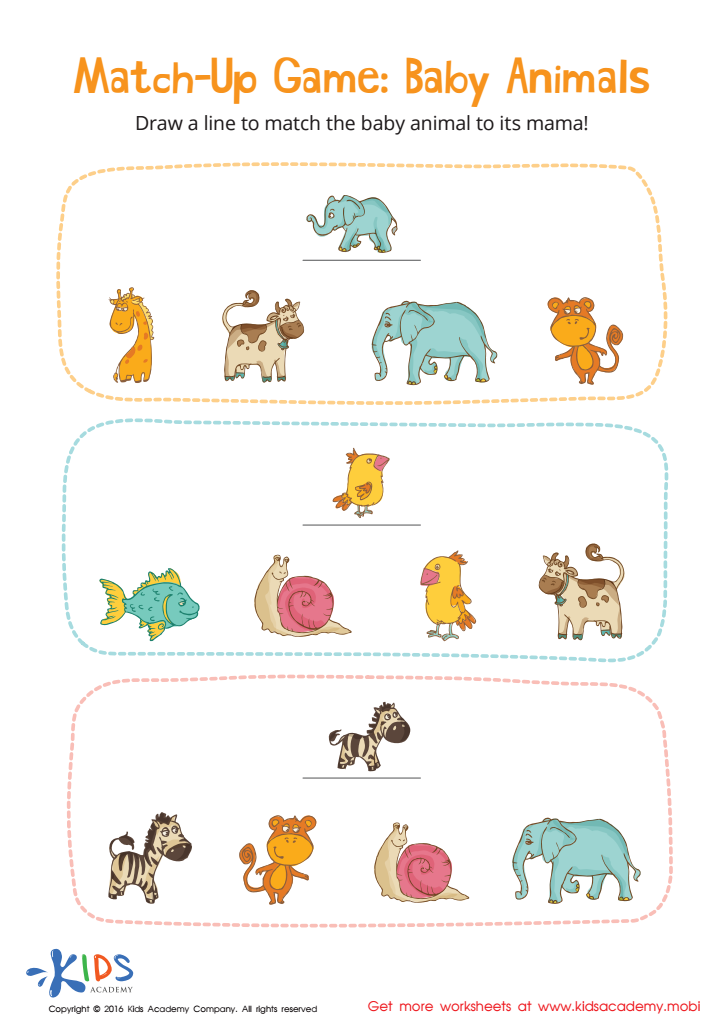
Baby Animals Matching Worksheet

Baby Animals Match-Up Worksheet
Help baby animals find their mummies by using this fun matching worksheet. Kids can practice logical reasoning skills while recognizing similar pictures and learning about animals. Extend their knowledge by having them identify each cute animal!
Baby Animals Match-Up Worksheet

Worksheet
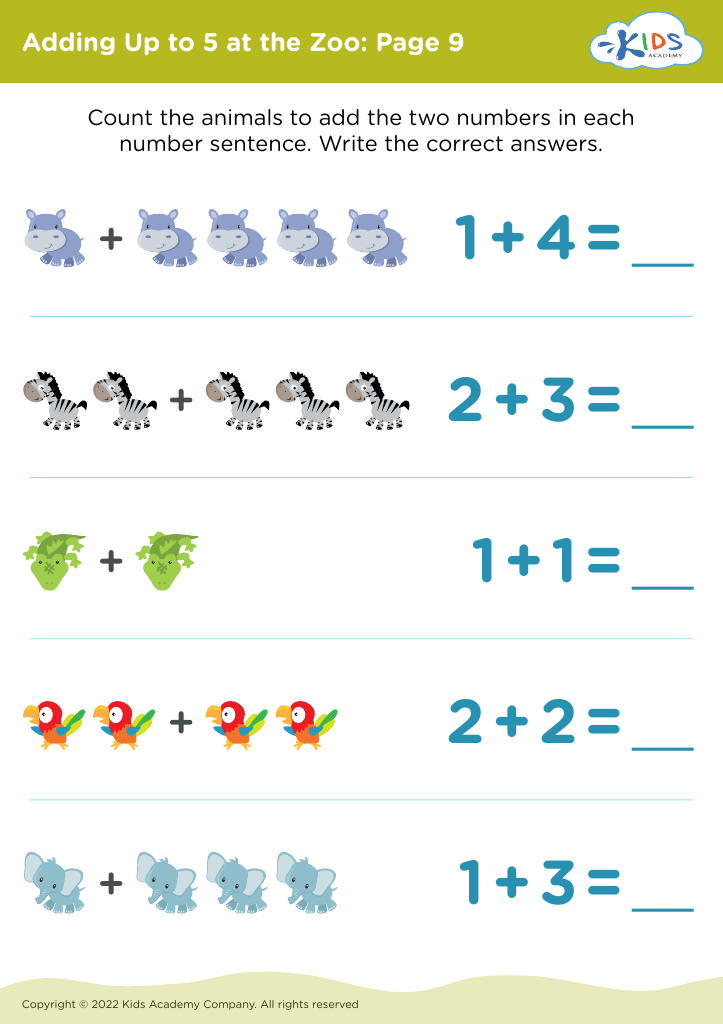
Adding Up to 5 at the Zoo: Page 9

Adding Up to 5 at the Zoo: Page 9

Adding Up to 5 at the Zoo: Page 9
Worksheet
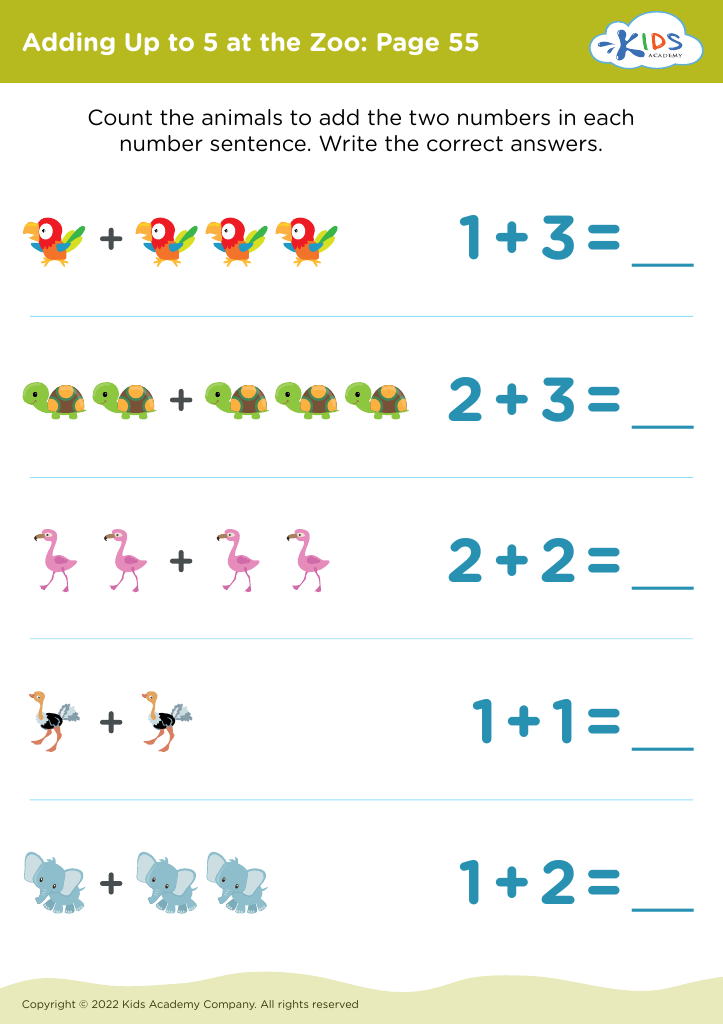
Adding Up to 5 at the Zoo: Page 55
Worksheet
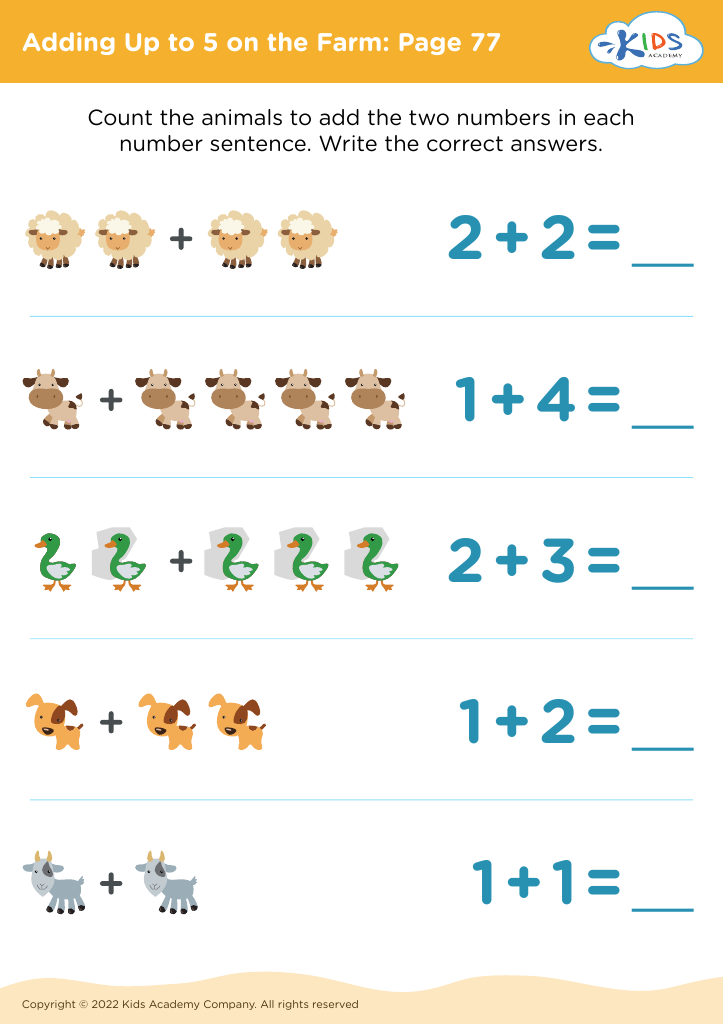
Adding Up to 5 on the Farm: Page 77
Worksheet
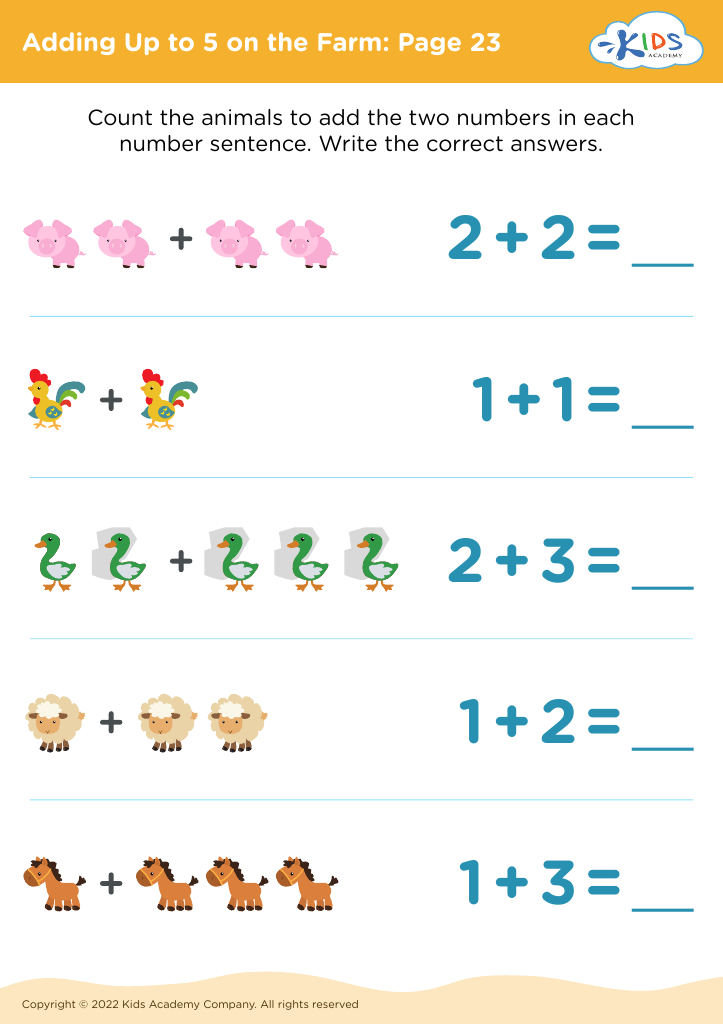
Adding Up to 5 on the Farm: Page 23
Worksheet
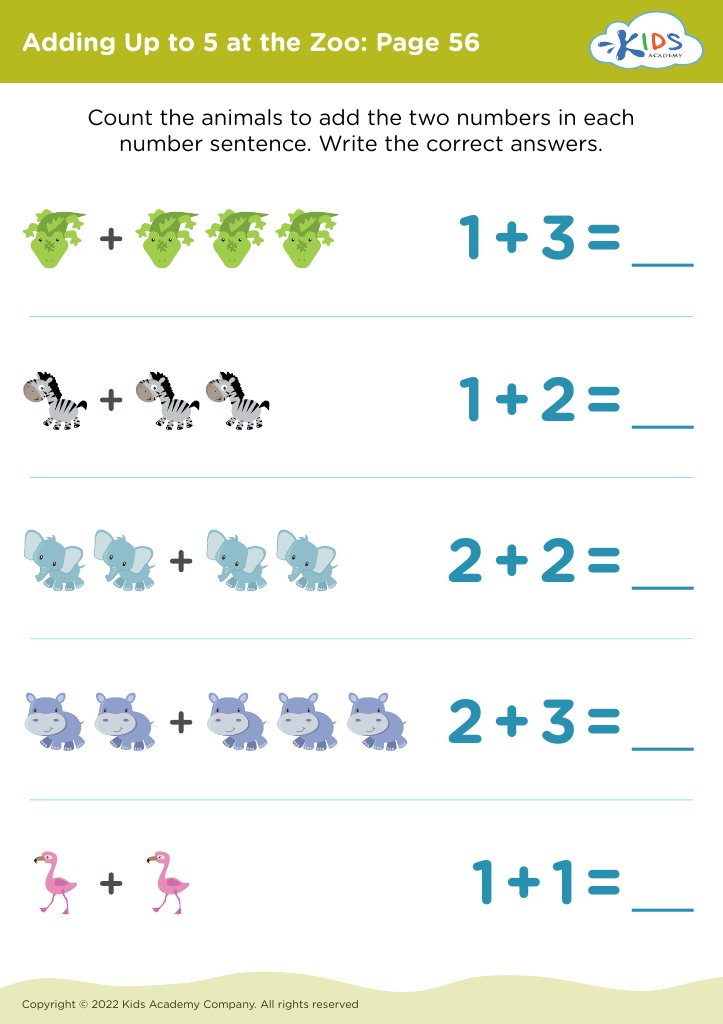
Adding Up to 5 at the Zoo: Page 56
Worksheet


Animal recognition is a vital aspect of early childhood education that fosters cognitive development, emotional understanding, and social skills in children aged 4-6. For parents and teachers, focusing on this learning topic offers a myriad of benefits.

Firstly, recognizing animals enhances language development. Children learn animal names, sounds, and characteristics, enriching their vocabulary and improving communication skills. This early linguistic foundation is crucial for later literacy.

Moreover, learning about animals promotes curiosity and interest in the natural world. Children develop observational skills and learn about habitats, diets, and roles within ecosystems, fostering a sense of wonder and scientific inquiry.

Socially, animal recognition can facilitate discussions about empathy and compassion. As children learn to identify and care for various animals, they cultivate an understanding of feelings and diverse perspectives, nurturing emotional intelligence. Learning about pets or wild animals can also strengthen family bonds, as parents can engage children in conversations and activities centered around these creatures.

Furthermore, integrating animal recognition into play-centered learning can improve fine motor skills, as children engage in related arts and crafts. Overall, prioritizing animal recognition cultivates well-rounded, empathetic, and inquisitive young learners, laying a strong foundation for lifelong learning.