Astronomy basics Worksheets for Ages 4-6
3 filtered results
-
From - To
Discover a world of wonder with our "Astronomy Basics Worksheets for Ages 4-6!" Designed to ignite curiosity and inspire young minds, these printable worksheets introduce budding explorers to essential concepts of astronomy, including the sun, moon, stars, and planets. Engaging activities foster critical thinking and creativity through coloring, matching, and simple problem-solving tasks. Perfect for classroom settings or home learning, our worksheets promote early literacy and comprehension skills in an exciting way. Let children embark on a cosmic adventure as they learn about the universe’s fascinating elements, encouraging their love for science and discovery. Enjoy a stellar learning experience today!
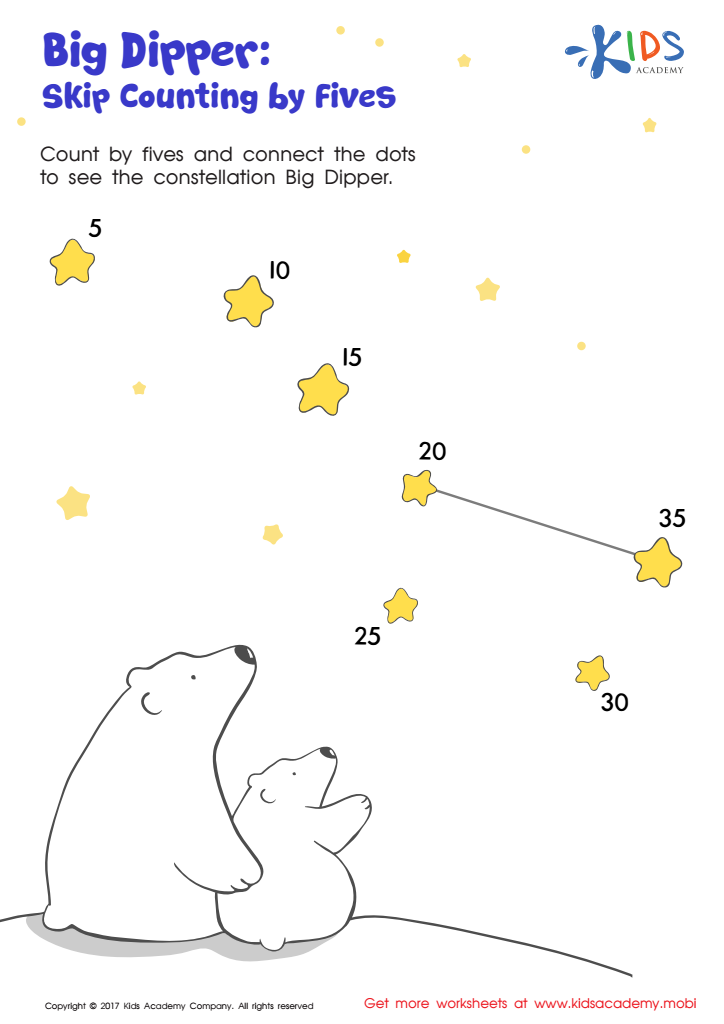
 Assign to My Students
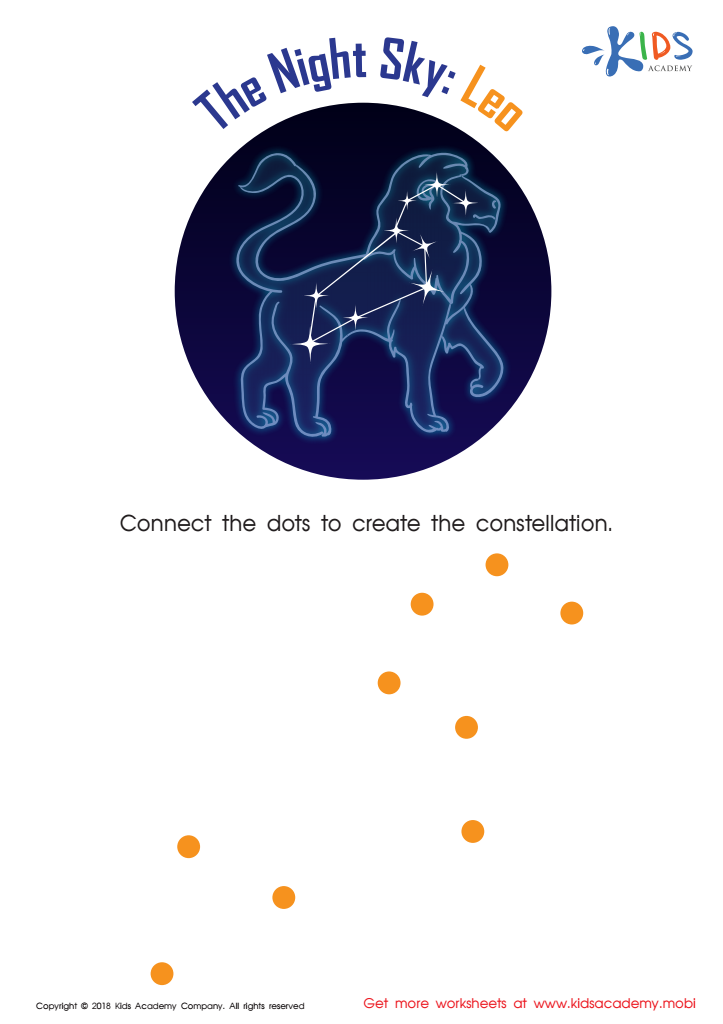
The Night Sky: Leo Worksheet
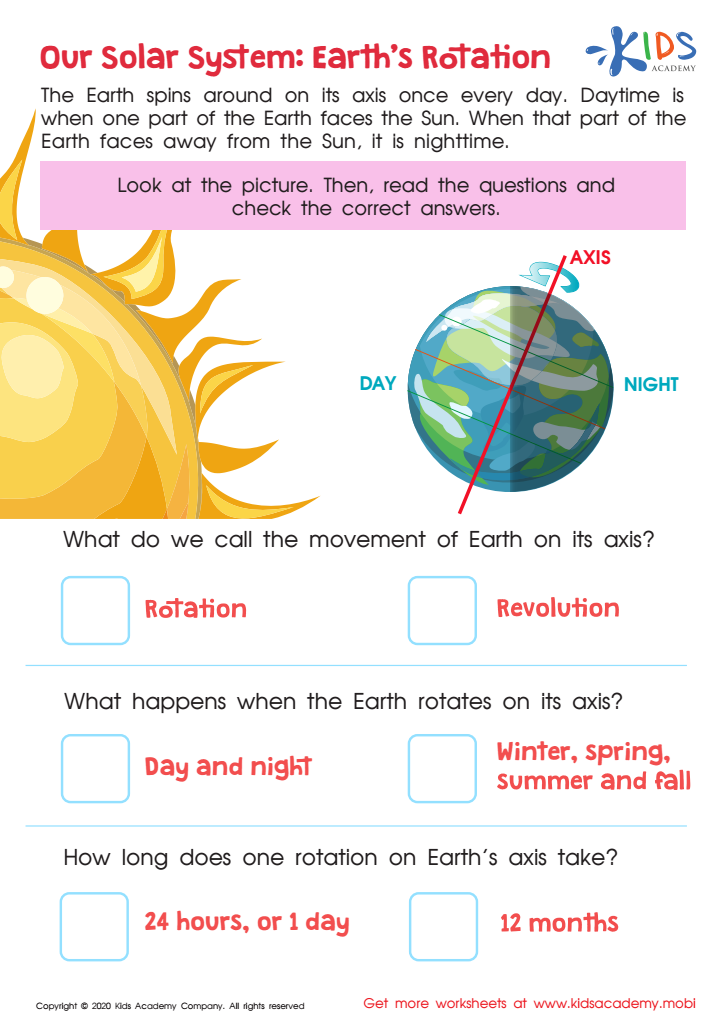
Our Solar System: Earth's Rotation Printable




.jpg)
Astronomy in early education holds significant importance, especially for children aged 4-6. At this stage, kids are naturally curious about the world around them, and introducing them to the basics of astronomy can further ignite that curiosity. Learning about the stars, planets, and the universe can help children develop essential cognitive skills such as observation, critical thinking, and scientific inquiry.
Understanding astronomy also promotes an appreciation for nature and the environment. Through discussions about phases of the moon or the colors of the stars, children can connect with concepts of time, seasons, and the vastness of space. This fascination nurtures creativity and imagination, fostering a sense of wonder that can enhance other areas of learning, from art to storytelling.
Incorporating astronomy basics can also build early numeracy and literacy skills. Count the stars, trace constellations, or rhyme about planets – these activities make learning interactive and engaging. Furthermore, as parents and teachers model enthusiasm for exploring the universe, they instill values of lifelong learning and curiosity. Ultimately, teaching astronomy basics lays a foundation for future STEM interest, promoting intellectual growth and inspiring the next generation of scientists and thinkers.








