Categorizing objects Worksheets for Ages 4-6
4 filtered results
-
From - To
Unlock your child's potential with our Categorizing Objects Worksheets for Ages 4-6! Designed to facilitate early learning, these engaging printables help young learners develop crucial sorting and categorization skills. By interacting with colorful images and familiar items, children will enhance their abilities to identify similarities and differences, promoting critical thinking and cognitive development. Each worksheet provides a fun and interactive way for kids to practice grouping objects by various attributes, such as size, color, and type. Perfect for preschool and kindergarten classrooms or home learning, these worksheets will keep your little ones entertained while boosting their foundational understanding of categories. Start exploring today!
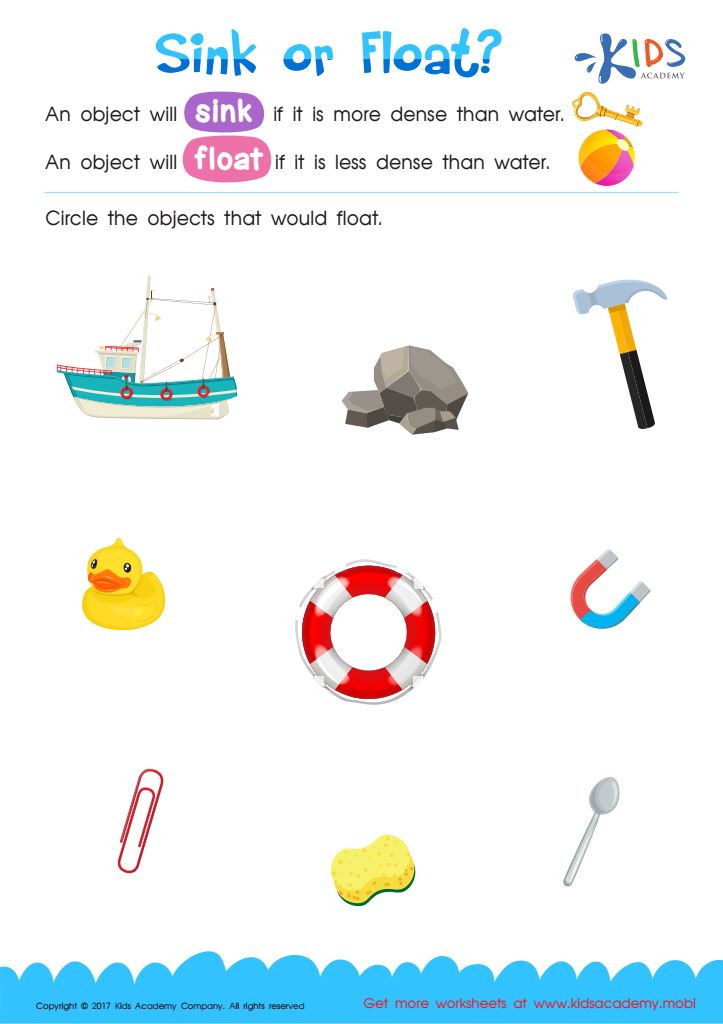
Sink or Float Printable
 Assign to My Students
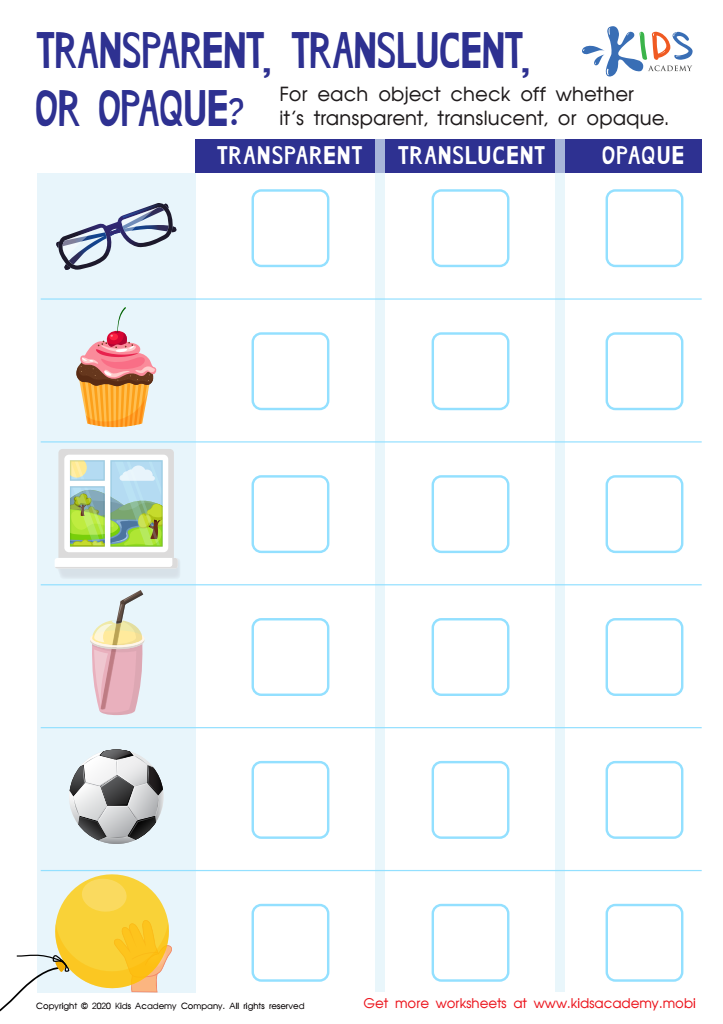
Transparent, Translucent, or Opaque Worksheet
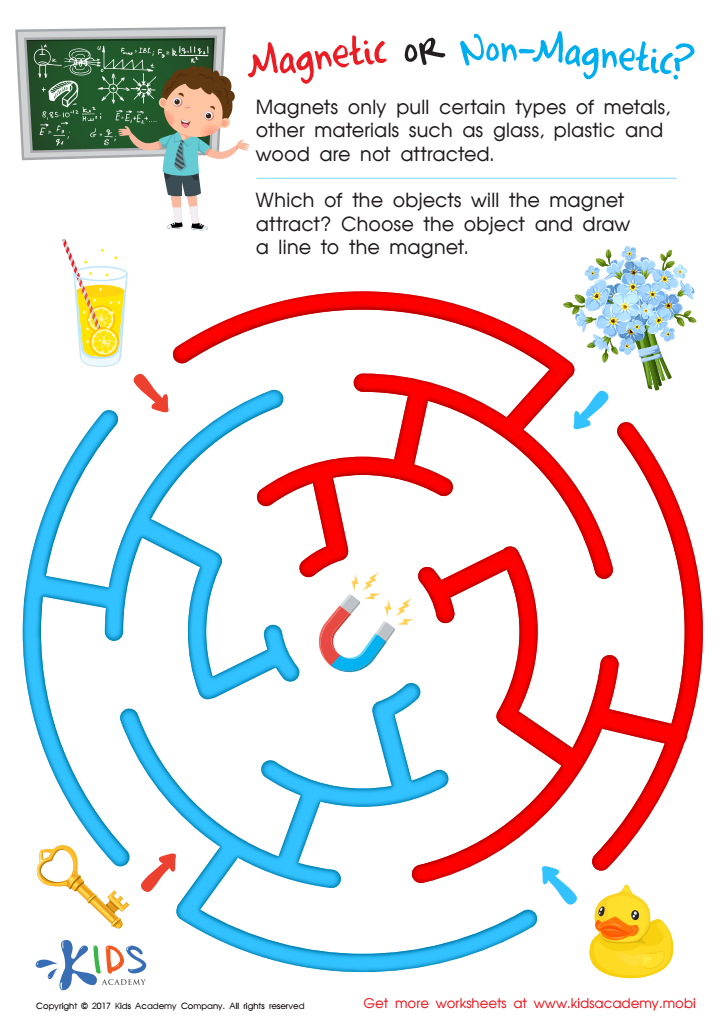
Magnetic or Non–Magnetic Worksheet
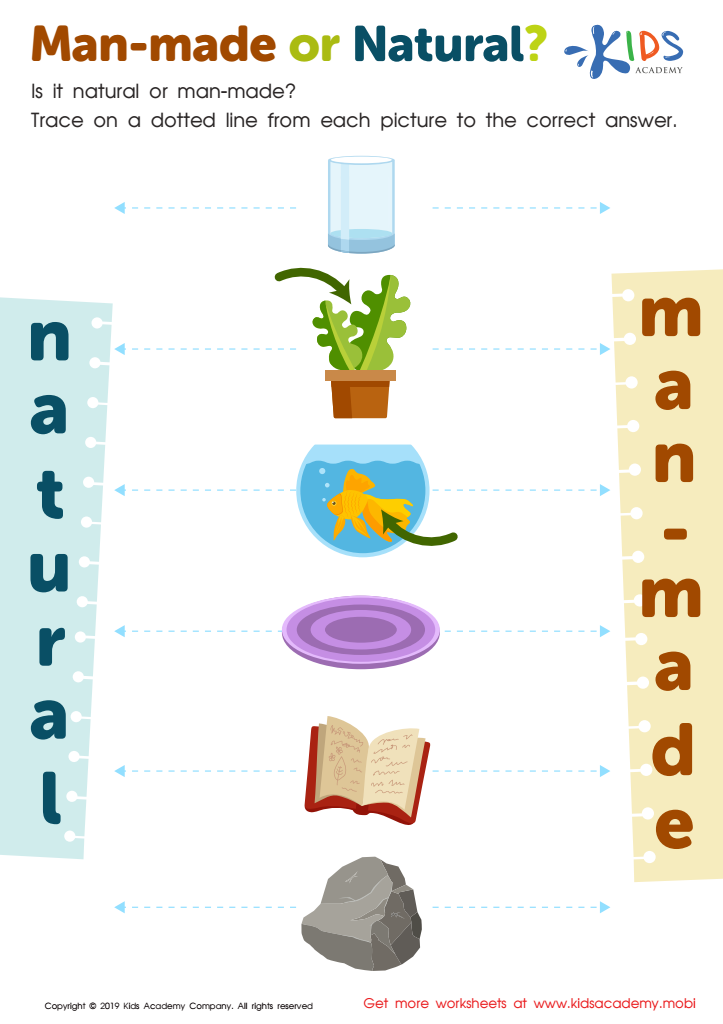
Man-Made or Natural? Worksheet





Categorizing objects is a fundamental skill for children aged 4-6, laying the groundwork for critical thinking and cognitive development. By helping children classify items, parents and teachers support their ability to identify similarities and differences, which enhances their observational skills. This fosters logical reasoning as children begin to understand relationships between categories, such as colors, shapes, sizes, or functions.
Moreover, categorization is connected to language development. As children sort and discuss various objects, they expand their vocabulary and expressive capabilities. This interaction can promote effective communication skills, enhancing their ability to share ideas and understand others.
Additionally, categorization exercises aid in developing executive function skills. Through sorting activities, children learn concepts like organizing, planning, and problem-solving. These skills are vital for academic success as they progress through school.
Lastly, engaging in categorization helps build self-regulation as children follow instructions and navigate challenges during sorting tasks. This contributes to their overall confidence in learning.
In summary, categorizing objects is an important and enjoyable activity that supports broader developmental milestones. Parents and teachers should prioritize it as a vital component of early education to foster holistic growth in young learners.








