Comparing objects Worksheets for Ages 4-6
7 filtered results
-
From - To
Discover our engaging Comparing Objects Worksheets designed specifically for children aged 4-6! These fun and interactive activities help young learners develop essential skills by encouraging them to identify similarities and differences between various objects. Our worksheets are crafted to promote critical thinking, visual discrimination, and vocabulary expansion. Each worksheet features colorful images and simple instructions, making them easy for children to understand and enjoy. Perfect for classroom settings or at-home learning, these resources offer a dynamic way to enhance observational skills while keeping your child entertained. Download our Comparing Objects Worksheets today and watch your little ones' confidence soar!
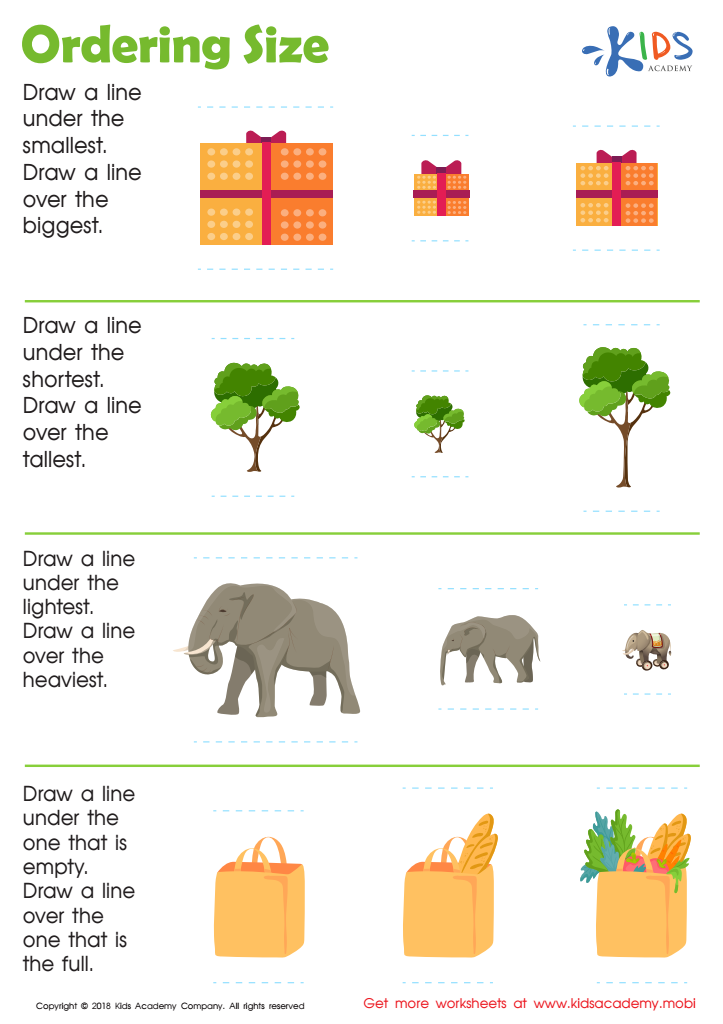
Ordering Size Worksheet
 Assign to My Students
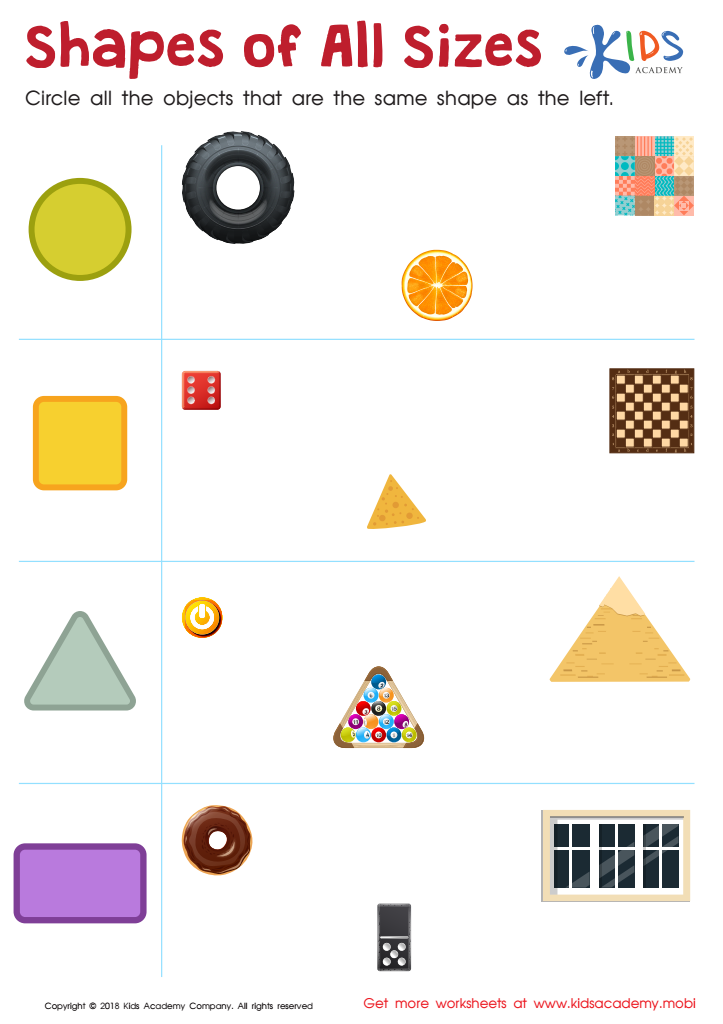
Shapes of All Sizes Worksheet
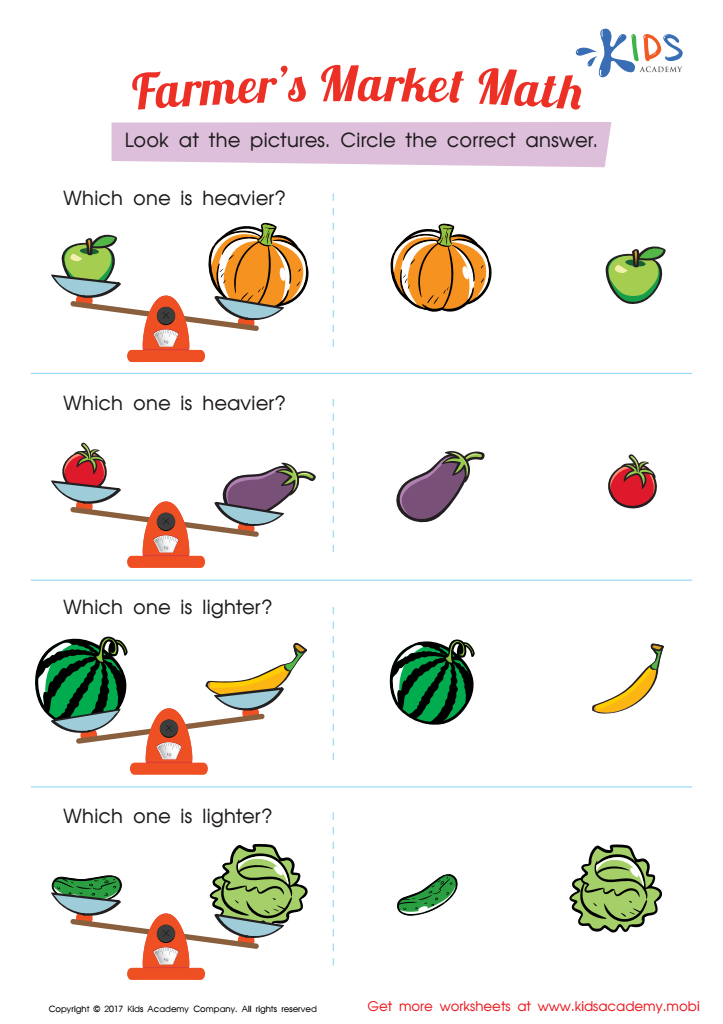
Which One Is Heavier Worksheet
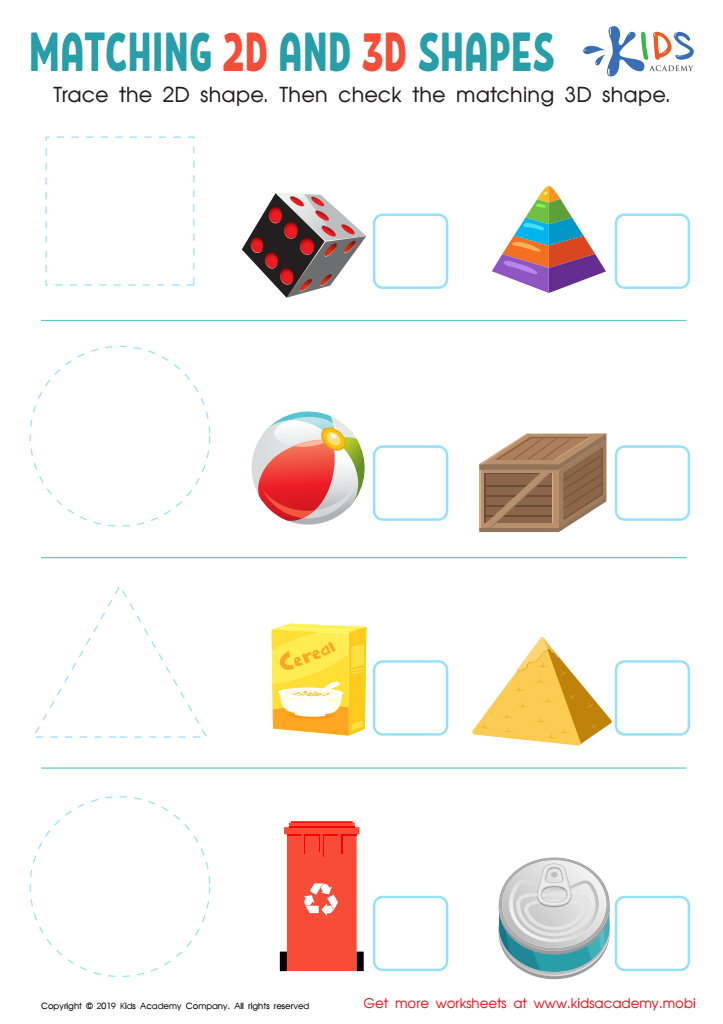
Matching 2D and 3D Shapes Worksheet
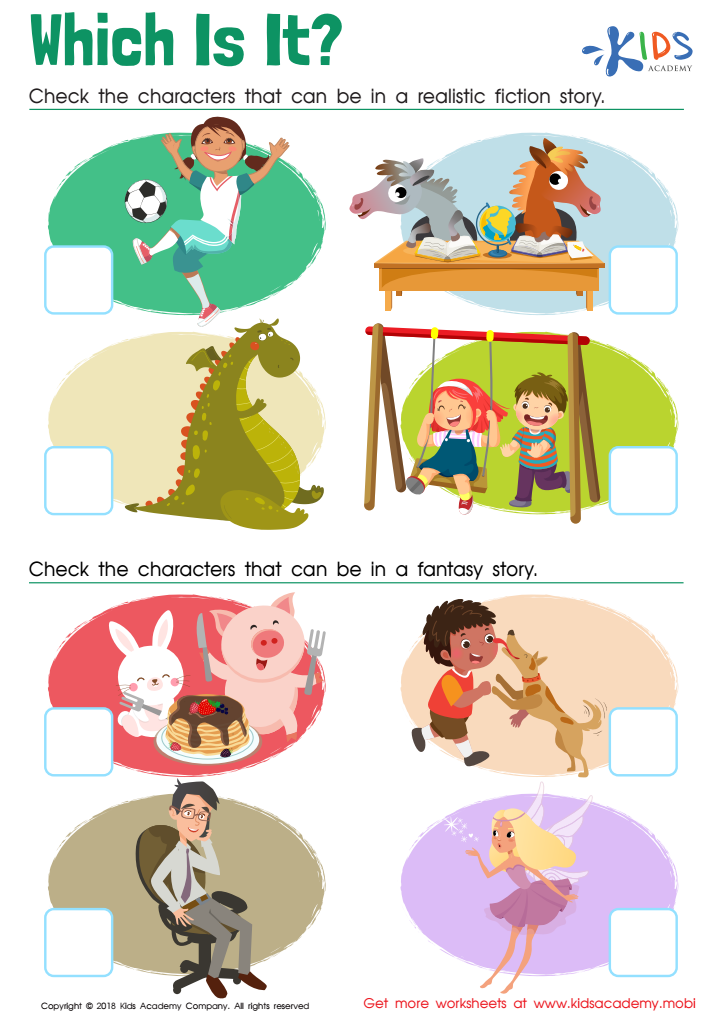
Which Is It? Worksheet
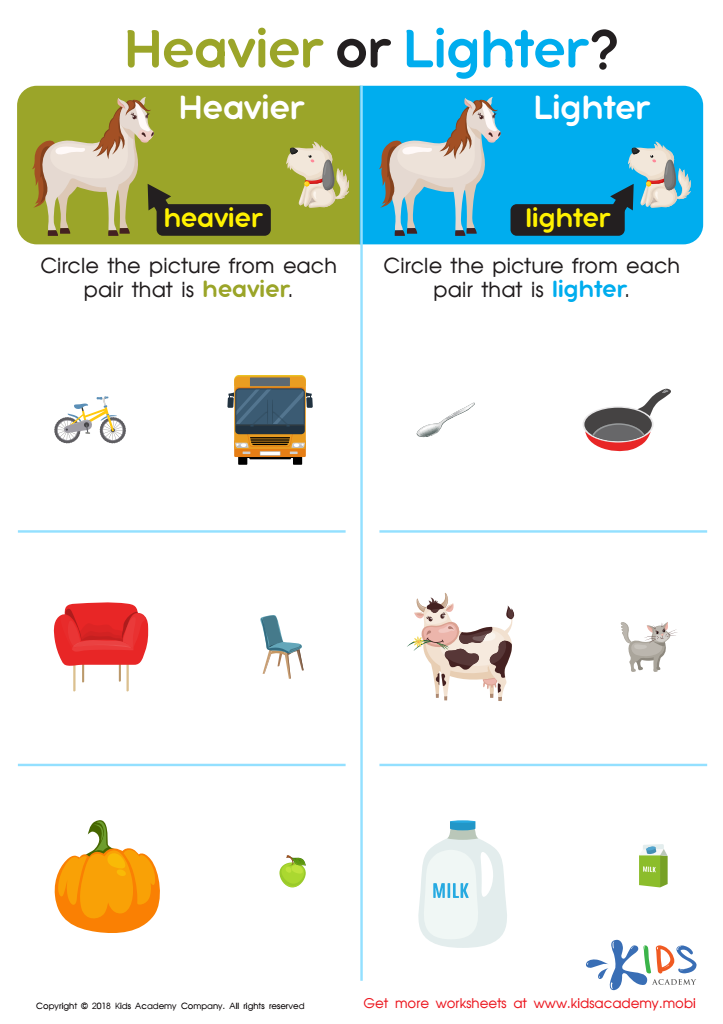
Heavier or Lighter? Worksheet
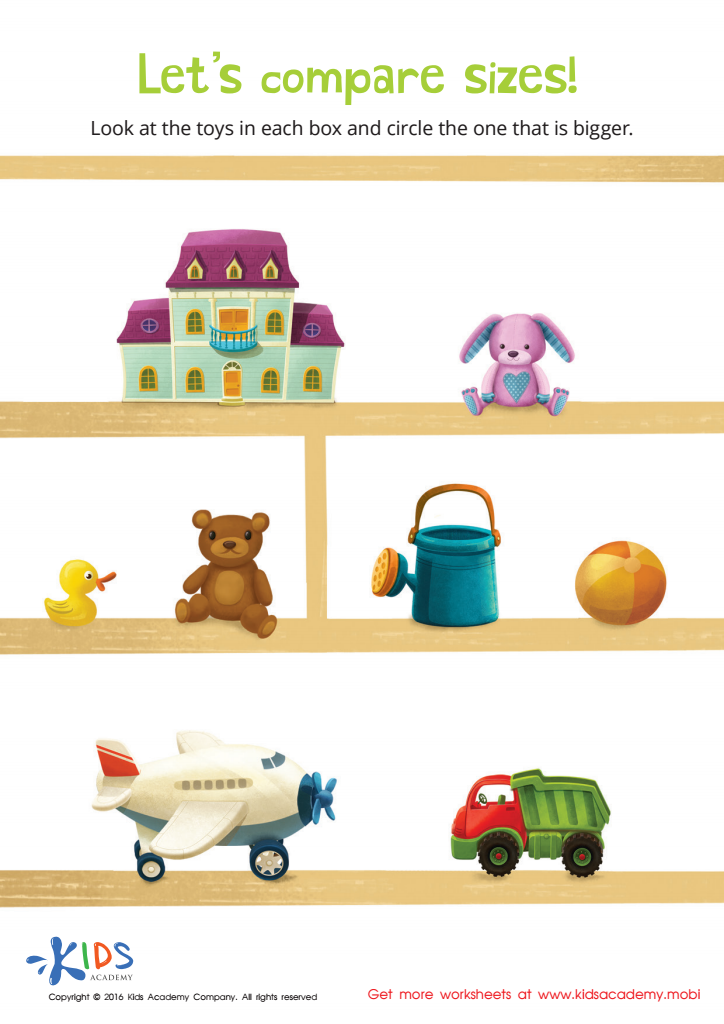
Classifying by Size Sorting Worksheet



Comparing objects is a fundamental skill that plays a crucial role in the cognitive development of children aged 4-6. During this stage, children begin to develop critical thinking and analytical skills, and comparing objects helps to lay the groundwork for these abilities. By learning to compare size, shape, color, and quantity, children engage in active problem-solving and enhance their observational skills.
Teachers and parents should prioritize this activity because it fosters mathematical understanding. For young children, making comparisons introduces the concept of measurement, which is foundational for later learning in mathematics. Through play and hands-on activities, children can learn to categorize objects, understand relationships between them, and communicate their observations.
Additionally, comparing objects can nurture language development as children articulate their thoughts, connecting words with characteristics. This social interaction will further aid in building collaboration and communication skills.
Lastly, encouraging comparisons also helps children build confidence in their reasoning abilities, paving the way for future learning successfully. Engaging children in comparing objects provides valuable learning experiences that cultivate critical thinking skills necessary for their academic and social growth.








