
Improving counting skills Worksheets for Ages 4-6
15 filtered results
Difficulty Level
Grade
Age
-
From - To
Subject
Activity
Standards
Enhance your preschooler's numerical abilities with our engaging "Improving Counting Skills Worksheets" designed specifically for ages 4-6. These fun-filled worksheets provide a variety of activities that encourage children to explore counting through colorful visuals and interactive tasks. With an emphasis on hands-on learning, your little ones will practice counting objects, writing numbers, and recognizing patterns. Each worksheet is crafted to spark curiosity and foster a love for mathematics, ensuring that early learners build a solid foundation in counting. Perfect for home, preschool, or supplementing classroom activities, these worksheets make learning to count an enjoyable adventure! Get started today!
Favorites
With answer key
Interactive
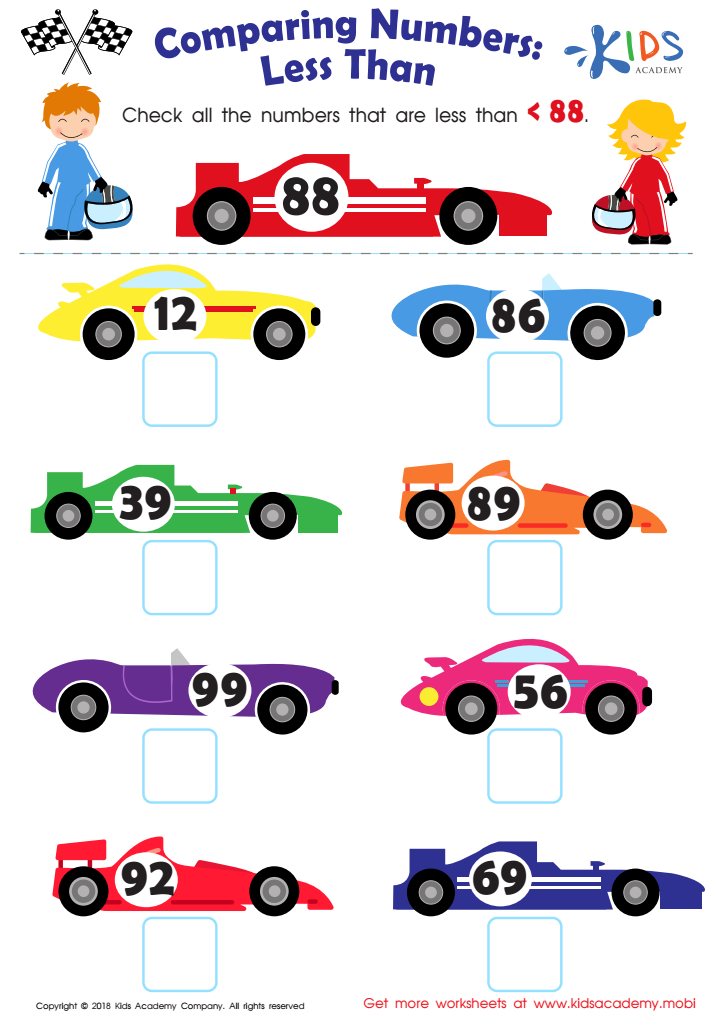
Less Than Worksheet
Compare numbers with your child using this fun worksheet! Paintings of sports cars add visuals to the task of counting up to 88. Make learning enjoyable with this colorful activity - your child will stay engaged and eager to learn more.
 Assign to My Students
Less Than Worksheet
Worksheet
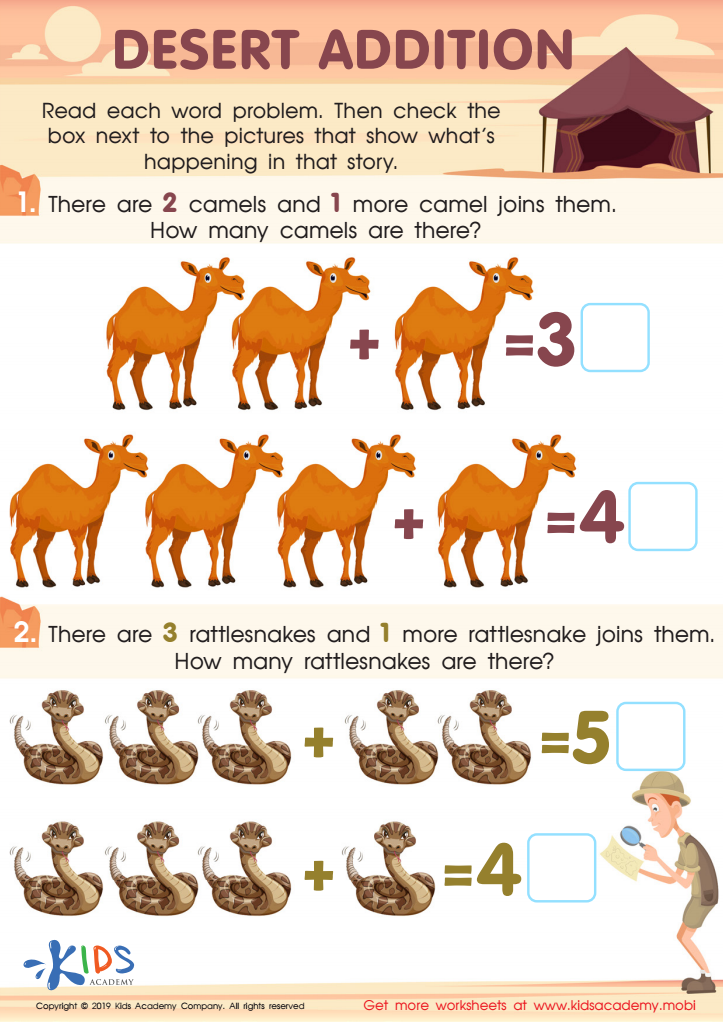
Desert Addition Worksheet
In the desert, scorching heat and little water mean animals must adapt to survive. Show kids pictures of these animals and teach their names. Then, read the word problems in the worksheet, and have them check the box next to the pictures that portray each story. 80 words
Desert Addition Worksheet
Worksheet
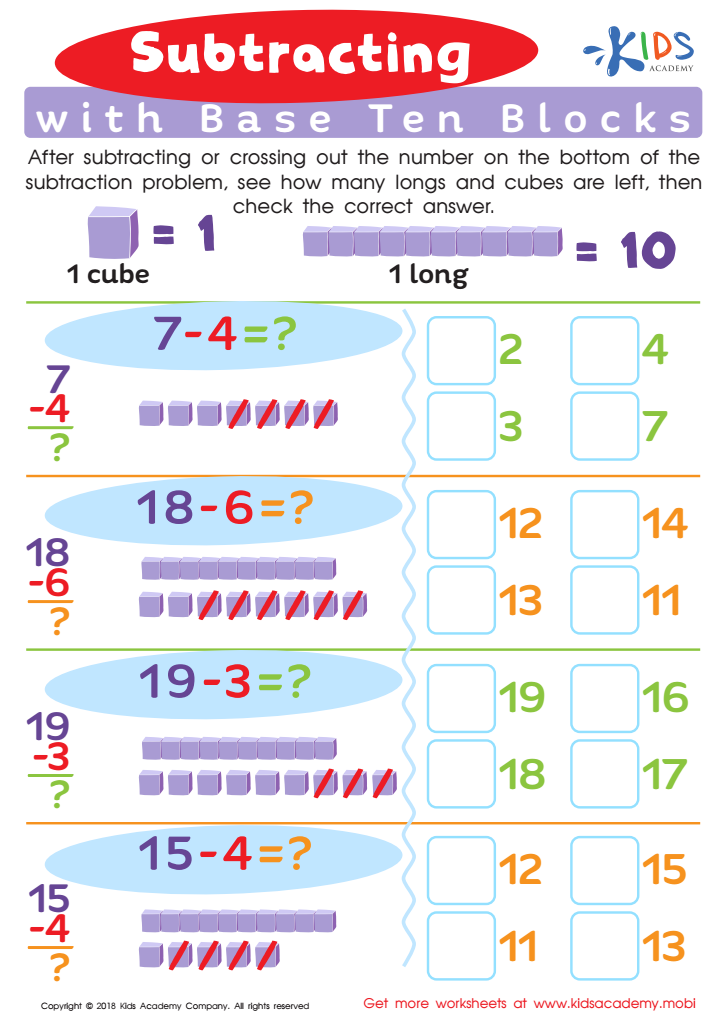
Subtracting With Base 10 Blocks Worksheet
Ask your child to count the cubes then help them check the answer. This problem may seem tricky, but it's just basic math. If they can count, they should have no trouble completing the exercise.
Subtracting With Base 10 Blocks Worksheet
Worksheet
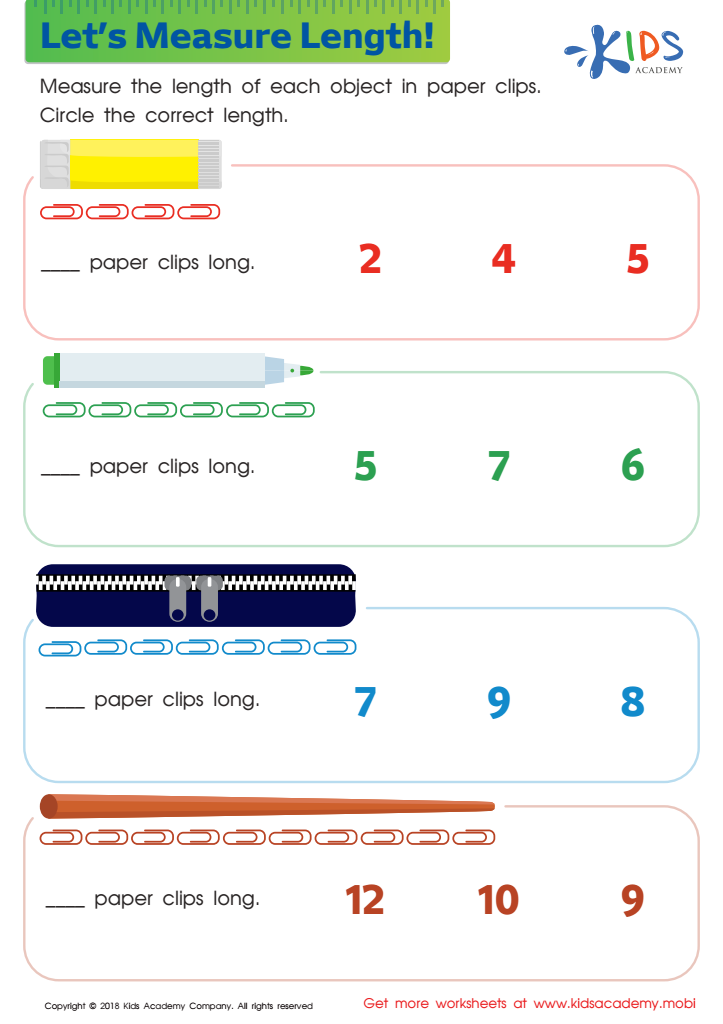
Lets Measure Length Worksheet
It's time to help your child take their measuring skills up a notch! This colorful PDF sheet from Kids Academy introduces kids to measuring with paperclips. Guide them through the page, showing them how to count the clips to measure each image. Then, circle the correct length for each to complete the sheet!
Lets Measure Length Worksheet
Worksheet
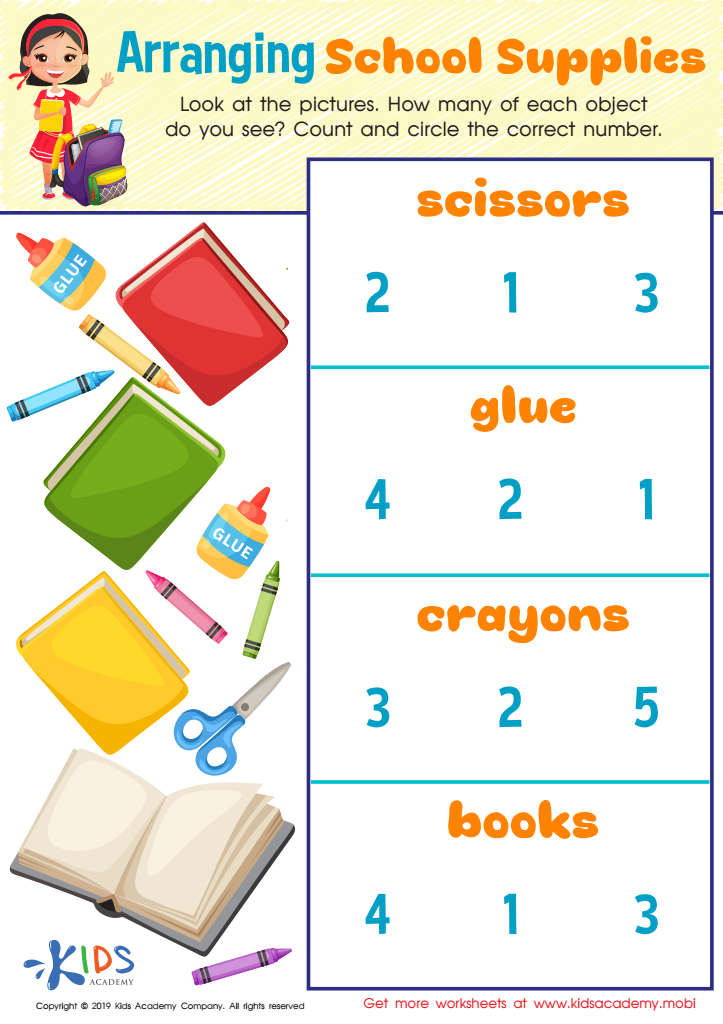
Arranging School Supplies Worksheet
Help your kids identify and count the school supplies in this colorful printout. Ask them to circle the correct number from the options provided. This is an easy and fun way for your child to practice their counting skills and recognize everyday objects.
Arranging School Supplies Worksheet
Worksheet
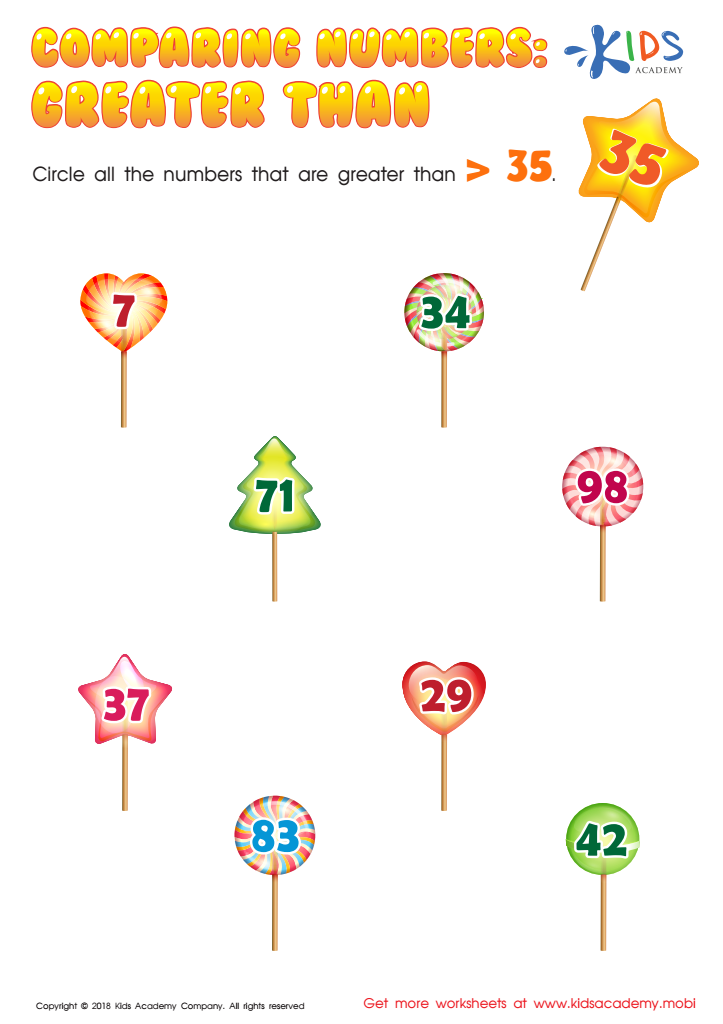
Greater Than Worksheet
Tired of generic maths problems? Try this fun pdf worksheet! With your child or student, carefully look through the numbers in the balloon and circle those greater than 35. Enjoyable and educational!
Greater Than Worksheet
Worksheet
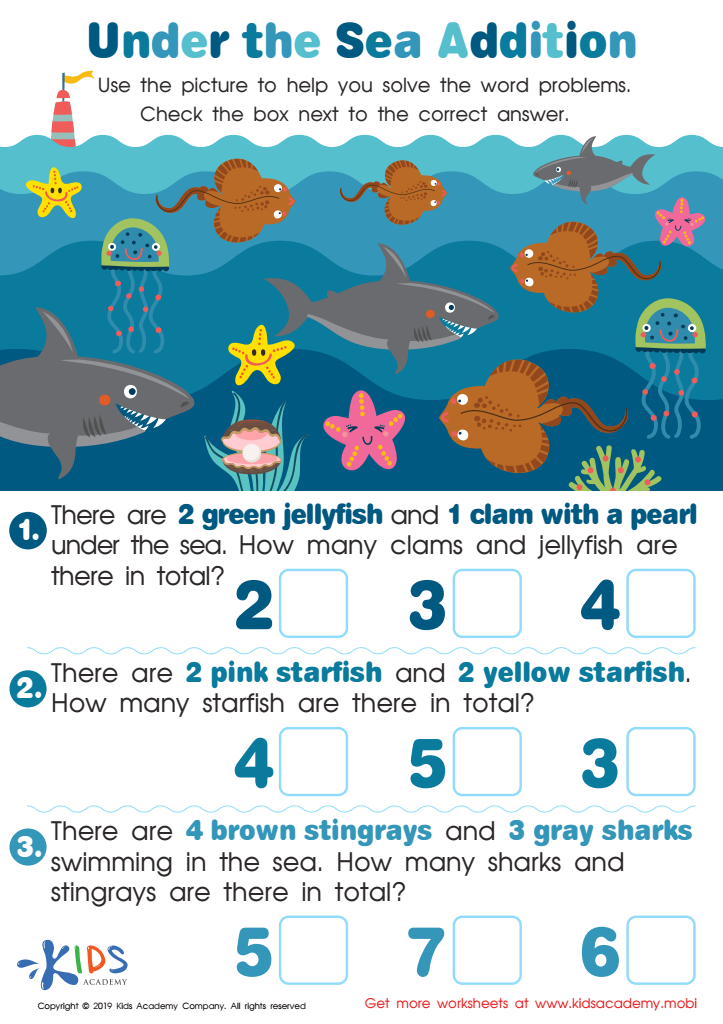
Under the Sea Addition Worksheet
Ask your kids to identify undersea animals in a picture, then solve the word problems at the bottom with it! If they're into the nature channel or marine life, they'll love this worksheet. Check the box next to the correct answer for each one. 80 words
Under the Sea Addition Worksheet
Worksheet
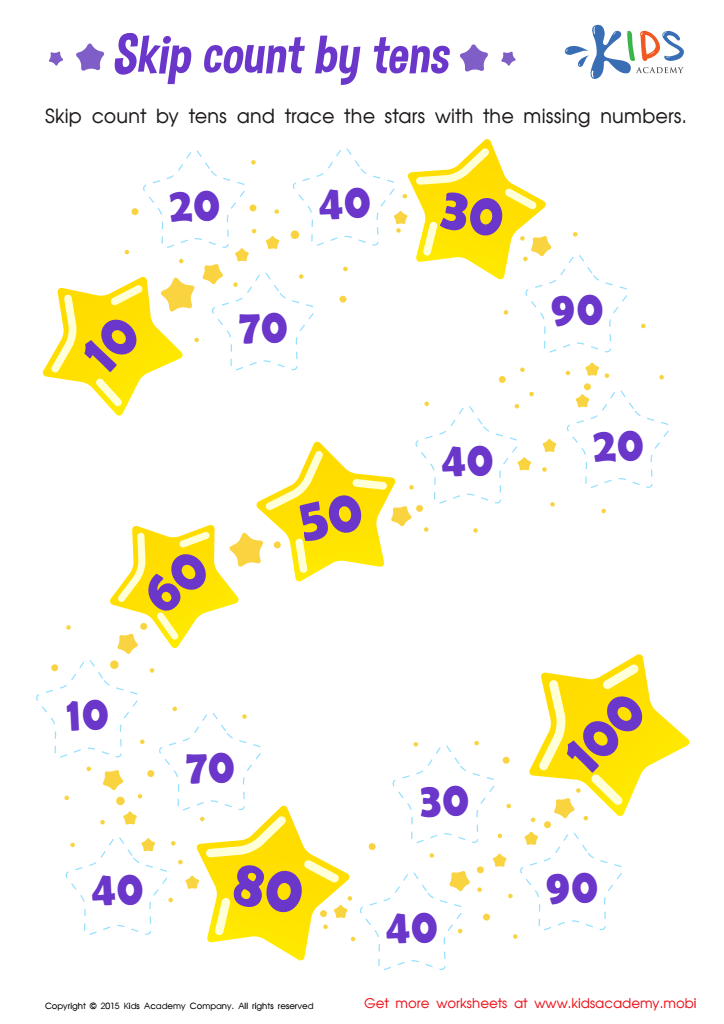
Learn dozens: Skip Count by Tens Printable
Follow a shooting star on an adventure of skip counting by 10s. Strengthen math skills with this fun and colorful worksheet. Kids will solve a puzzle, exercise logical reasoning and problem-solving skills. Get them ready for multiplication and division through increased skip counting abilities. Print this worksheet and take your star to the next level!
Learn dozens: Skip Count by Tens Printable
Worksheet
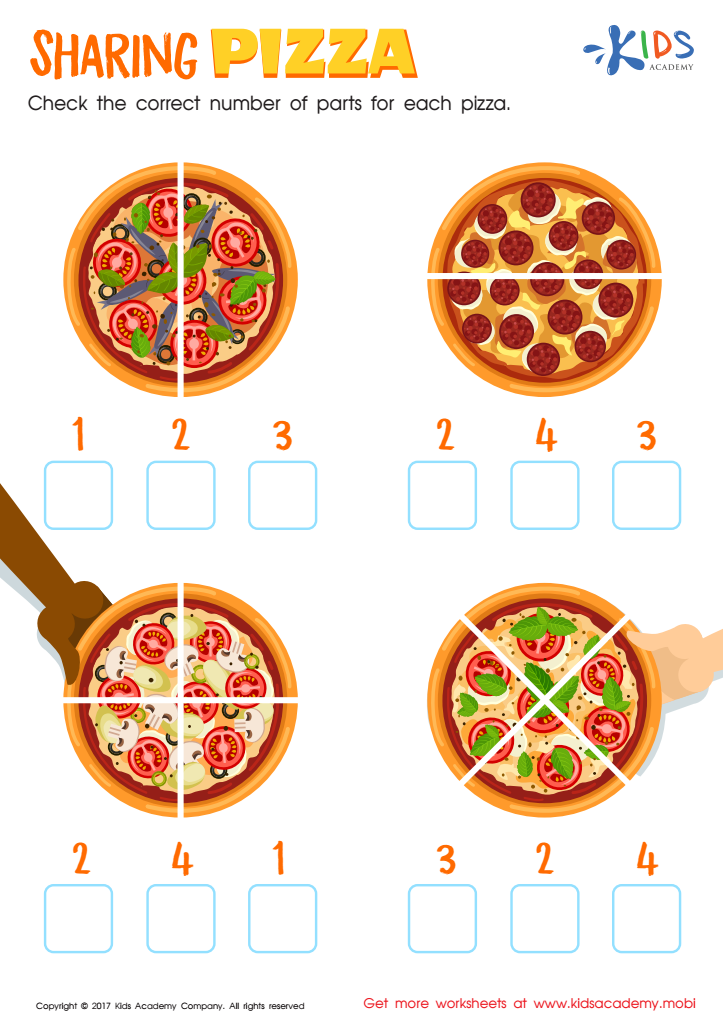
Sharing Pizza Worksheet
Show your child the four pizzas in this worksheet. Ask them to count the number of slices each one has. Help them count and check the answer for the first pizza, then do the same for the rest. Have fun counting the slices and see if they can spot the pizza!
Sharing Pizza Worksheet
Worksheet
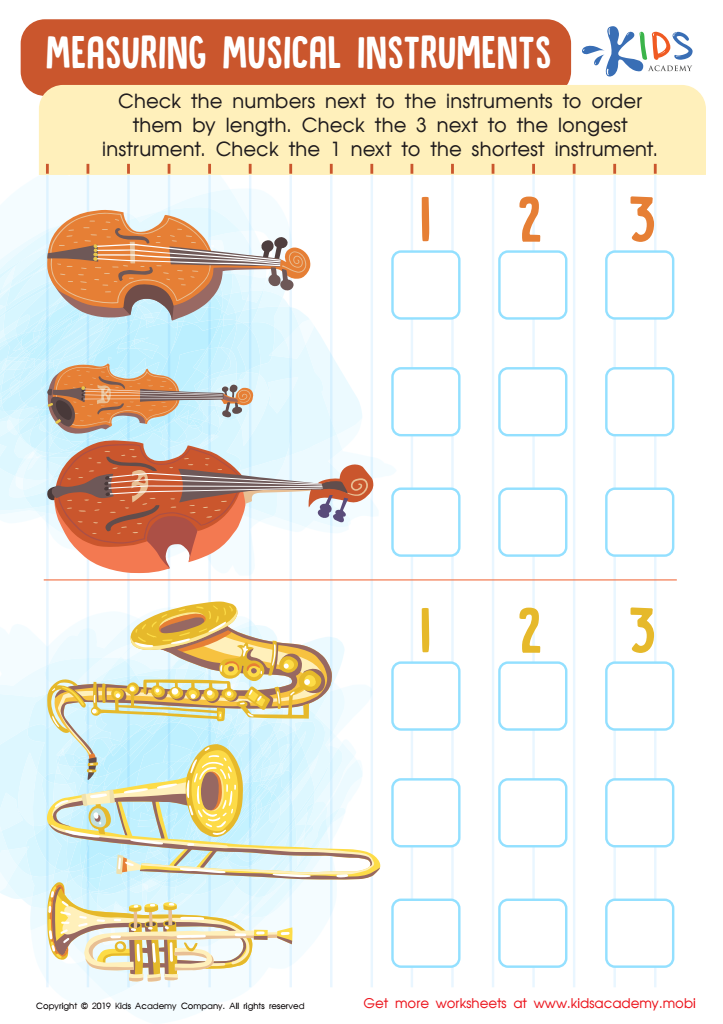
Measuring Musical Instruments Worksheet
Learning measurements can be tricky, but this worksheet makes it easy. Ask your child to identify the instruments in the pictures. Then, order them by length using the numbers. 3 is the longest, 1 is the shortest. Simple exercises like this will help them understand the different metric systems.
Measuring Musical Instruments Worksheet
Worksheet
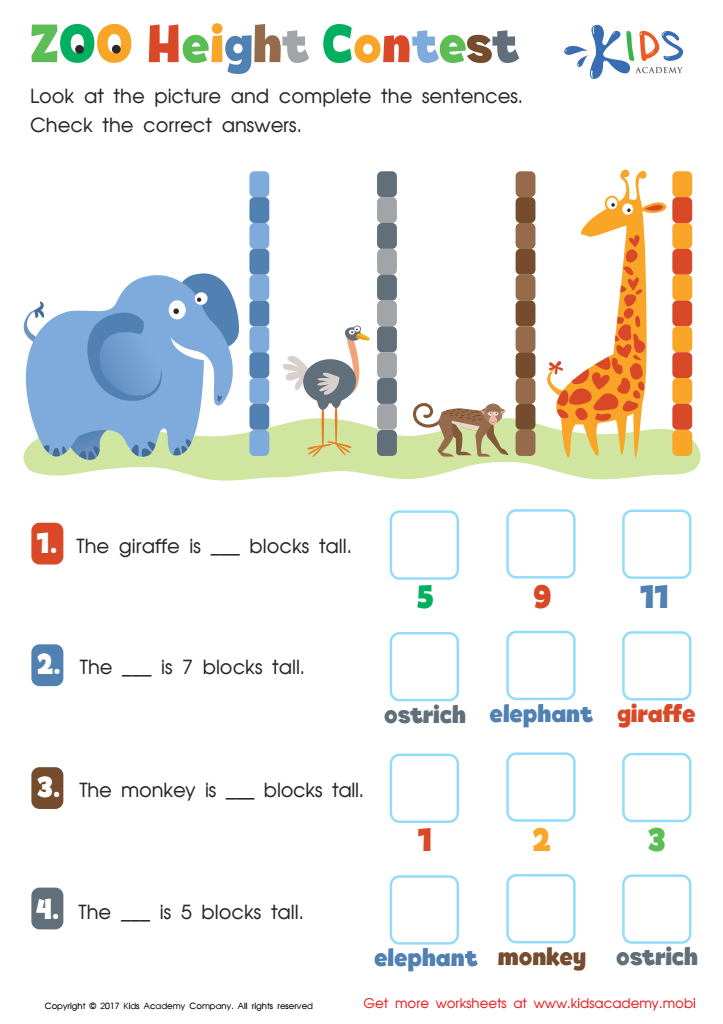
Zoo Height Contest Worksheet
Let's head to the zoo and use colorful blocks to measure your child's favorite animals! With this Kids Academy worksheet, help them practice and prepare for learning measurement. Guide them in looking at the zoo animals and counting blocks to find the height. Then, read the questions and check the box next to the correct answer.
Zoo Height Contest Worksheet
Worksheet
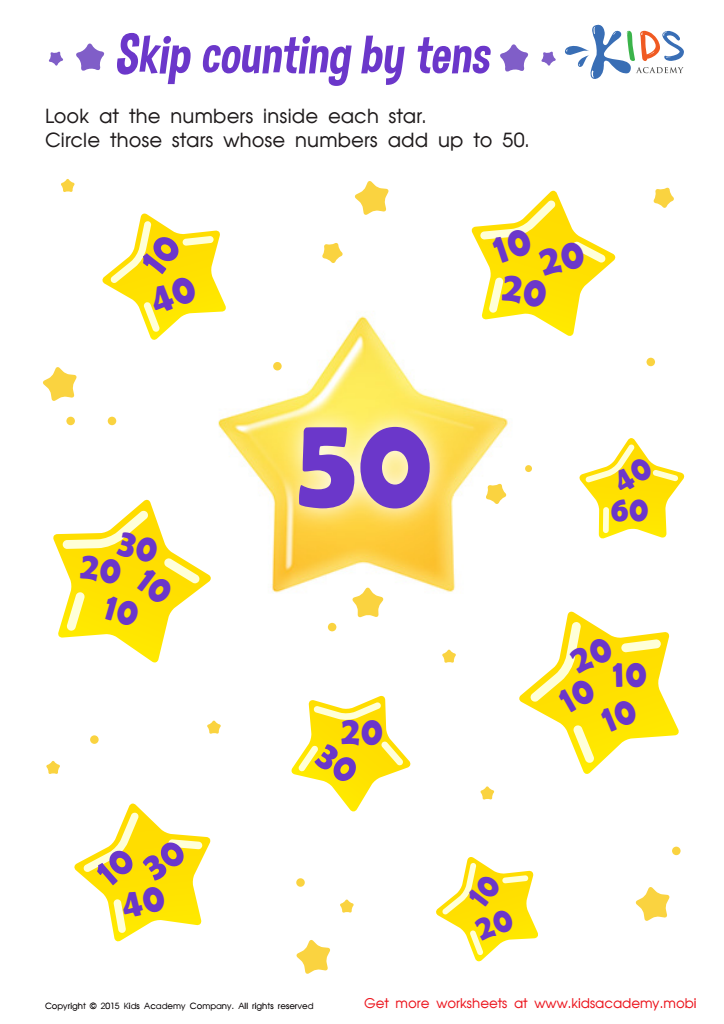
Learn Dozens: Skip Counting by Tens Printable
This skip counting by 10 worksheet helps kids strengthen fluency, practice addition & build number sense. They'll use problem-solving skills to find the correct answer, which is revealed by stars. This worksheet is a fun way to practice crucial foundational math skills.
Learn Dozens: Skip Counting by Tens Printable
Worksheet
Join Kids Academy for Free
Who is primarily going to use this learning content?







Improving counting skills for children ages 4-6 is essential for several reasons. Firstly, counting forms the foundation for more complex mathematical concepts, which children will encounter later in their academic journey. Early counting skills help young learners understand quantities, patterns, and relationships, fostering their overall cognitive development. When parents and teachers focus on these skills, they are helping to cultivate critical thinking and problem-solving abilities.
Additionally, strong counting skills enhance children’s ability to engage in everyday activities, such as sharing, measuring, and organizing, which lay the groundwork for practical life skills. Children who can count reliably gain confidence, which positively affects their learning environment.
Socially, counting can facilitate interactions among peers during play and group activities, enhancing teamwork and collaboration skills. Also, many literacy skills are tied to counting—rhyming books and songs involve numbers, making math a fun, integrated part of language learning.
Ultimately, by investing in their counting development, parents and teachers are setting children up for continued academic success while enriching their overall learning experiences. Prioritizing these foundational skills ensures that children are well-prepared for future mathematical learning and equipped with essential life skills.








