
Number formation Worksheets for Ages 4-6
3 filtered results
Difficulty Level
Grade
Age
-
From - To
Subject
Activity
Standards
Discover our engaging "Number Formation Worksheets for Ages 4-6" designed to help young learners master their number writing skills. These worksheets are perfect for preschool and kindergarten children, offering a fun way to develop fine motor skills and numerical understanding. Each worksheet features colorful illustrations and easy-to-follow traces, making learning enjoyable and effective. As kids practice writing numbers from 0 to 10, they gain confidence and prepare for more advanced math concepts. Perfect for both classroom and home use, these resources provide an excellent foundation for early math education. Start building your child's love for numbers today!
Favorites
With answer key
Interactive
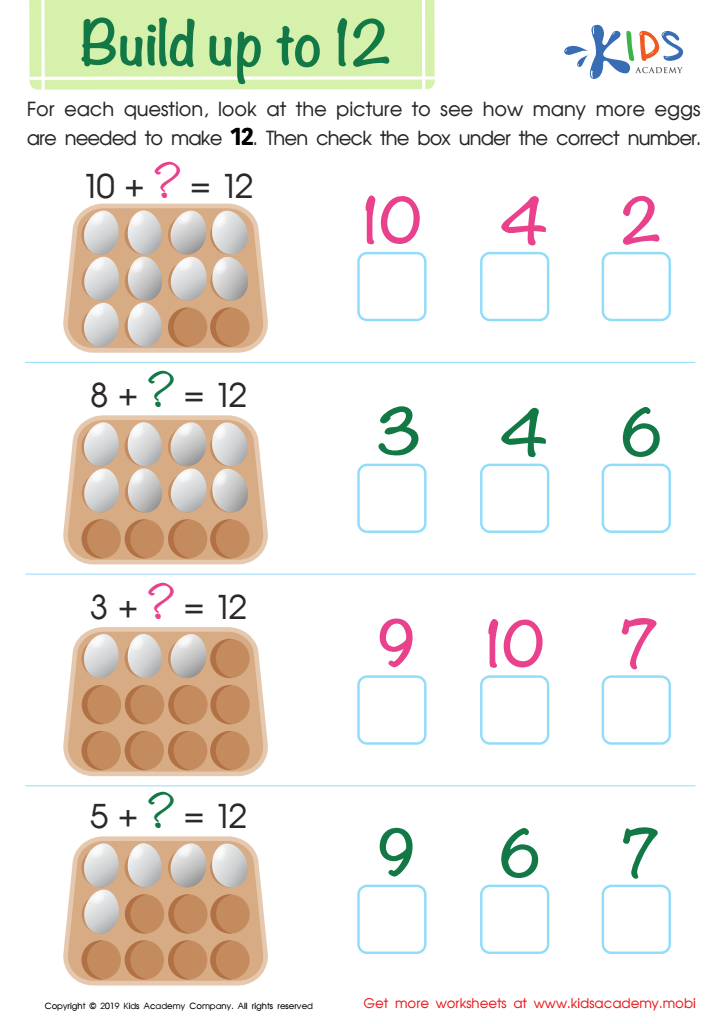
Build up to 12 Worksheet
Love eggs? Kids can identify them in the picture in this worksheet. We need to add numbers to make 12. Look at the picture and see how many eggs are needed. Check the correct number box. Breakfast or baking, eggs are essential!
 Assign to My Students
Build up to 12 Worksheet
Worksheet
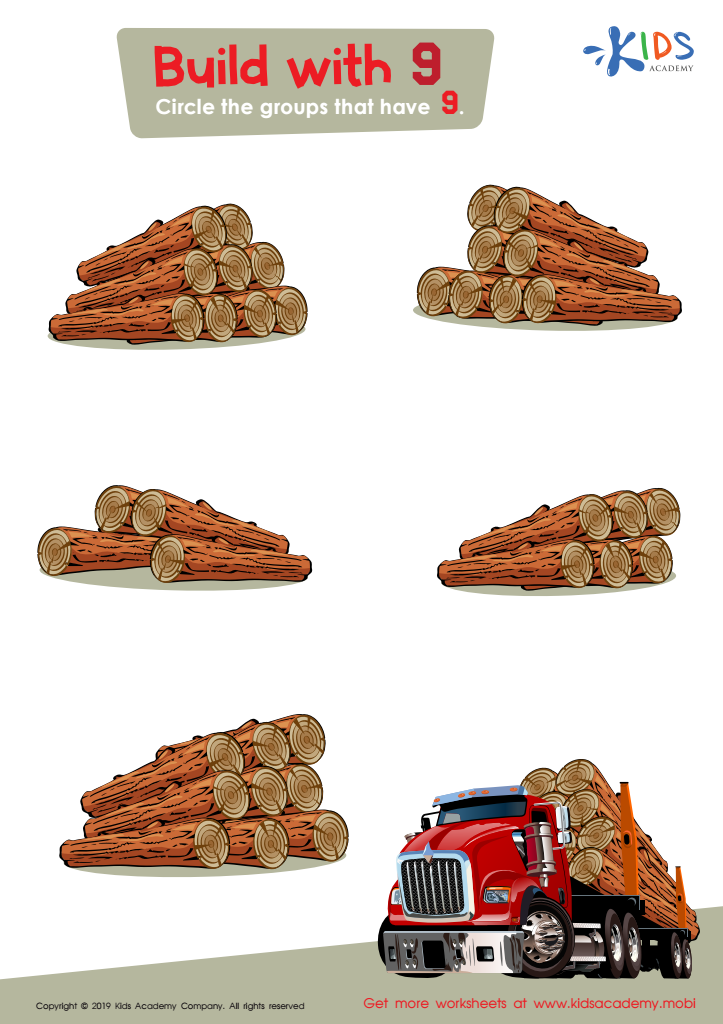
Build with 9 Worksheet
Your students' learning journey can be challenging, but ultimately rewarding. This worksheet helps them practice counting: count the logs in all the groups and circle those with 9 logs.
Build with 9 Worksheet
Worksheet
Join Kids Academy for Free
Who is primarily going to use this learning content?


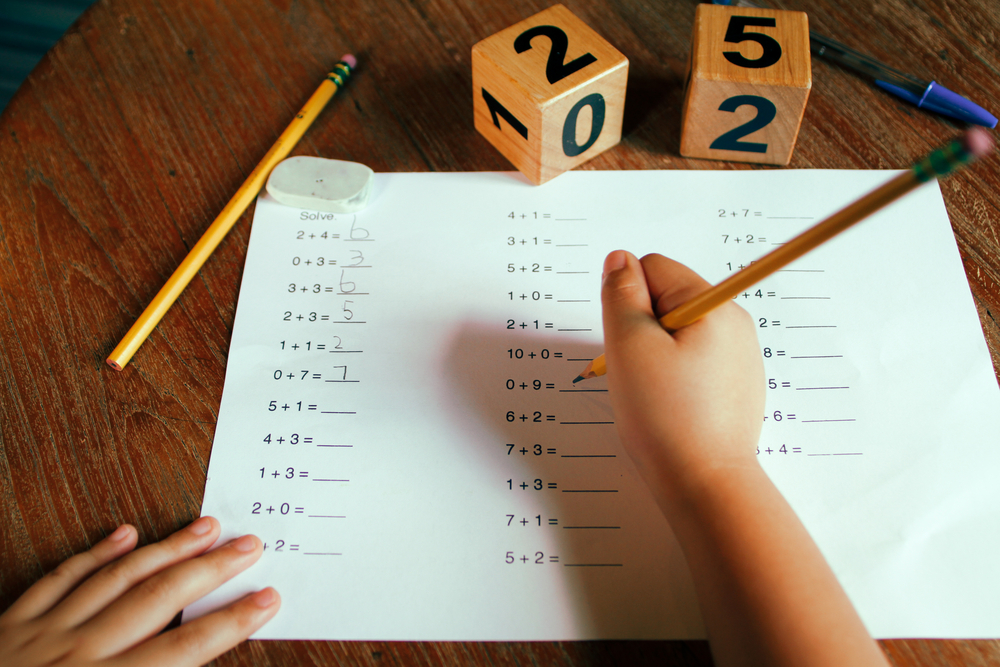




Number formation is a critical skill for children aged 4 to 6 as it lays the foundation for their mathematical understanding and overall learning experiences. During these formative years, children develop fine motor skills and cognitive abilities that directly impact their ability to write numbers correctly. Proper number formation helps prevent confusion and mistakes in arithmetic as they progress in their education.
Teachers and parents play a vital role in supporting this skill. When children practice correct number formation, they enhance their hand-eye coordination, which transfers to better handwriting and increased confidence in expressing themselves through writing. Additionally, mastering number formation helps children grasp fundamental math concepts, such as counting, addition, and subtraction.
Engaging in activities that promote number formation, such as tracing, drawing, and using manipulatives, can make learning enjoyable. Parents and teachers should encourage this with praise and positive reinforcement, creating an environment that emphasizes the importance of diligence and attention to detail. Collectively, nurturing correct number formation in early learners aids their overall academic journey, fostering a love for learning and establishing healthy study habits that will benefit them in the future.








