
Predicting outcomes Worksheets for Ages 4-6
3 filtered results
Difficulty Level
Grade
Age
-
From - To
Subject
Activity
Standards
Explore our engaging "Predicting Outcomes Worksheets" designed specifically for children aged 4-6. These worksheets help young learners enhance their critical thinking and reasoning skills as they practice predicting the results of various scenarios. Each activity is crafted to spark curiosity and creativity, making learning fun and interactive. Children will engage with colorful illustrations and relatable situations, promoting their ability to analyze and make informed guesses. Ideal for both home and classroom settings, these worksheets are perfect for developing essential cognitive skills while fostering a love for learning in early learners. Start your child’s journey to meaningful predictions today!
Favorites
With answer key
Interactive
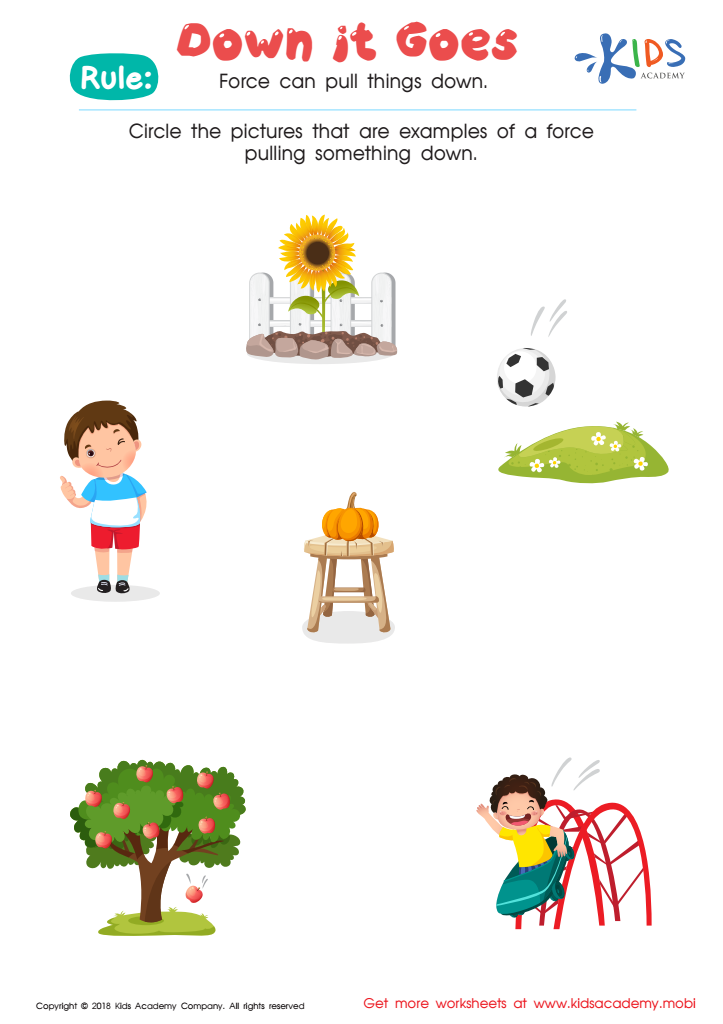
Down it Goes Worksheet
Explain gravity to your child using this fun worksheet. Ask them to give examples of things pulled down with force, then instruct them to circle the pictures that show this. It's a great way to help them understand the concept of gravity.
 Assign to My Students
Down it Goes Worksheet
Worksheet
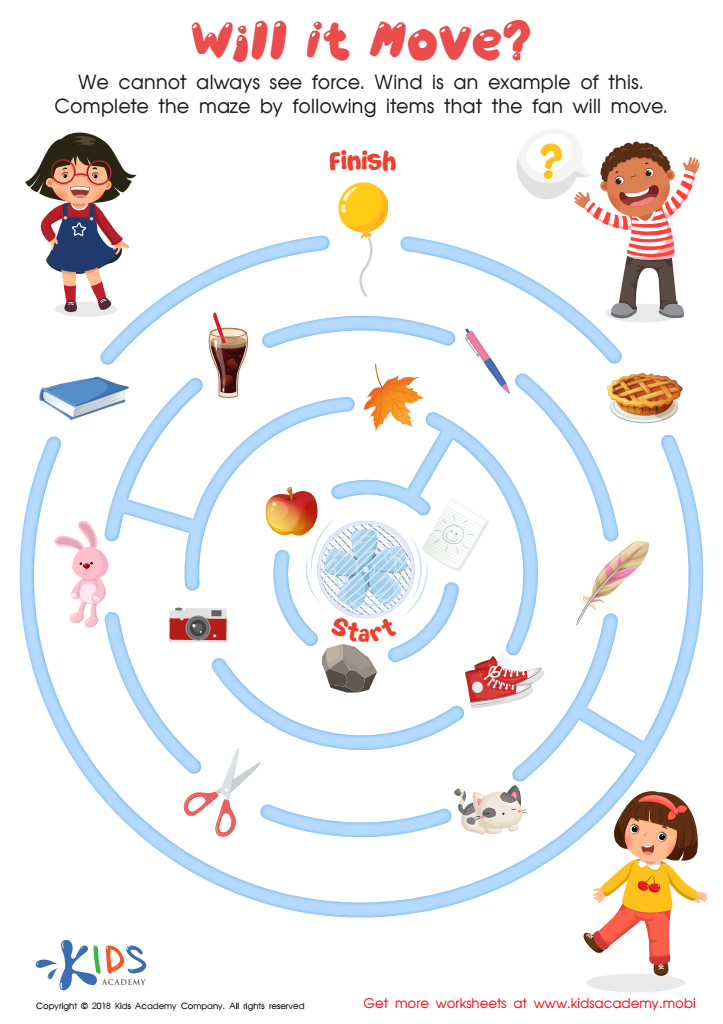
Will it Move? Worksheet
Does your child know about force? If yes/no, this worksheet can help. Force is invisible - like wind - but it moves objects. Ask your child to complete the maze, following the path of items moved by the wind. 80 words.
Will it Move? Worksheet
Worksheet

Race Car Ramp Worksheet
Kids can learn numbers quickly and have fun with this worksheet! It teaches preschoolers counting to 5 and allows them to draw a car ramp. It's a creative way to learn numbers, making them fun and easy to remember.
Race Car Ramp Worksheet
Worksheet
Join Kids Academy for Free
Who is primarily going to use this learning content?


.jpg)





Predicting outcomes for children aged 4-6 is essential for parents and teachers as it directly influences developmental milestones, academic progress, and overall well-being. At this stage, children are undergoing rapid cognitive, social, and emotional growth, making it vital to understand their potential trajectories.
By evaluating predictive outcomes, educators and parents can tailor their approaches to meet individual needs, fostering a conducive learning environment. For instance, identifying a child's strengths and areas for improvement allows for targeted interventions, thereby enhancing learning experiences and fostering motivation.
Additionally, predictive assessments can inform curriculum development, ensuring age-appropriate activities are designed that stimulate interest and engagement. Understanding potential challenges early on can also facilitate early interventions, reducing the risk of long-term academic difficulties and promoting resilience and adaptability.
Moreover, this early awareness equips parents and teachers to build strong partnerships focusing on each child’s unique development while boosting confidence and self-esteem. Ultimately, caring about predicting outcomes grants families and educators a critical toolkit to support children's earliest achievements, paving the way for success in later educational stages. Emphasizing this proactive approach ensures that every child is provided with the best opportunities for a bright and fulfilling future.








