Spatial Orientation Worksheets for Ages 4-6
4 filtered results
-
From - To
Enhance your child's learning journey with our Spatial Orientation Worksheets designed for kids aged 4-6! These engaging activities help young learners develop crucial spatial awareness skills, including map reading, understanding directions, and recognizing shapes in relation to their surroundings. Each worksheet is tailored to captivate your child's interest while promoting cognitive growth and problem-solving abilities. Ideal for both home and classroom settings, our worksheets foster independent learning, creativity, and critical thinking. Explore our collection today and watch your child thrive as they navigate the world around them with confidence! Perfect for educators and parents aiming for a well-rounded educational experience.
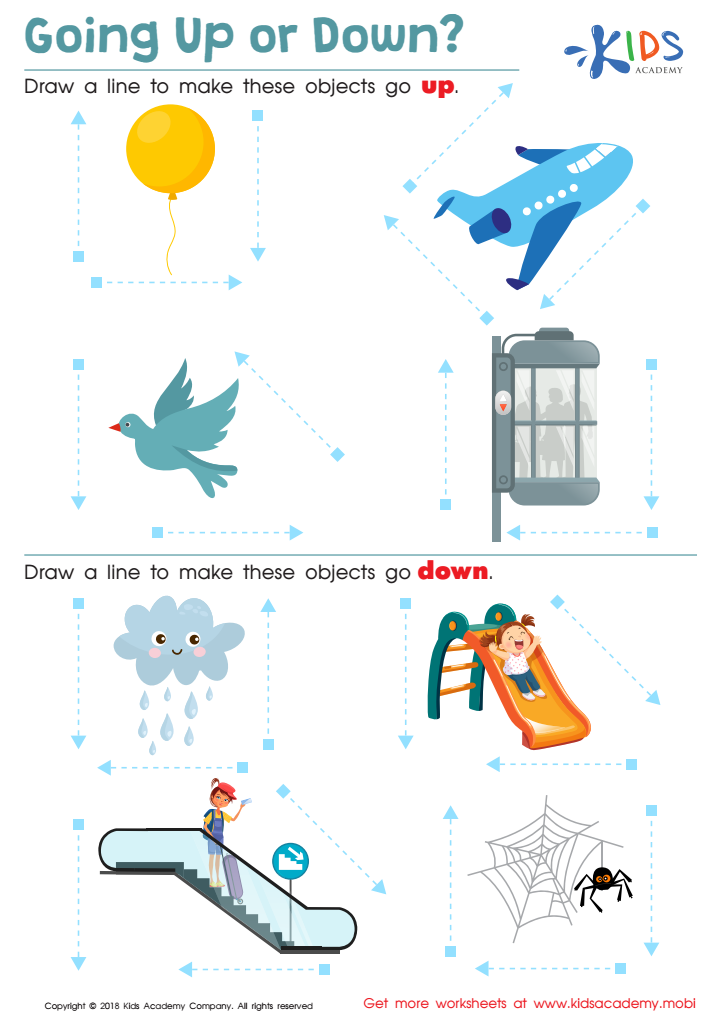
Going up or Down? Worksheet
 Assign to My Students
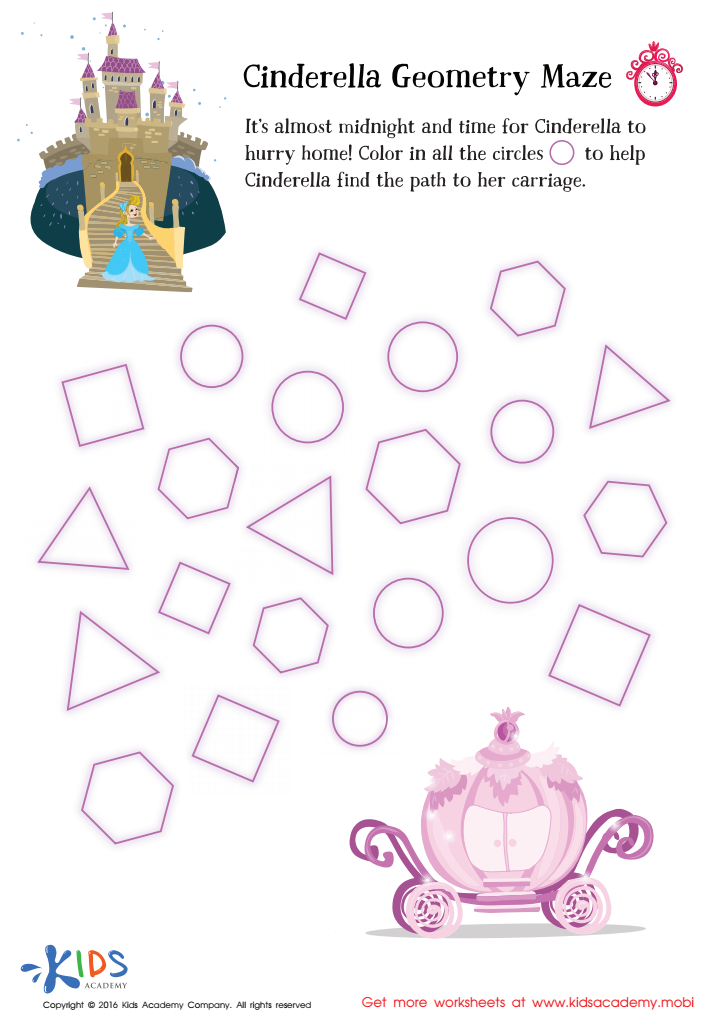
Cinderella Geometry Maze Worksheet
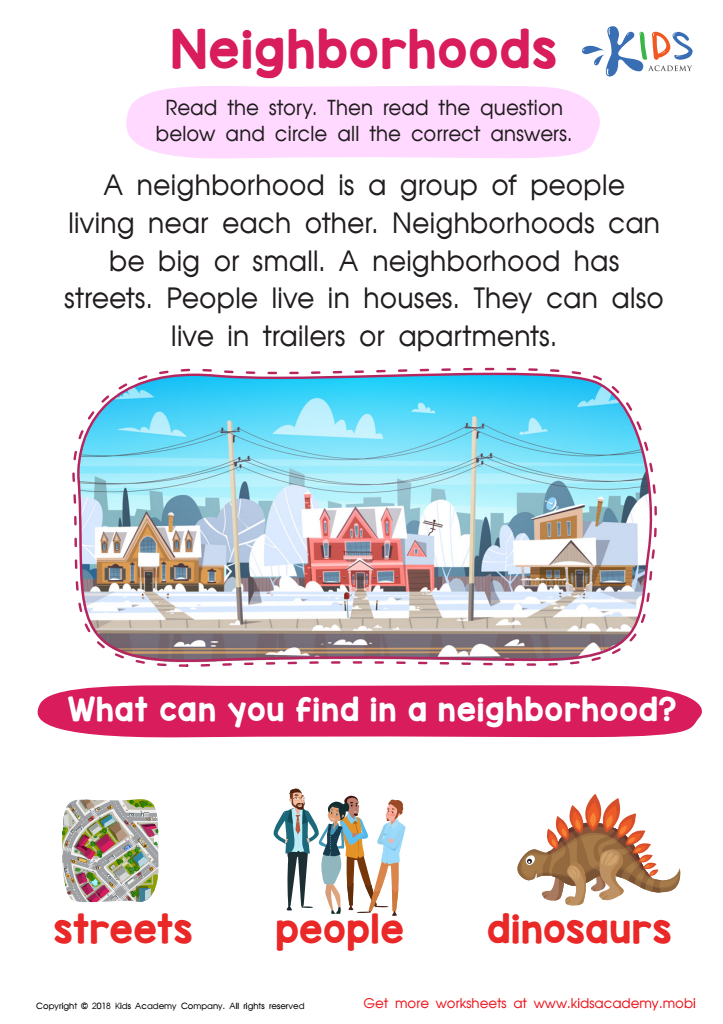
Neighborhoods Worksheet
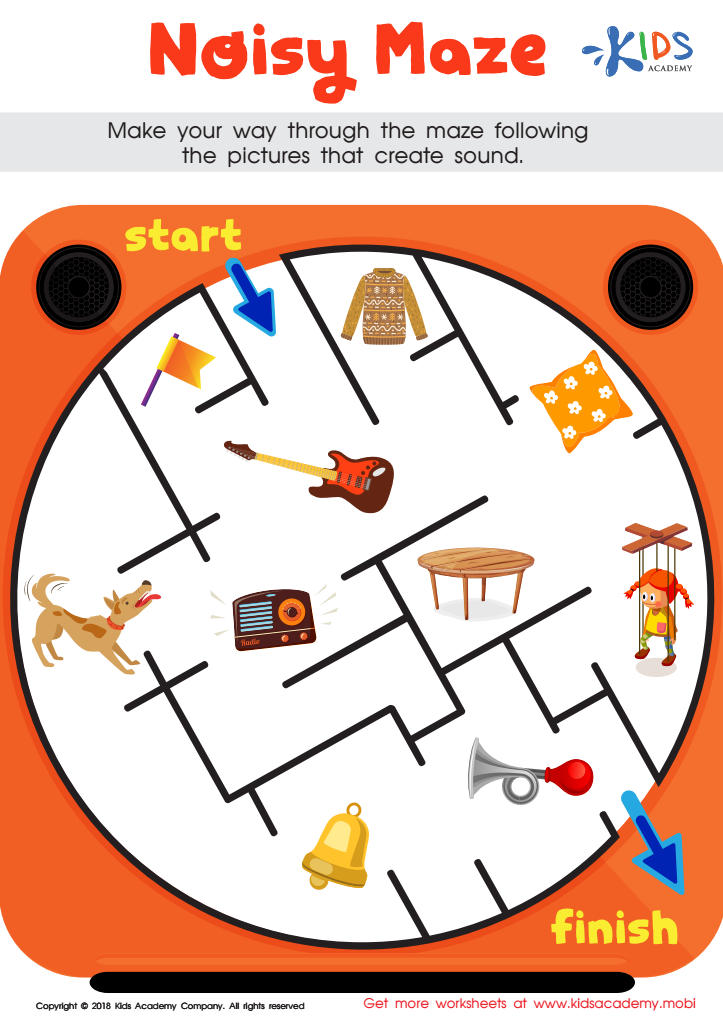
Noisy Maze Worksheet







Spatial orientation is crucial for children aged 4-6 as it serves as a foundation for various cognitive and physical skills. At this stage of development, children begin to understand their position in relation to objects and spaces around them. This ability impacts their everyday activities, from navigating their environment to engaging in play and social interactions.
When teachers and parents cultivate spatial orientation skills, they help children excel in crucial areas such as math, reading, and science. For instance, recognizing shapes, understanding maps, and grasping geometric concepts hinge on strong spatial skills. Moreover, these skills enhance problem-solving abilities because children learn to visualize and manipulate objects mentally.
Encouraging children's spatial orientation promotes physical skills too, such as motor coordination necessary for activities like writing, drawing, and playing sports. Engaging in games that require movement and direction, like obstacle courses or scavenger hunts, can significantly contribute to their spatial awareness.
Overall, supporting the development of spatial orientation in early childhood leads to a successful transition into more complex academic concepts, fosters independence, and promotes confidence in exploration and learning. Parents and teachers play a vital role in this process, making it essential to prioritize and integrate spatial awareness activities into daily routines.








