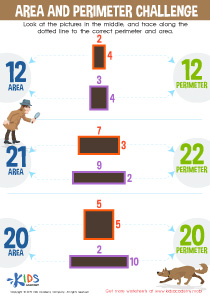
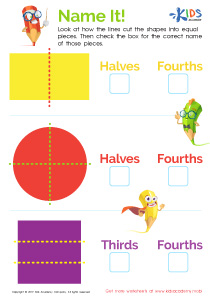
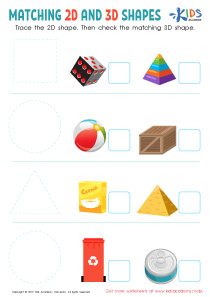
Critical Thinking 2D Shapes Worksheets for Ages 4-6
5 filtered results
-
From - To
Enhance your child's critical thinking skills with our engaging 2D Shapes Worksheets designed specifically for ages 4-6! These interactive activities provide young learners with the opportunity to explore fundamental geometric concepts while developing problem-solving abilities. Each worksheet encourages kids to identify, compare, and manipulate various 2D shapes in fun, creative ways. Not only do they reinforce shape recognition, but they also promote analytical reasoning by challenging children to think critically as they engage in exciting exercises. Perfect for preschool or early grade classrooms, our worksheets make learning about shapes an enjoyable experience that sparks curiosity and fosters lifelong learning skills!
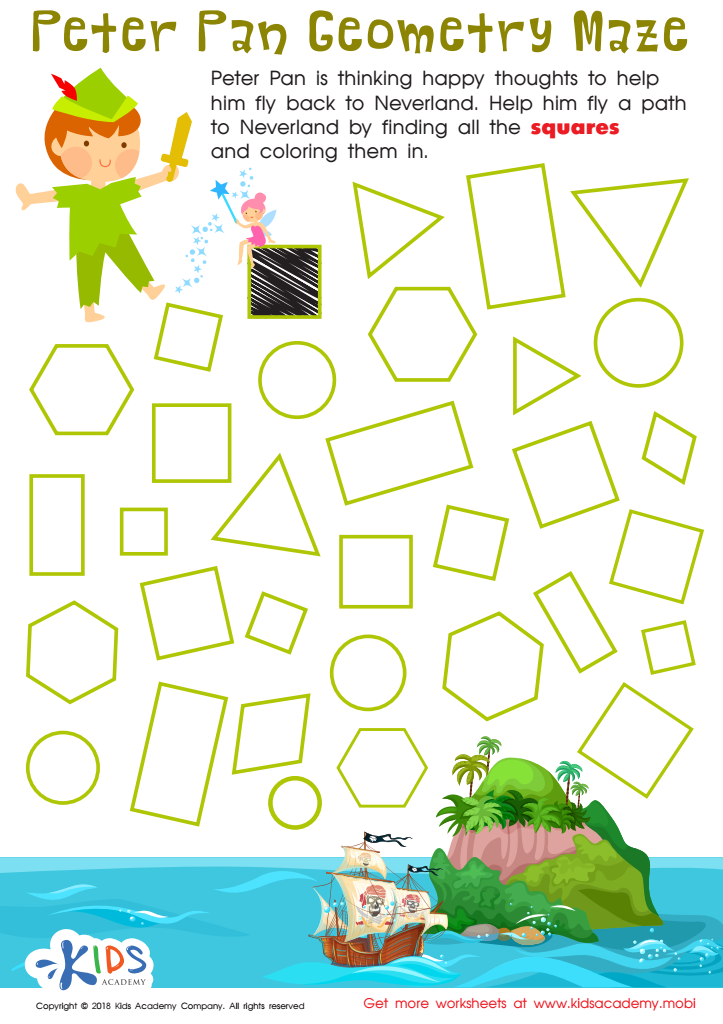
Peter Pan Worksheet
 Assign to My Students


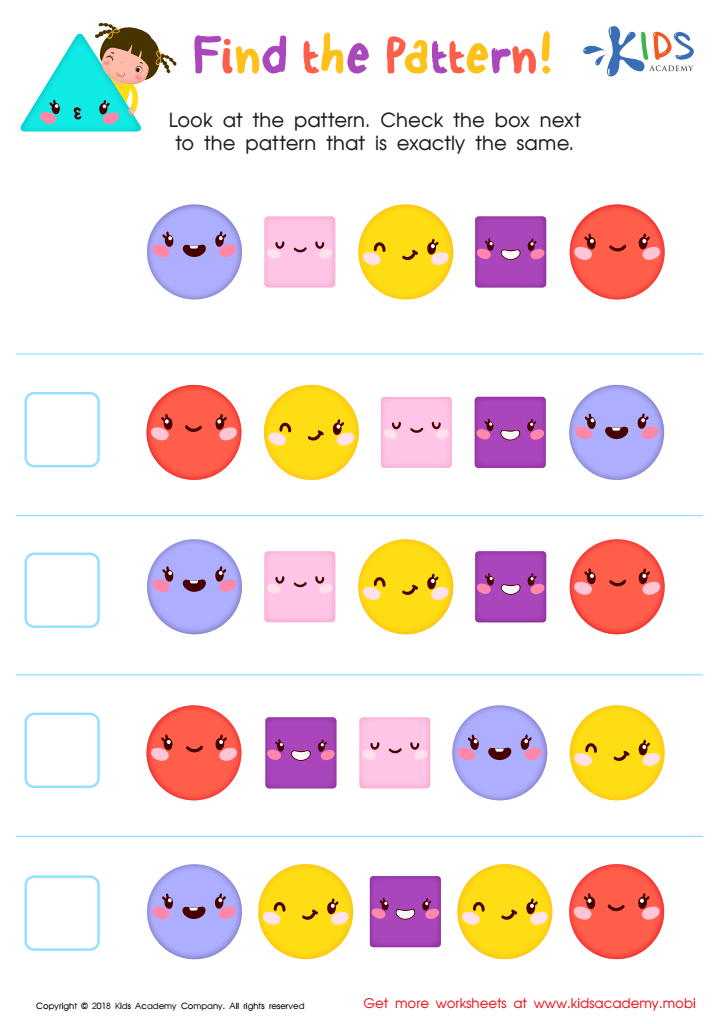
Find the Pattern Worksheet
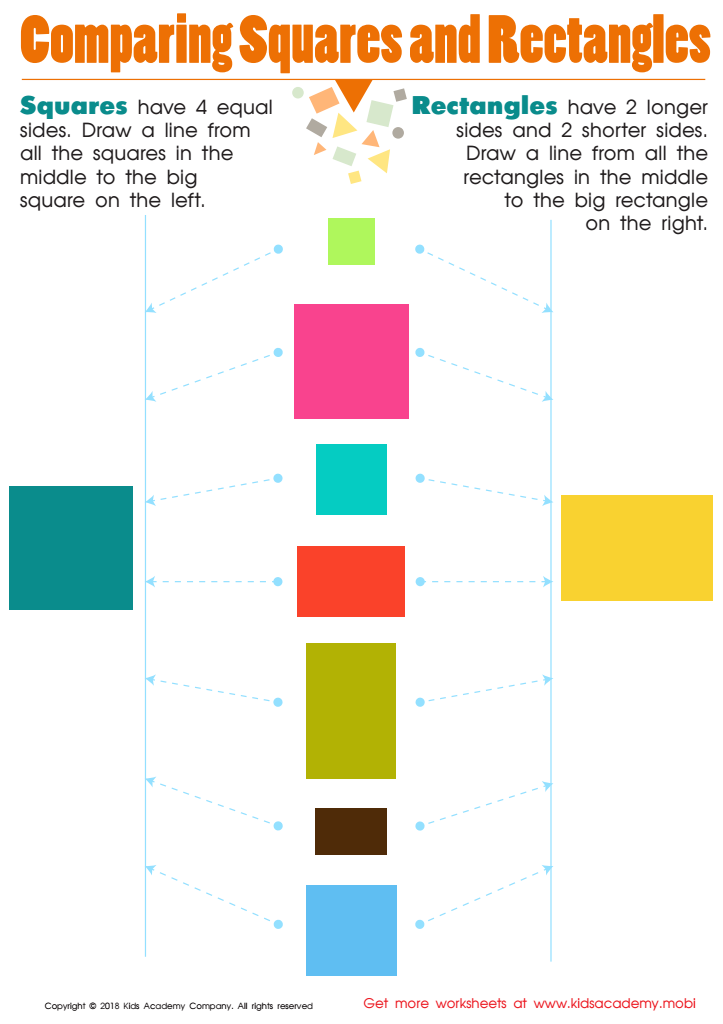
Comparing Squares Rectangles Worksheet
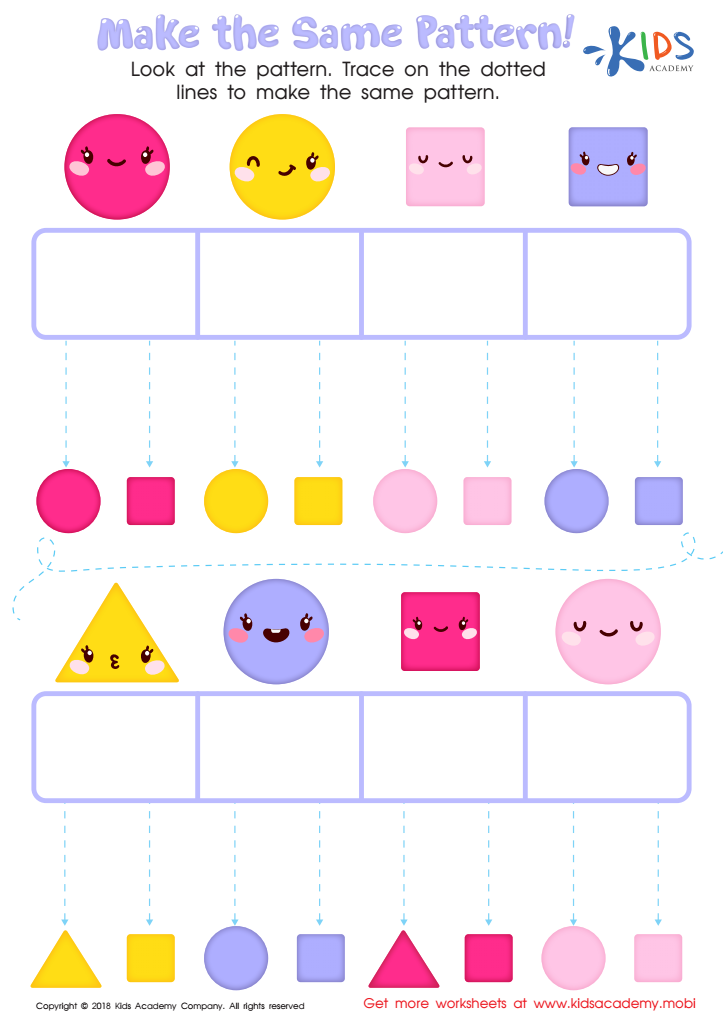
Make the Same Pattern Worksheet
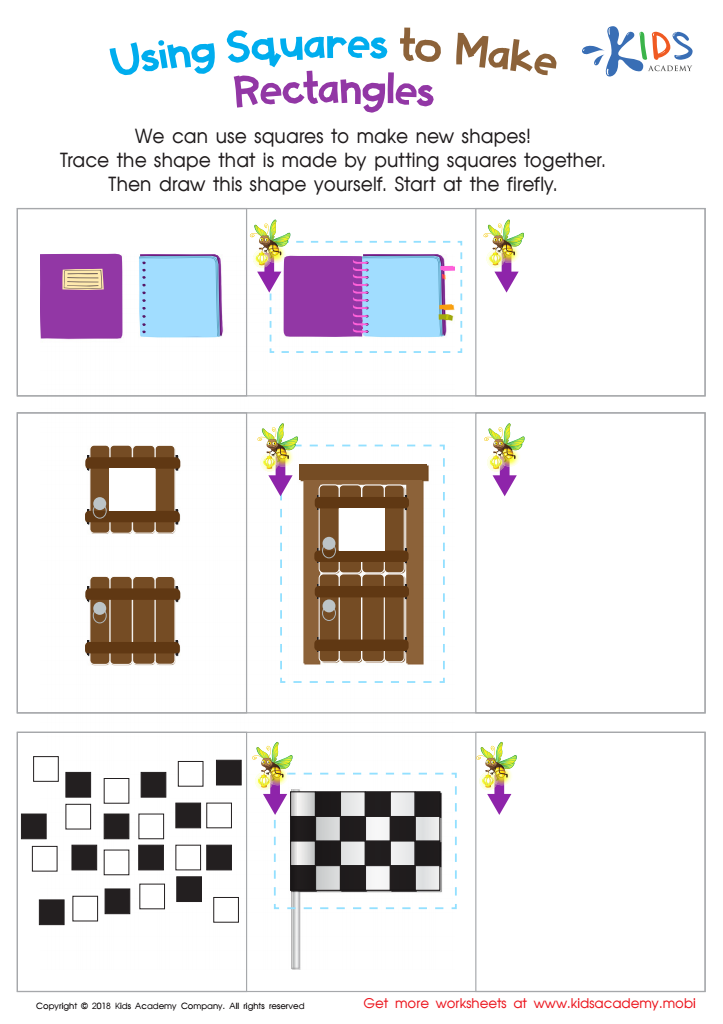
Using Squares to Make Rectangles Worksheet








Critical thinking in young children, particularly regarding 2D shapes, is essential for cognitive development and foundational math skills. At ages 4 to 6, children are naturally curious and begin exploring the world through observation and inquiry. Teaching them to think critically about 2D shapes not only enhances their understanding of geometric concepts but also nurtures vital reasoning skills.
When children analyze the properties of shapes—such as sides, angles, and symmetry—they learn to make comparisons and draw conclusions. This builds their ability to solve problems and think logically, skills that are crucial across all areas of learning. Engaging with 2D shapes encourages creativity as children experiment with combining shapes to create new forms or solve puzzles.
Additionally, a strong grasp of 2D shapes leads to improved performance in more complex mathematical concepts later on. This early foundation fosters confidence in their abilities and can inspire a lifelong interest in STEM subjects. By prioritizing critical thinking about 2D shapes, parents and teachers equip children with essential tools to navigate their environment, develop analytical skills, and become active, engaged learners. In essence, critical thinking about shapes lays the groundwork for academic and cognitive success.