Filters

442 filtered results

Clear all filters
Favorites
With answer key
Interactive

442 filtered results

Difficulty Level

Grade


Check out this FREE Trial Lesson on Addition & Subtraction for age 4-6!

Making 12

Favorites
With answer key
Interactive
  • 4-6
  • Number Recognition
  • Addition & Subtraction
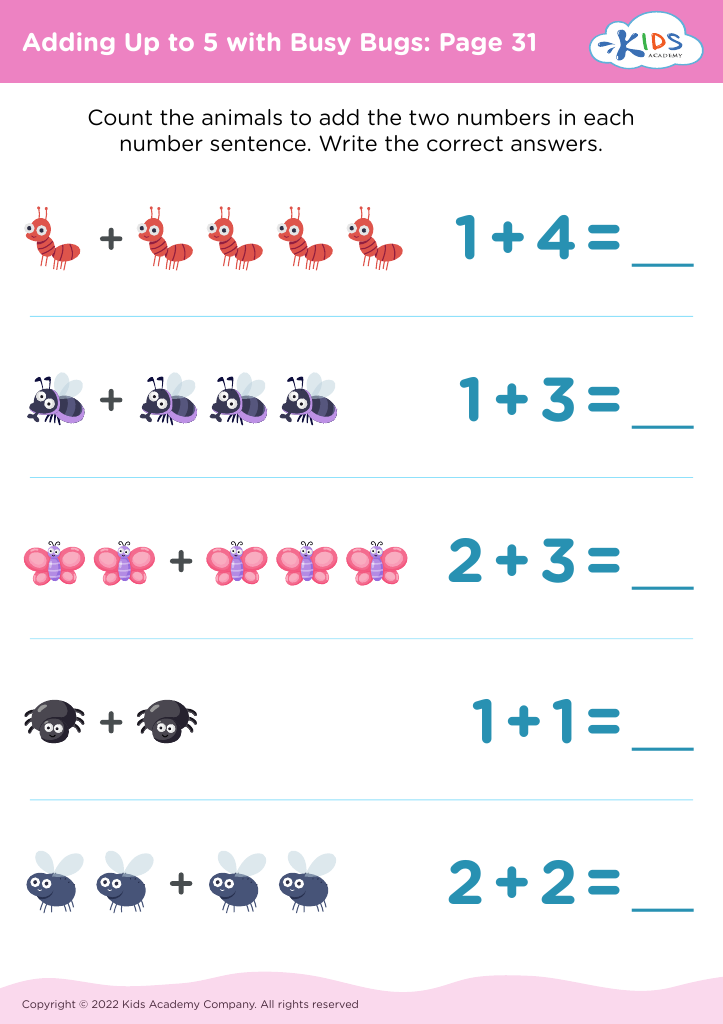
Adding Up to 5 with Busy Bugs: Page 31
Worksheet
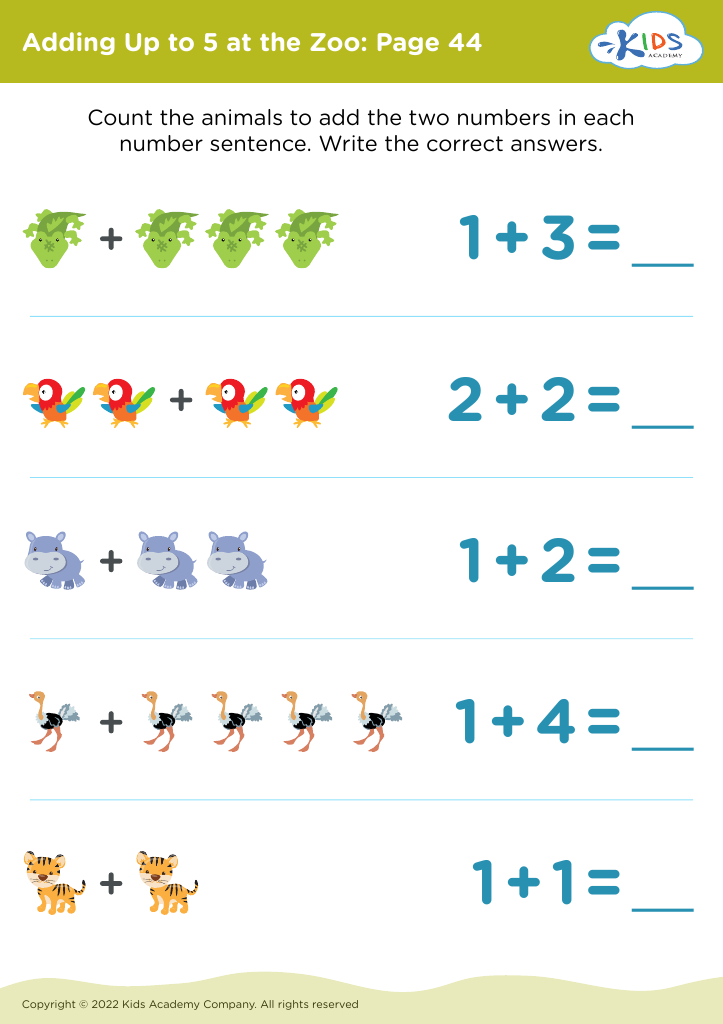
Adding Up to 5 at the Zoo: Page 44
Worksheet
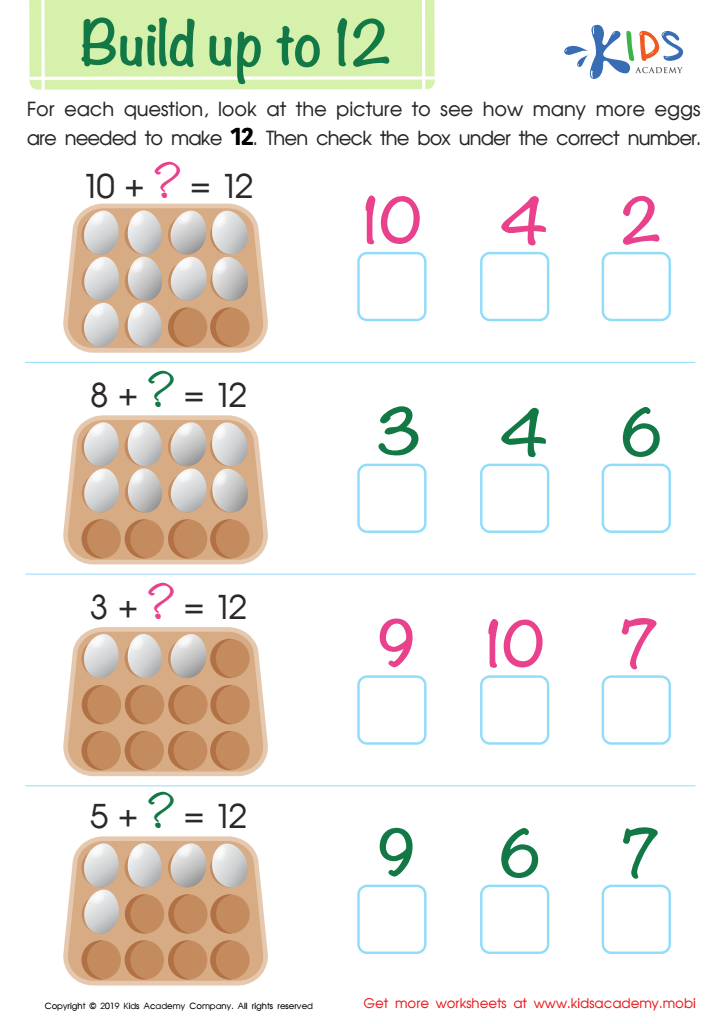
Build up to 12 Worksheet

Build up to 12 Worksheet

Love eggs? Kids can identify them in the picture in this worksheet. We need to add numbers to make 12. Look at the picture and see how many eggs are needed. Check the correct number box. Breakfast or baking, eggs are essential!
Build up to 12 Worksheet
Worksheet
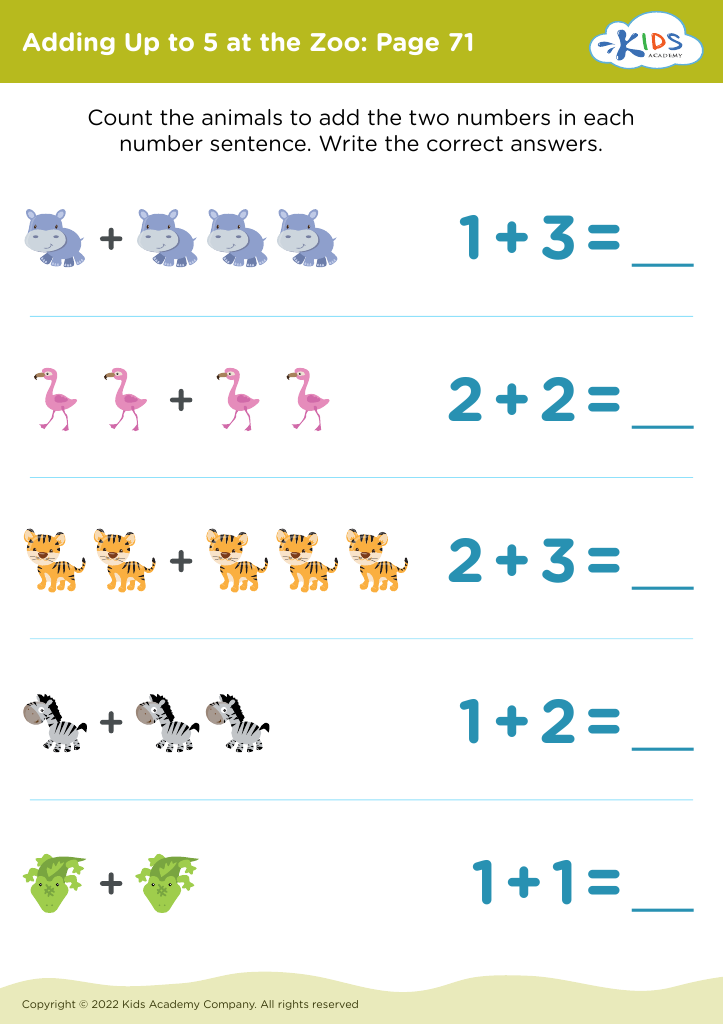
Adding Up to 5 at the Zoo: Page 71
Worksheet
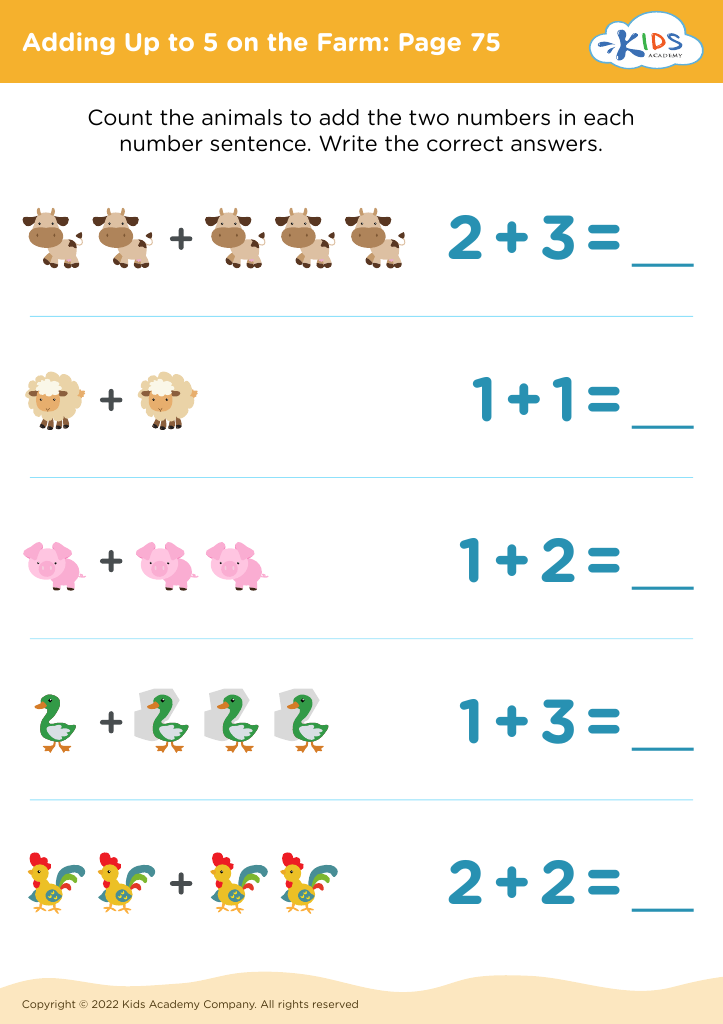
Adding Up to 5 on the Farm: Page 75
Worksheet
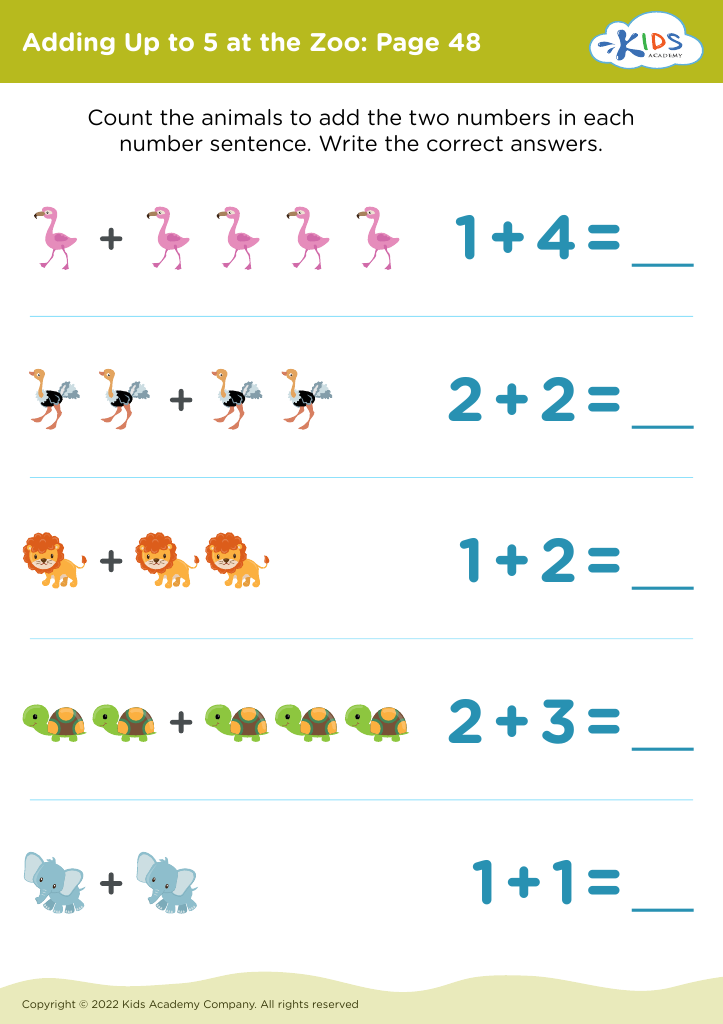
Adding Up to 5 at the Zoo: Page 48
Worksheet
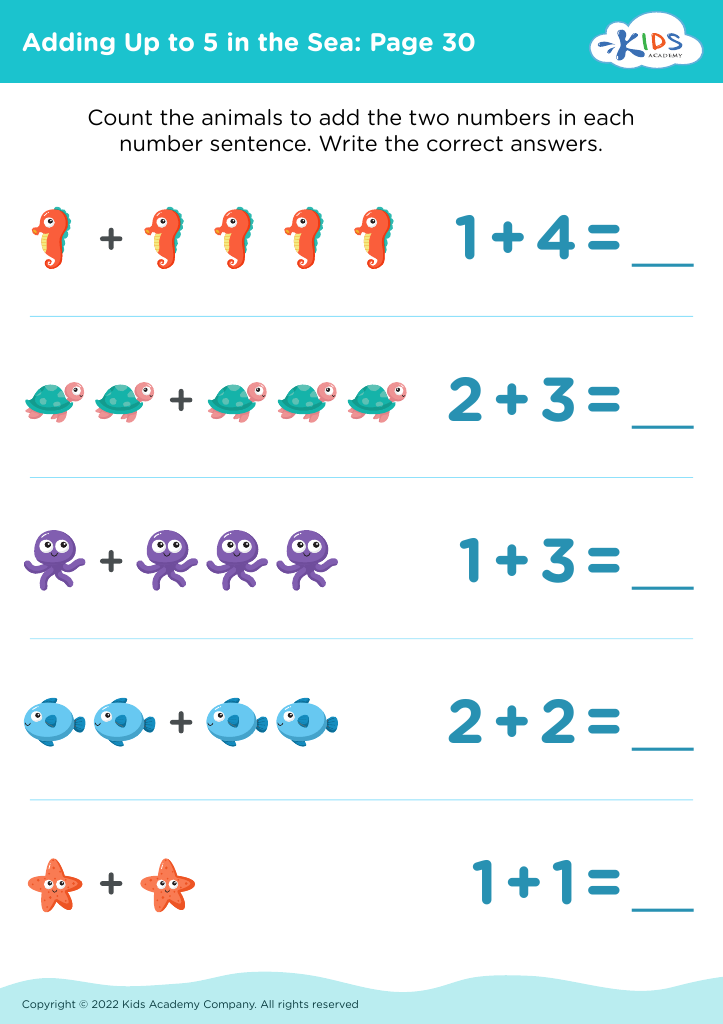
Adding Up to 5 in the Sea: Page 30
Worksheet
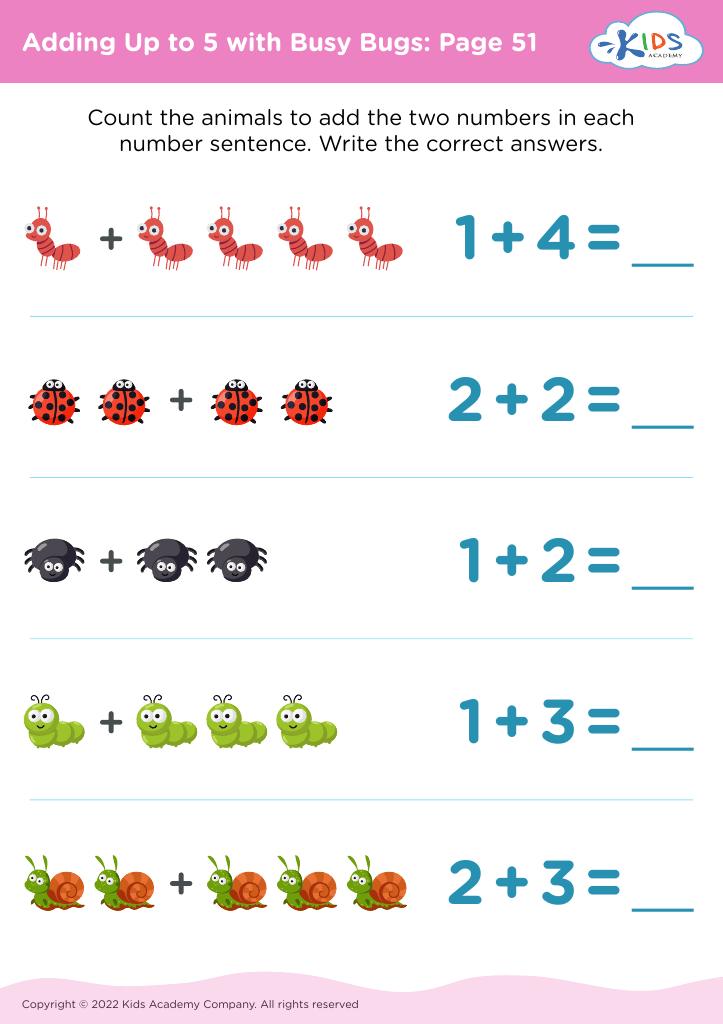
Adding Up to 5 with Busy Bugs: Page 51
Worksheet
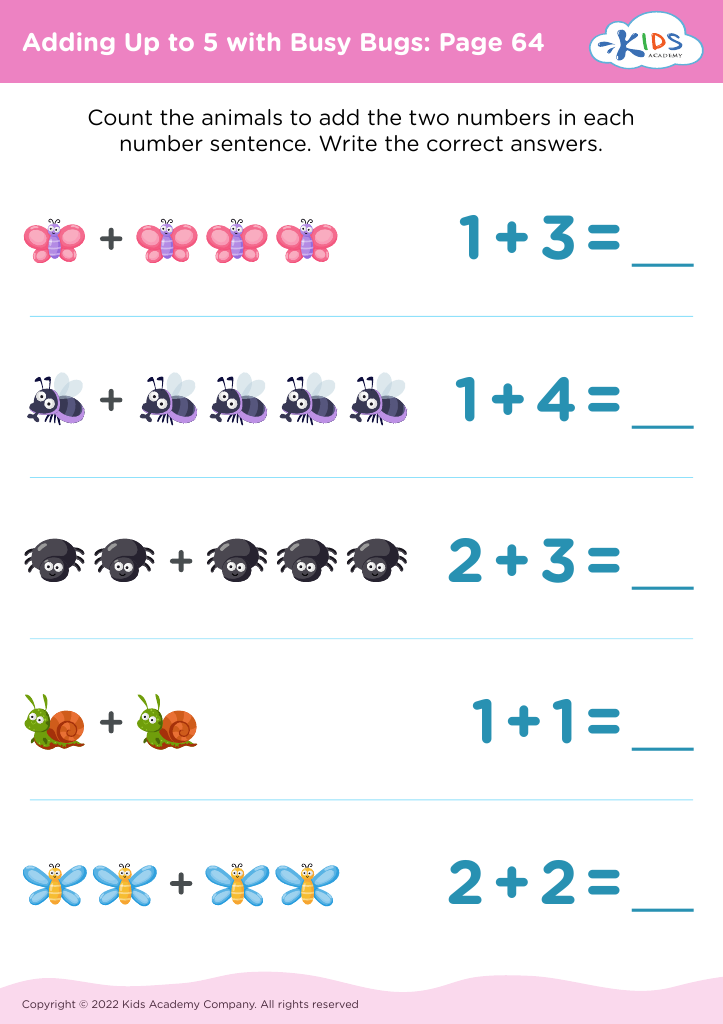
Adding Up to 5 with Busy Bugs: Page 64
Worksheet
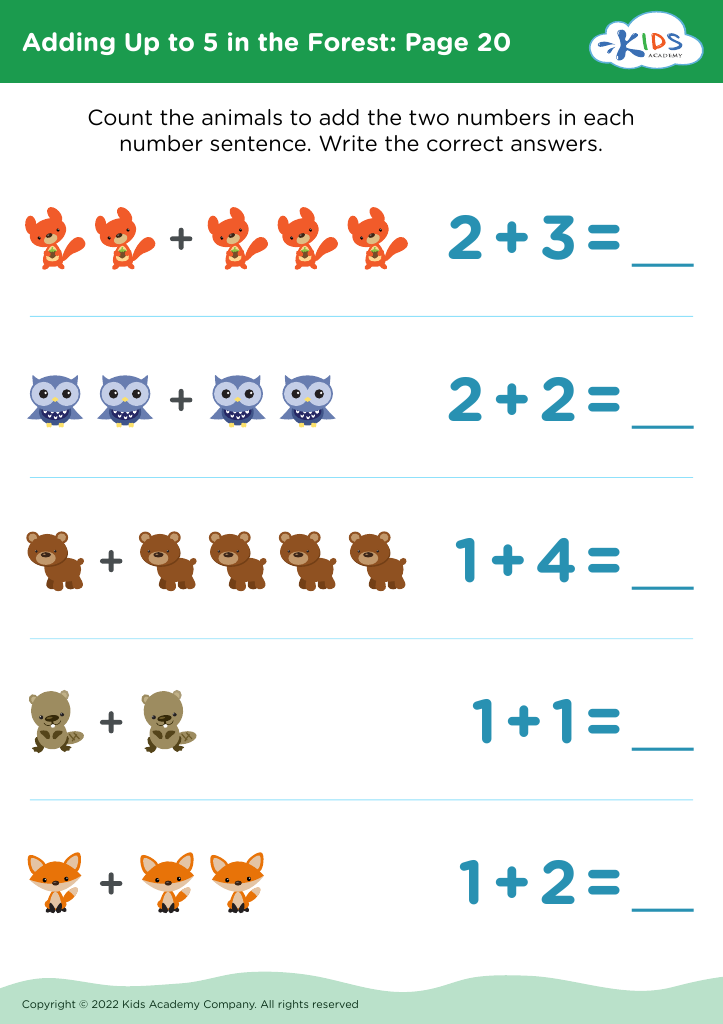
Adding Up to 5 in the Forest: Page 20
Worksheet
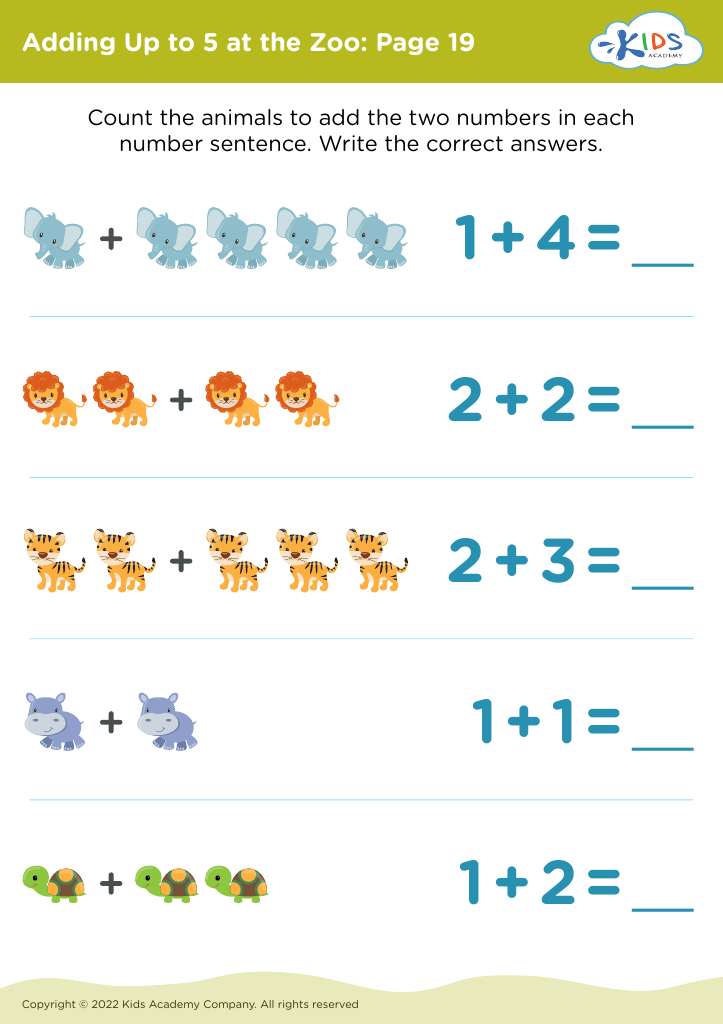
Adding Up to 5 at the Zoo: Page 19
Worksheet
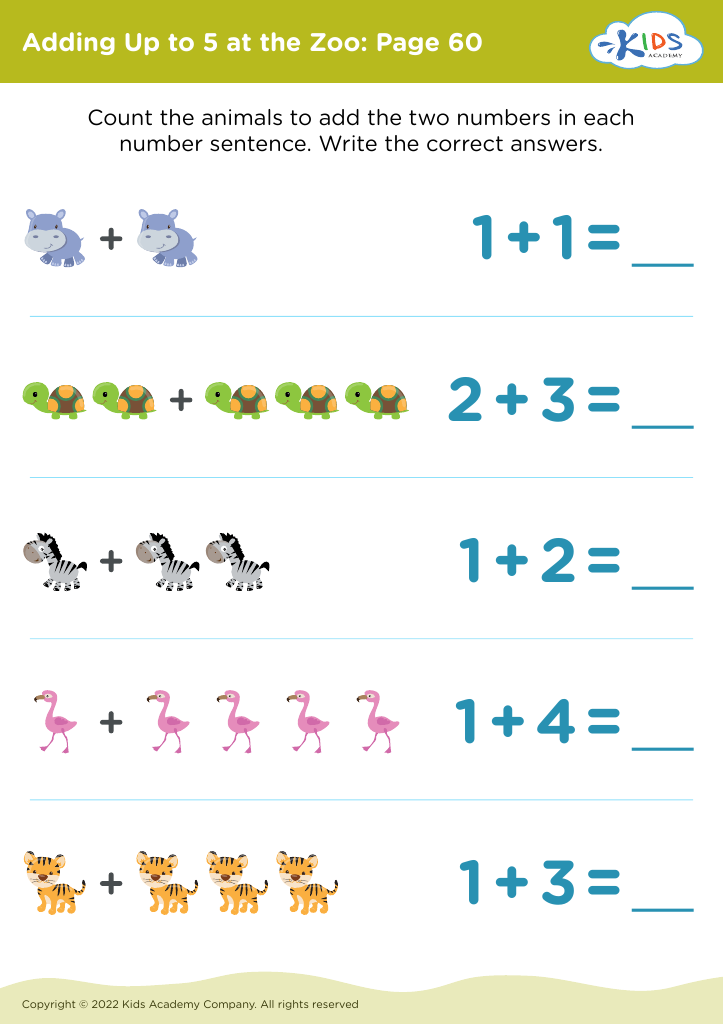
Adding Up to 5 at the Zoo: Page 60
Worksheet
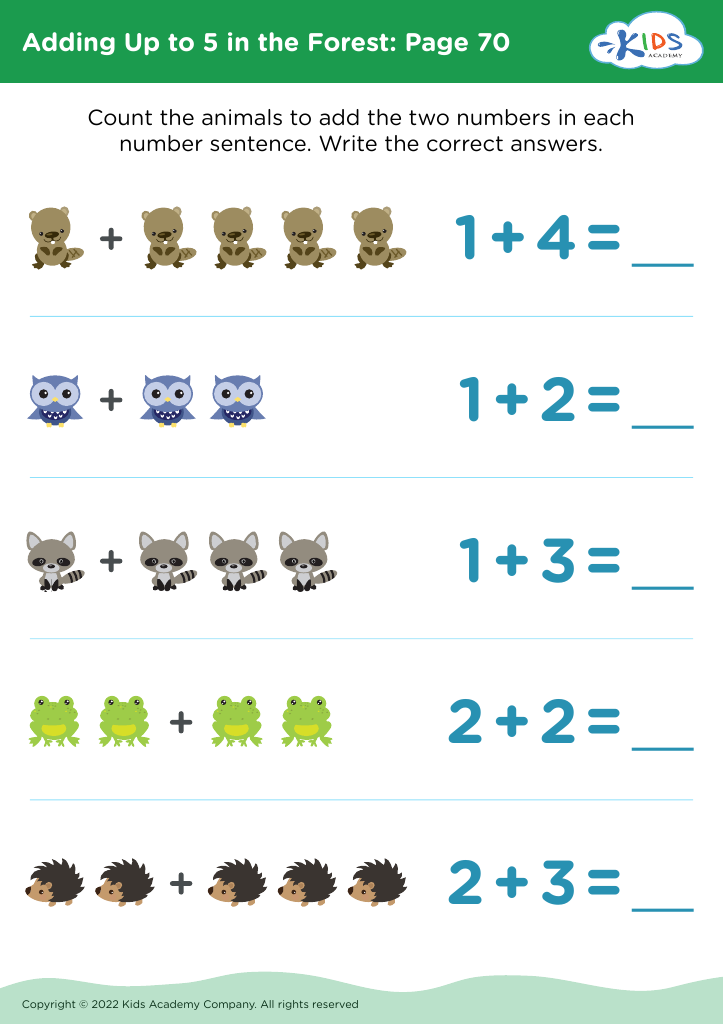
Adding Up to 5 in the Forest: Page 70
Worksheet
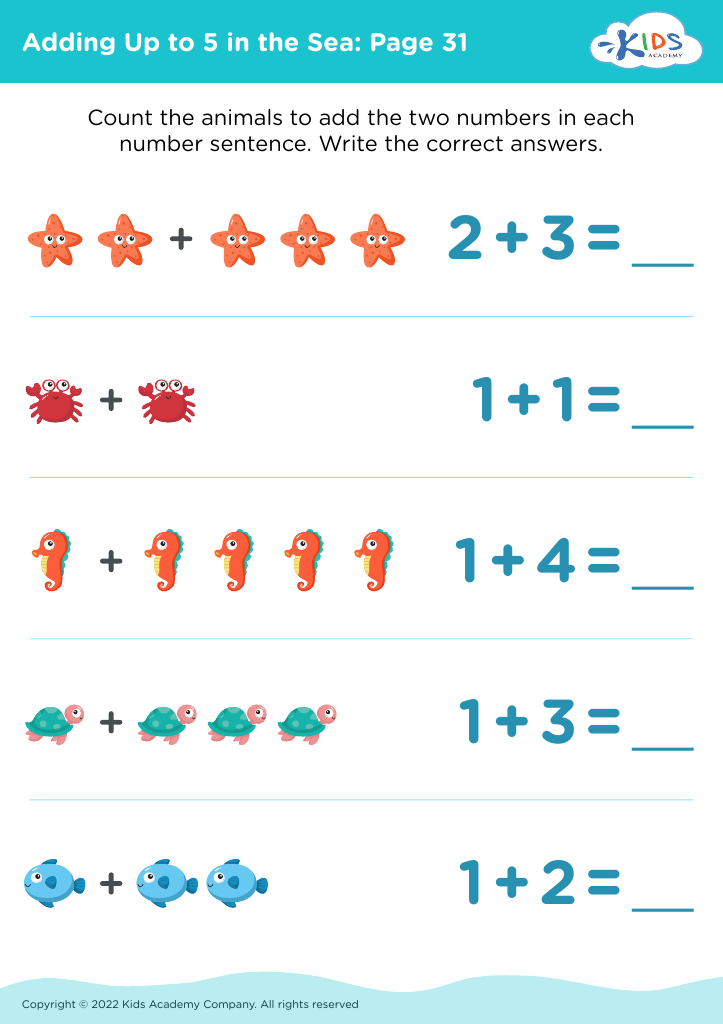
Adding Up to 5 in the Sea: Page 31
Worksheet
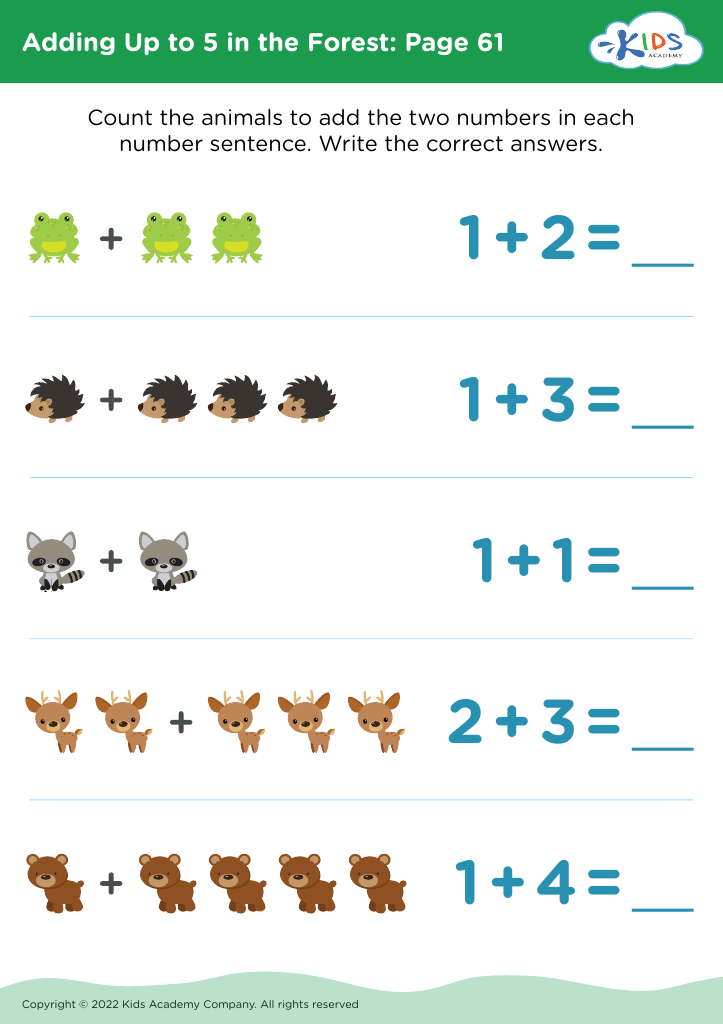
Adding Up to 5 in the Forest: Page 61
Worksheet
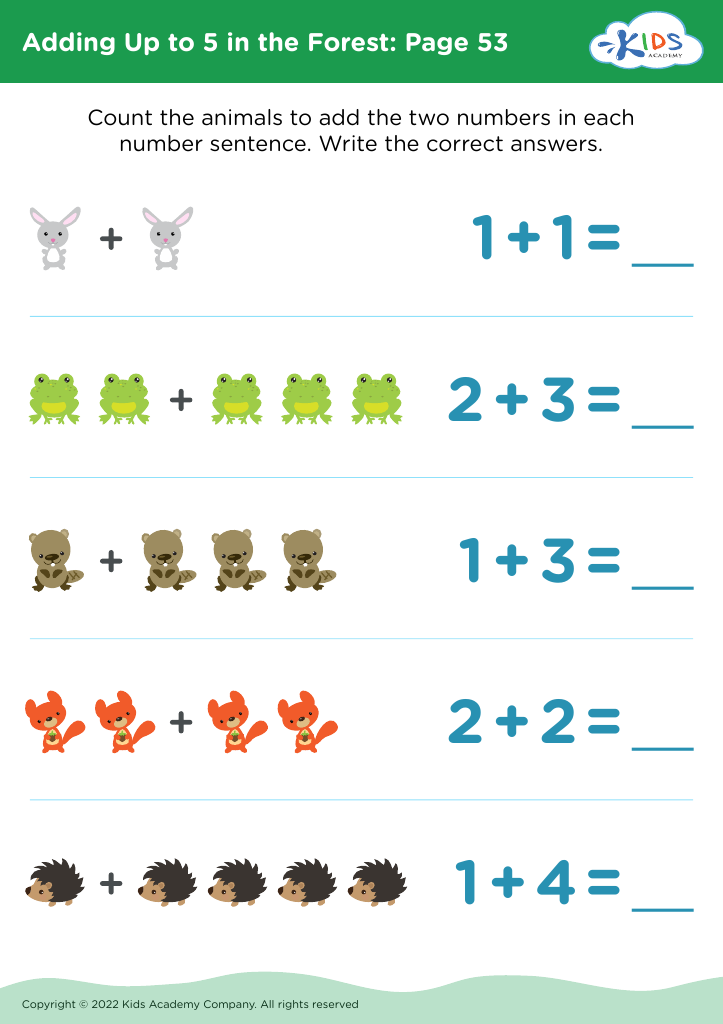
Adding Up to 5 in the Forest: Page 53
Worksheet
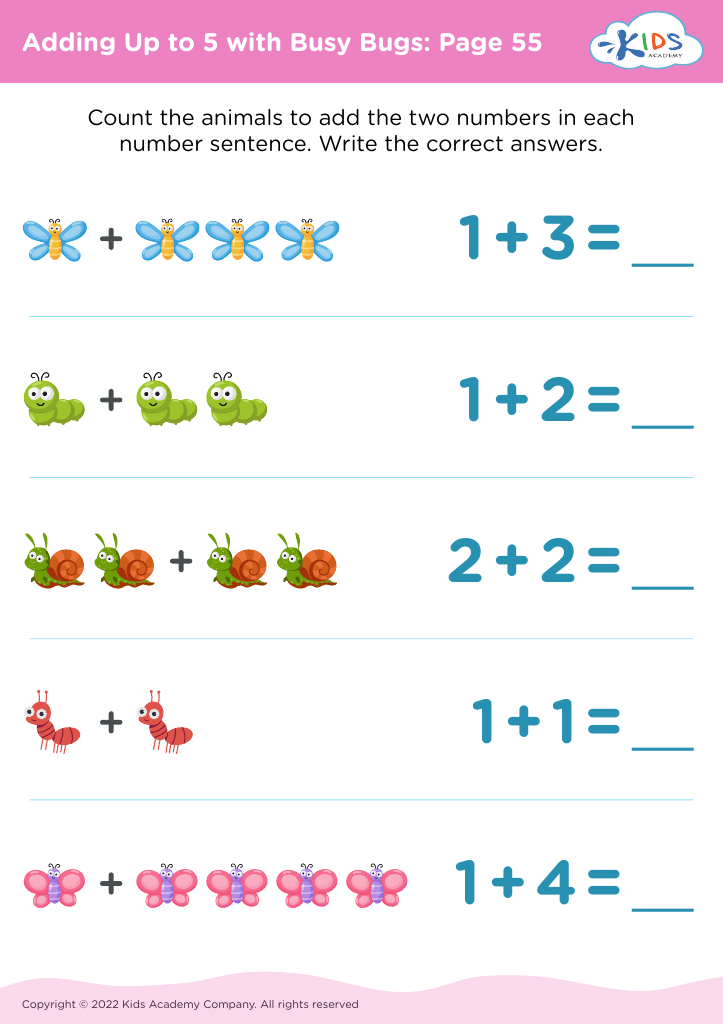
Adding Up to 5 with Busy Bugs: Page 55
Worksheet
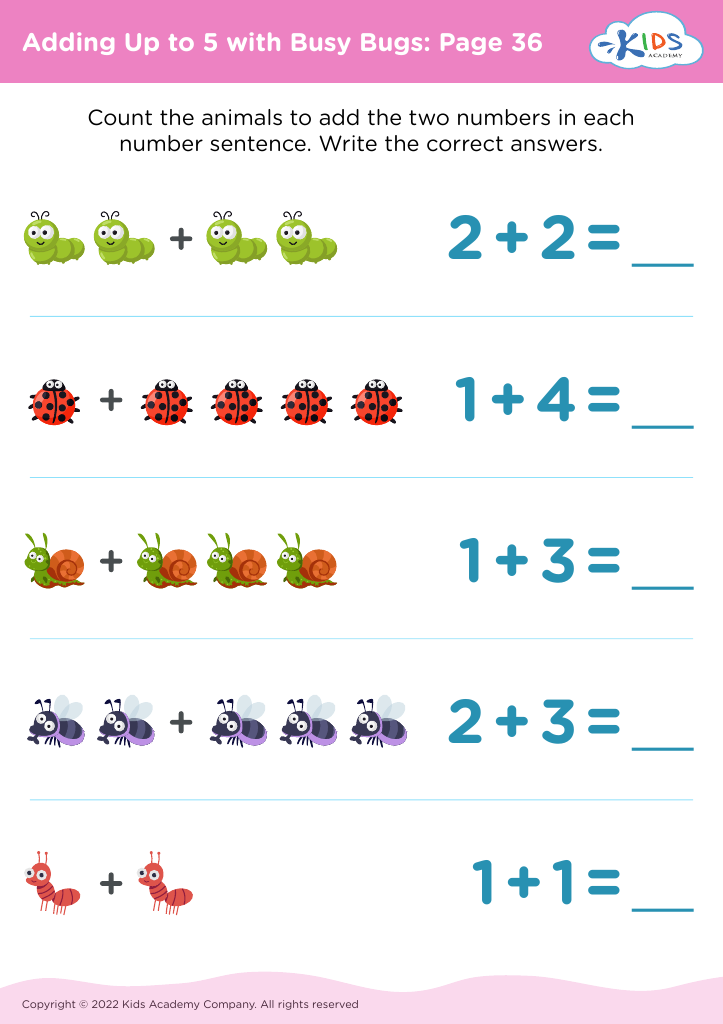
Adding Up to 5 with Busy Bugs: Page 36
Worksheet
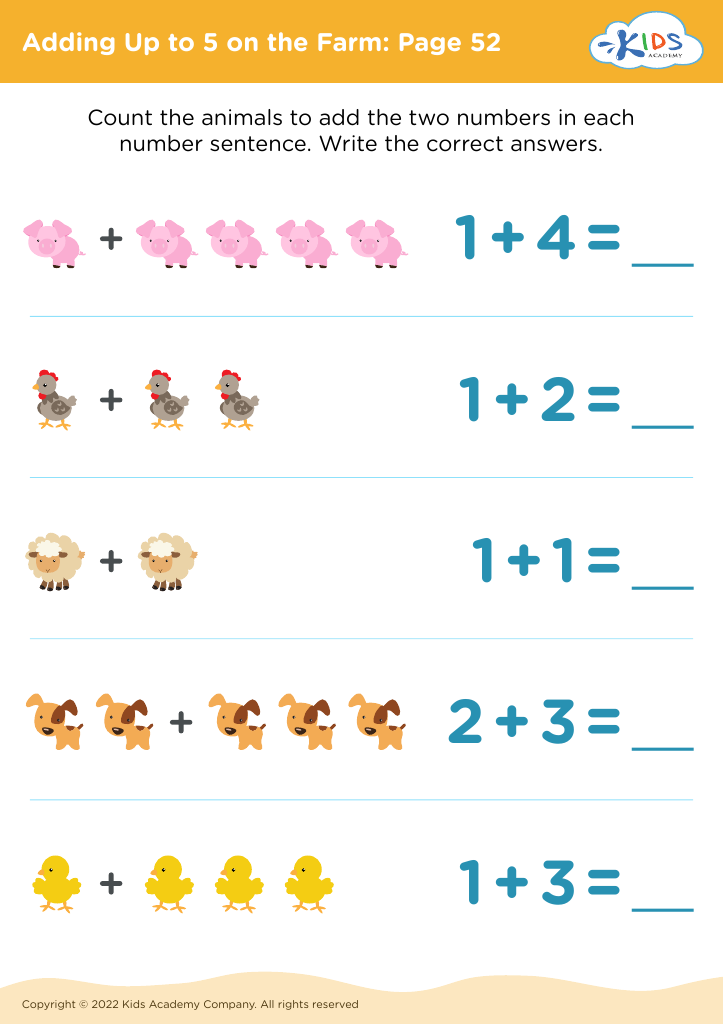
Adding Up to 5 on the Farm: Page 52
Worksheet
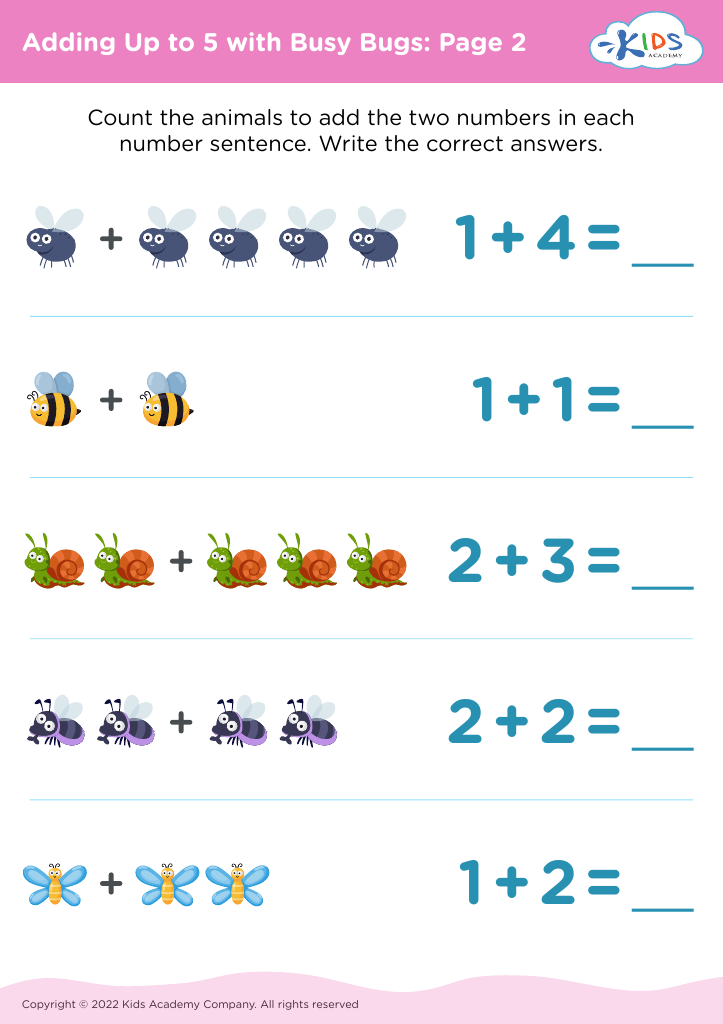
Adding Up to 5 with Busy Bugs: Page 2
Worksheet
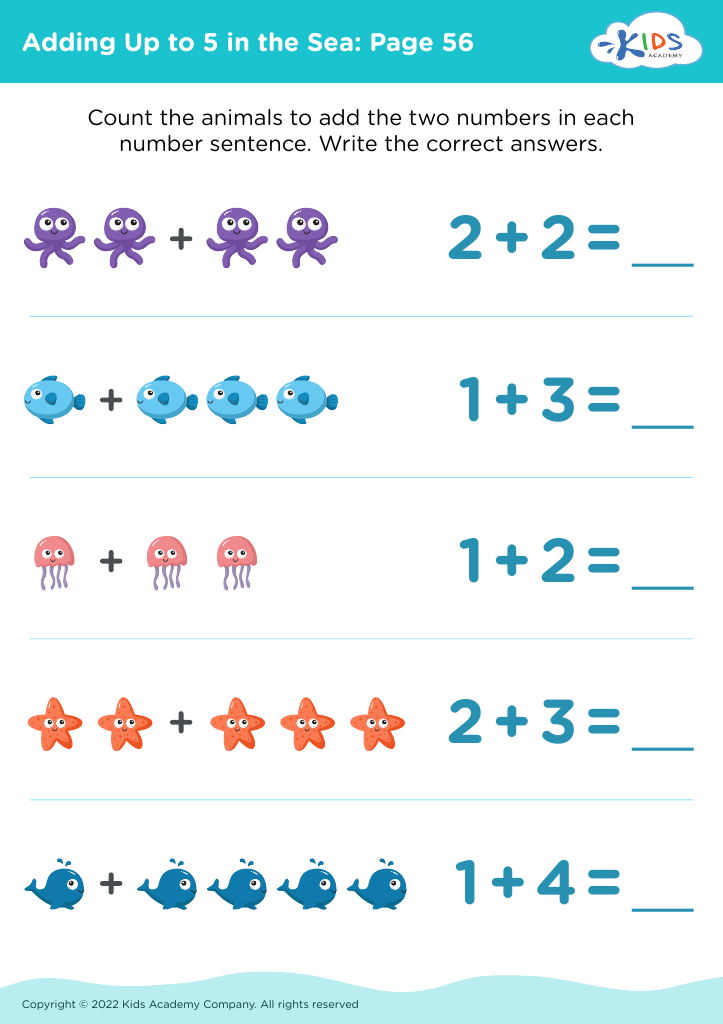
Adding Up to 5 in the Sea: Page 56
Worksheet
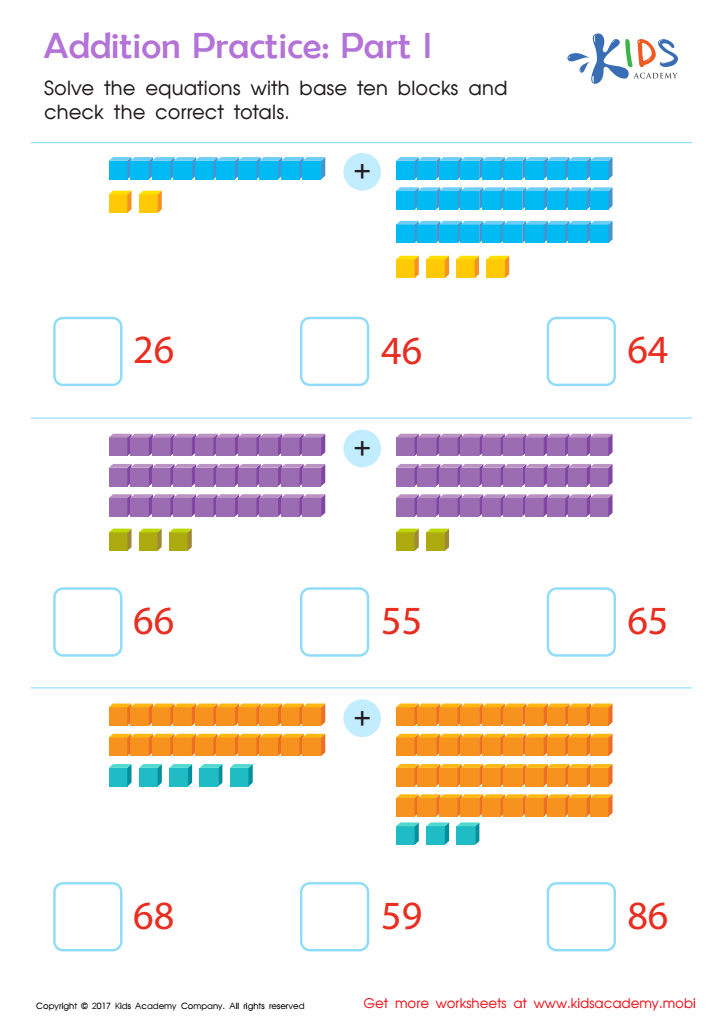
Addition Practice Sheet: Part 1
Addition Practice Sheet: Part 1

Kids Academy offers a free worksheet to help kids learn addition with base ten blocks, with or without actual manipulatives. Help your Kindergarten or First Grader flex and increase their knowledge of place value and understand math more deeply. Download this useful page for images that will promote success.
Addition Practice Sheet: Part 1

Worksheet
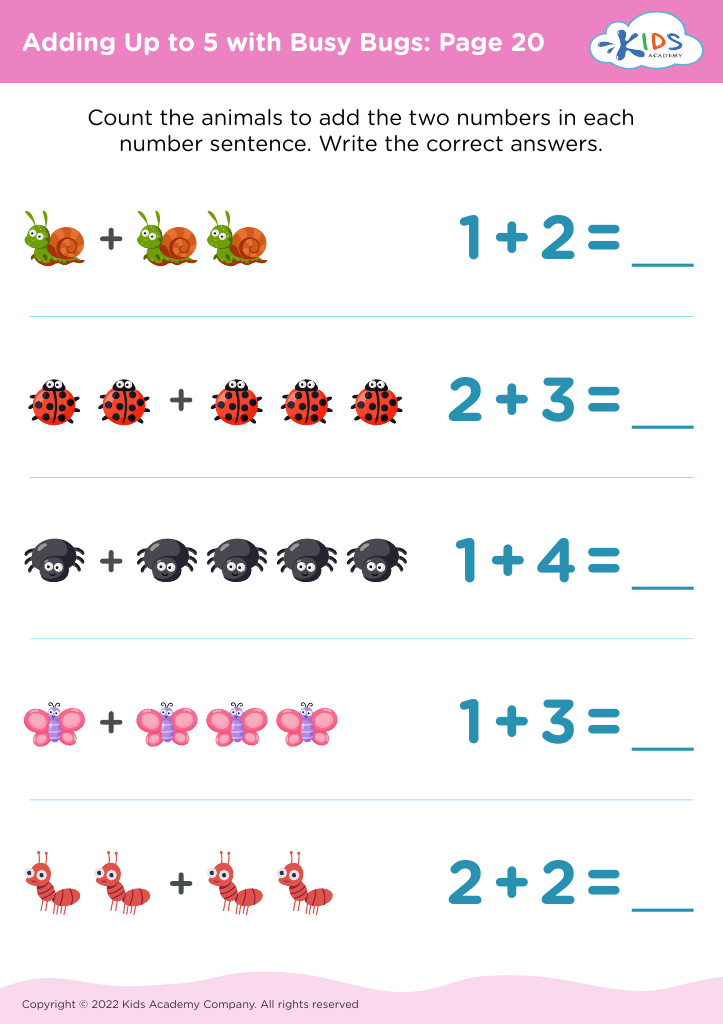
Adding Up to 5 with Busy Bugs: Page 20
Worksheet
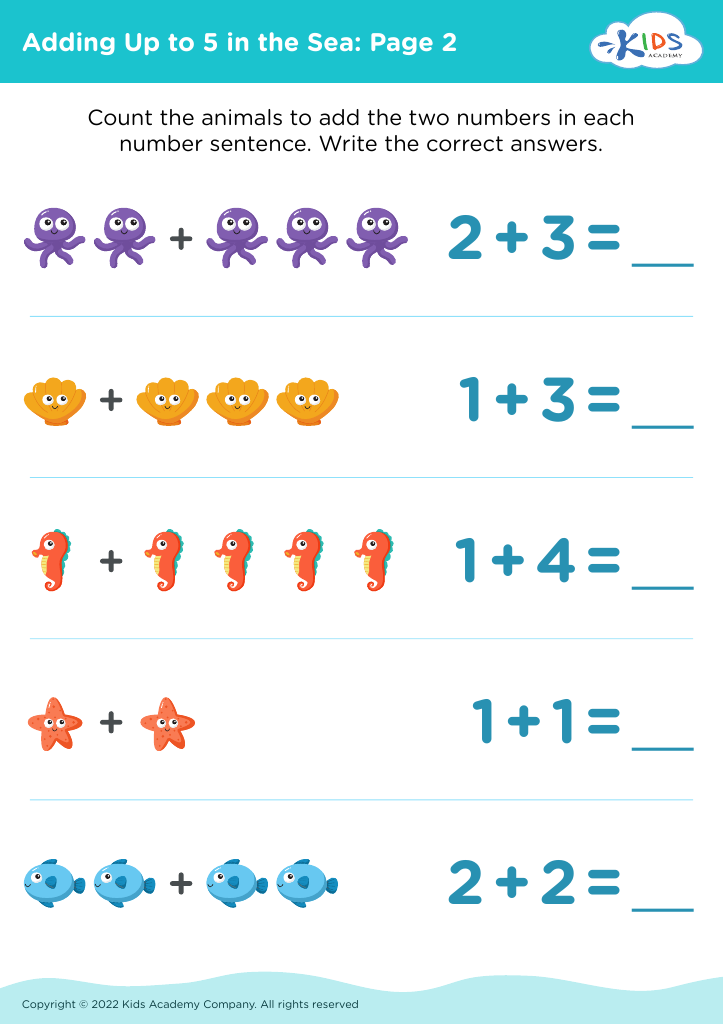
Adding Up to 5 in the Sea: Page 2

Adding Up to 5 in the Sea: Page 2

Adding Up to 5 in the Sea: Page 2
Worksheet


Number recognition, along with basic addition and subtraction, forms the foundation of mathematical literacy in early learners aged 4 to 6. During these critical years, children develop essential cognitive skills and intuitive understanding of numbers, which sets the stage for more complex concepts in mathematics and beyond.

Parents and teachers should prioritize these skills, as they enhance children's problem-solving capabilities and boost their confidence in handling numbers. Recognition of numbers allows kids to identify and understand the world around them—from counting objects to recognizing patterns in their environment. Addition and subtraction offer them the tools to quantify their experiences and express ideas like sharing or taking away, crucial social concepts at this age.

Moreover, early exposure to these mathematical concepts helps strengthen children's broader critical thinking abilities. Engaging children in playful activities—like counting items during shopping or incorporating number games—reinforces learning and fosters a positive attitude toward math. Also, solid number skills link to later success in academic achievement, paving the way for higher-level math understanding. Ultimately, building a strong foundation in number recognition and basic operations cultivates not only skilled mathematicians but also well-rounded, confident learners.