Filters

94 filtered results

Clear all filters
Favorites
With answer key
Interactive

94 filtered results

Difficulty Level

Grade


Check out this FREE Trial Lesson on Addition for age 4-6!

My Family

Favorites
With answer key
Interactive
  • 4-6
  • Animal recognition
  • Addition
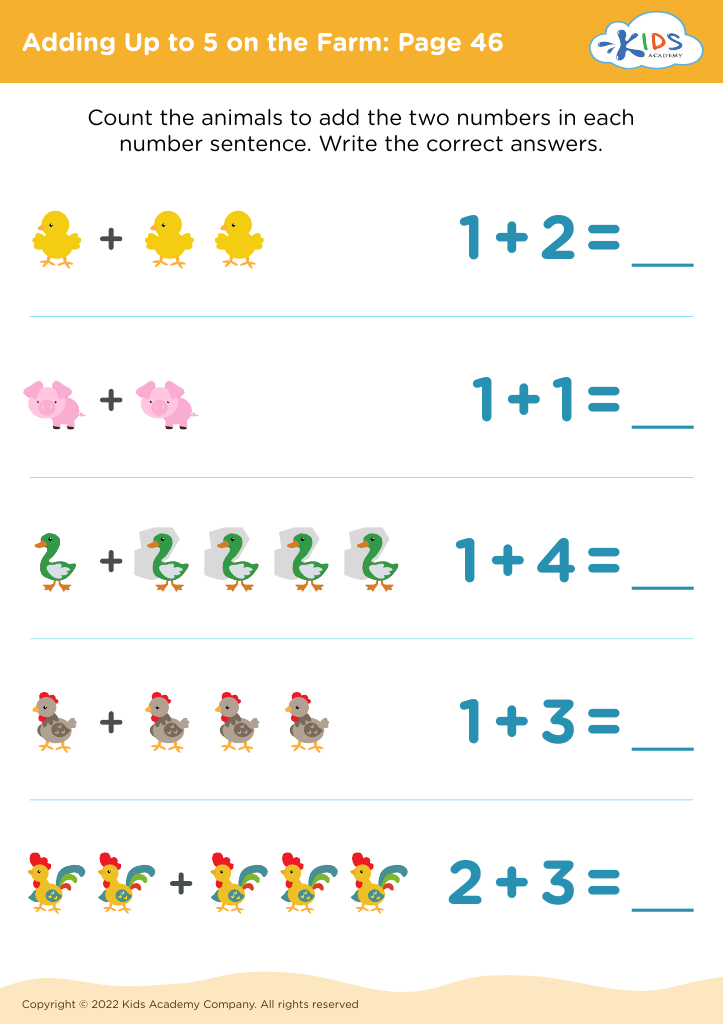
Adding Up to 5 on the Farm: Page 46
Worksheet
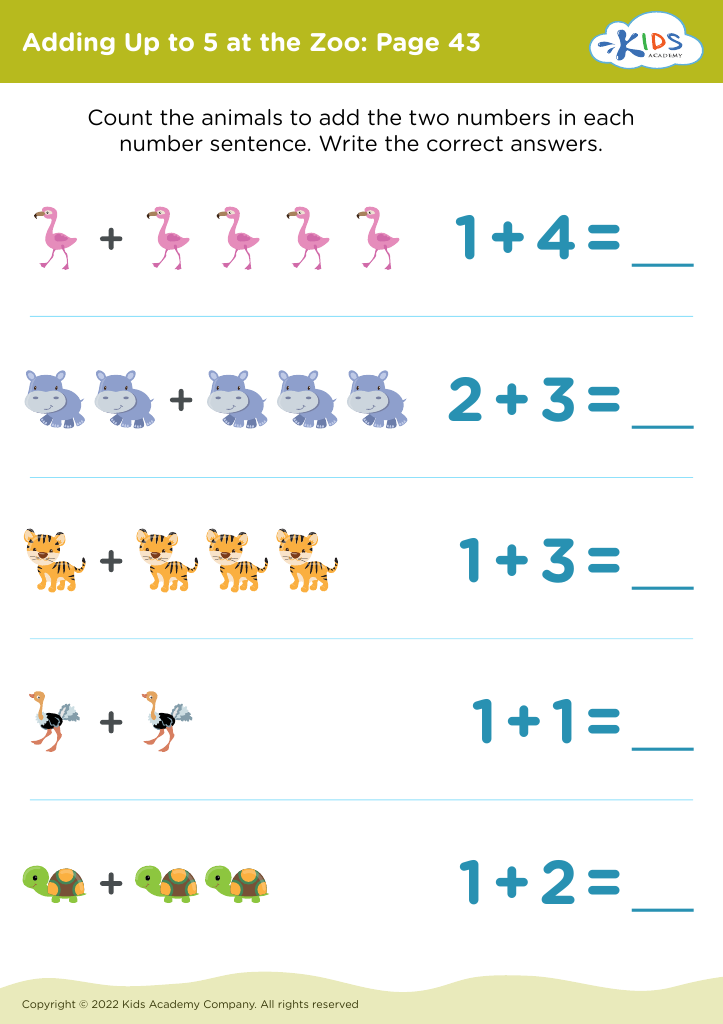
Adding Up to 5 at the Zoo: Page 43
Worksheet
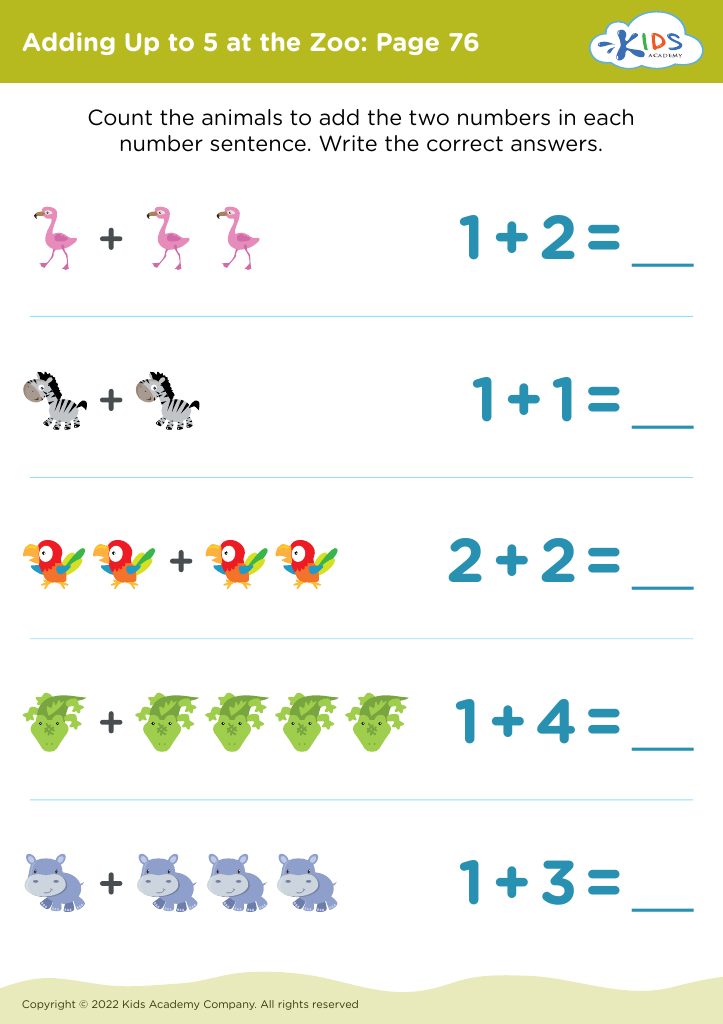
Adding Up to 5 at the Zoo: Page 76
Worksheet
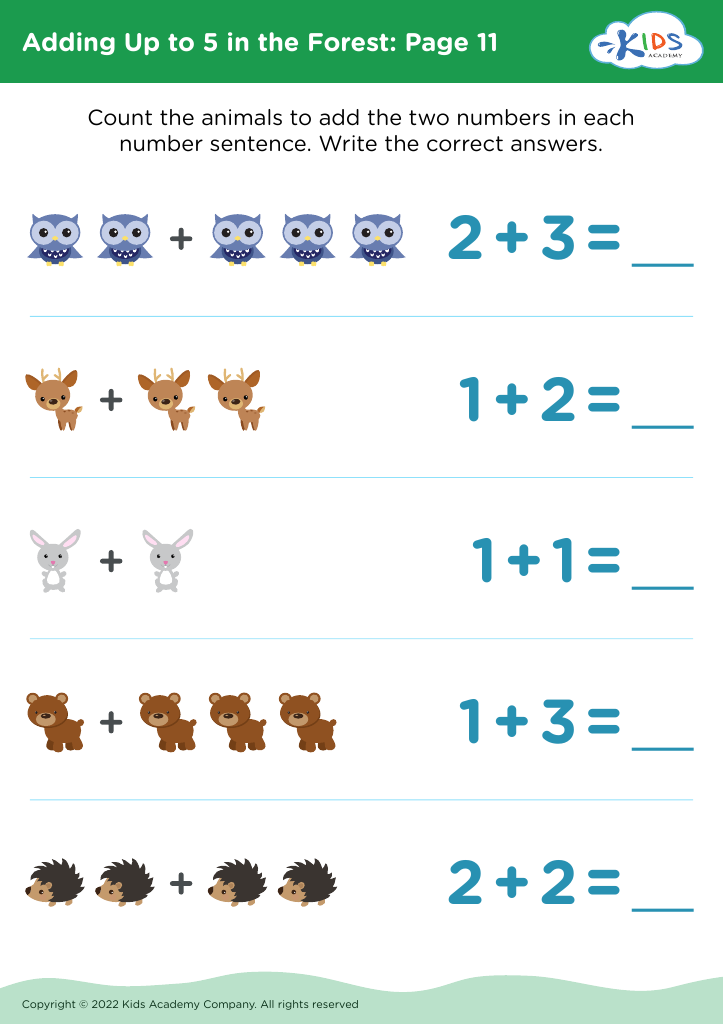
Adding Up to 5 in the Forest: Page 11
Worksheet
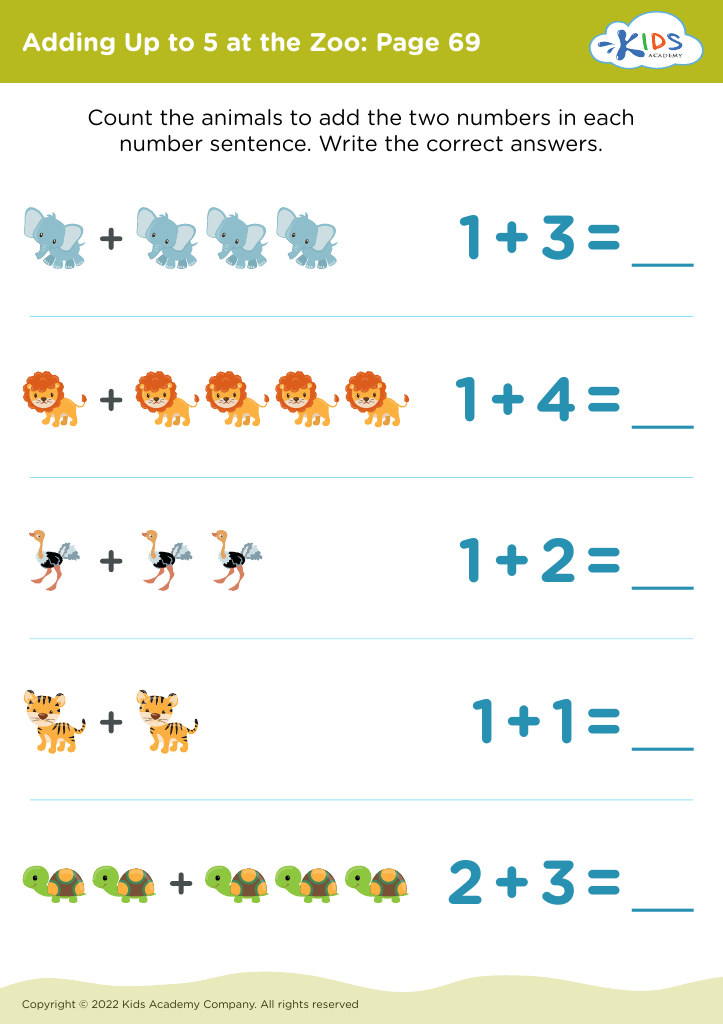
Adding Up to 5 at the Zoo: Page 69
Worksheet
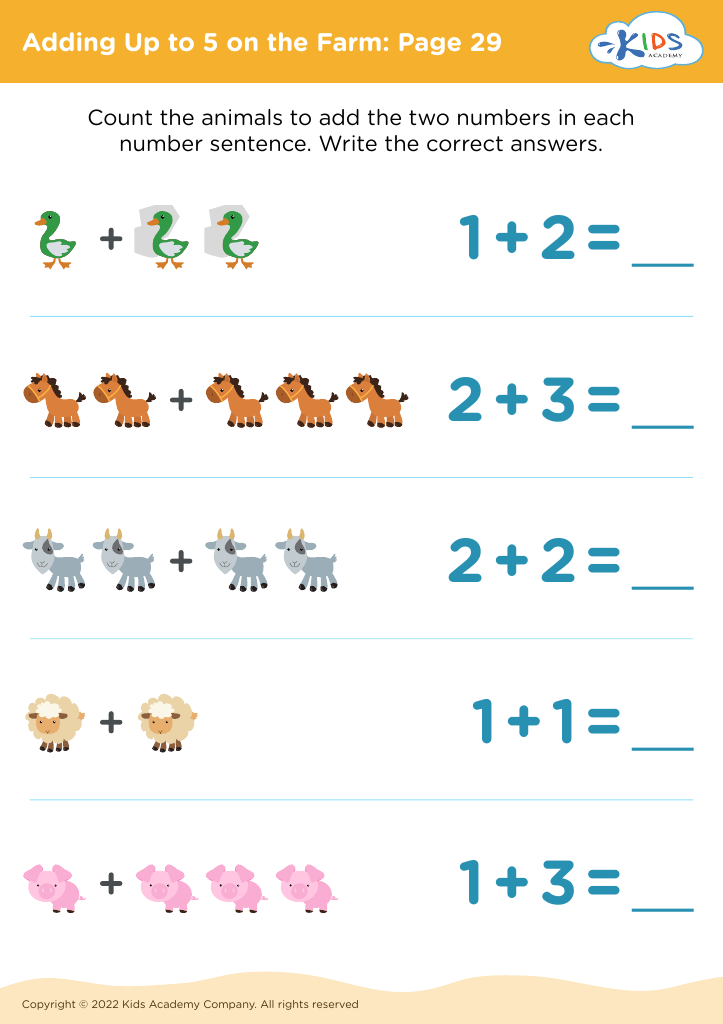
Adding Up to 5 on the Farm: Page 29
Worksheet
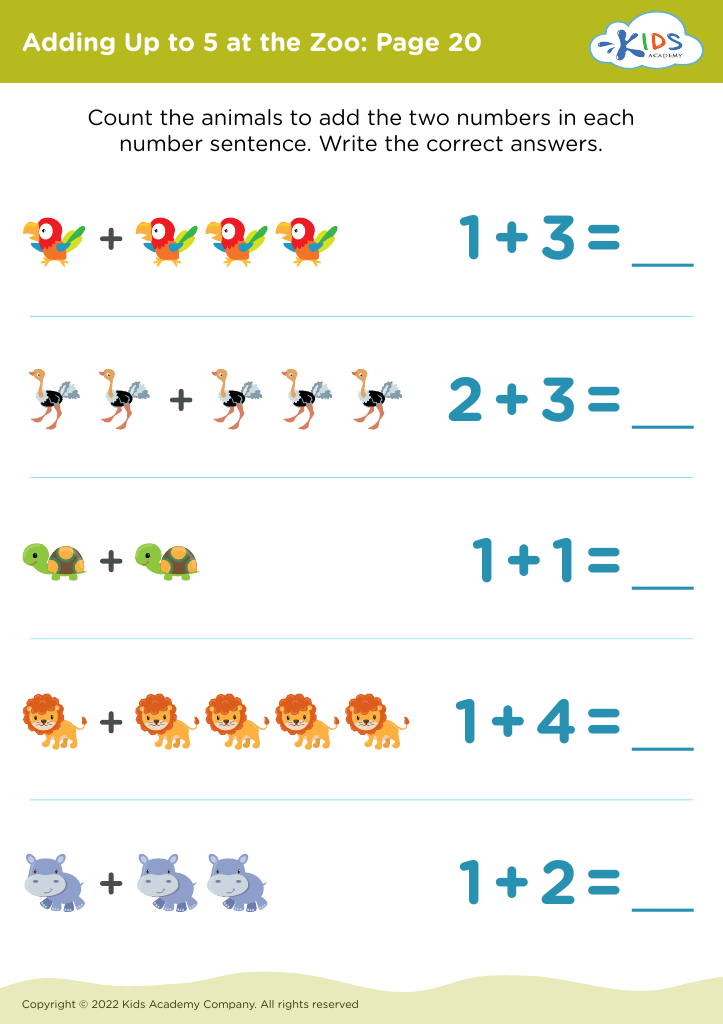
Adding Up to 5 at the Zoo: Page 20
Worksheet
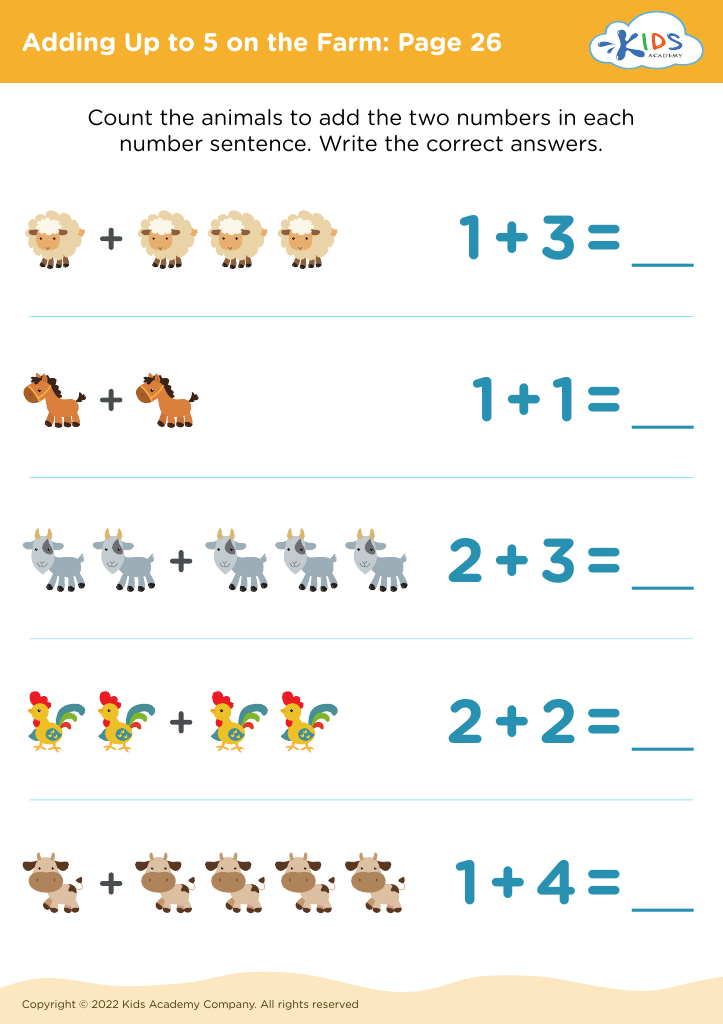
Adding Up to 5 on the Farm: Page 26
Worksheet
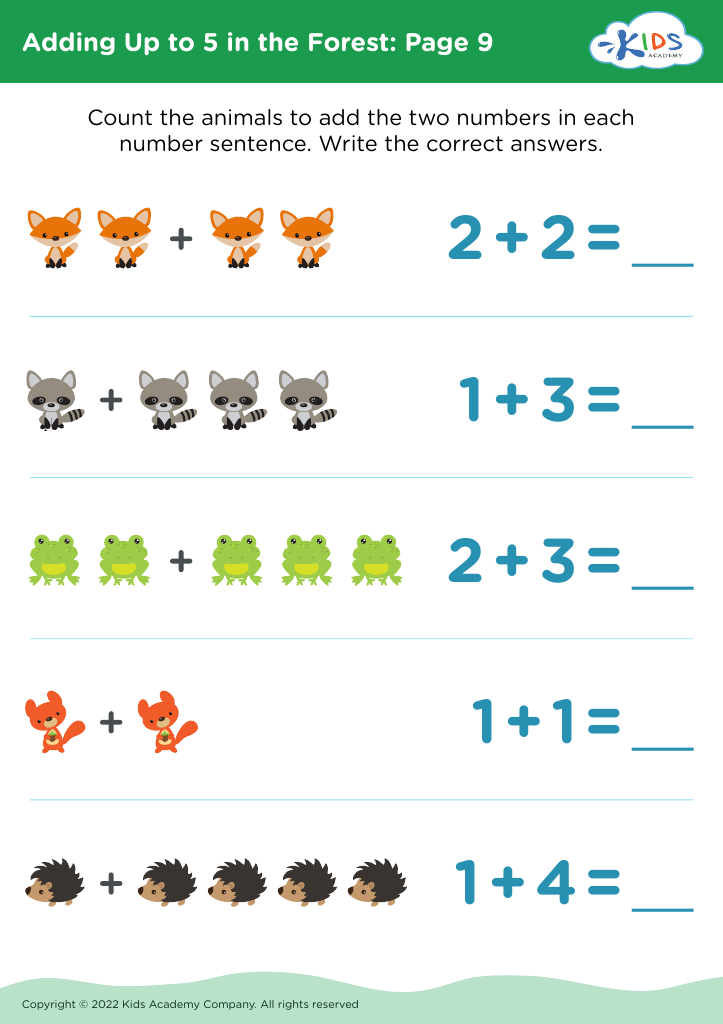
Adding Up to 5 in the Forest: Page 9
Worksheet
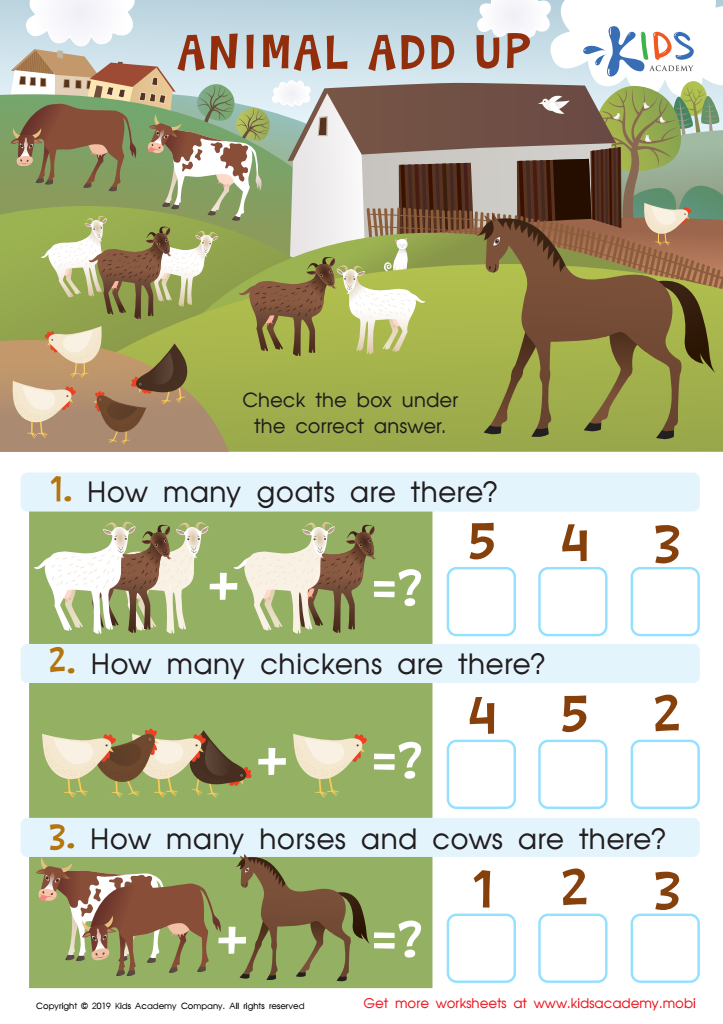
Animal Add Up Worksheet

Animal Add Up Worksheet

Animals are fun to observe and interact with. They can be seen at the zoo, parks, farms and in homes with pets. This worksheet helps kids identify animals, and build addition skills. Look at the picture with them and help name each animal. After that, add the animals up and check the box for the correct answer. 80 words.
Animal Add Up Worksheet
Worksheet
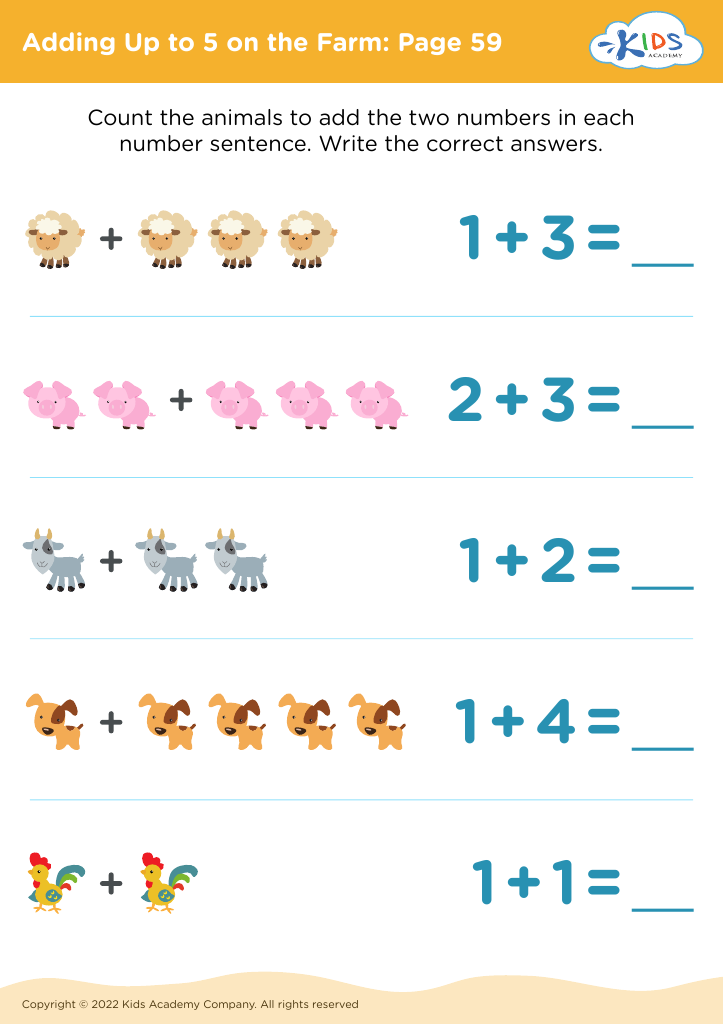
Adding Up to 5 on the Farm: Page 59
Worksheet
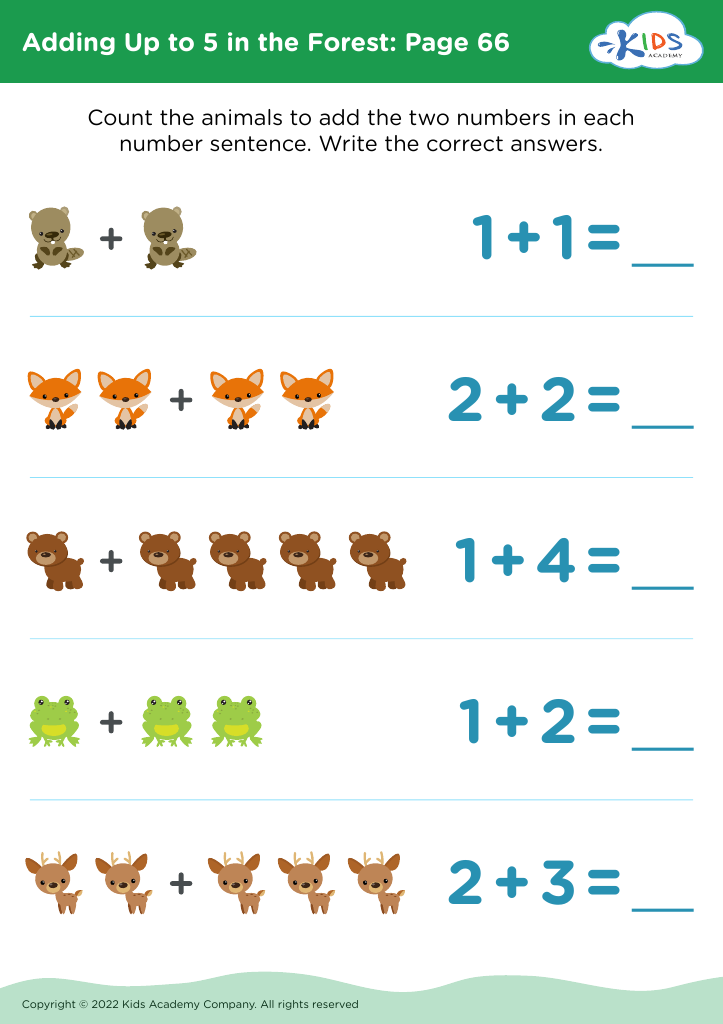
Adding Up to 5 in the Forest: Page 66
Worksheet
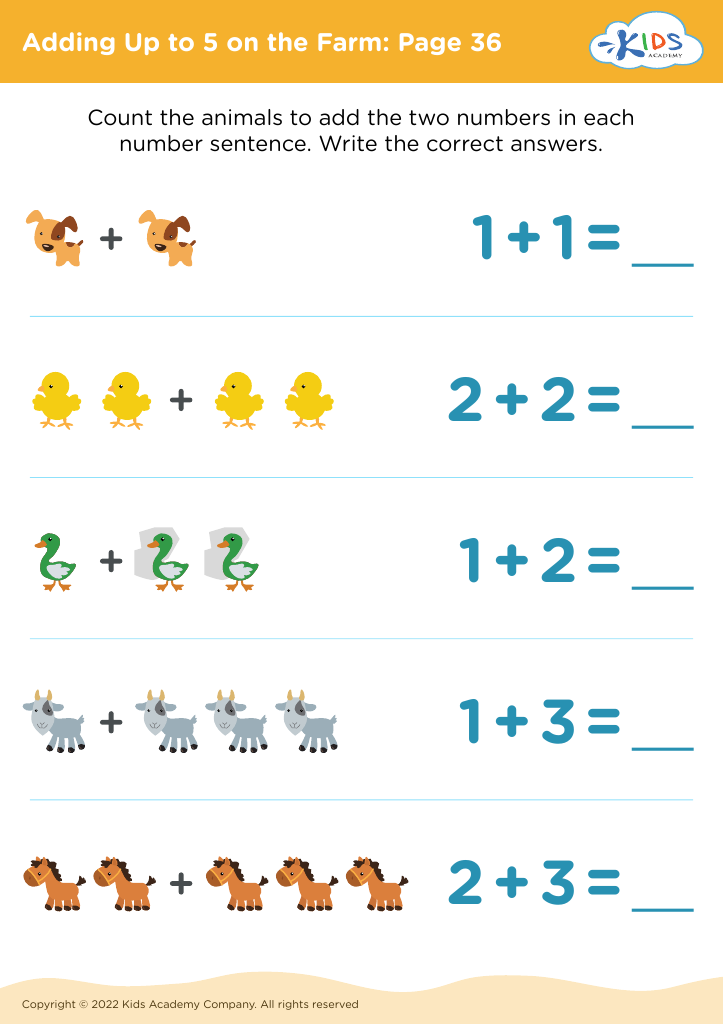
Adding Up to 5 on the Farm: Page 36
Worksheet
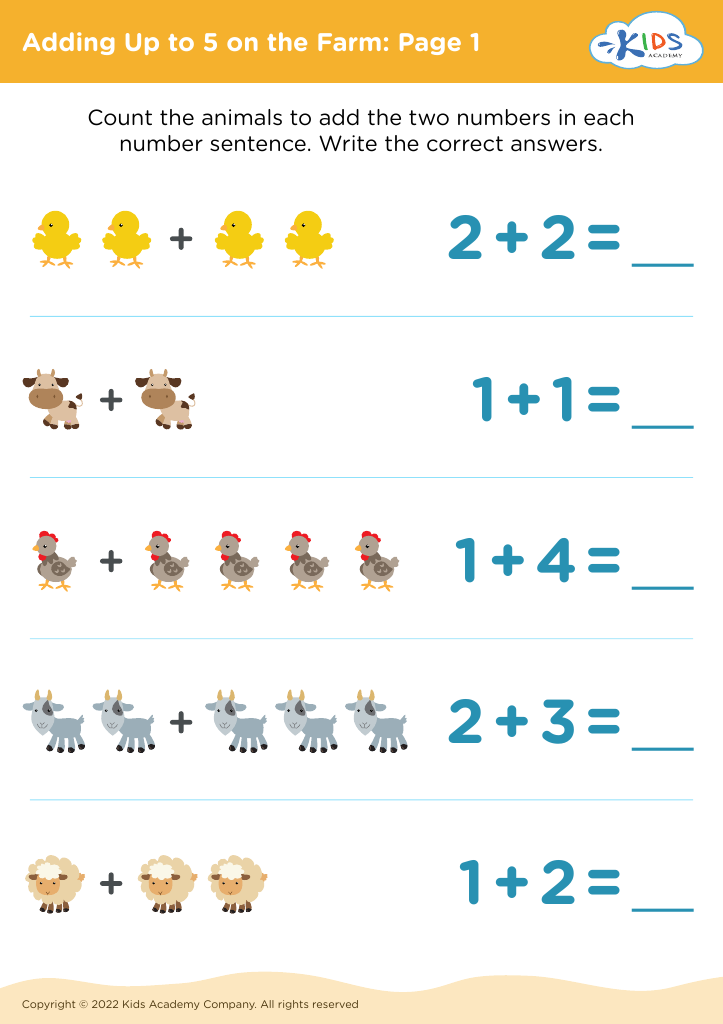
Adding Up to 5 on the Farm: Page 1
Worksheet
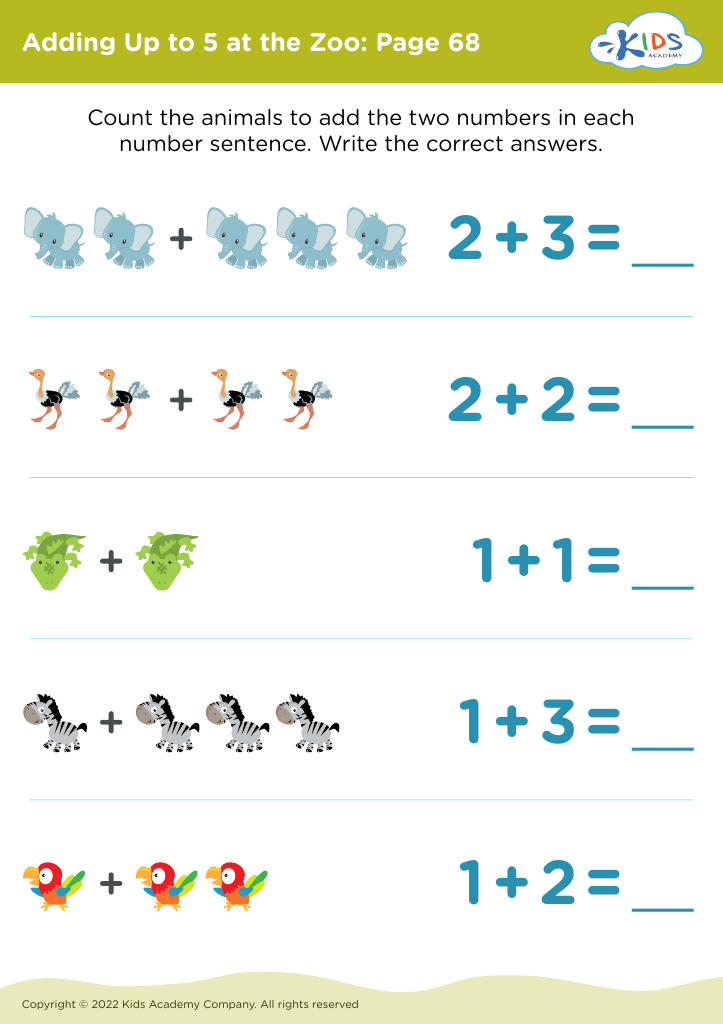
Adding Up to 5 at the Zoo: Page 68
Worksheet
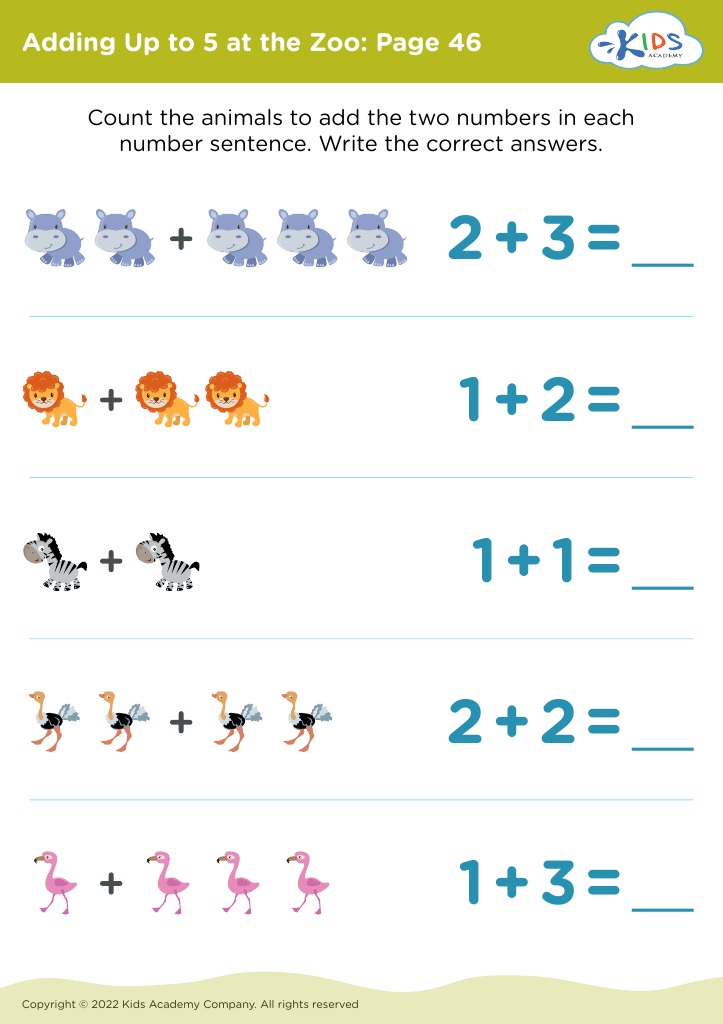
Adding Up to 5 at the Zoo: Page 46
Worksheet
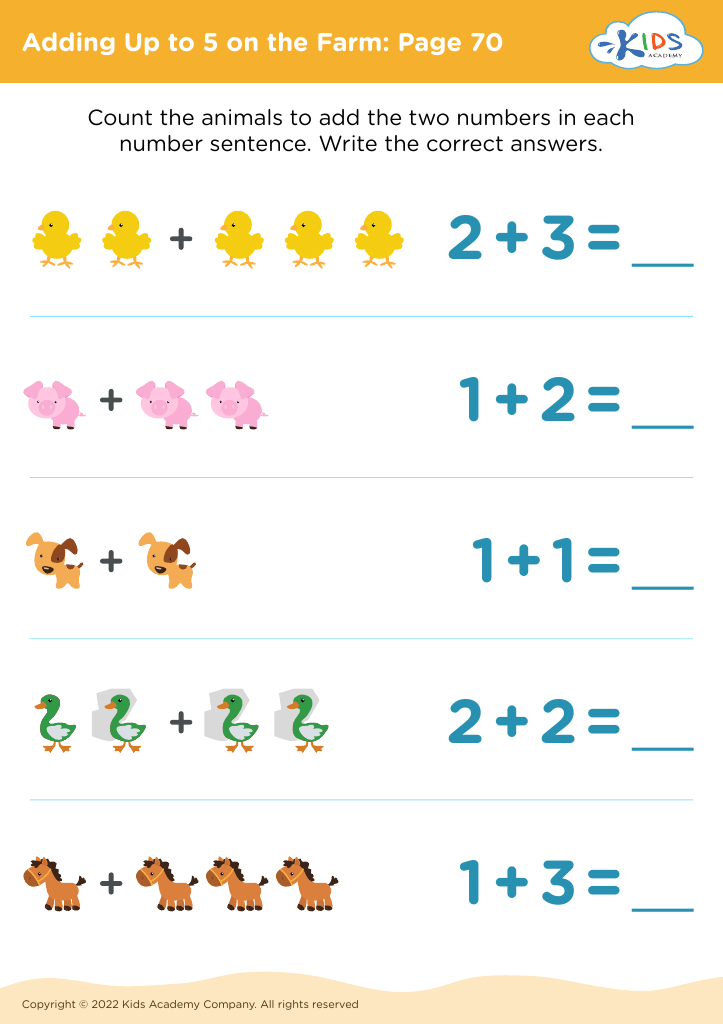
Adding Up to 5 on the Farm: Page 70
Worksheet
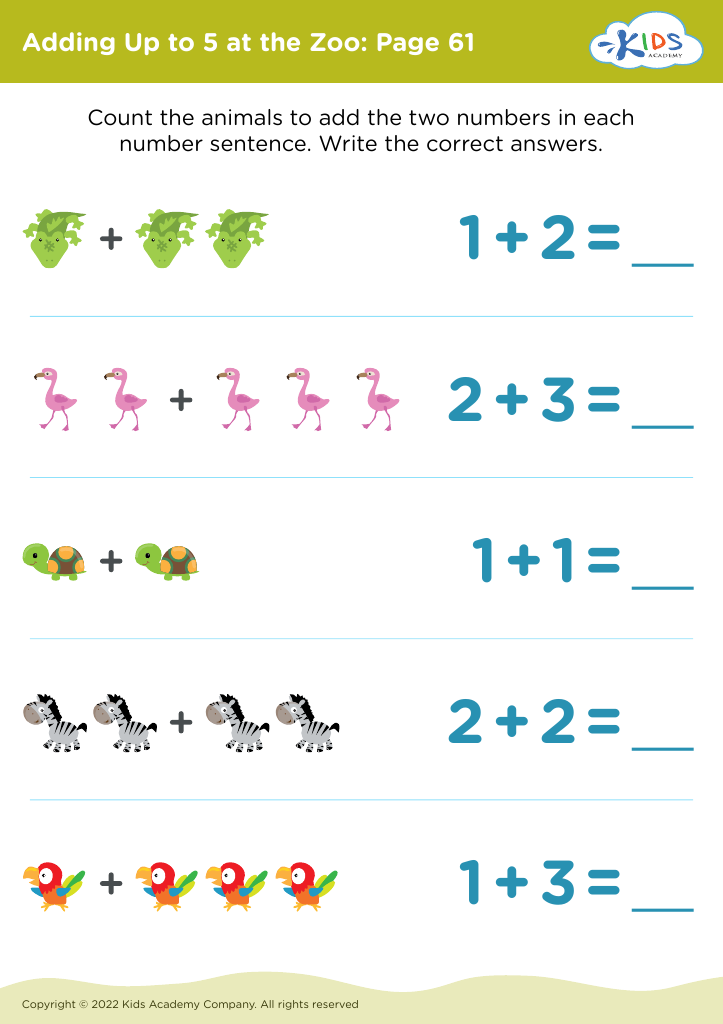
Adding Up to 5 at the Zoo: Page 61
Worksheet
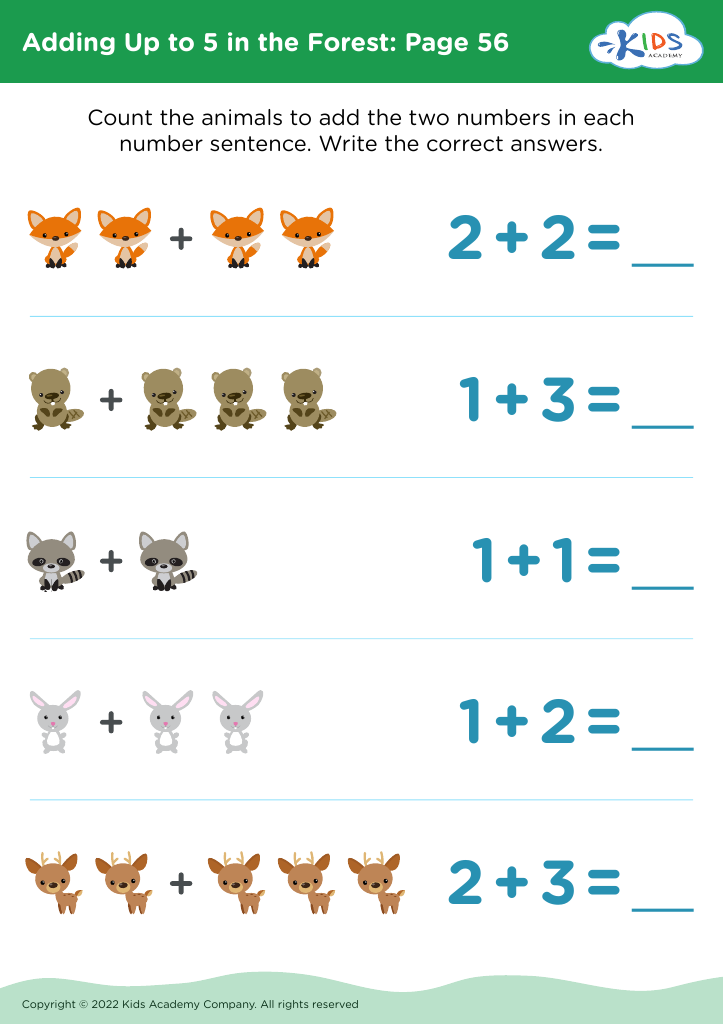
Adding Up to 5 in the Forest: Page 56
Worksheet
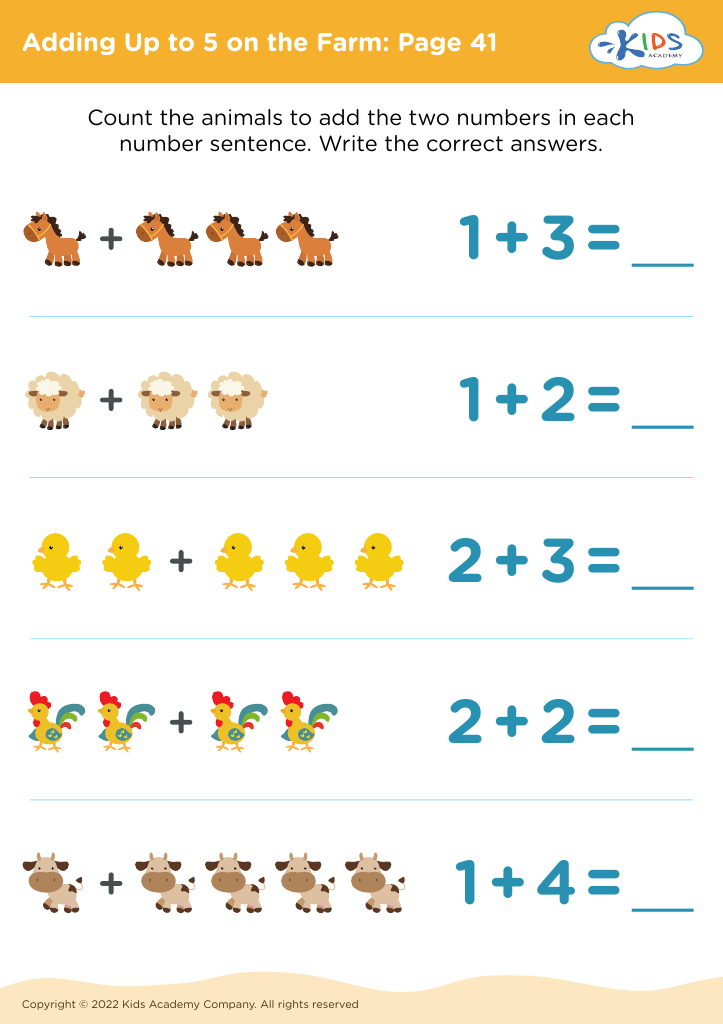
Adding Up to 5 on the Farm: Page 41
Worksheet
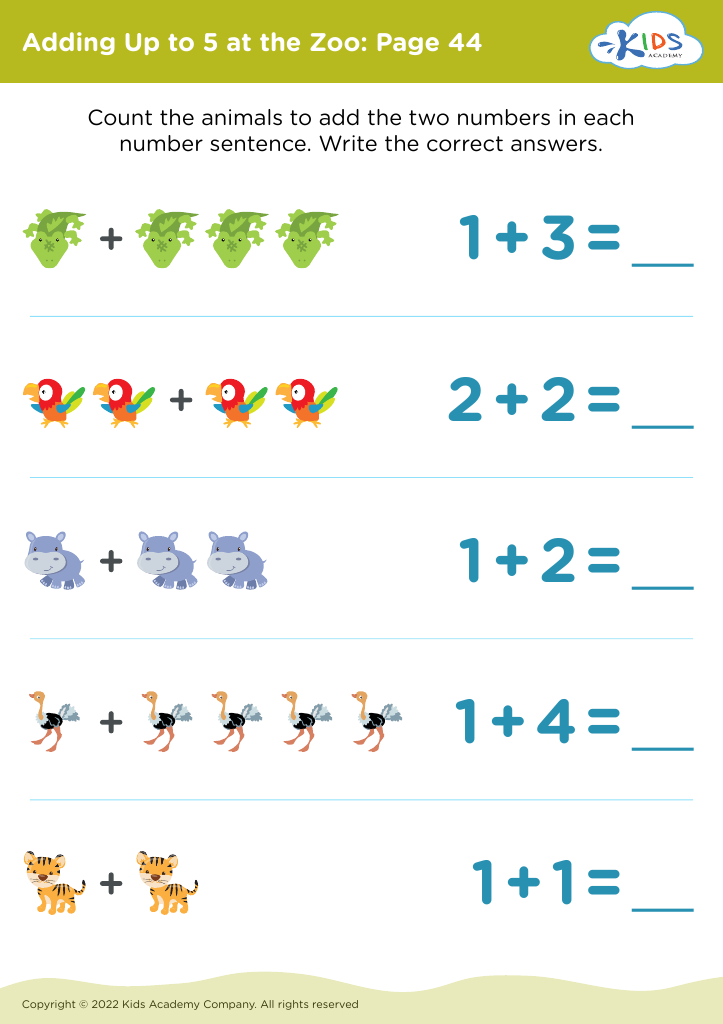
Adding Up to 5 at the Zoo: Page 44
Worksheet
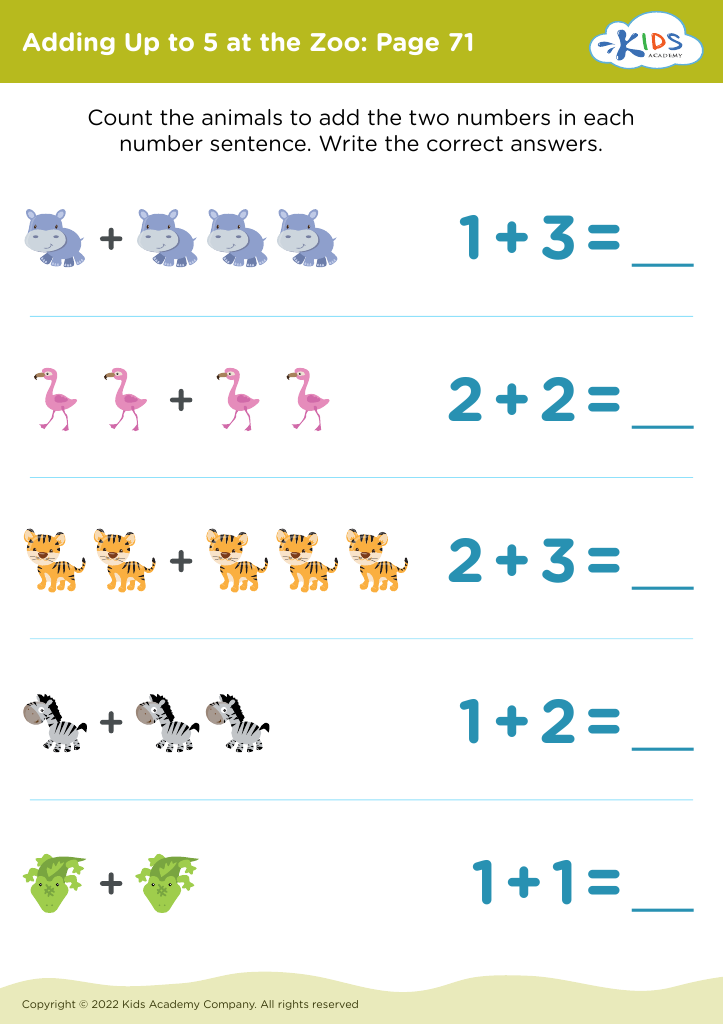
Adding Up to 5 at the Zoo: Page 71
Worksheet
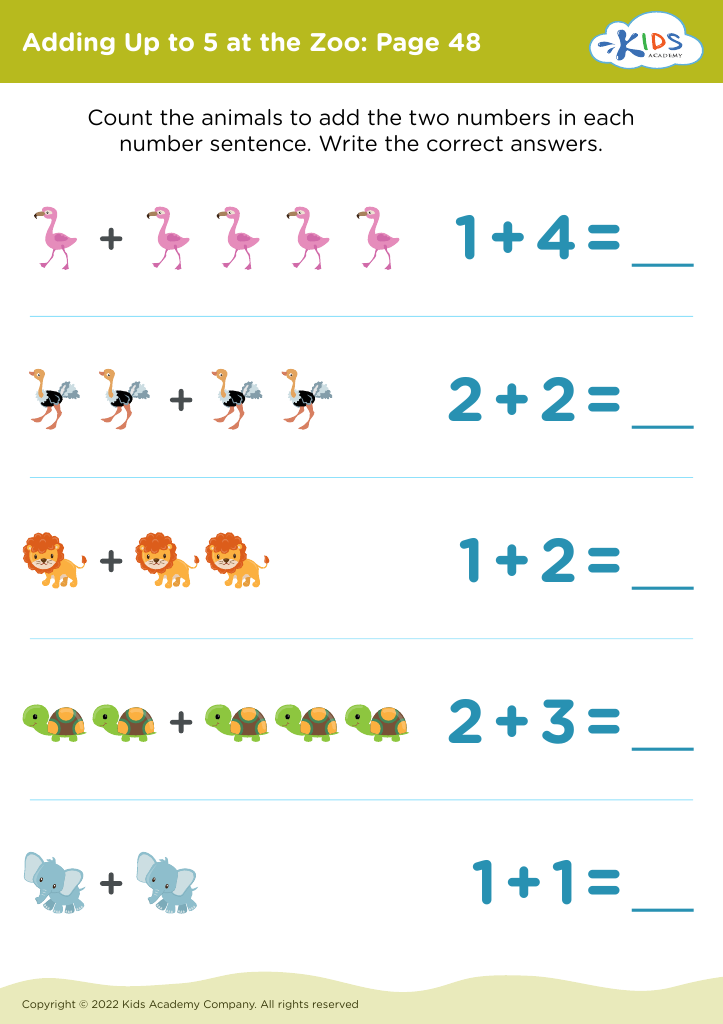
Adding Up to 5 at the Zoo: Page 48
Worksheet
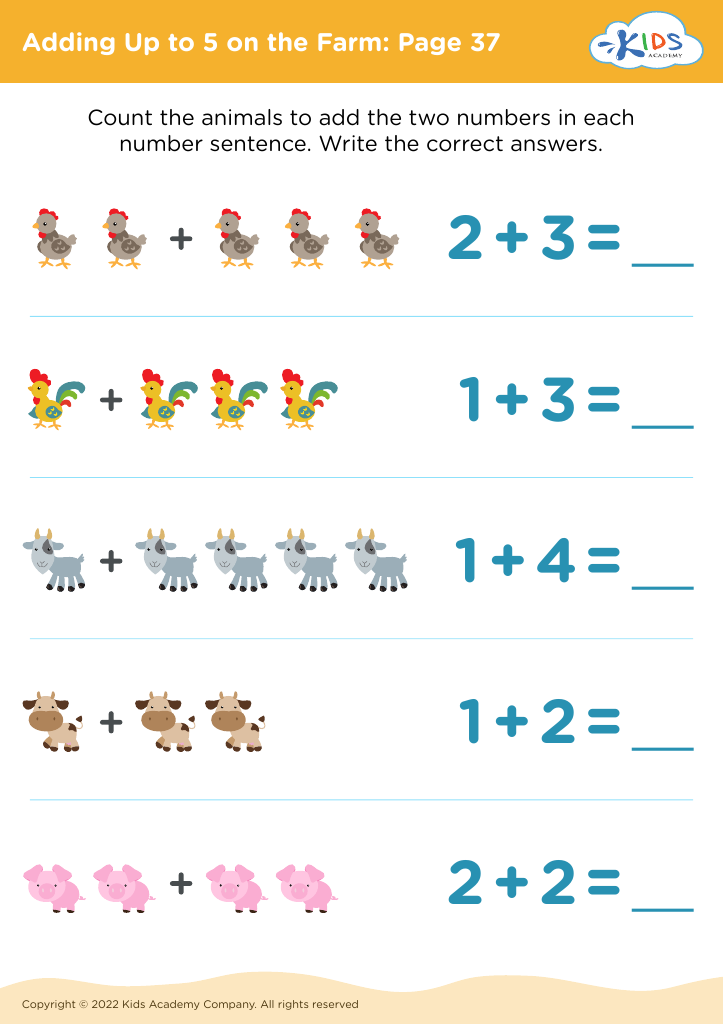
Adding Up to 5 on the Farm: Page 37
Worksheet


Animal recognition addition is a vital educational tool for children aged 4-6. Engaging with this concept allows young learners to develop foundational math skills while simultaneously fostering a love for animals and nature. When parents and teachers incorporate animal recognition into addition activities, they create a multi-sensory learning experience that captures children's attention and stimulates their imagination.

These activities are developmentally appropriate, offering a playful approach to math. By counting and adding different animals—whether through pictures, toys, or interactive games—children strengthen their understanding of numbers and simple addition. This method also promotes critical thinking as they categorize animals, recognize patterns, and explore relationships among numbers.

Furthermore, using animals as a theme makes learning relatable and enjoyable, encouraging participation and reducing math anxiety often seen in early learners. The familiarity of animals helps reinforce concepts through repetition and real-world relevance.

By prioritizing animal recognition addition, parents and teachers support early numeracy while nurturing curiosity and engagement. This approach lays a robust foundation for lifelong learning, enhances cognitive development, and empowers children with essential skills they will build upon throughout their educational journey. Supporting such activities ultimately leads to more confident and capable learners.