Filters

240 filtered results

Clear all filters
Favorites
With answer key
Interactive

240 filtered results

Difficulty Level

Grade


Check out this FREE Trial Lesson on Addition for age 4-6!

Z

Favorites
With answer key
Interactive
  • 4-6
  • Counting practice
  • Addition
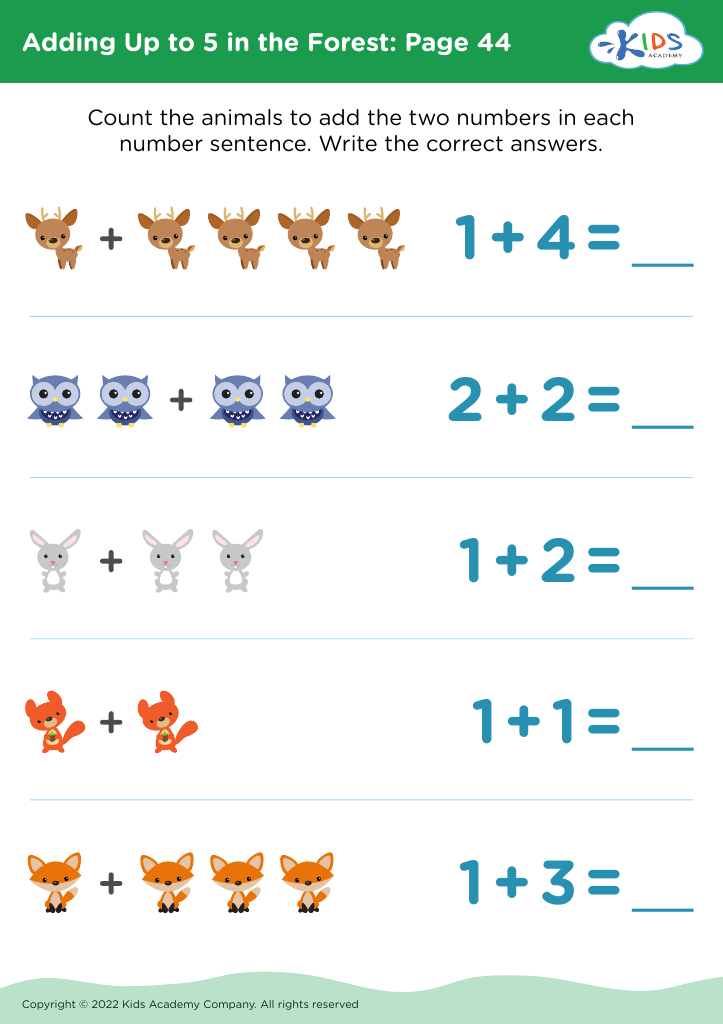
Adding Up to 5 in the Forest: Page 44
Worksheet
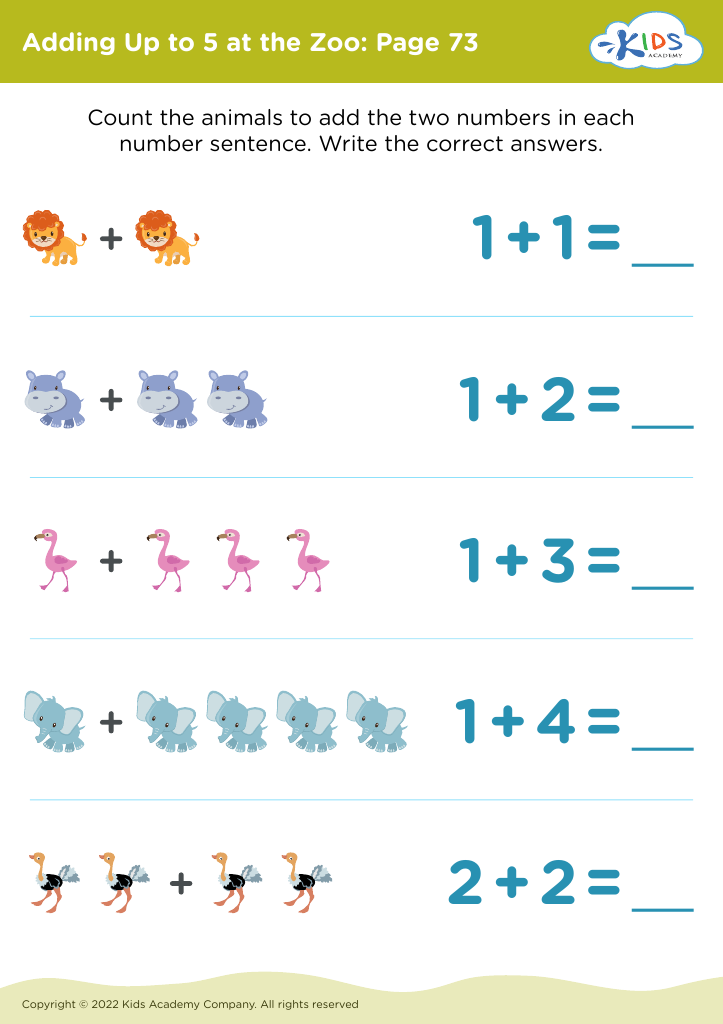
Adding Up to 5 at the Zoo: Page 73
Worksheet
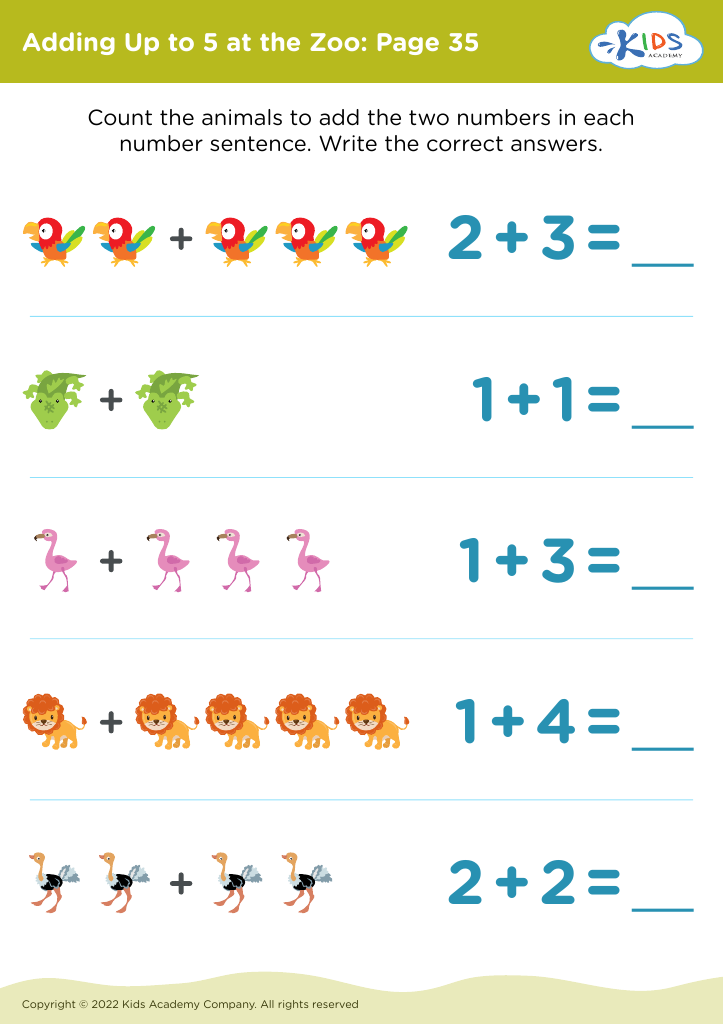
Adding Up to 5 at the Zoo: Page 35
Worksheet
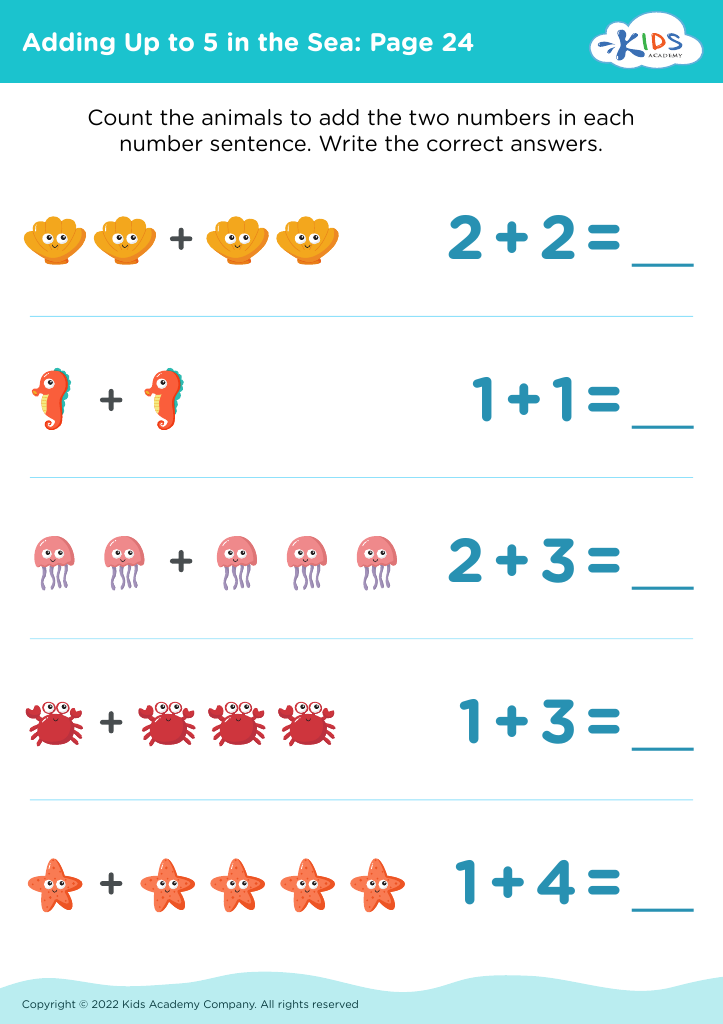
Adding Up to 5 in the Sea: Page 24
Worksheet
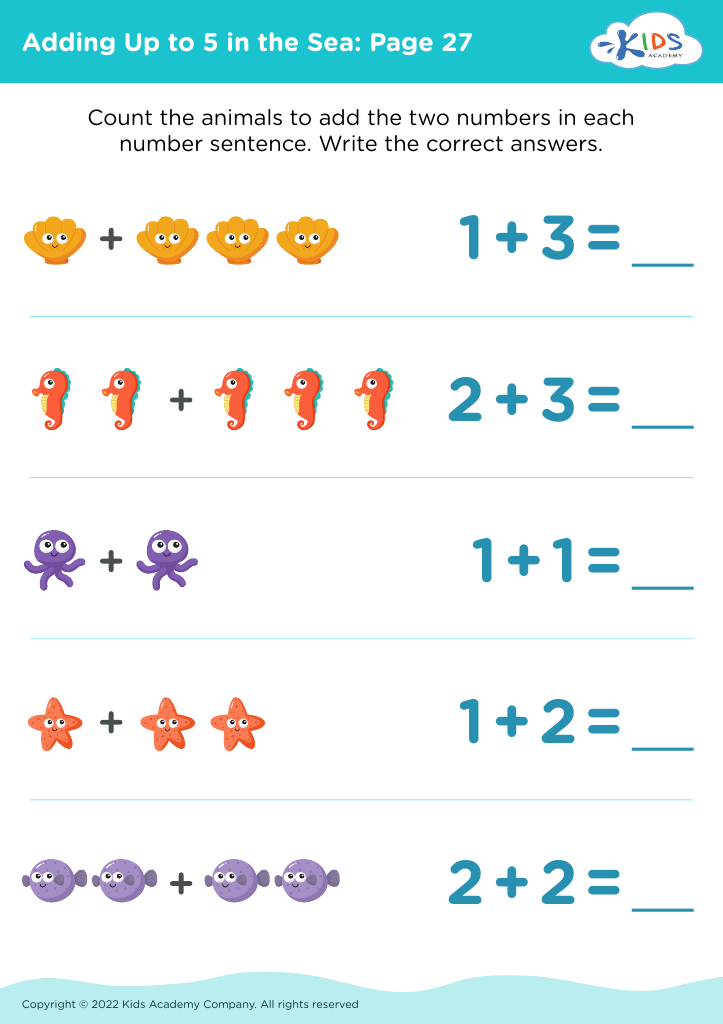
Adding Up to 5 in the Sea: Page 27
Worksheet
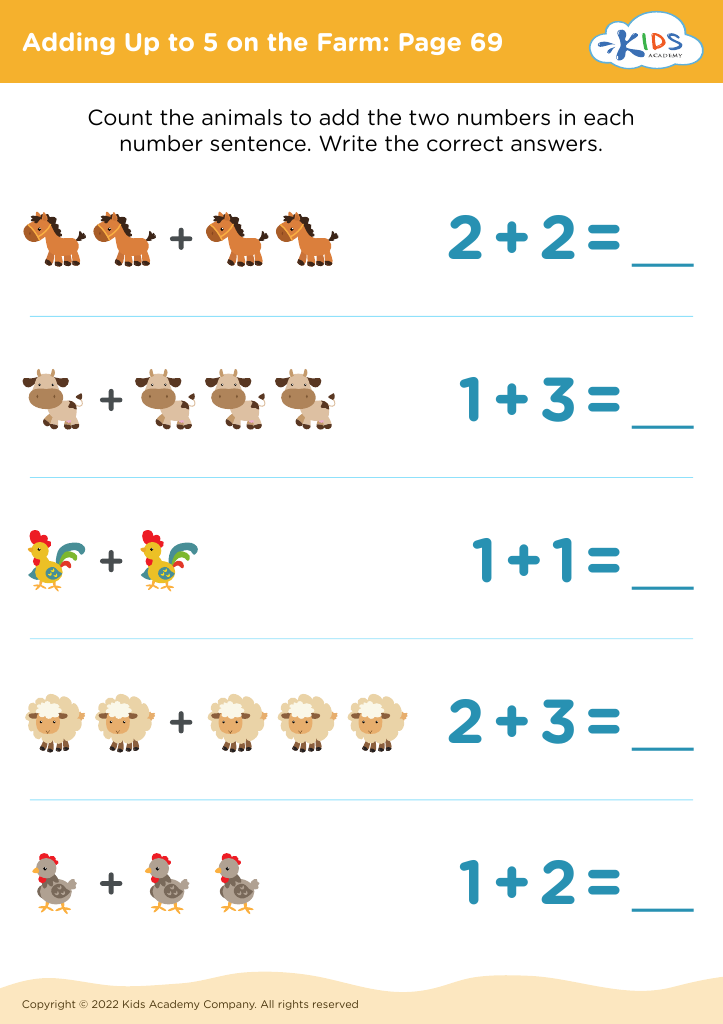
Adding Up to 5 on the Farm: Page 69
Worksheet
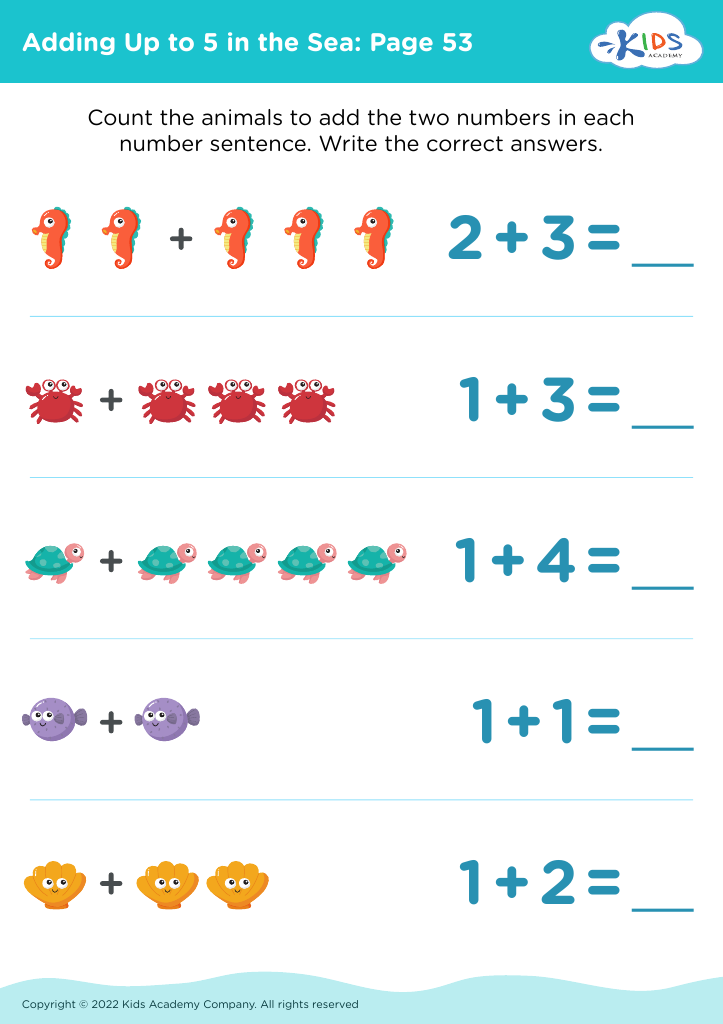
Adding Up to 5 in the Sea: Page 53
Worksheet
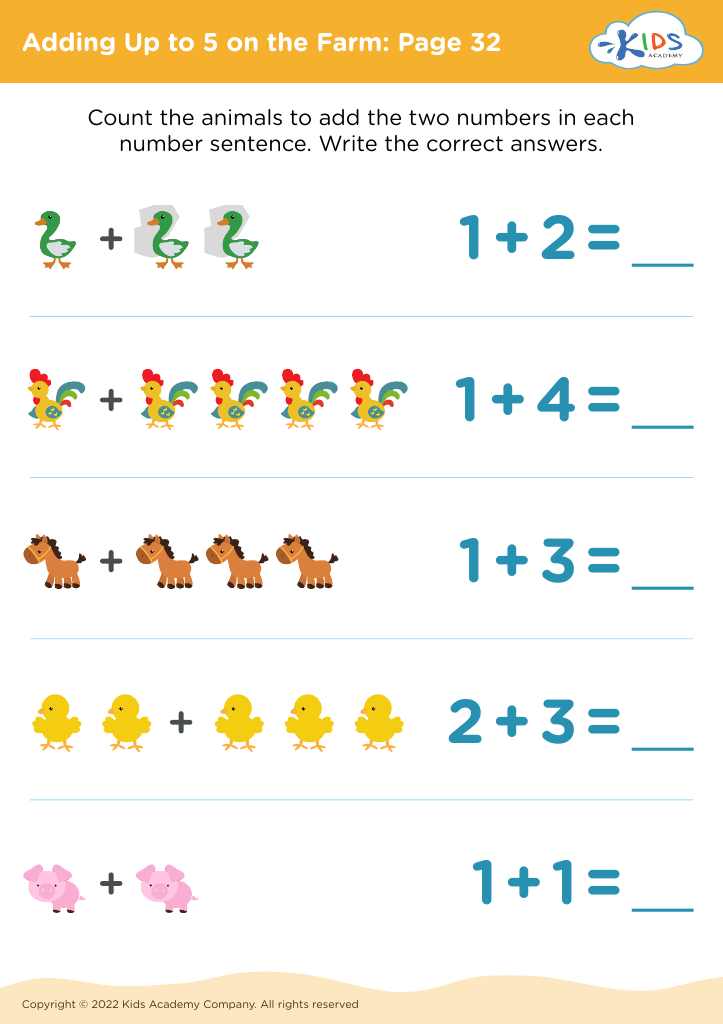
Adding Up to 5 on the Farm: Page 32
Worksheet
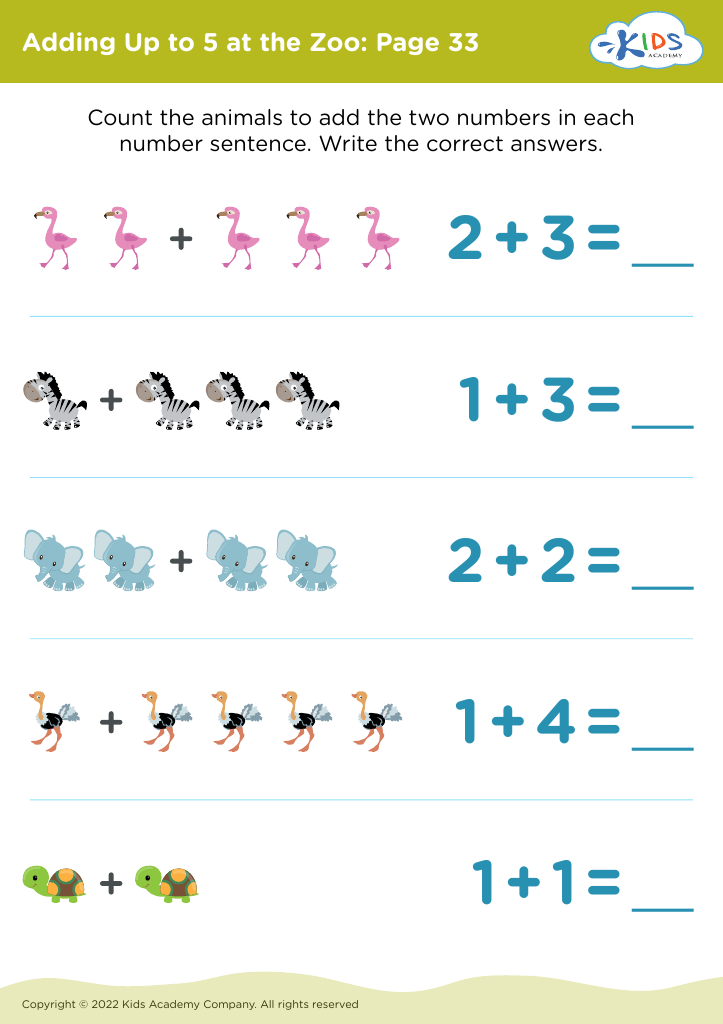
Adding Up to 5 at the Zoo: Page 33
Worksheet
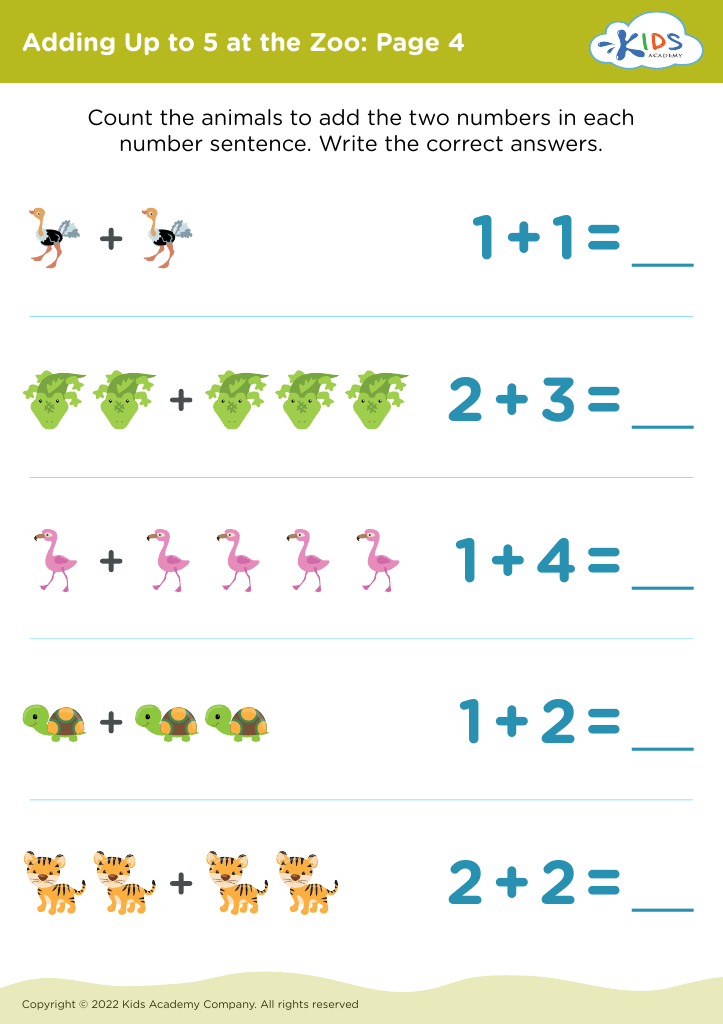
Adding Up to 5 at the Zoo: Page 4

Adding Up to 5 at the Zoo: Page 4

Adding Up to 5 at the Zoo: Page 4
Worksheet
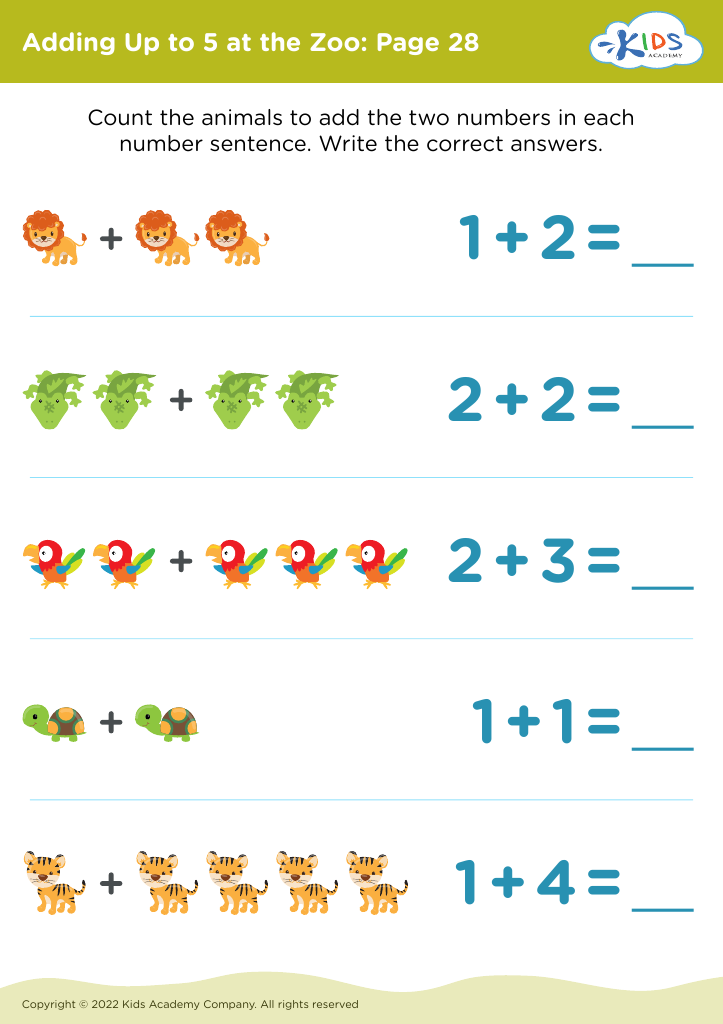
Adding Up to 5 at the Zoo: Page 28
Worksheet
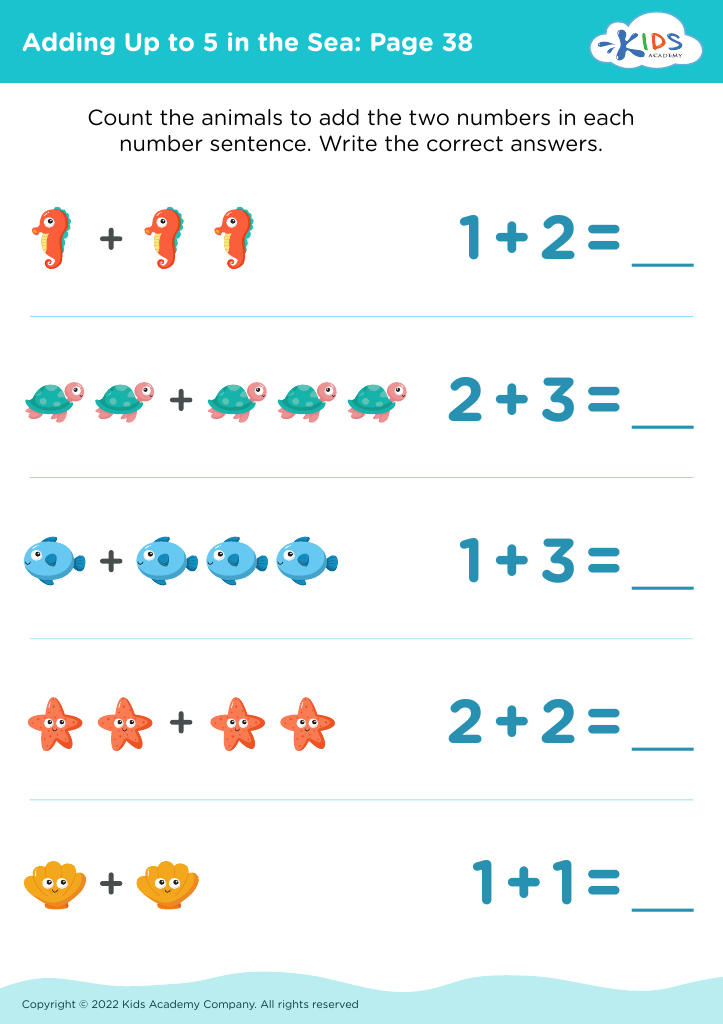
Adding Up to 5 in the Sea: Page 38
Worksheet
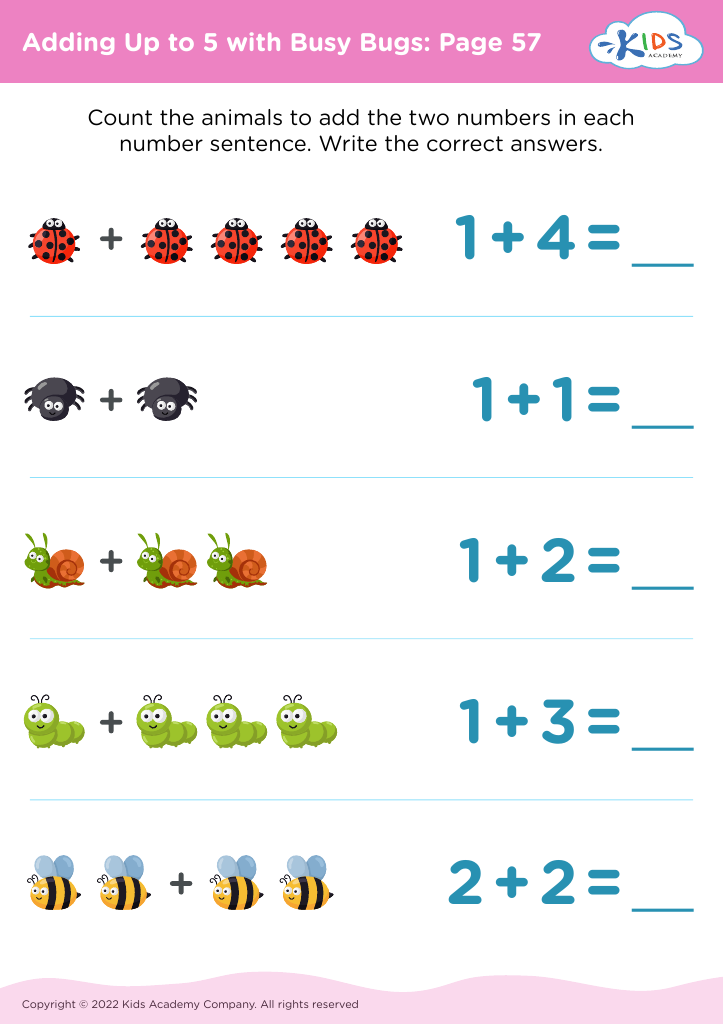
Adding Up to 5 with Busy Bugs: Page 57
Worksheet
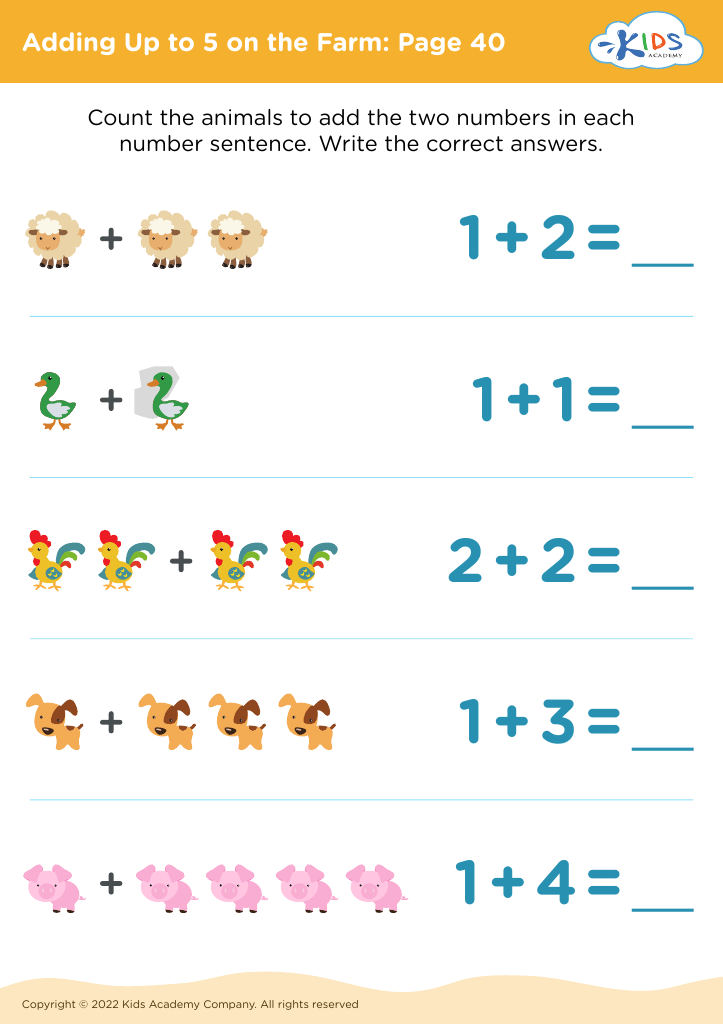
Adding Up to 5 on the Farm: Page 40
Worksheet
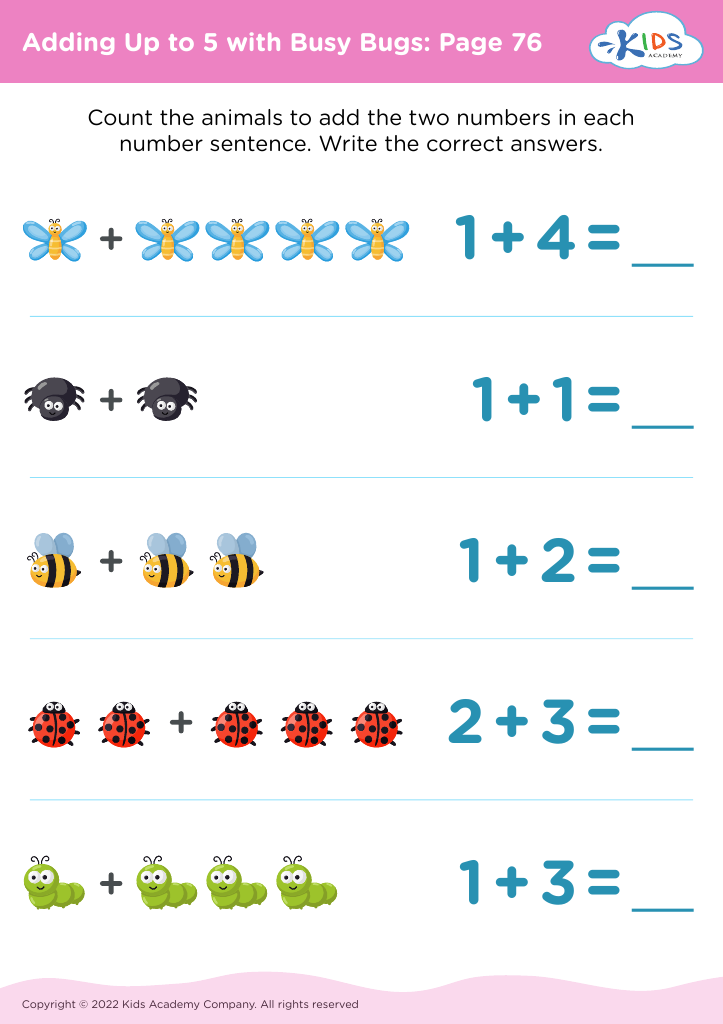
Adding Up to 5 with Busy Bugs: Page 76
Worksheet
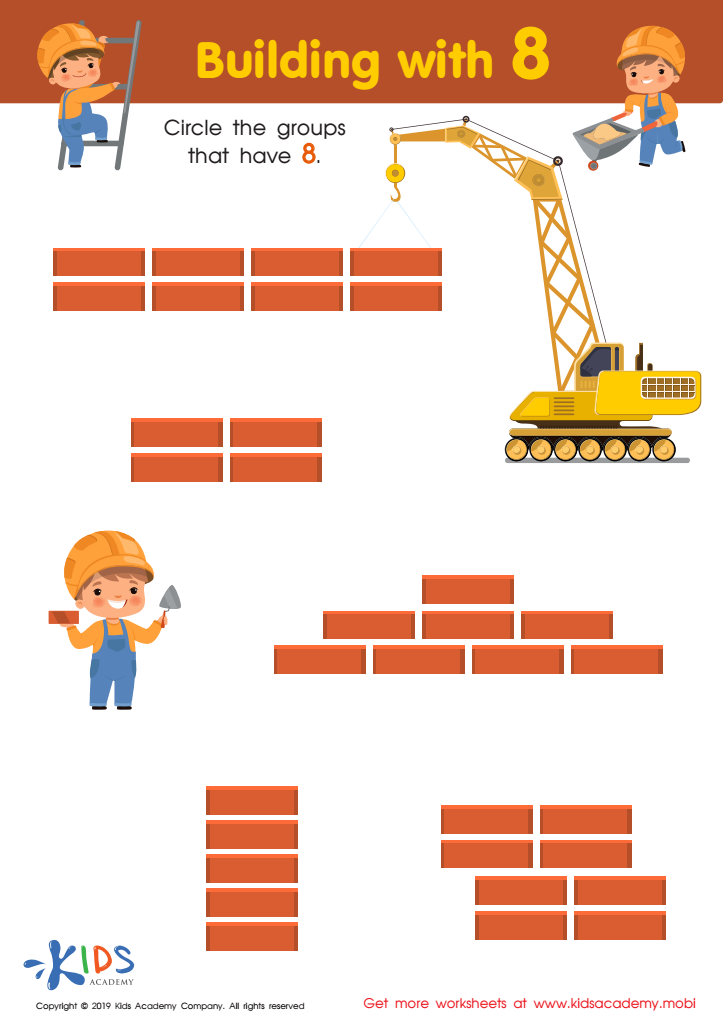
Building with 8 Worksheet

Building with 8 Worksheet

Your child can learn more with this simple exercise! Get them counting and help them circle the groups of 8 bricks. It's a great addition to their post-school lessons, supporting their counting skills. Plus, it's a fun way to learn!
Building with 8 Worksheet
Worksheet
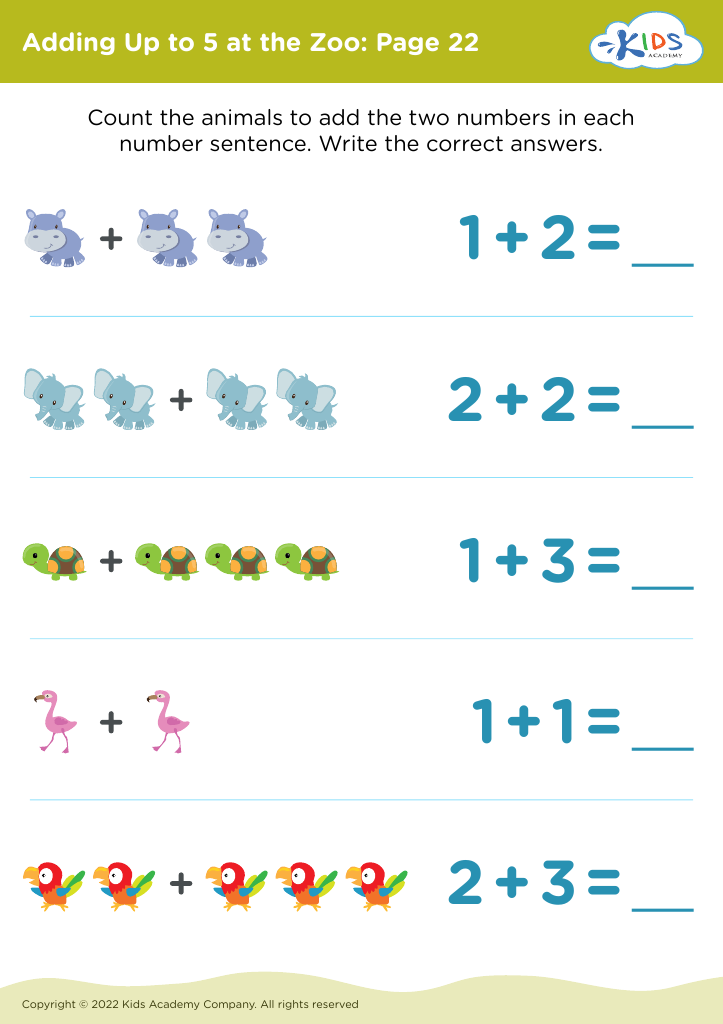
Adding Up to 5 at the Zoo: Page 22
Worksheet
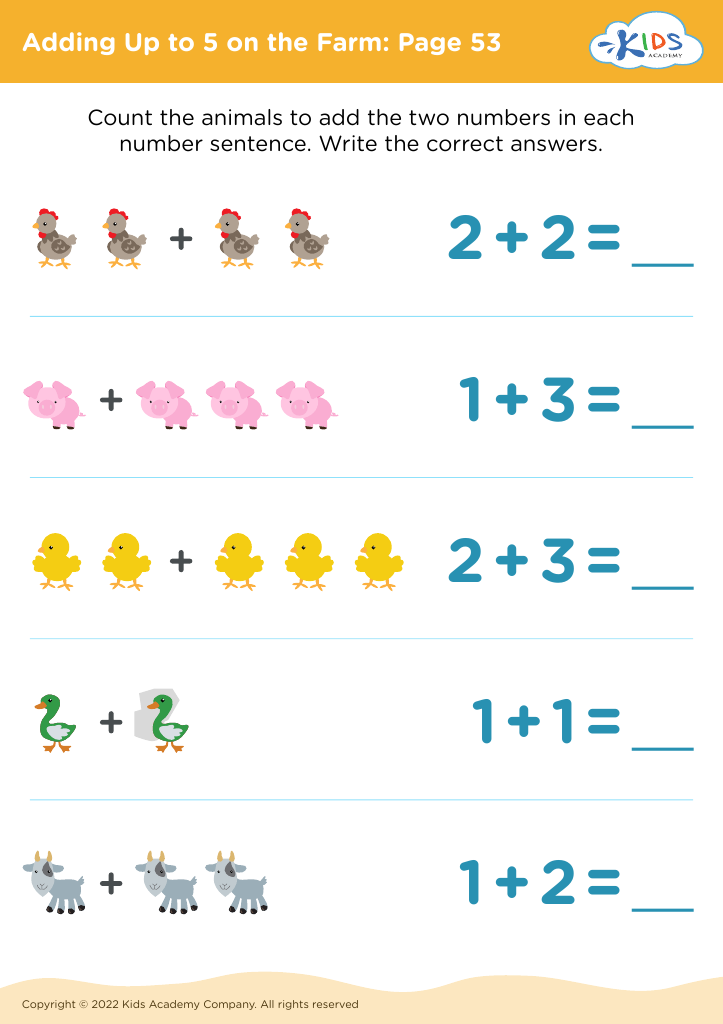
Adding Up to 5 on the Farm: Page 53
Worksheet
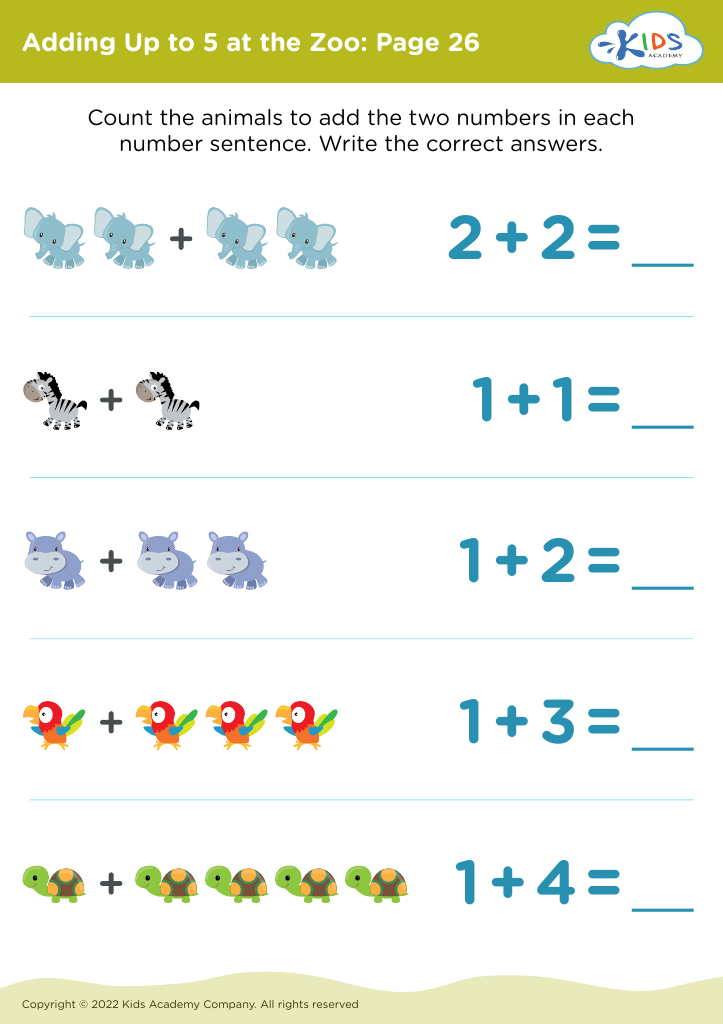
Adding Up to 5 at the Zoo: Page 26
Worksheet
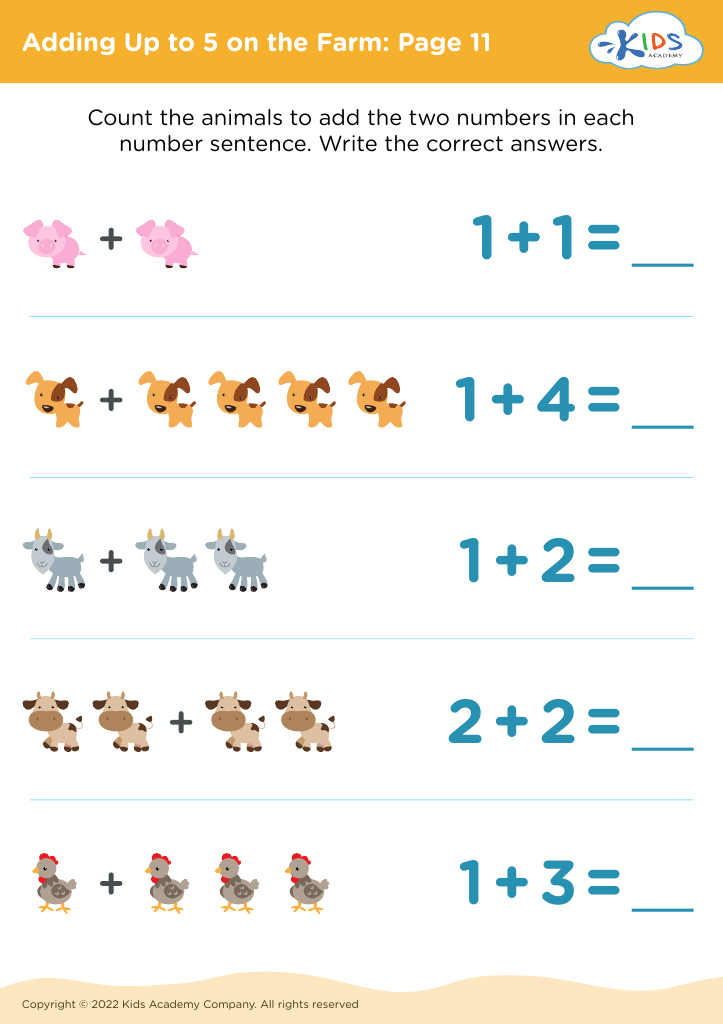
Adding Up to 5 on the Farm: Page 11
Worksheet
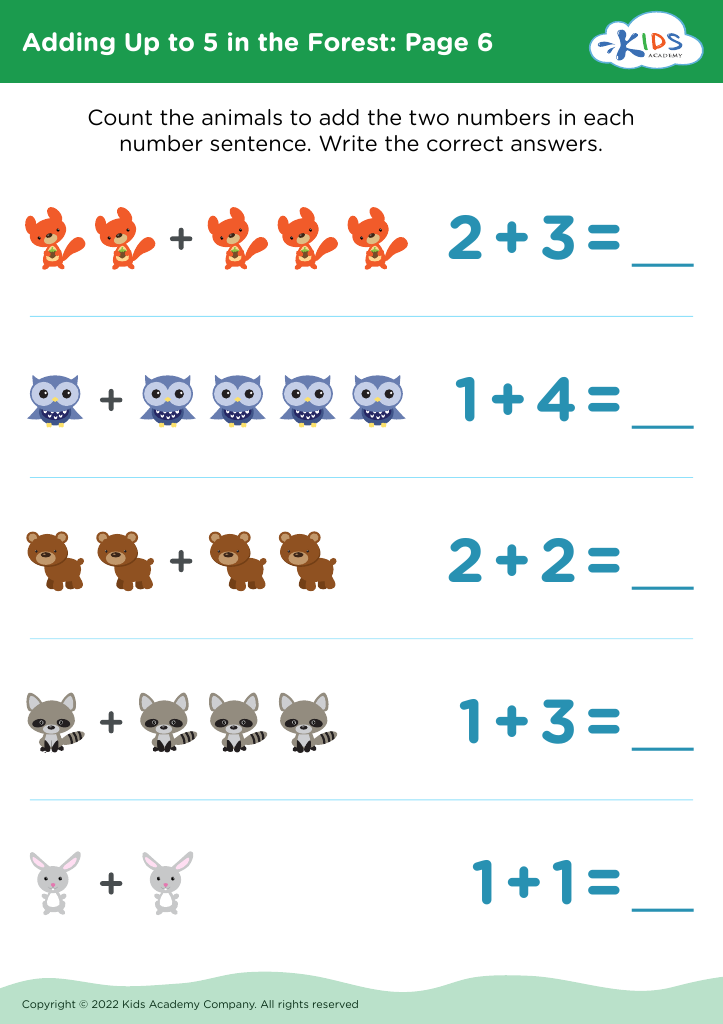
Adding Up to 5 in the Forest: Page 6
Worksheet
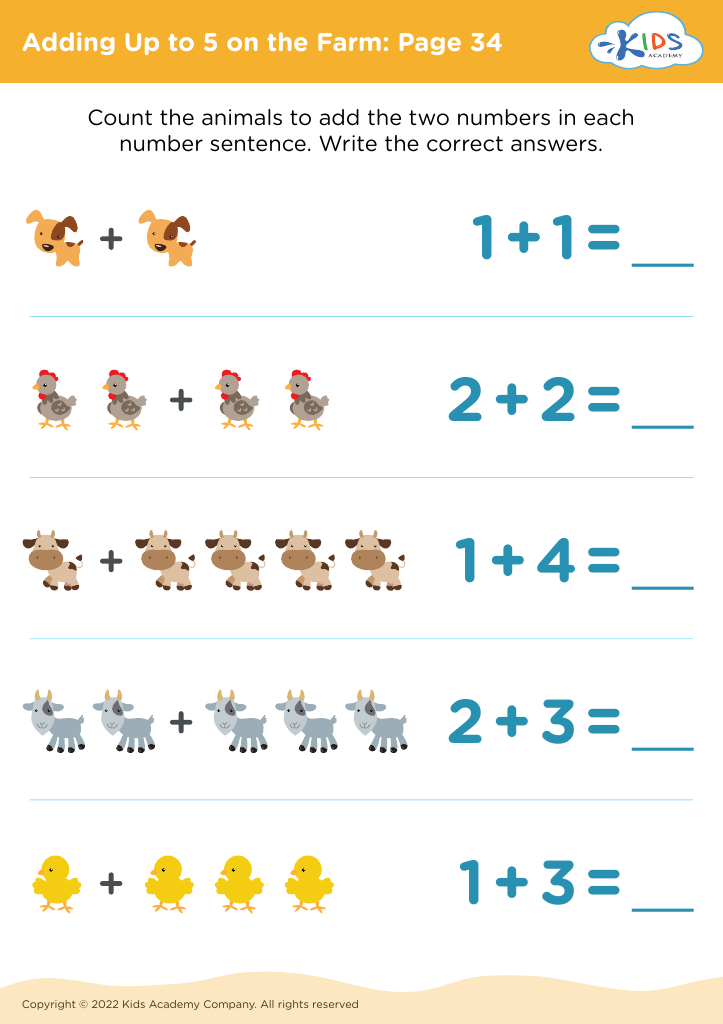
Adding Up to 5 on the Farm: Page 34
Worksheet
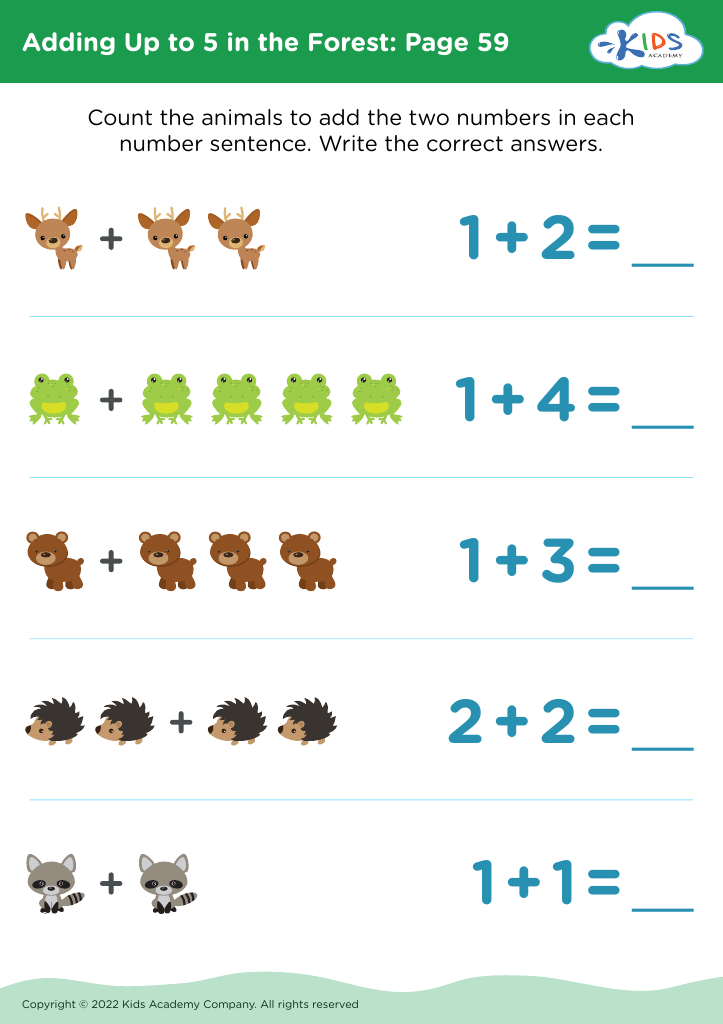
Adding Up to 5 in the Forest: Page 59
Worksheet
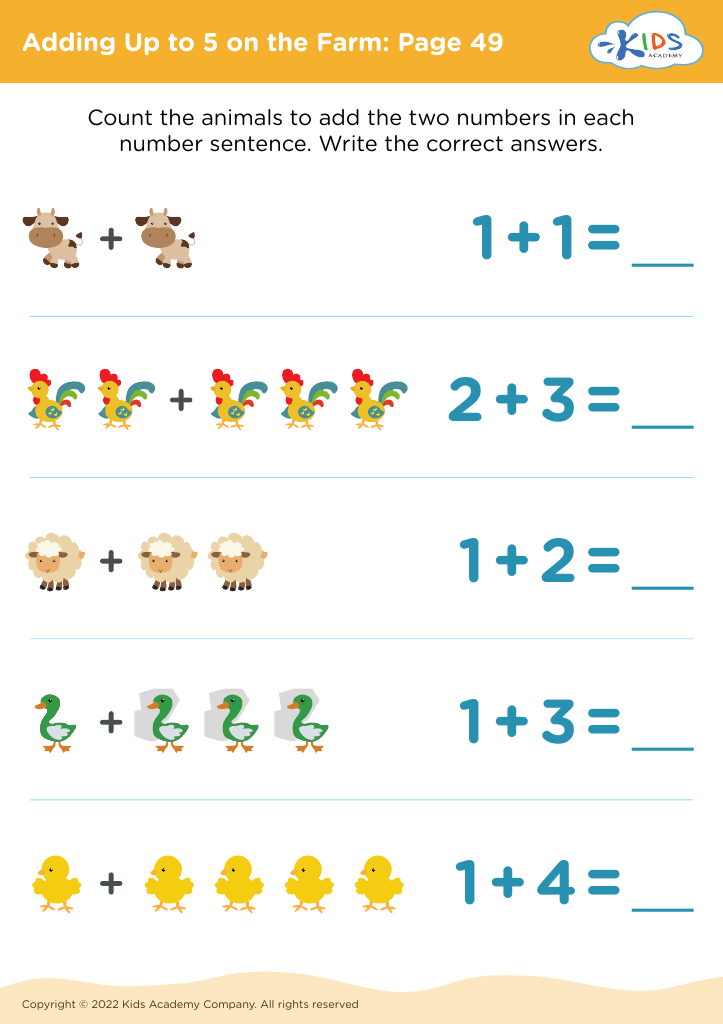
Adding Up to 5 on the Farm: Page 49
Worksheet


Counting practice and basic addition skills for children aged 4-6 are foundational elements in early childhood education that help pave the way for future mathematical understanding. During these formative years, children are developing crucial cognitive skills, and counting serves as a building block for all mathematics. By engaging in counting practice, children learn to recognize numbers, understand quantity, and develop one-to-one correspondence—important skills that enhance their ability to add.

Parents and teachers should care about counting and addition practices because they contribute significantly to children's overall cognitive development. Mastering these skills at an early age leads to greater confidence in mathematical problem-solving and improved academic performance later on. This early groundwork also nurtures critical thinking and logical reasoning abilities, which extend beyond mathematics.

Furthermore, counting and simple addition exercises are fun and can be incorporated into everyday activities—making learning a natural part of life. It fosters a positive attitude towards math and creates opportunities for shared experiences between parents or teachers and children. Encouraging these practices can establish a lifelong appreciation for math and build a solid base for further learning in more complex areas as the child grows. Thus, investing time in these skills now will yield long-term benefits.