Counting skills Addition Worksheets for Ages 4-6 - Page 6
127 filtered results
-
From - To
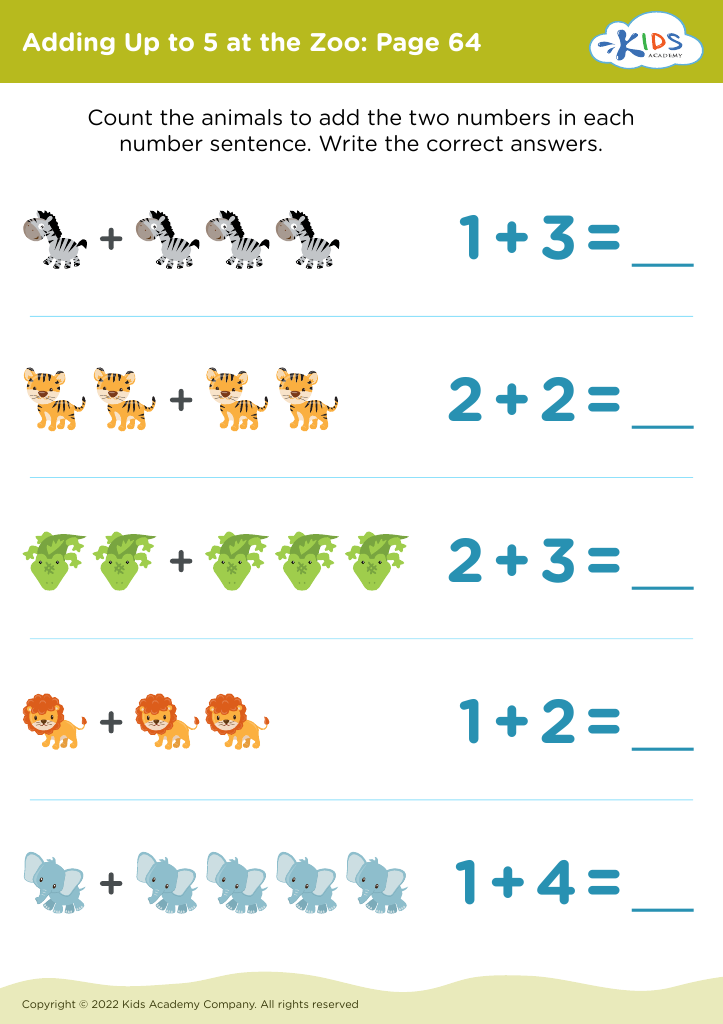
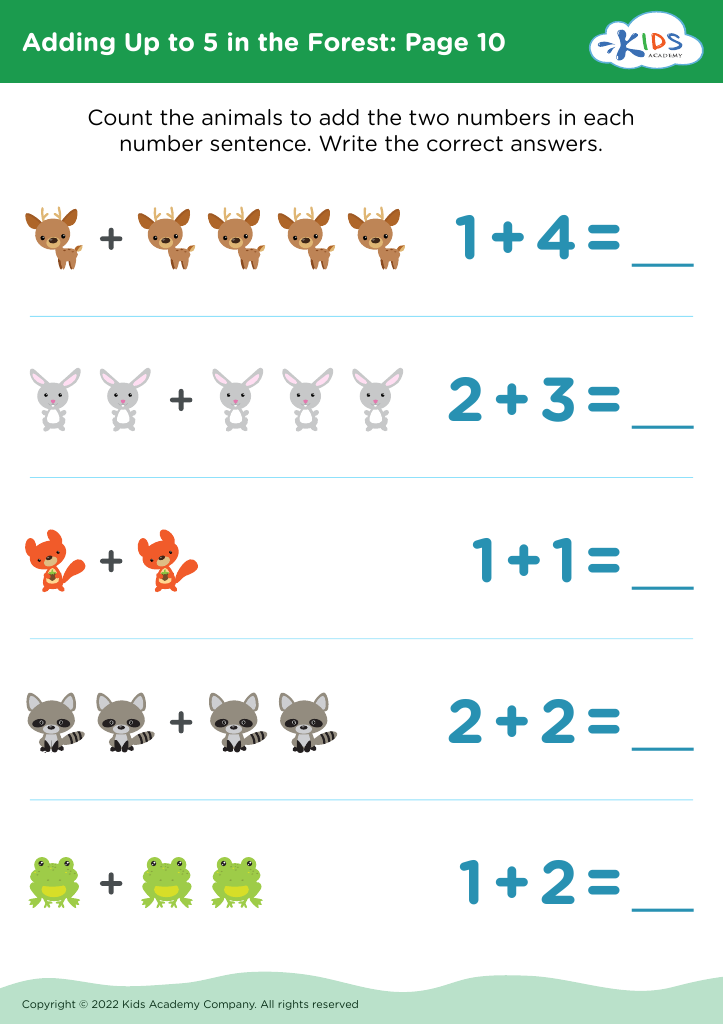
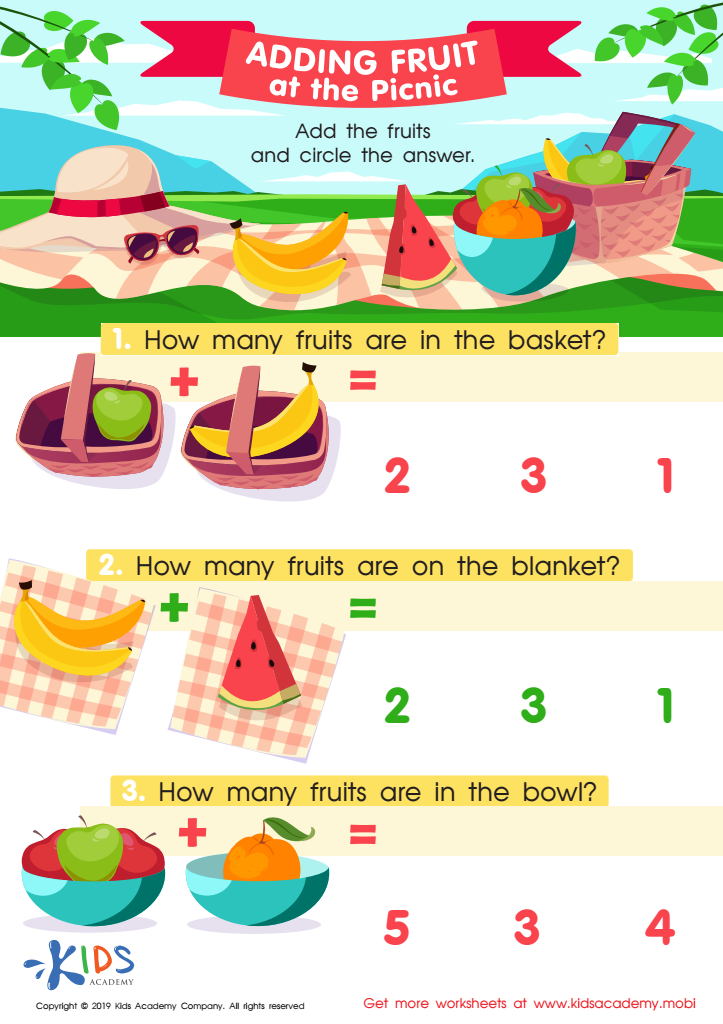
Adding Fruit at the Picnic Worksheet
 Assign to My Students
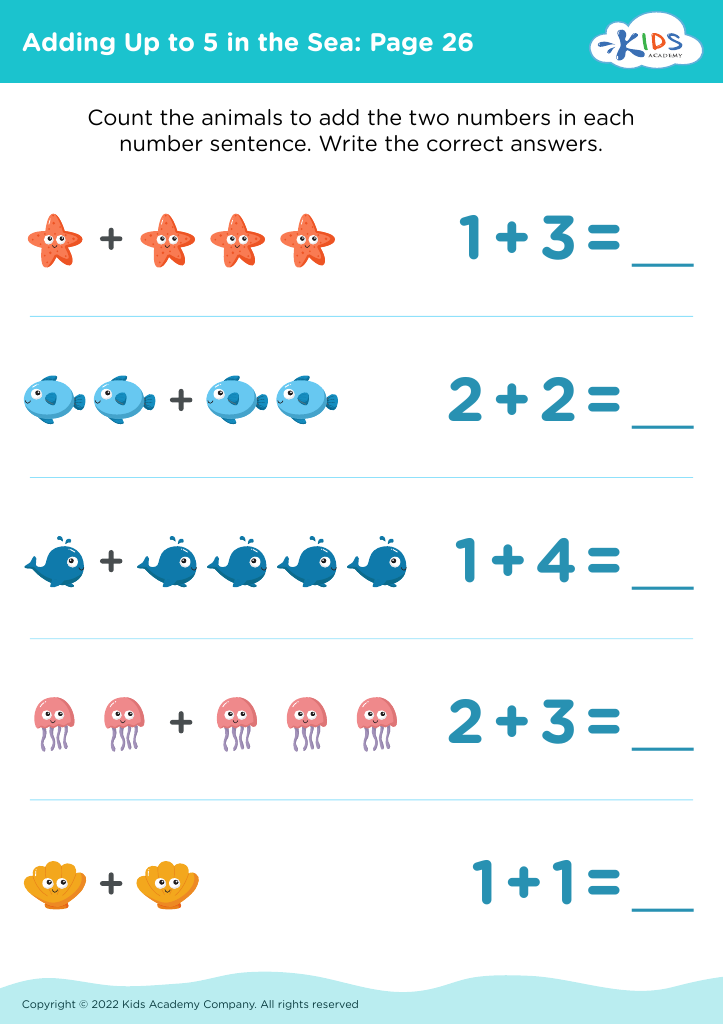
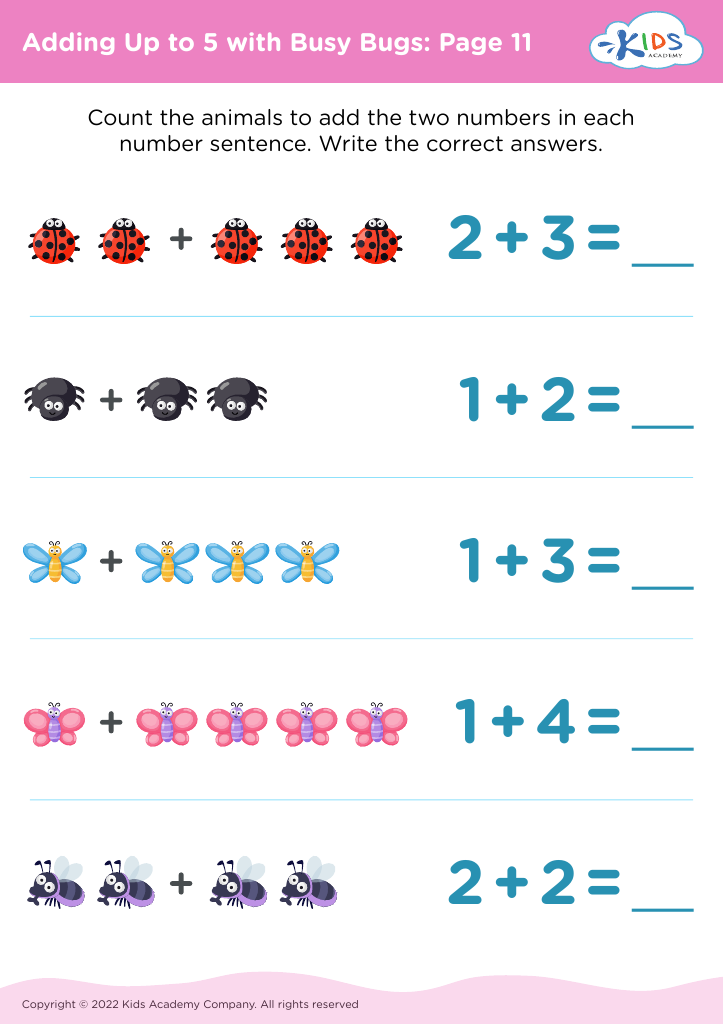
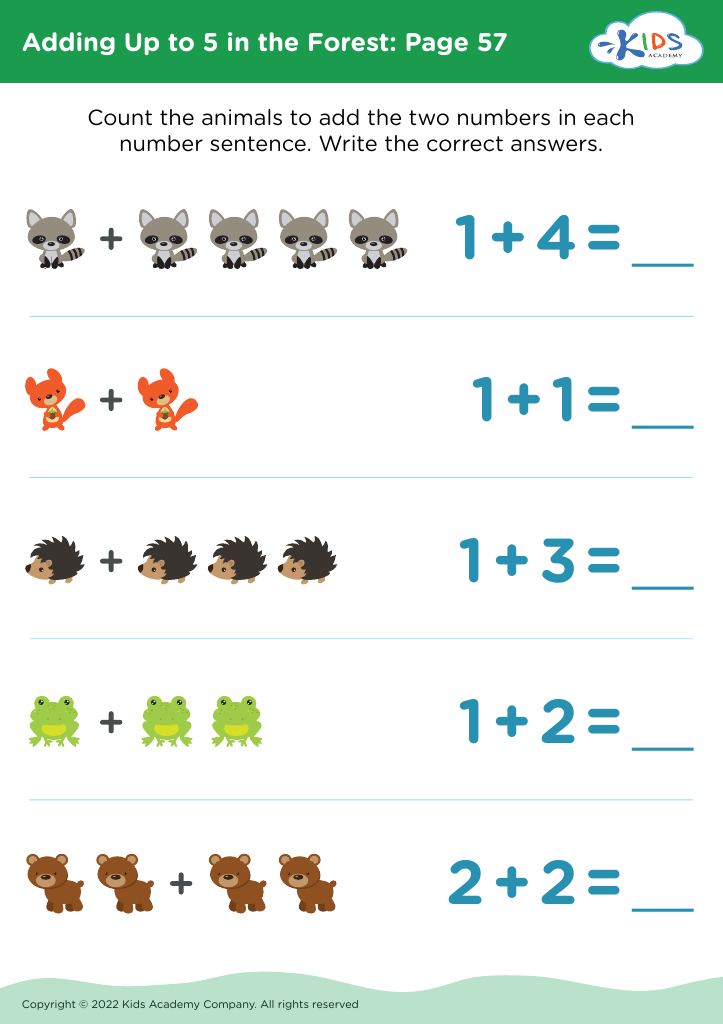
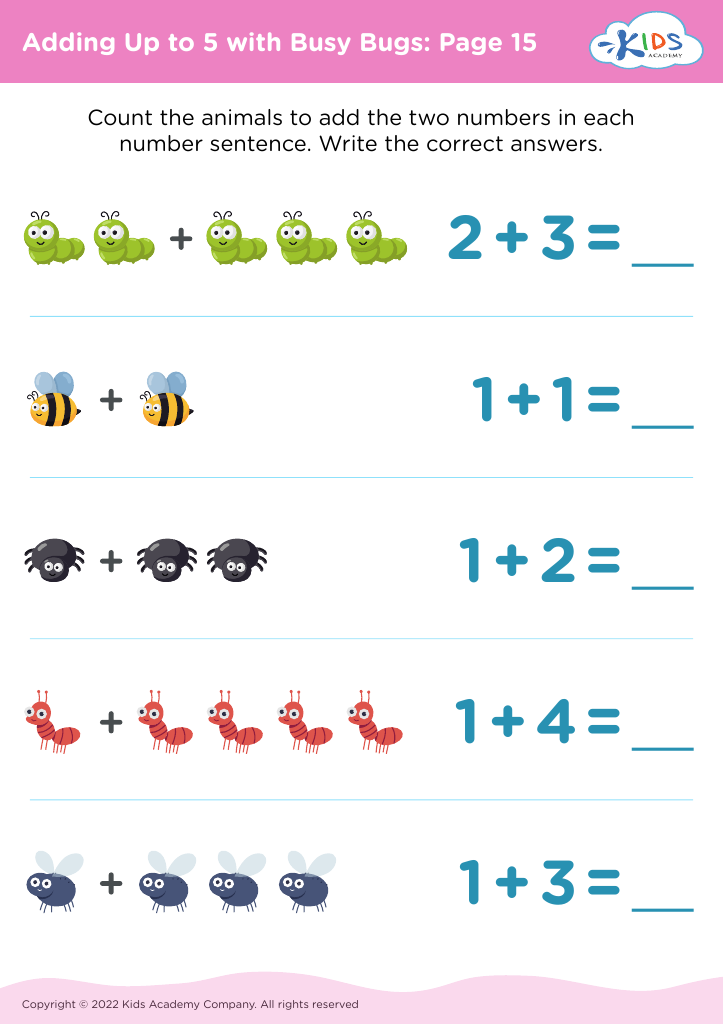








Counting skills and addition are fundamental building blocks in early mathematics for children aged 4-6. At this developmental stage, mastering these skills paves the way for a child's future success in math and problem-solving. Parents and teachers should prioritize these skills because they form the foundation for more advanced mathematical concepts, including subtraction, multiplication, and even basic geometry.
Enhancing counting abilities helps children understand quantity and number recognition, essential for daily life. Engaging in simple addition activities nurtures logical thinking and promotes cognitive development. For instance, using everyday objects, such as snacks or toys, can turn the abstract concepts of counting and addition into tangible experiences, making learning enjoyable and relevant.
Moreover, developing these skills fosters confidence and a positive attitude toward mathematics. Children who acquire strong counting and addition skills often perform better in school, leading to a lifelong appreciation for learning. Additionally, these skills enhance social interactions, as children begin to share, take turns, and play games involving numbers with their peers. Therefore, investing time and resources into building counting and addition skills in early childhood is crucial, setting a strong, supportive foundation for all future academic successes.








