Discover fun and engaging "Understanding Quantity Addition Worksheets for Ages 4-6" designed to spark young minds! Our carefully crafted worksheets help children grasp the concept of addition through hands-on practice. Every activity integrates colorful visuals and simple instructions, making learning enjoyable and effective. The exercises are excellent for developing basic math skills, enhancing number sense, and building a strong addition foundation. Perfect for teachers, parents, and homeschoolers aiming to support early learners in mathematics. Turn math time into an exciting adventure—watch your child's confidence soar as they master addition with ease!
Check out this FREE Trial Lesson on Addition for age 4-6!

Breaking Down 8

Favorites
With answer key
Interactive
  • 4-6
  • Understanding quantity
  • Addition
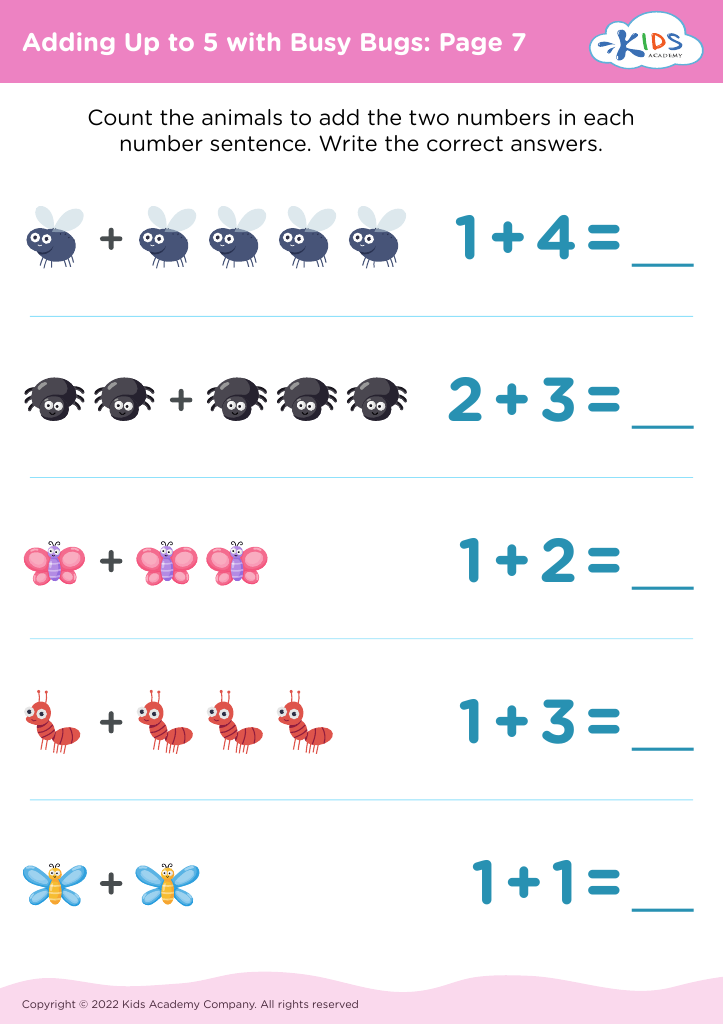
Adding Up to 5 with Busy Bugs: Page 7
Worksheet
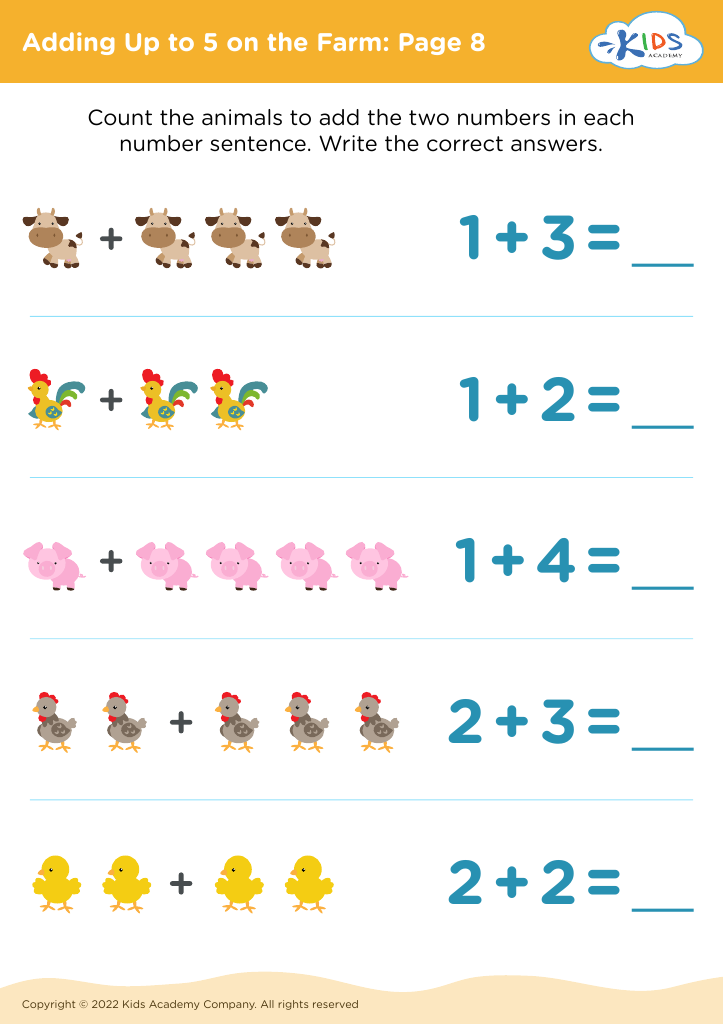
Adding Up to 5 on the Farm: Page 8
Worksheet
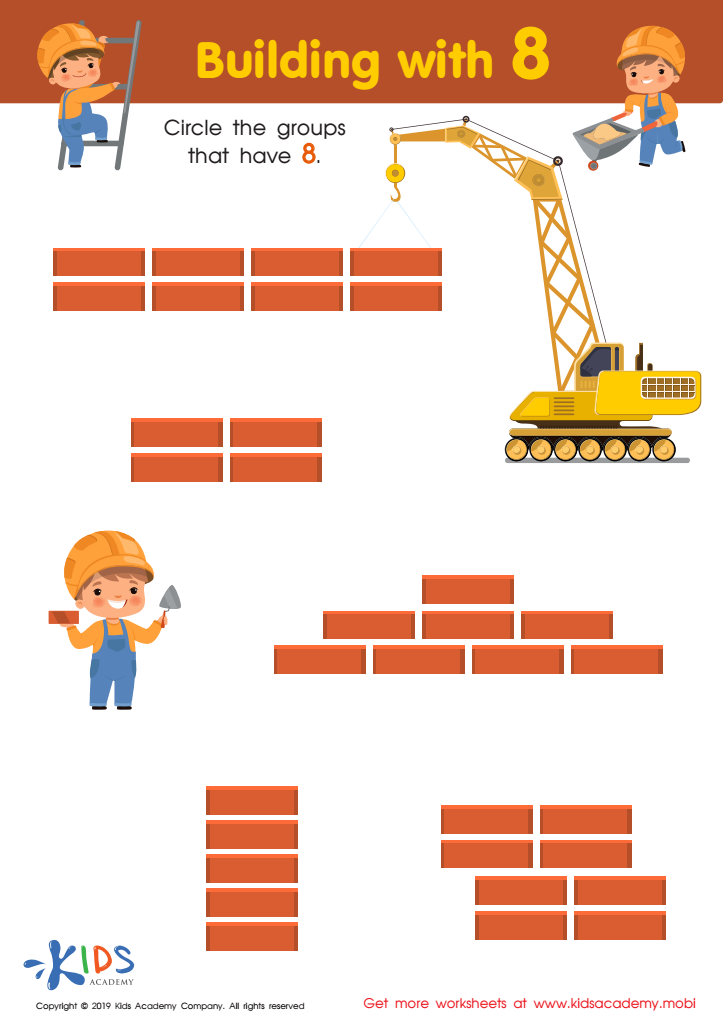
Building with 8 Worksheet

Building with 8 Worksheet

Your child can learn more with this simple exercise! Get them counting and help them circle the groups of 8 bricks. It's a great addition to their post-school lessons, supporting their counting skills. Plus, it's a fun way to learn!
Building with 8 Worksheet
Worksheet
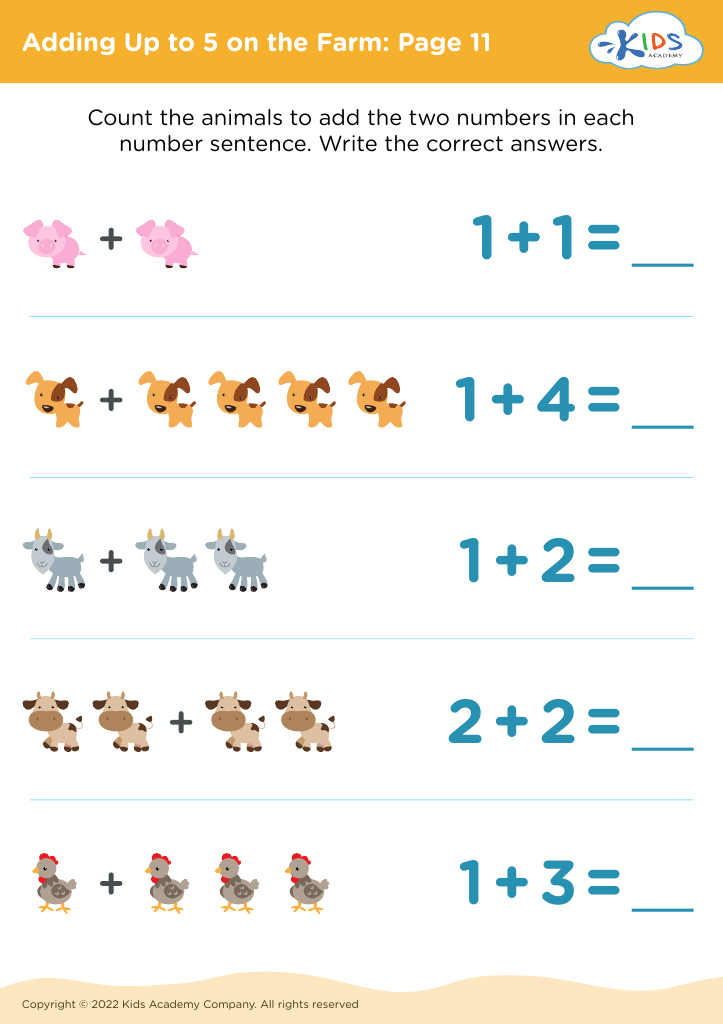
Adding Up to 5 on the Farm: Page 11
Worksheet
Counting Seedlings Worksheet
Counting Seedlings Worksheet
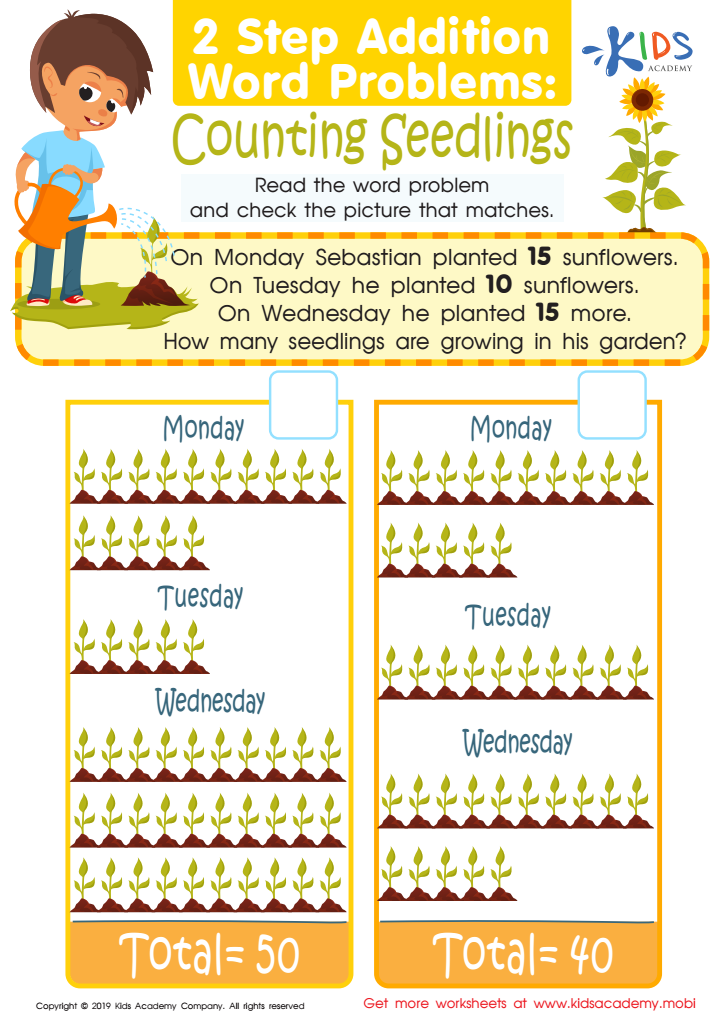
Understanding math word problems is key. Multiple steps can prove challenging - this free worksheet provides one-to-one picture representation to help kids solve multi-step addition word problems. Strengthen addition skills by choosing the matching picture to the answer.
Counting Seedlings Worksheet
Worksheet
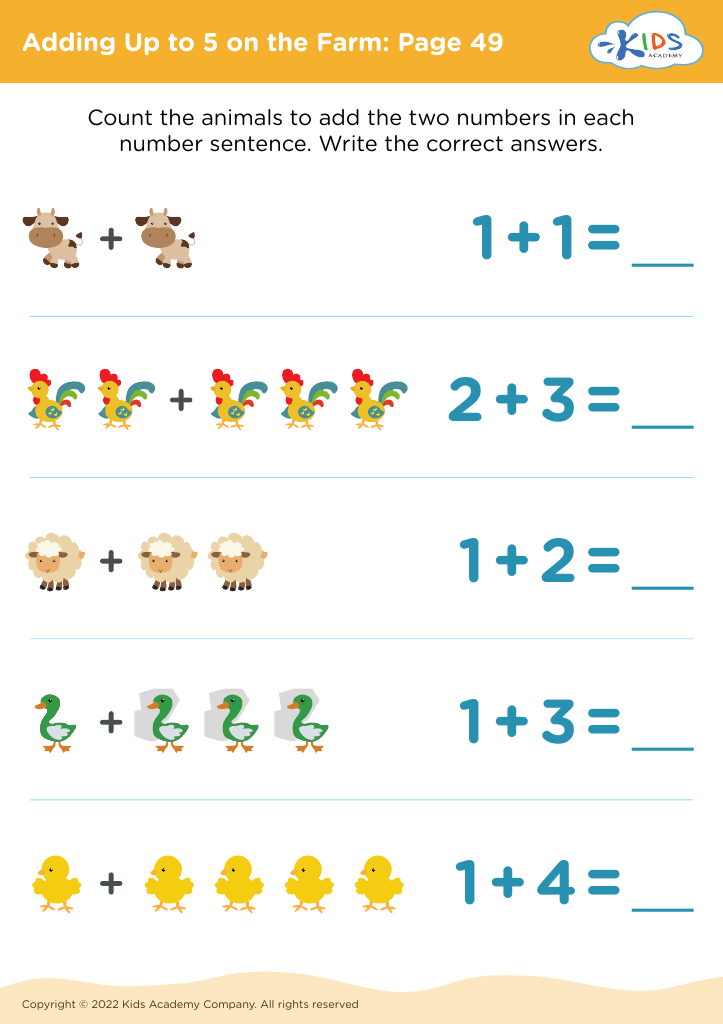
Adding Up to 5 on the Farm: Page 49
Worksheet
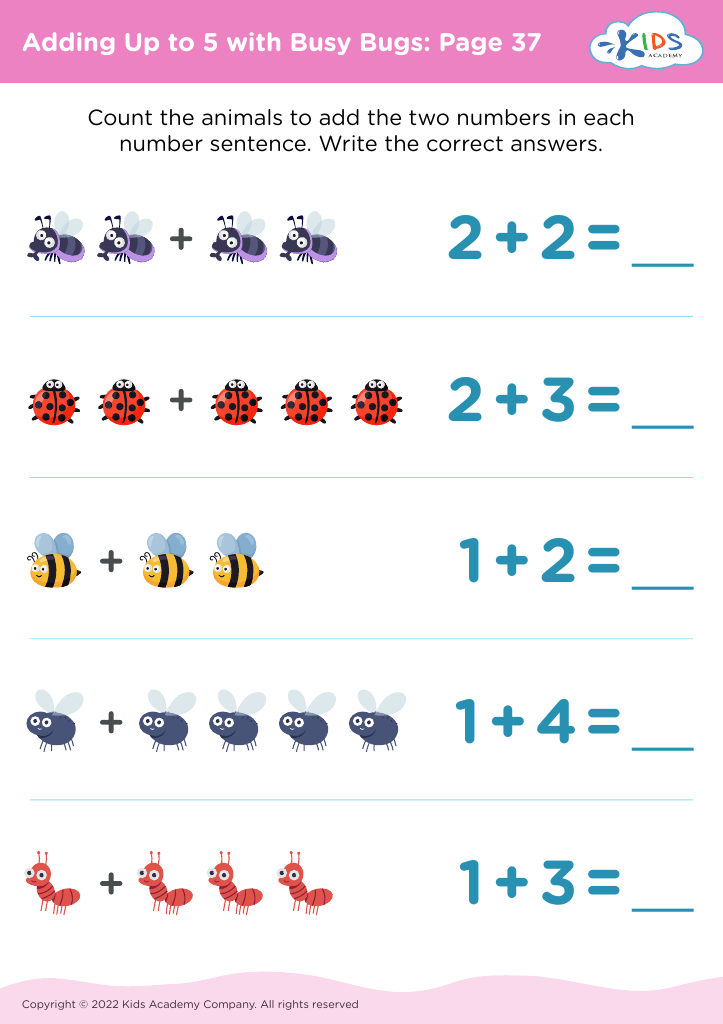
Adding Up to 5 with Busy Bugs: Page 37
Worksheet
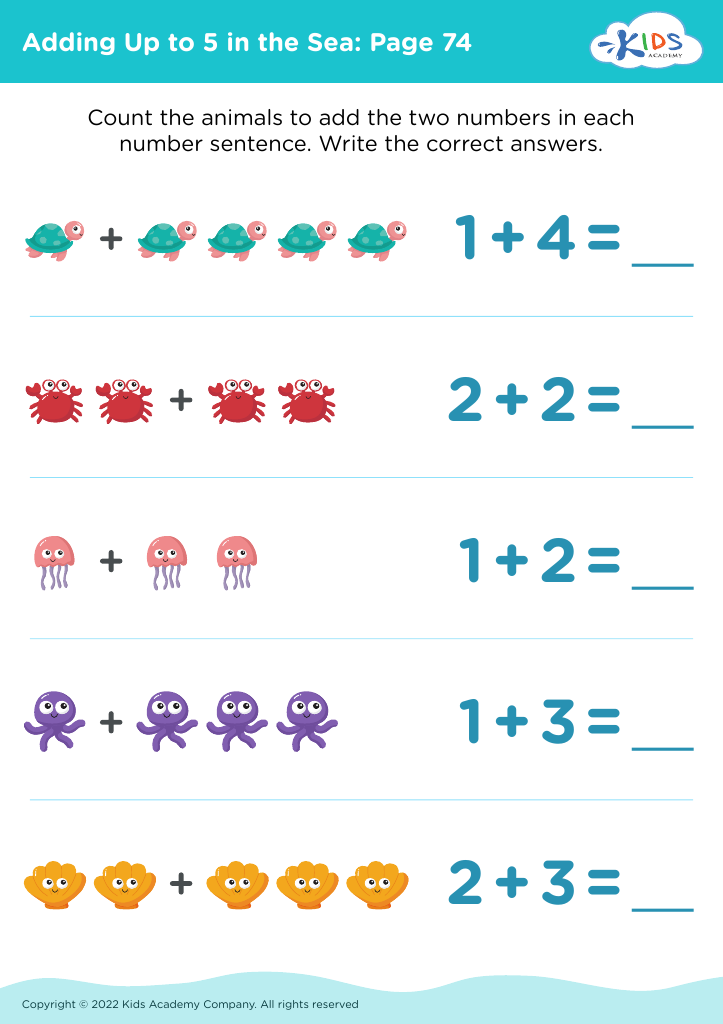
Adding Up to 5 in the Sea: Page 74
Worksheet
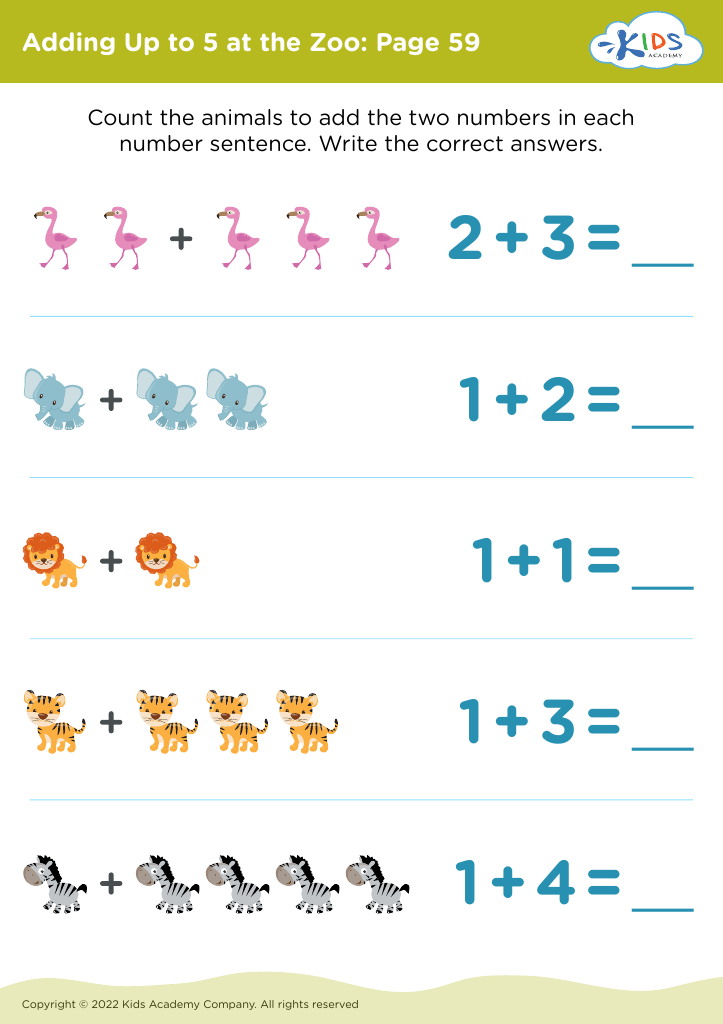
Adding Up to 5 at the Zoo: Page 59
Worksheet
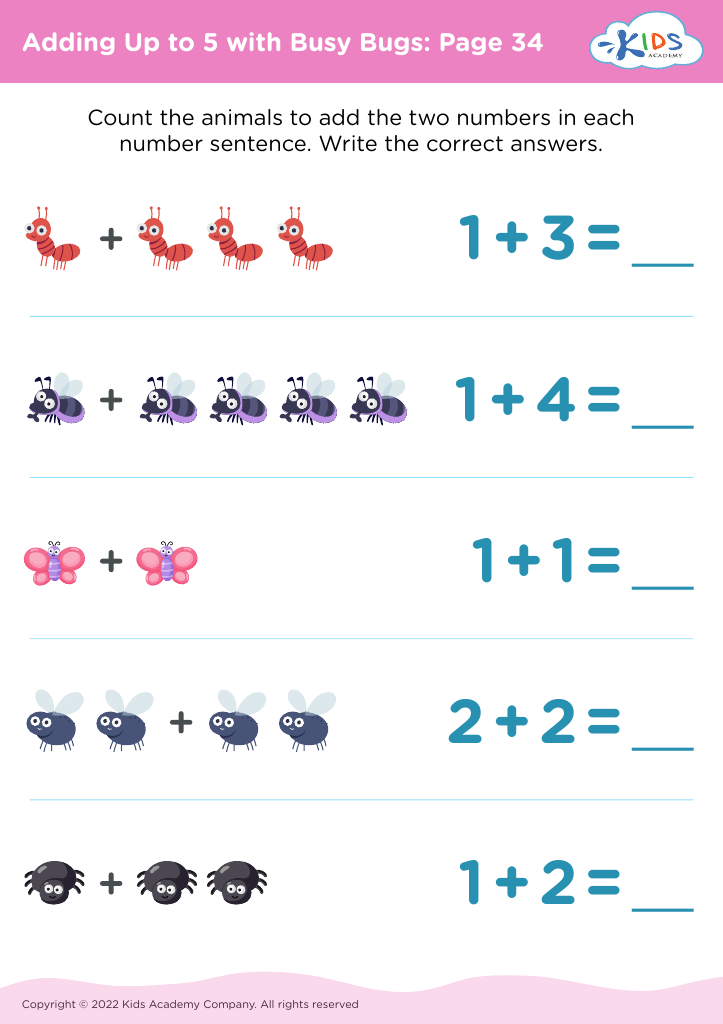
Adding Up to 5 with Busy Bugs: Page 34
Worksheet
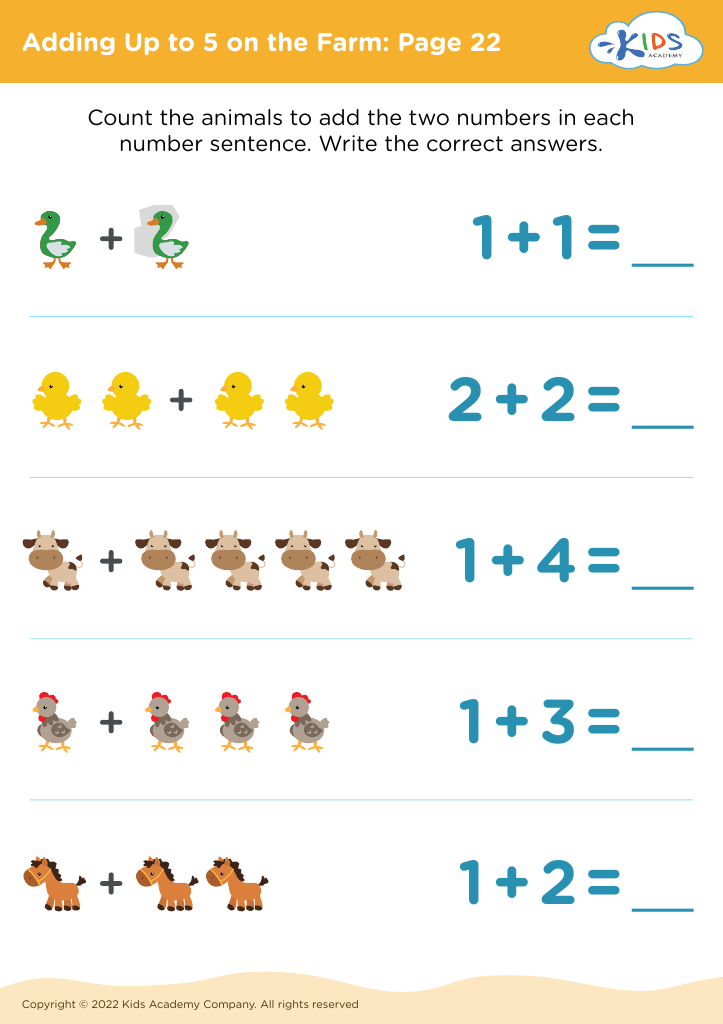
Adding Up to 5 on the Farm: Page 22
Worksheet
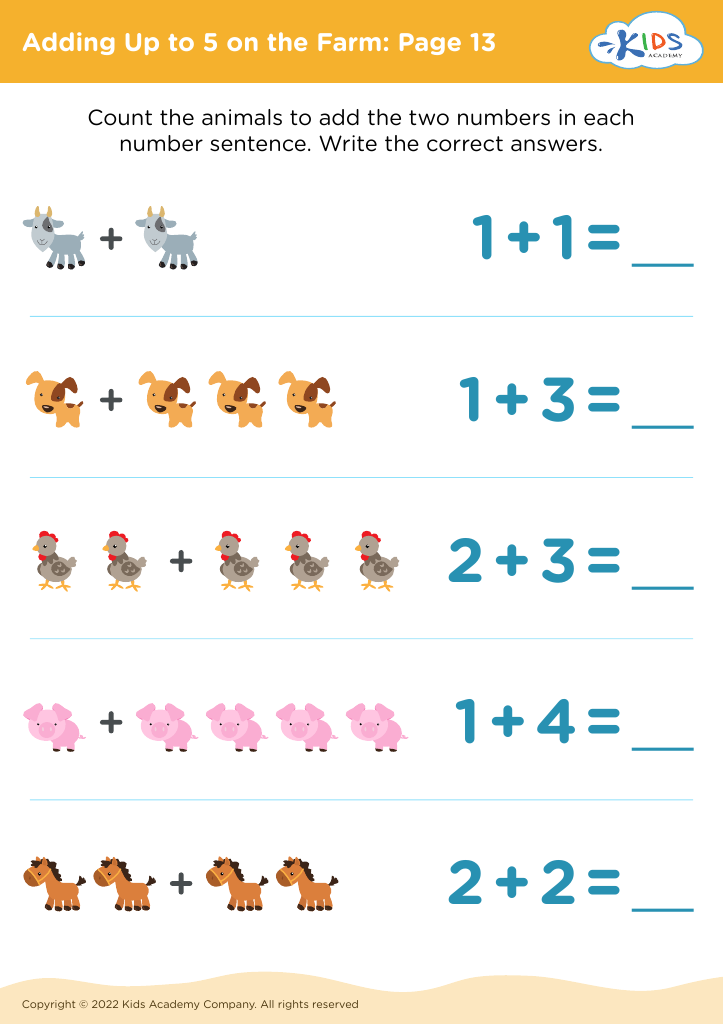
Adding Up to 5 on the Farm: Page 13
Worksheet
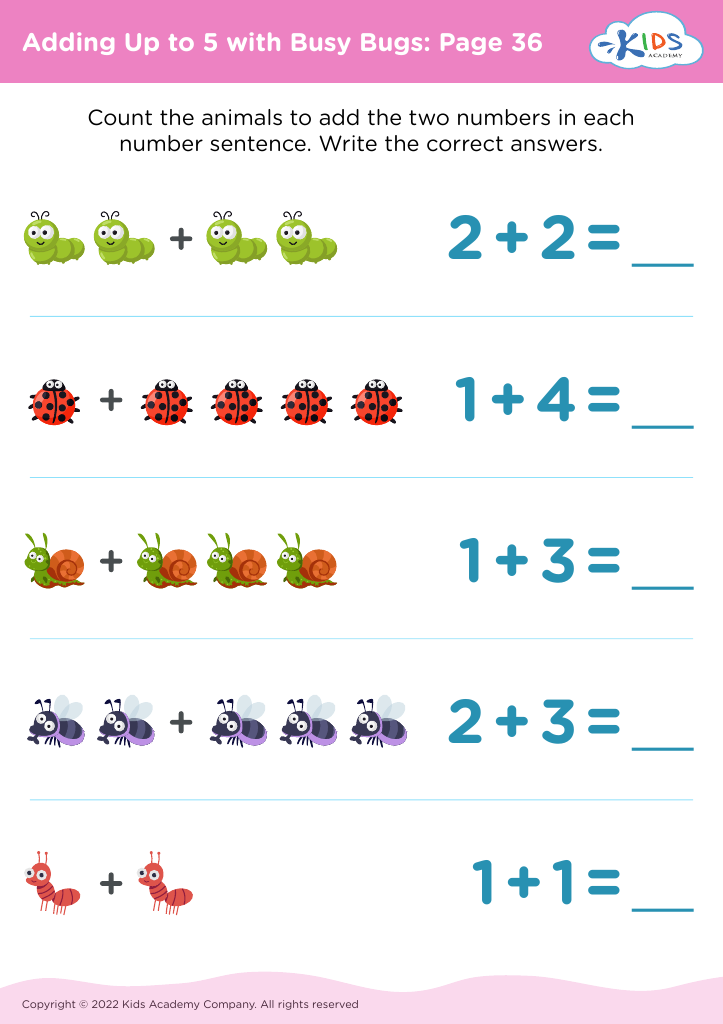
Adding Up to 5 with Busy Bugs: Page 36
Worksheet
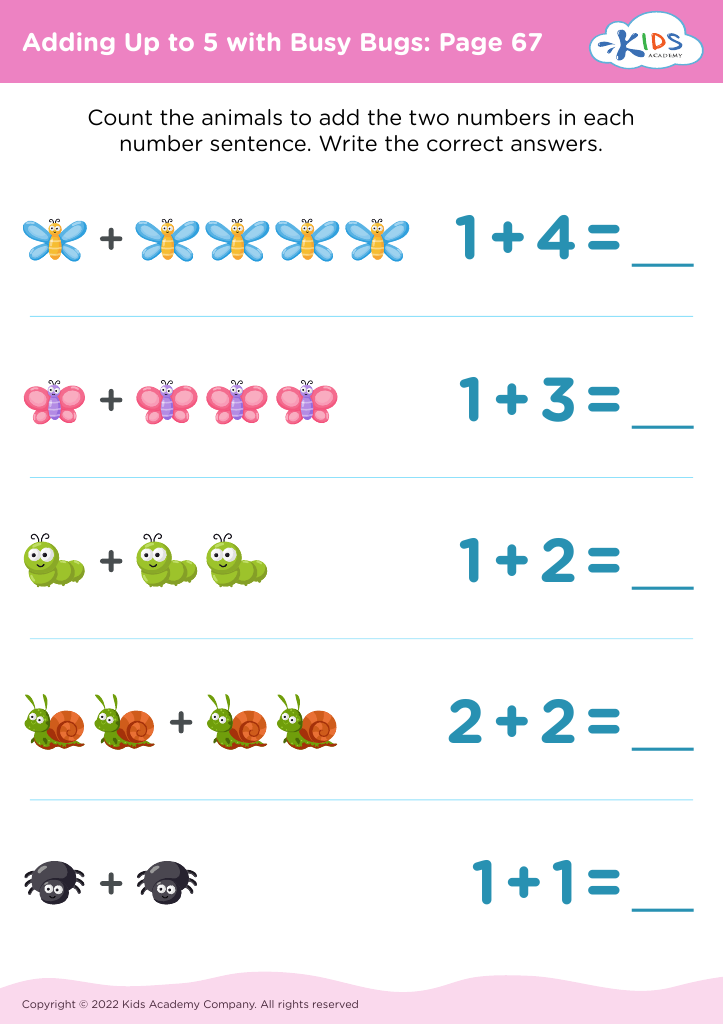
Adding Up to 5 with Busy Bugs: Page 67
Worksheet
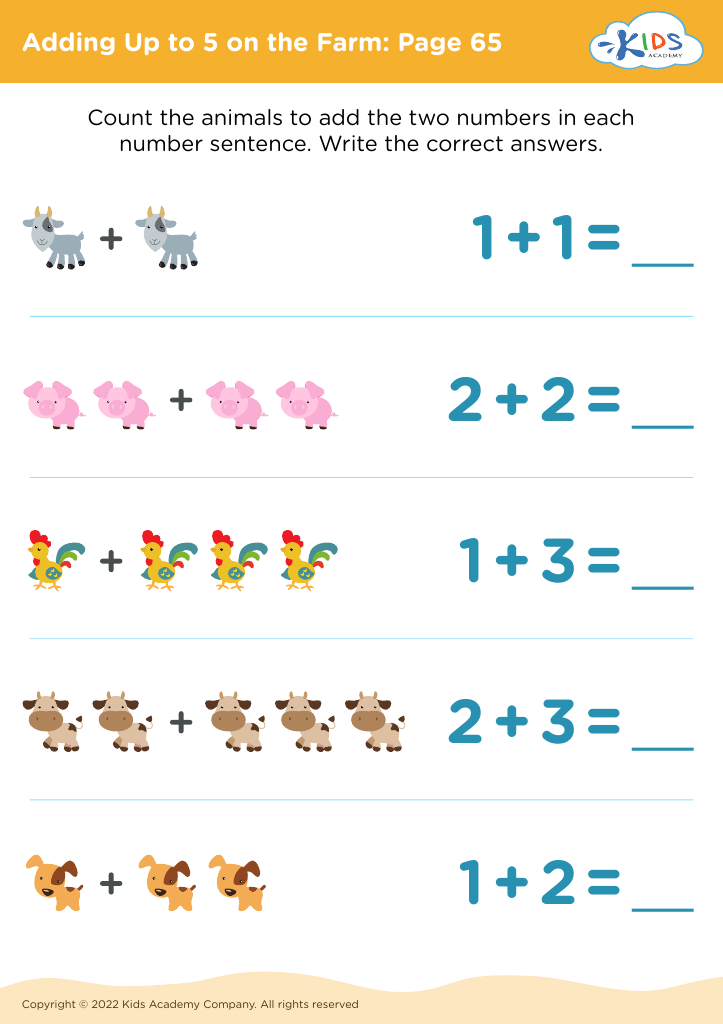
Adding Up to 5 on the Farm: Page 65
Worksheet
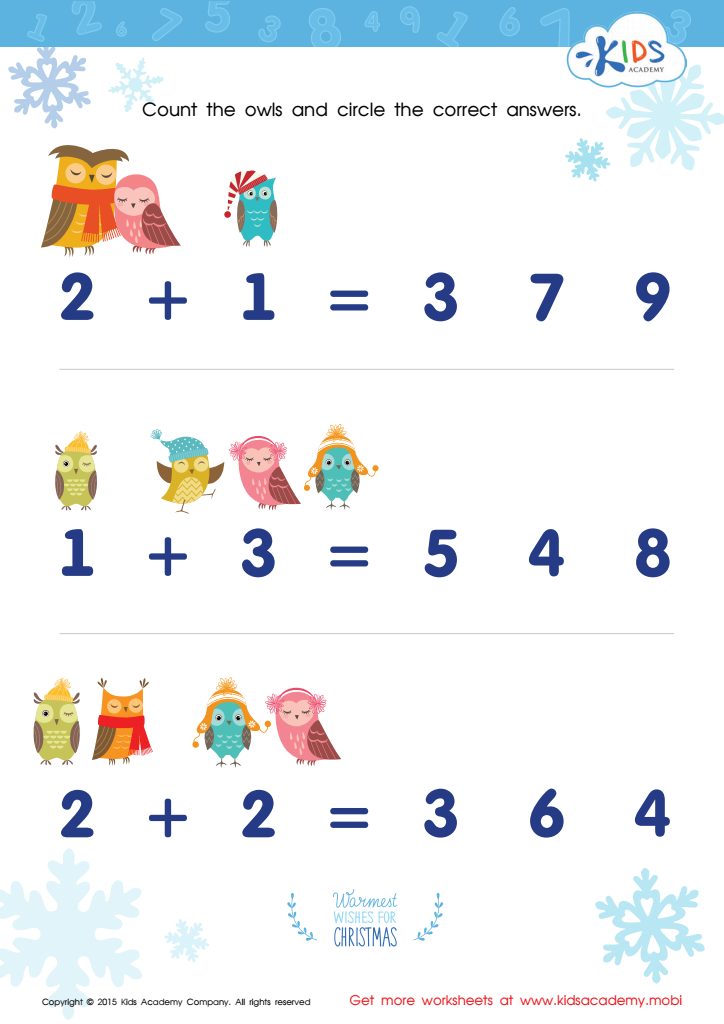
Math PDF Worksheet: Count Little Owls

Count Little Owls Worksheet
Math fun awaits! Count the cute little owls and practice adding single digits up to three indoors. Bright pictures help kids solve these simple problems. Get the free worksheets and enjoy the holiday season with Kids Academy!
Count Little Owls Worksheet
Worksheet
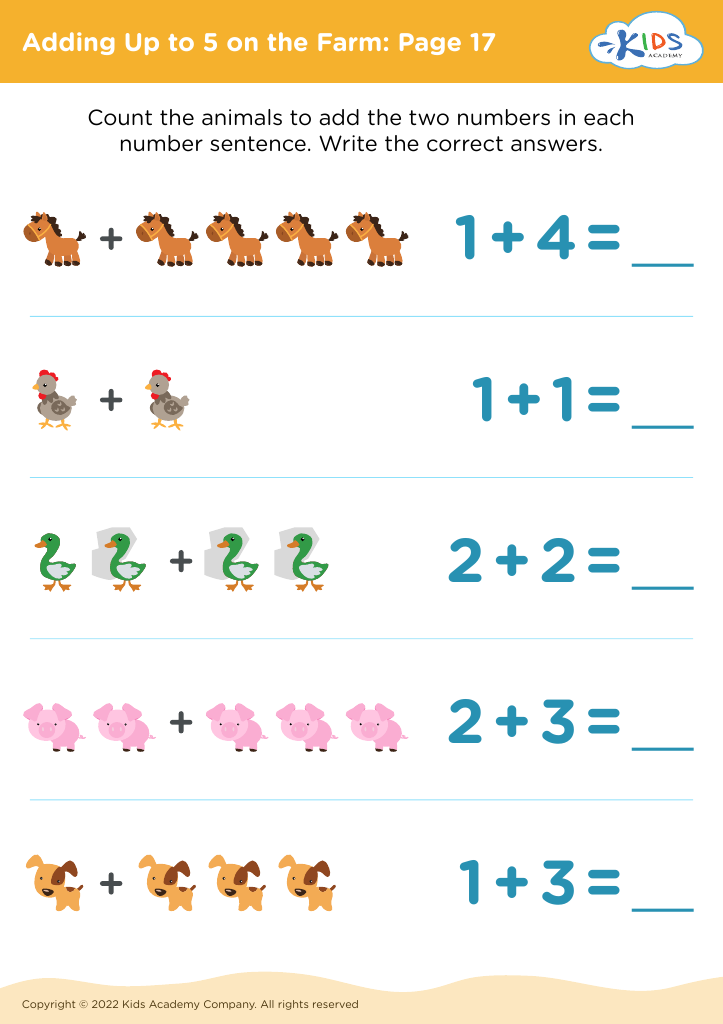
Adding Up to 5 on the Farm: Page 17
Worksheet
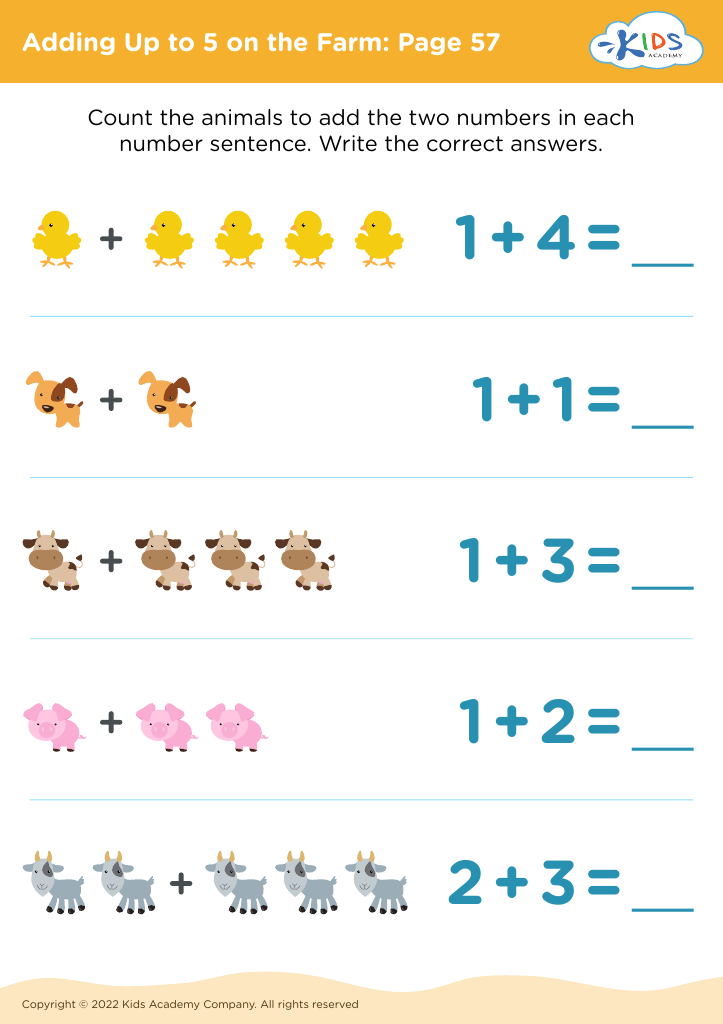
Adding Up to 5 on the Farm: Page 57
Worksheet
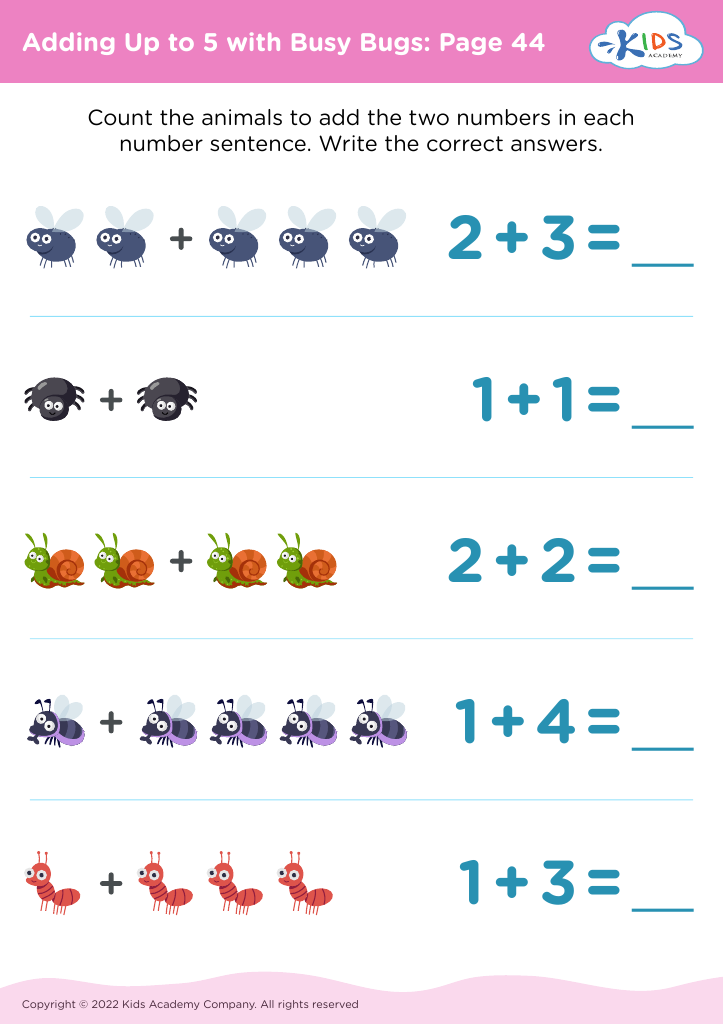
Adding Up to 5 with Busy Bugs: Page 44
Worksheet
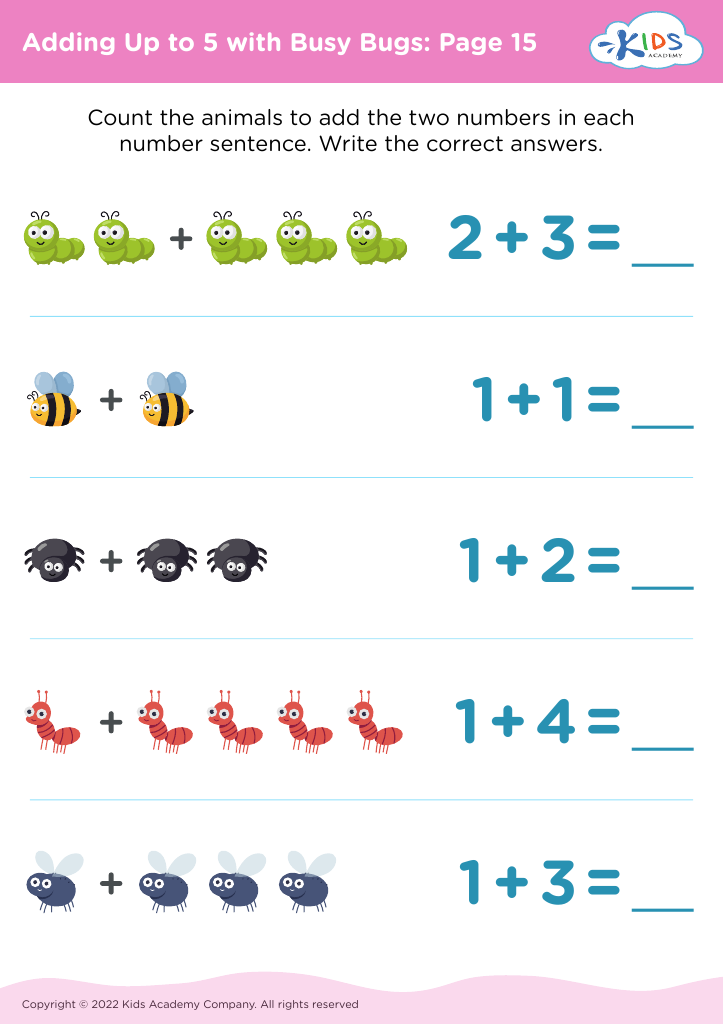
Adding Up to 5 with Busy Bugs: Page 15
Worksheet


Understanding quantity addition at ages 4-6 is pivotal for several reasons, both educational and developmental. At this age, young children's brains are undergoing rapid development, and fostering strong foundational math skills can have a lasting positive impact.

Firstly, early skills in quantity addition develop number sense, or the ability to understand, relate, and connect numbers. This lays the groundwork for more complex mathematical concepts. For example, understanding that 2 apples plus 3 apples equals 5 apples helps children visualize and grasp numbers more concretely.

Secondly, mastering addition fosters problem-solving and critical thinking skills. When children figure out that combining two groups yields a new total, they learn logical sequencing and cause-effect relationships. These cognitive abilities are essential across diverse academic and life contexts.

Thirdly, practical applications of addition in daily life build confidence and independence. Whether counting toys, distributing snacks, or managing time, young children constantly encounter opportunities to practice math naturally.

Finally, early proficiency in addition can prevent math anxiety. Children who feel confident in their abilities are more likely to approach new challenges with a positive attitude, fostering a lifelong love of learning.

Therefore, parents and teachers who prioritize understanding quantity addition provide children with the essential tools to succeed academically and in everyday life.