Basic Math Skills Comparison Worksheets for Ages 4-6
3 filtered results
-
From - To
Introduce your child to the world of mathematics with our Basic Math Skills Comparison Worksheets for Ages 4-6! Perfectly tailored for early learners, these engaging worksheets emphasize foundational math concepts, like comparing numbers and understanding quantities. Kids Academy's expertly crafted activities blend fun and learning, helping children recognize patterns, grasp bigger vs. smaller, and develop critical thinking. Vibrant illustrations and interactive challenges make arithmetic enjoyable, while fostering a love for numbers. Equip your child with the essential skills they need to excel in their educational journey. Dive into our collection and watch your young learner confidently explore basic math!
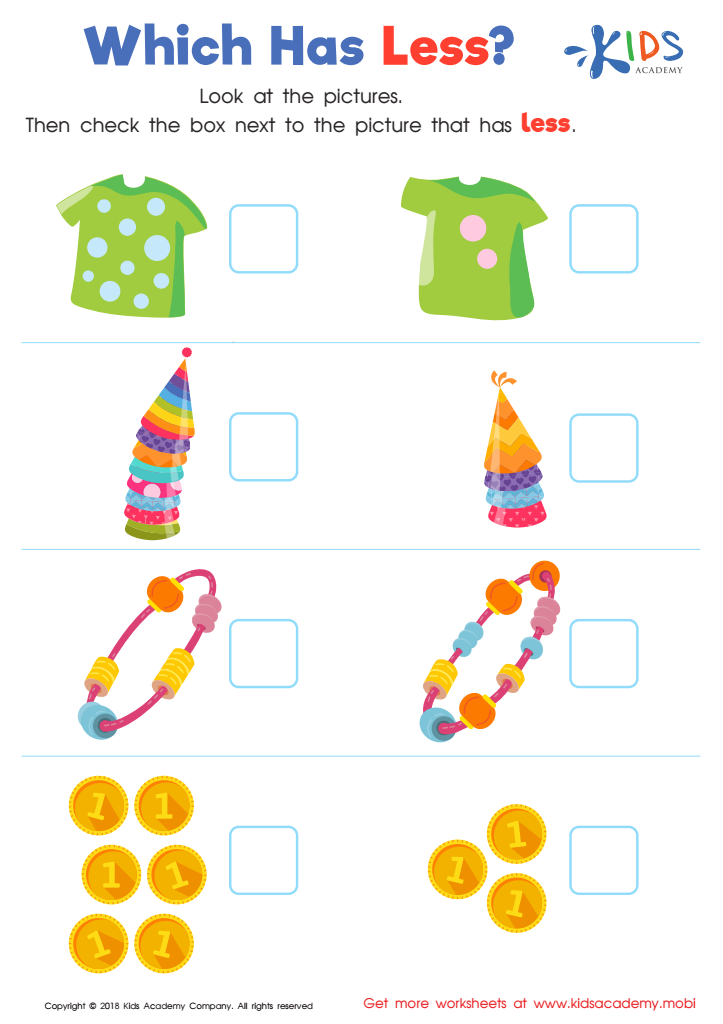
Which Has Less? Worksheet
 Assign to My Students
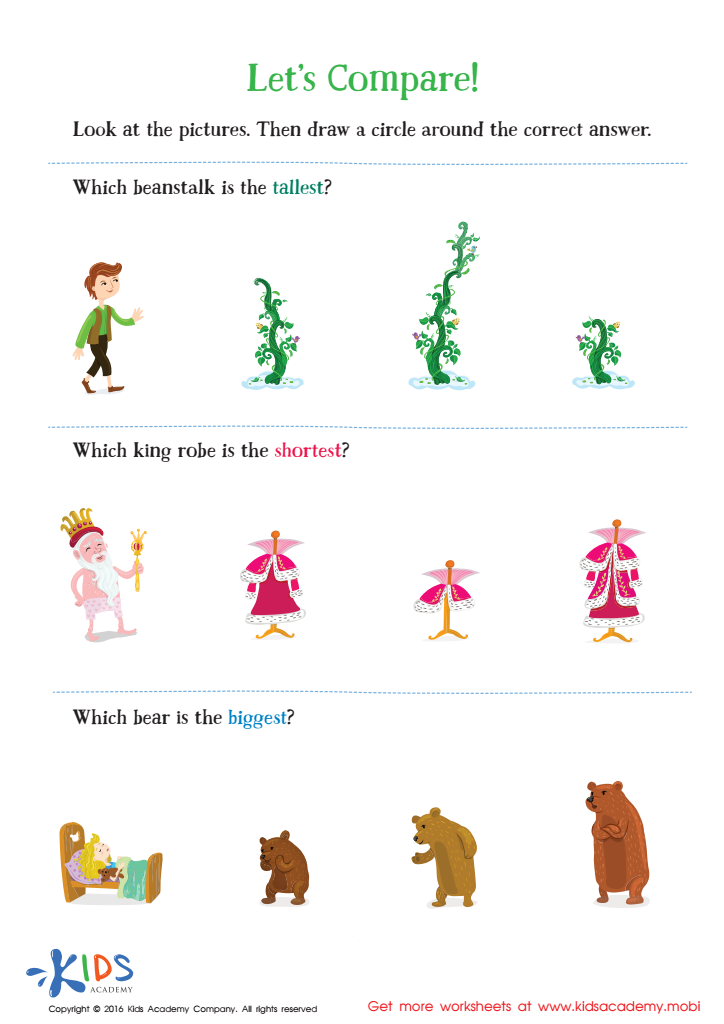
Fairy Tale Worksheet: Let's Compare
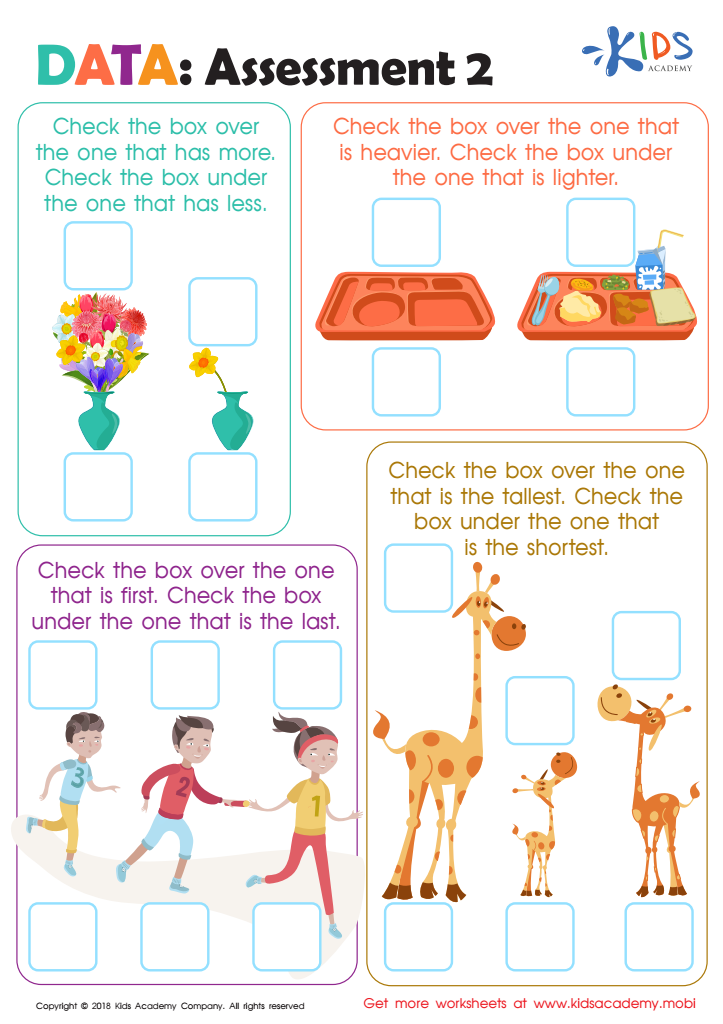
Data: Assessment 2 Worksheet







It is vital for parents and teachers to consider Basic Math Skills Comparison for children aged 4-6 because early childhood is a crucial period for cognitive development. At this stage, children's brains are highly plastic and receptive to new information. Basic math skills, such as counting, number recognition, and fundamental arithmetic, form the foundation for later academic achievement and everyday problem-solving.
By understanding each child's current math skills compared to developmental benchmarks, parents and teachers can tailor their approach to meet individual needs. Early identification of strengths and weaknesses allows for timely intervention, which can help prevent future difficulties in more advanced math. This proactive approach fosters a positive learning experience and builds confidence in young learners.
Moreover, developing these skills at a young age promotes critical thinking and logical reasoning, which are essential for success in various subjects beyond math. Children who enter school with robust math skills are often more engaged and perform better academically, setting them on a path toward lifelong learning. Given these long-term benefits, parents and teachers should prioritize tracking and supporting basic math skills to give children a strong start in their educational journey.








