Spatial understanding Geometry Worksheets for Ages 4-6
3 filtered results
-
From - To
Boost your child's spatial understanding with our engaging Geometry Worksheets designed for ages 4-6. These interactive resources help young learners explore shapes, sizes, and spatial relationships through fun activities tailored to develop essential mathematical skills. With colorful visuals and playful themes, children will enjoy identifying, sorting, and constructing shapes, fostering both creativity and critical thinking. Each worksheet is crafted to reinforce foundational geometry concepts in an enjoyable way, supporting early learners as they navigate the world of shapes. Perfect for both classroom and home use, these worksheets offer a captivating way to make geometry an exciting adventure for your little ones!
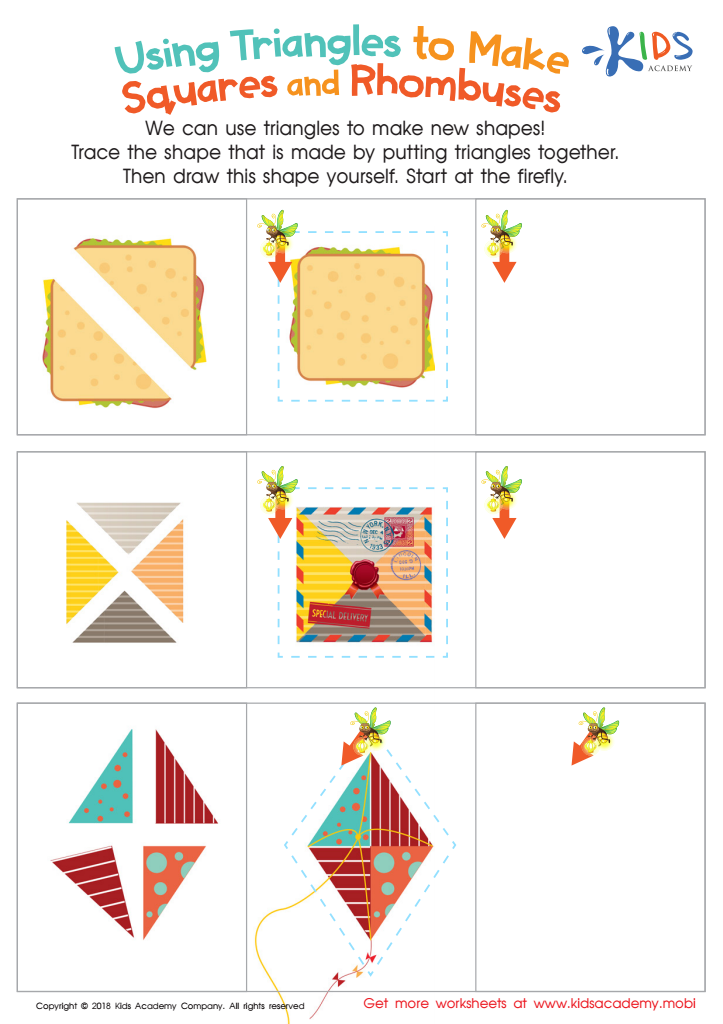
Using Triangles to Make Squares and Rhombuses Worksheet
 Assign to My Students











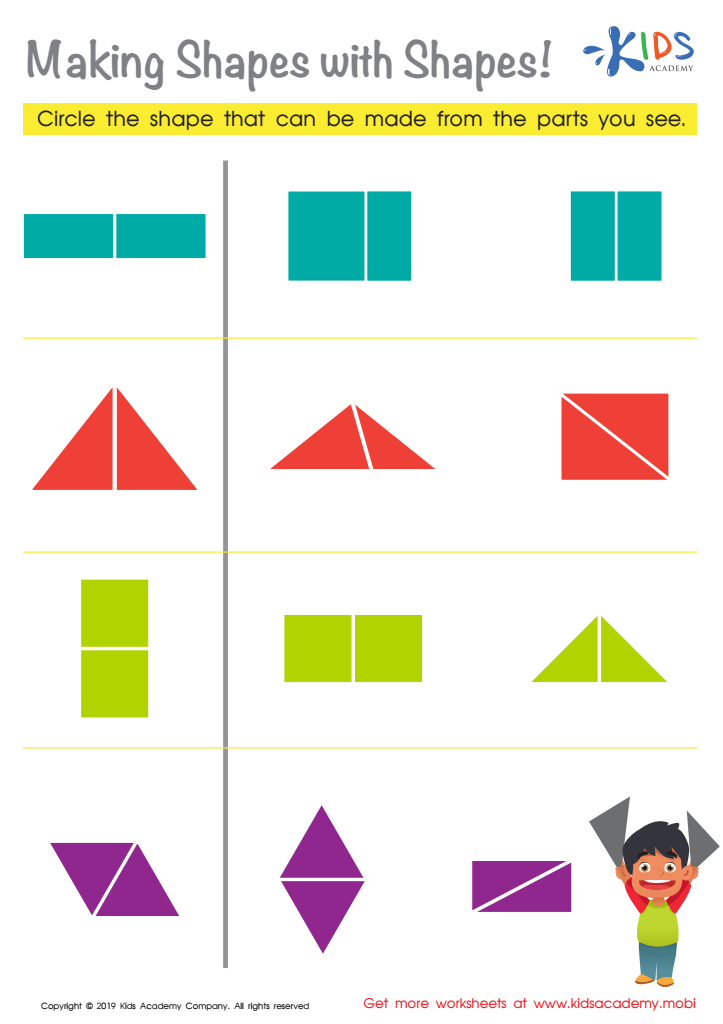
Making Shapes with Shapes Worksheet
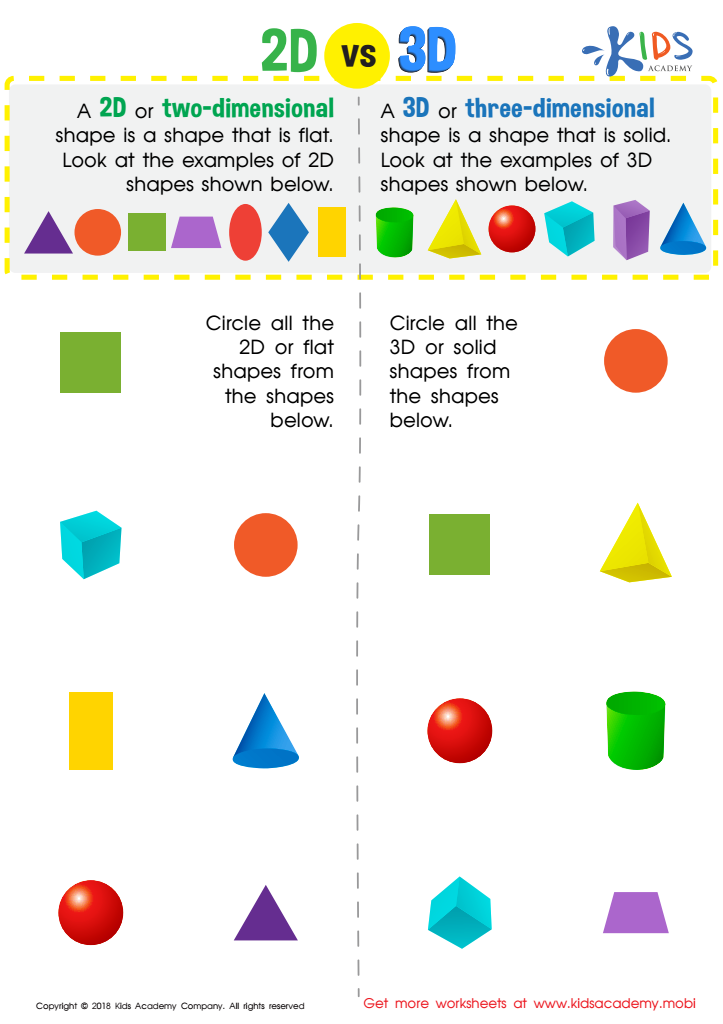
2D vs 3D Shapes Worksheet








Spatial understanding and geometry are foundational skills for young children, particularly between the ages of 4 and 6. During this developmental stage, children are naturally curious and eager to explore their surroundings. It is vital for parents and teachers to support and nurture this curiosity through spatial and geometric concepts.
Understanding spatial relationships helps children develop critical thinking and problem-solving skills. For instance, by manipulating blocks, drawing shapes, or engaging in puzzle play, children learn about dimensions, symmetry, and the properties of various shapes. These activities not only promote cognitive development but also enhance fine motor skills, language acquisition, and social skills when done in groups.
Moreover, the ability to visualize and comprehend space and shape lays the groundwork for more advanced math concepts later on, such as measurement, algebra, and even science principles. As they encounter geometric concepts in everyday life—from building with Legos to map reading—they begin to make connections that enhance their learning experiences.
Instilling an early appreciation for geometry and spatial understanding can foster a lifelong love of math and science, preparing children for future academic success and real-world problem-solving. Parents and teachers play a crucial role in encouraging this exploration, making it essential for them to prioritize these experiences.








