Visual Perception Skills Geometry Worksheets for Ages 4-6
3 filtered results
-
From - To
Enhance your child's learning experience with our engaging Visual Perception Skills Geometry Worksheets designed specifically for ages 4 to 6. These fun, printable worksheets focus on developing essential visual perception skills through geometrical shapes and patterns. Children will enjoy interactive activities that promote recognition, understanding, and manipulation of shapes, fostering critical thinking and cognitive growth. Perfect for preschool and early grade education, these worksheets support essential math foundations while making learning enjoyable. Download our resources today to help your little ones boost their visual perception abilities and build confidence in geometry concepts, paving the way for future academic success!
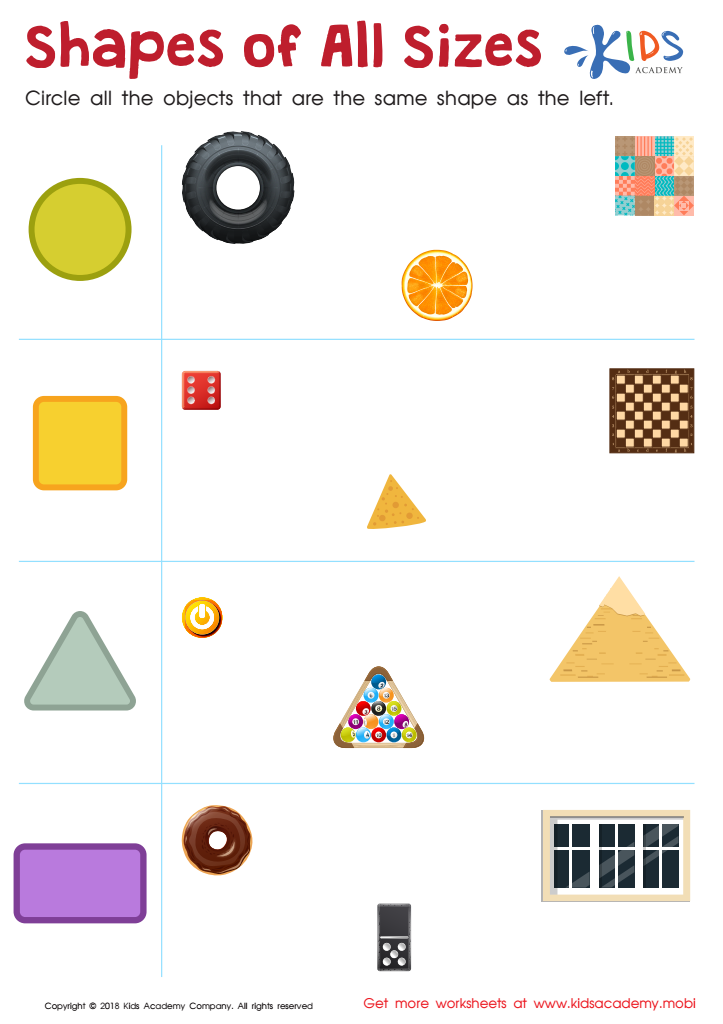
Shapes of All Sizes Worksheet
 Assign to My Students











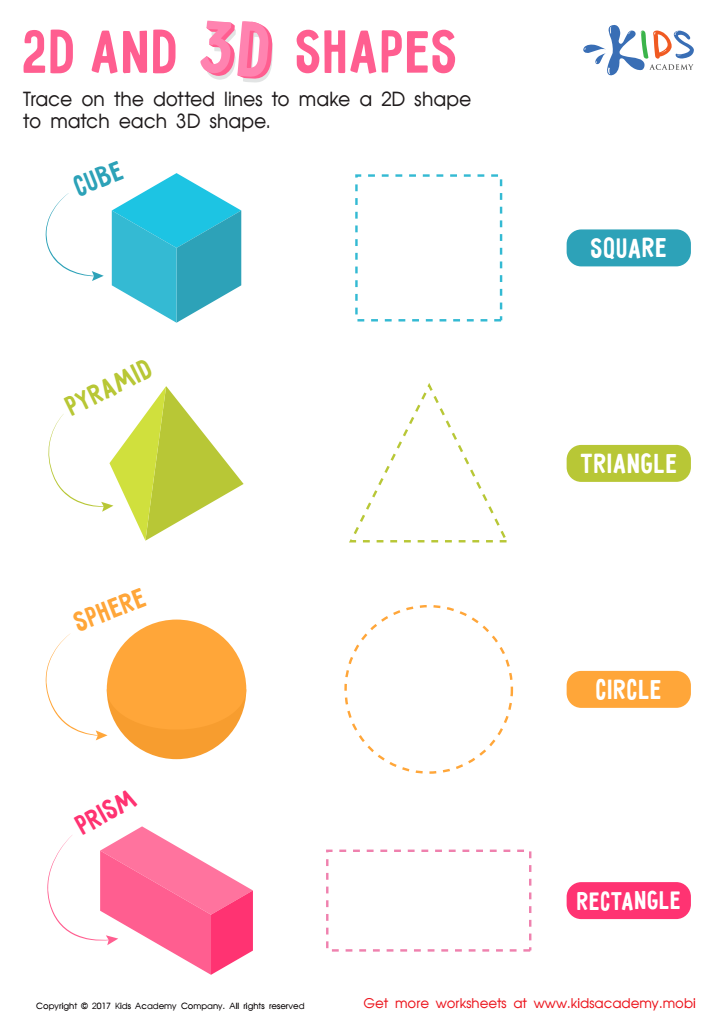
2D and 3D Shapes Worksheet
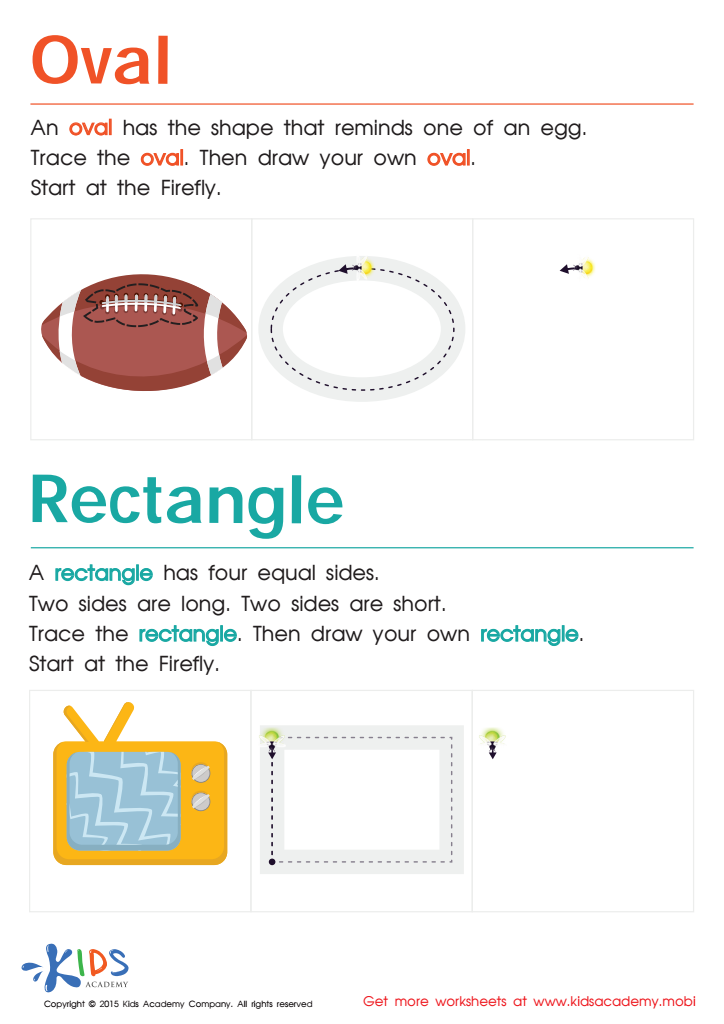
Easy Drawing of Ovals And Rectangles Worksheet








Visual perception skills are critical for young children, especially those aged 4-6, as they lay the groundwork for understanding geometry and other mathematical concepts. At this stage, children are naturally curious and begin to explore shapes, sizes, and spatial relationships. By developing strong visual perception skills, they learn to identify, differentiate, and manipulate shapes, which enhances their mathematical understanding and problem-solving abilities.
Parents and teachers should care about these skills because they are essential for later academic success. Strong visual perception aids in reading, as it helps children recognize letters and understand how they fit together to form words. It also supports fine motor skills necessary for writing and drawing geometric shapes.
Moreover, encouraging visual perception skills fosters creativity and critical thinking. Activities involving puzzles, sorting shapes, and engaging in arts and crafts help children explore geometry in a fun and meaningful way. By emphasizing these skills now, parents and teachers not only enhance children’s confidence and proficiency in mathematics but also equip them with essential tools for learning across various subjects. Ultimately, attention to visual perception in early education creates a robust foundation that contributes to lifelong learning and cognitive development.








