Enhancing Counting Skills Numbers Worksheets for Ages 4-6
6 filtered results
-
From - To
Discover our "Enhancing Counting Skills Numbers Worksheets" designed specifically for children ages 4-6. These engaging worksheets help young learners develop essential counting skills through fun activities and interactive exercises. By incorporating colorful visuals and relatable themes, our resources make learning numbers an enjoyable experience. Each worksheet focuses on various counting techniques, enabling your child to practice and reinforce their numerical abilities while building confidence. Perfect for both classroom settings and at-home learning, these counting worksheets are an effective way to enhance early math skills. Download and watch your child's counting proficiency grow as they explore the world of numbers!
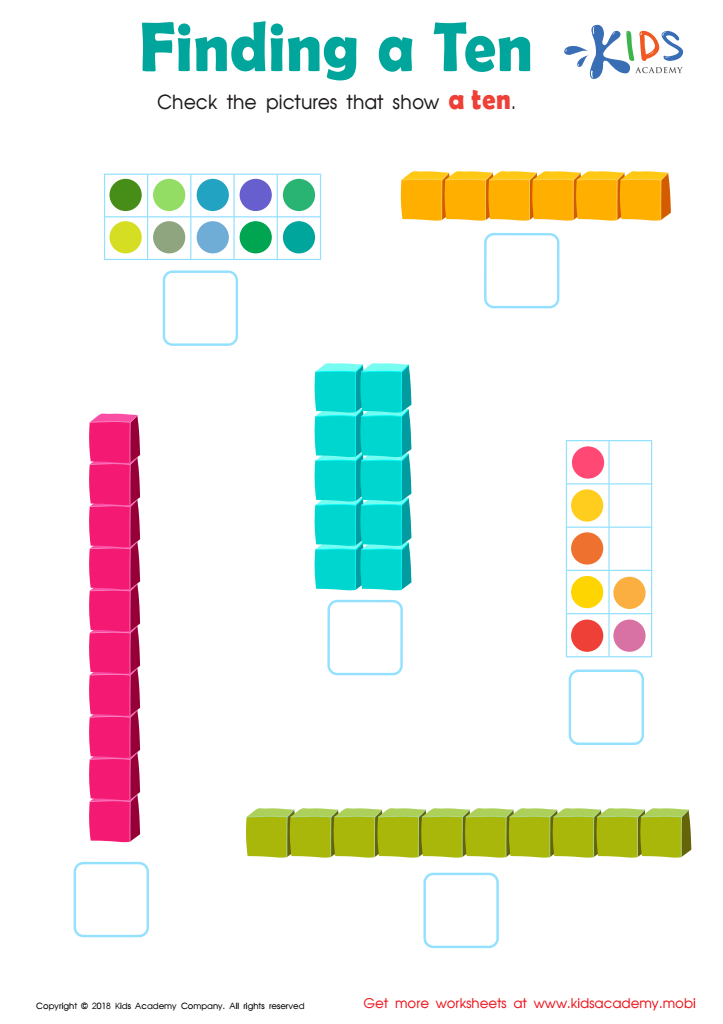
Finding a Ten Worksheet
 Assign to My Students
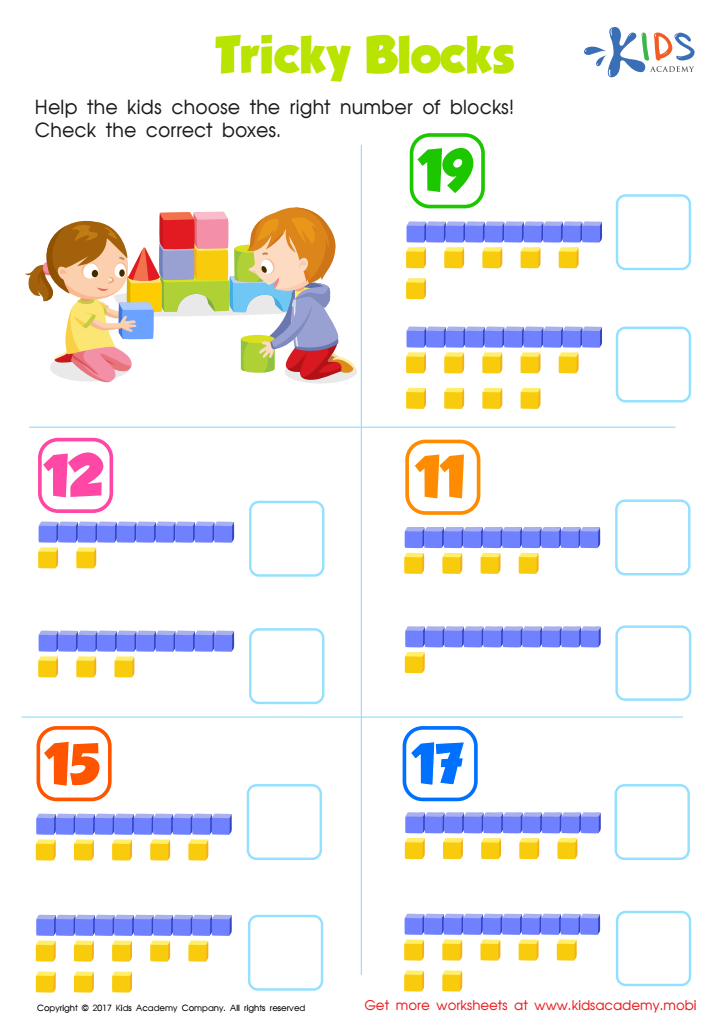
Tricky Blocks Worksheet
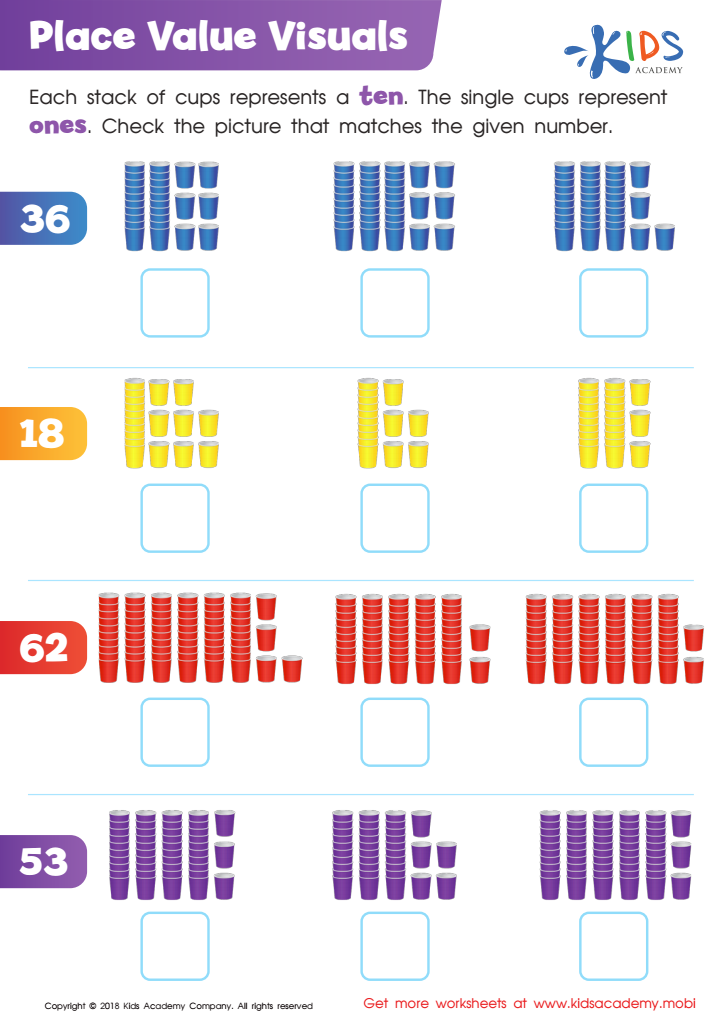
Place Value Visuals Worksheet
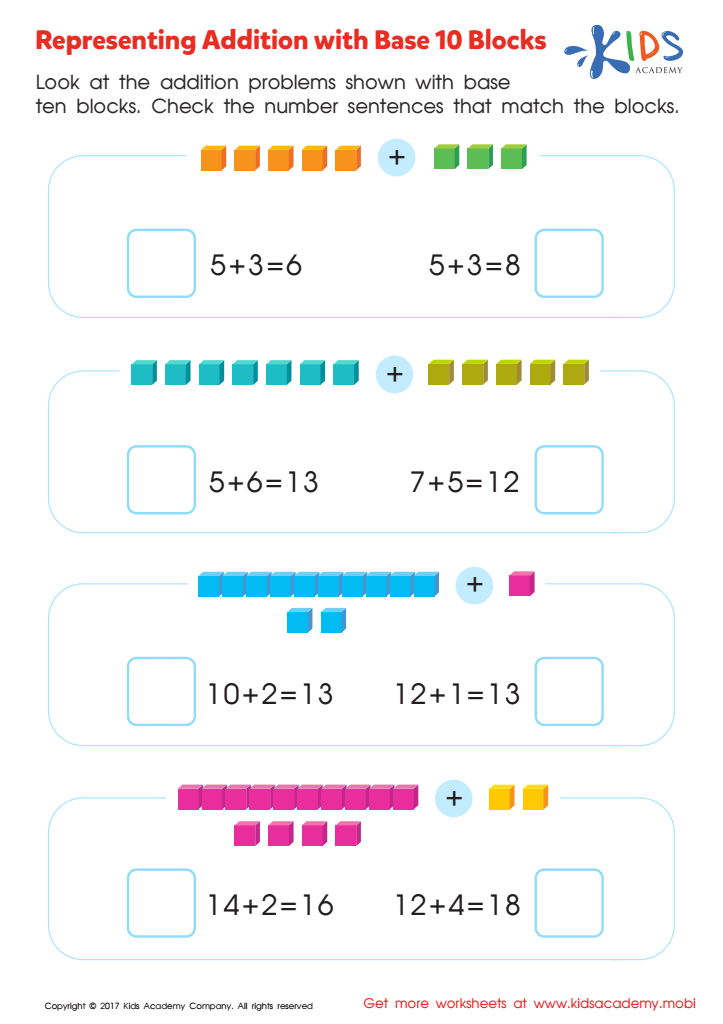
Representing Addition with Base 10 Blocks Worksheet
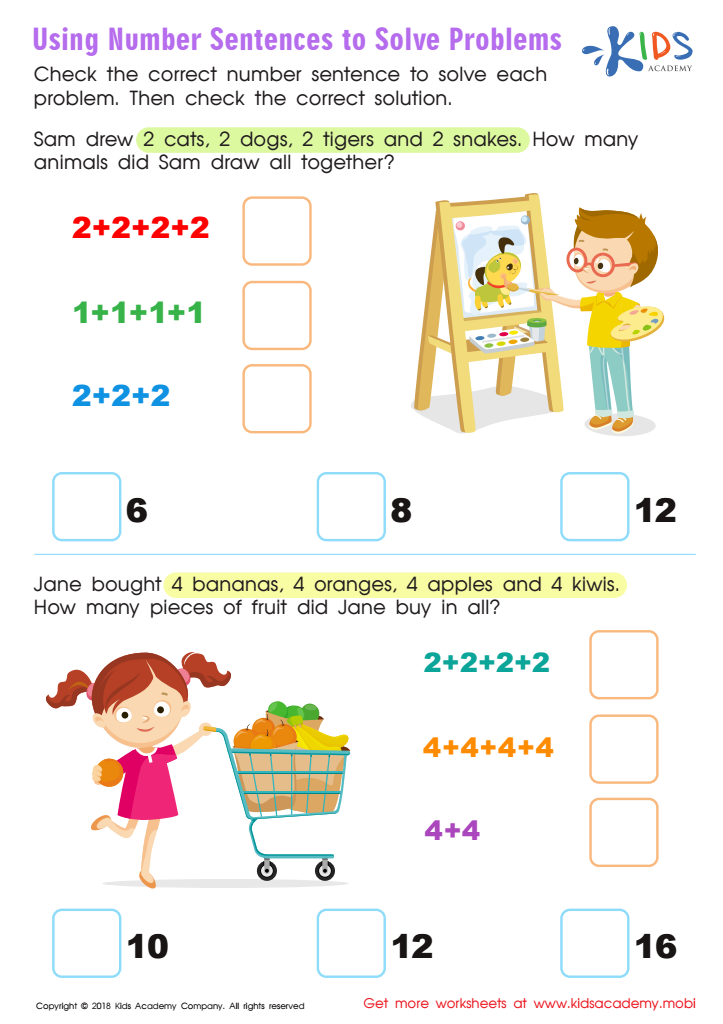
Using Number Sentences to Solve Problems Worksheet
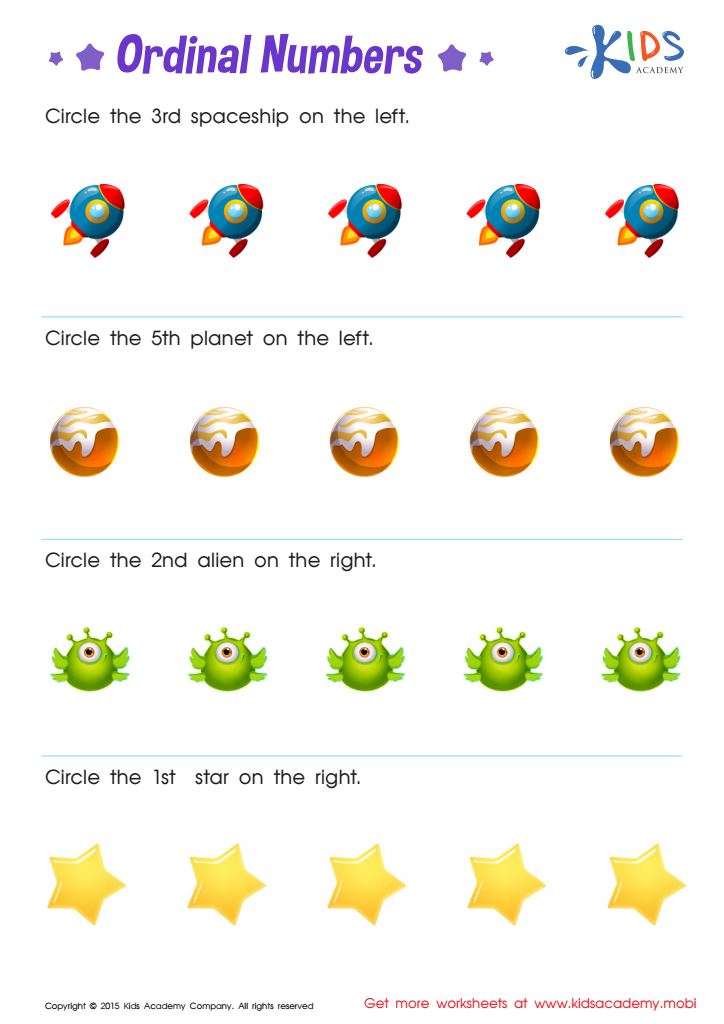
Ordinal Numbers: Space Ordinals Worksheet







Enhancing counting skills in children aged 4-6 is crucial for several reasons, making it a priority for parents and teachers alike. During these formative years, children develop foundational mathematical skills that shape their future learning and problem-solving capabilities. Counting is not just about memorizing numbers; it involves understanding quantity, sequences, and patterns, which are essential for more complex math concepts later on.
Strong counting skills lay the groundwork for essential cognitive abilities. They enhance children’s ability to grasp more advanced topics like addition and subtraction, promoting a more profound understanding of mathematics overall. Furthermore, counting helps develop critical thinking and logical reasoning skills, fostering a confident mindset toward math.
Beyond academics, these skills play a significant role in everyday activities. Whether it’s counting toys, sharing snacks, or sequencing daily routines, counting becomes a vital part of children's interactions with the world around them. It also promotes social skills through collaborative activities, where children can practice counting with peers.
Ultimately, investing time and resources in enhancing counting skills can set children on a path to success in their educational journey, build their confidence, and instill a positive attitude toward learning. This early focus prepares children for a variety of academic and life experiences.








