Improving math skills Numbers Worksheets for Ages 4-6
4 filtered results
-
From - To
Unlock your child's potential with our engaging "Improving Math Skills Numbers Worksheets" designed for ages 4-6. These expertly crafted worksheets offer delightful activities that turn learning numbers into a fun adventure. From counting and number recognition to simple addition, each worksheet reinforces essential math skills while keeping young minds captivated. Whether used in classrooms, at home, or on the go, they provide an excellent foundation for early math success. Help your child build confidence and a love for numbers with our interactive exercises that make learning both enjoyable and effective. Start their numerical journey today!
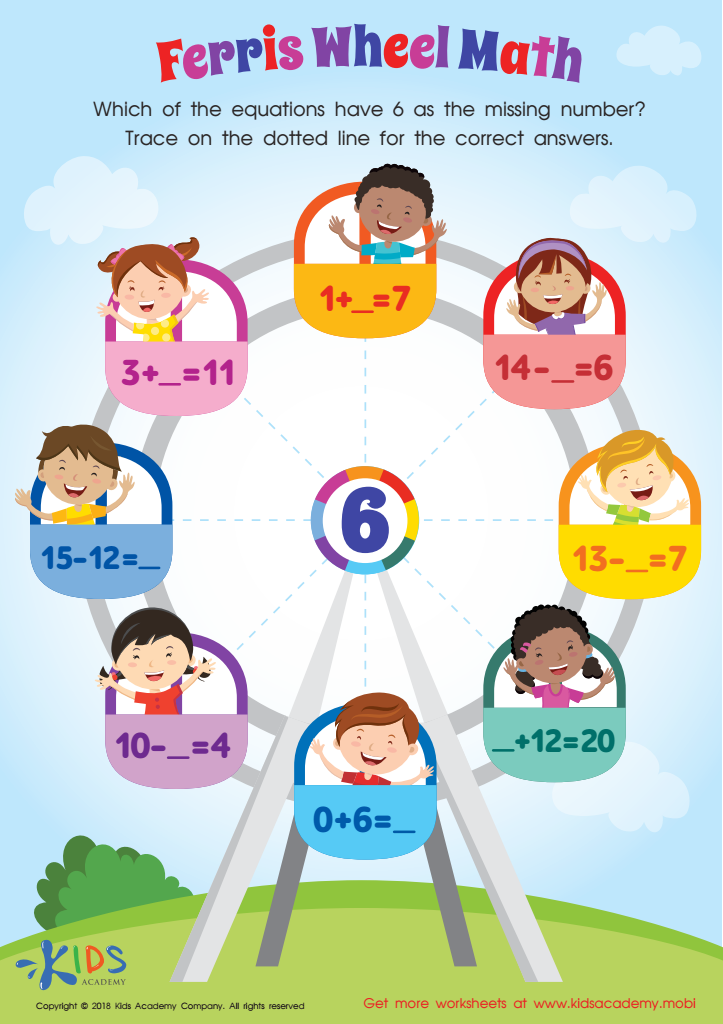
Missing Number: Ferris Wheel Math Worksheet
 Assign to My Students
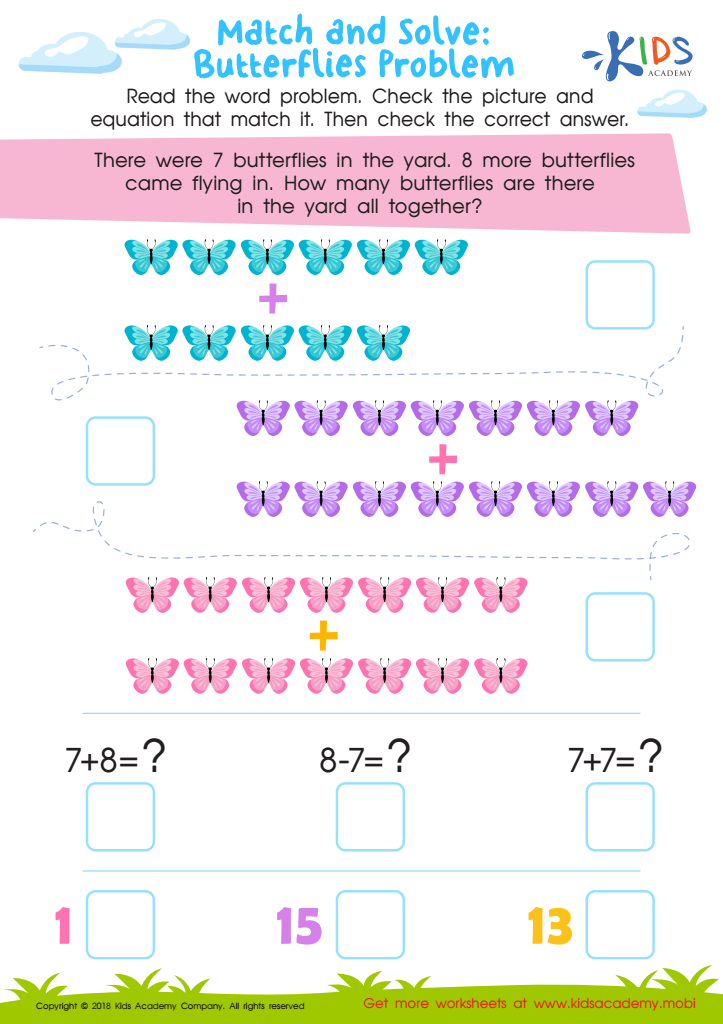
Match and Solve: Butterfly Problem Worksheet
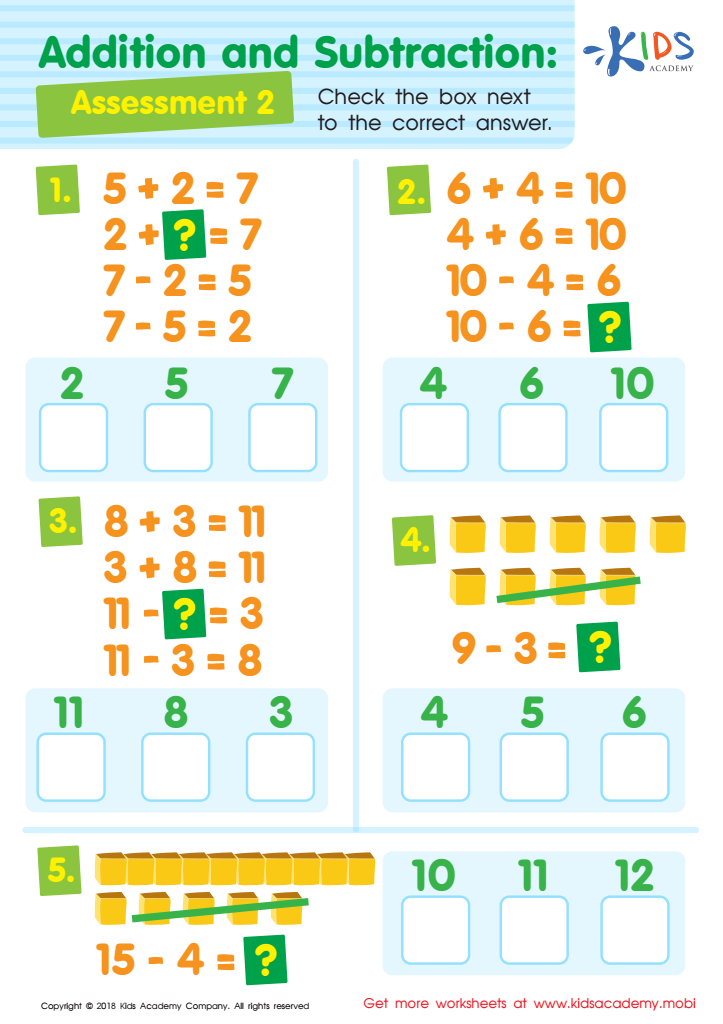
Addition and Subtraction Assessment 2 Worksheet
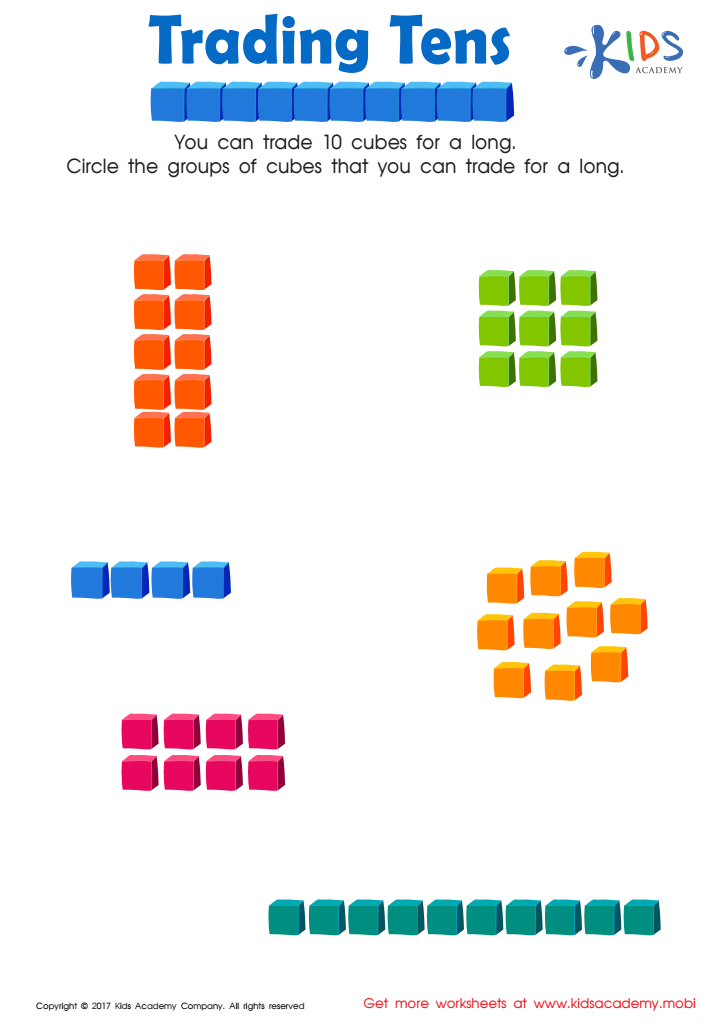
Trading Tens Worksheet







Improving math skills for children aged 4-6 is crucial for laying a strong educational foundation. At this formative age, young minds are exceptionally receptive to learning and absorbing new concepts, which makes it the perfect time to introduce basic math skills. Early math education helps children develop critical thinking and problem-solving abilities that are essential for future academic success and everyday life.
Strong number sense, such as understanding quantities, recognizing numbers, and basic addition and subtraction, fosters cognitive development and prepares children for more complex mathematical concepts. Skills acquired at this early stage also correlate with better performance in literacy and other subjects, promoting overall academic achievement.
For parents and teachers, focusing on early math skills instills a positive attitude toward learning in children. By engaging in fun and interactive math activities, kids can build confidence and develop a love for mathematics. Moreover, math proficiency supports practical daily activities like telling time, measuring ingredients while cooking, and handling money.
Research shows that early math skills are reliable predictors of later school success. Therefore, parents and teachers have a responsibility to nurture these foundational skills, ensuring children are well-prepared for the challenges of formal education and beyond. By doing so, they can help set children on a path towards a lifelong crucial competency.








