Sorting skills Numbers Worksheets for Ages 4-6
5 filtered results
-
From - To
Unlock your child's potential with our Sorting Skills Numbers Worksheets, tailored for ages 4-6. These engaging activities are designed to enhance early mathematical abilities by helping young learners categorize and organize numbers in fun and interactive ways. Each worksheet enables children to practice sorting skills, laying a foundational framework for future numeracy success. With colorful illustrations and age-appropriate challenges, your child will develop critical thinking, pattern recognition, and problem-solving abilities. Perfect for both classroom use and home learning, our worksheets make mastering number sorting an enjoyable experience for your little one!
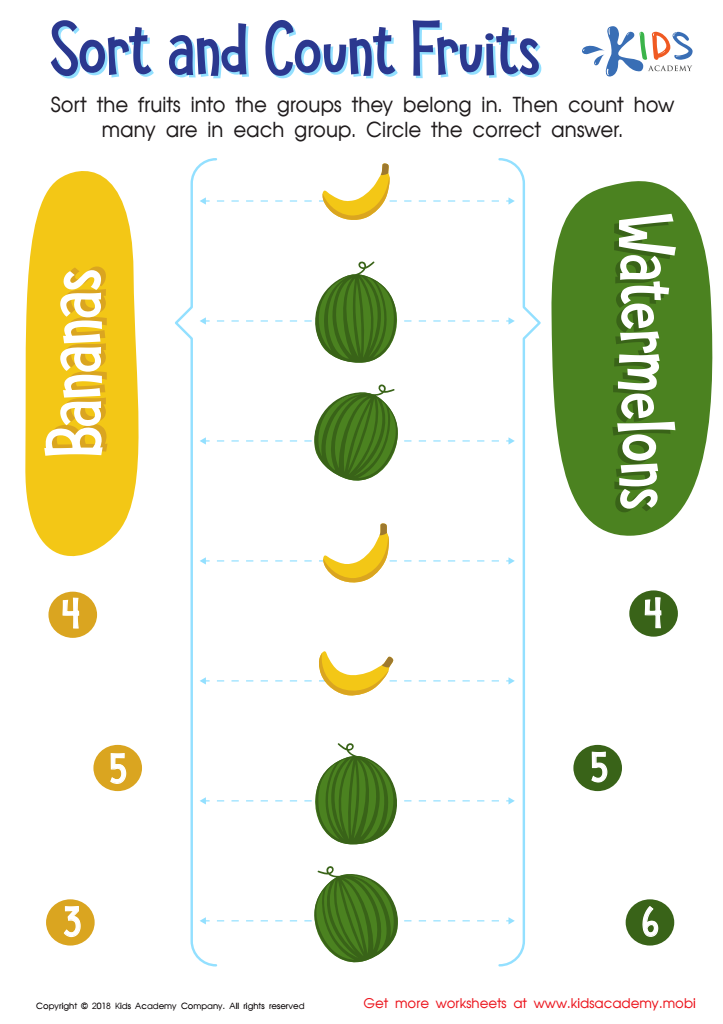
Sort and Count Fruits Worksheet
 Assign to My Students
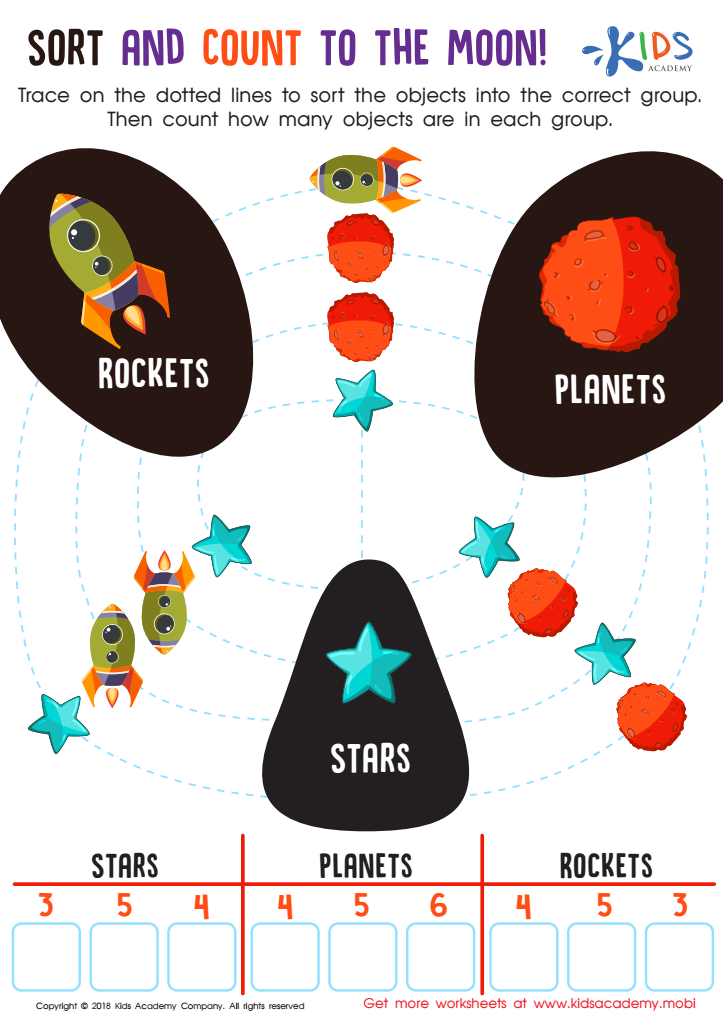
Sort and Count to the Moon Worksheet
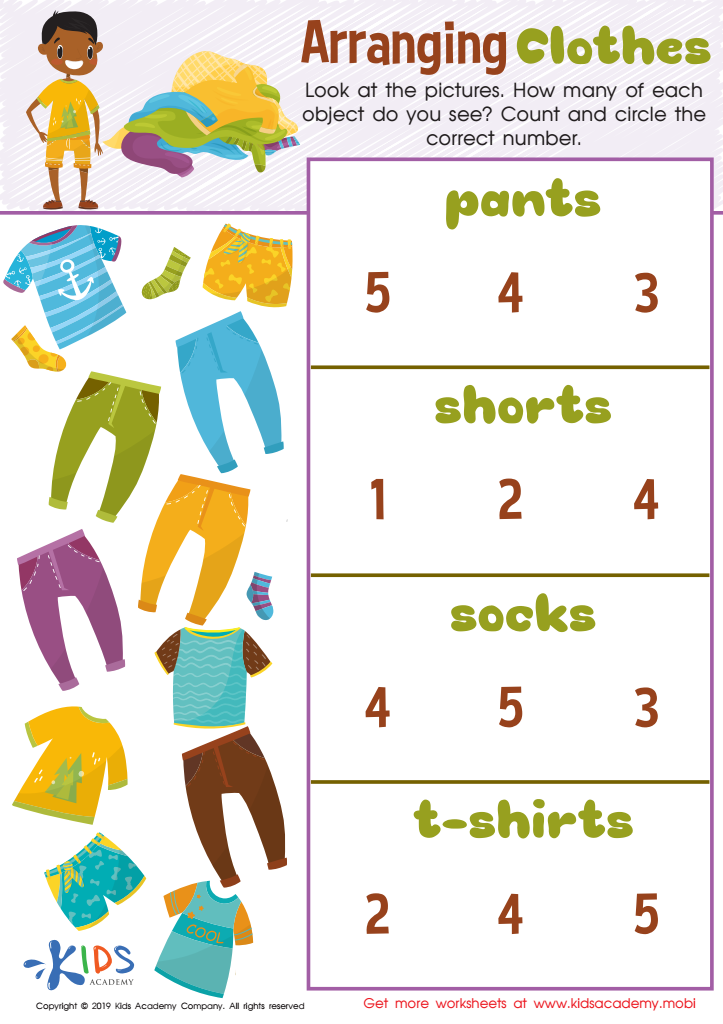
Arranging Clothes Worksheet
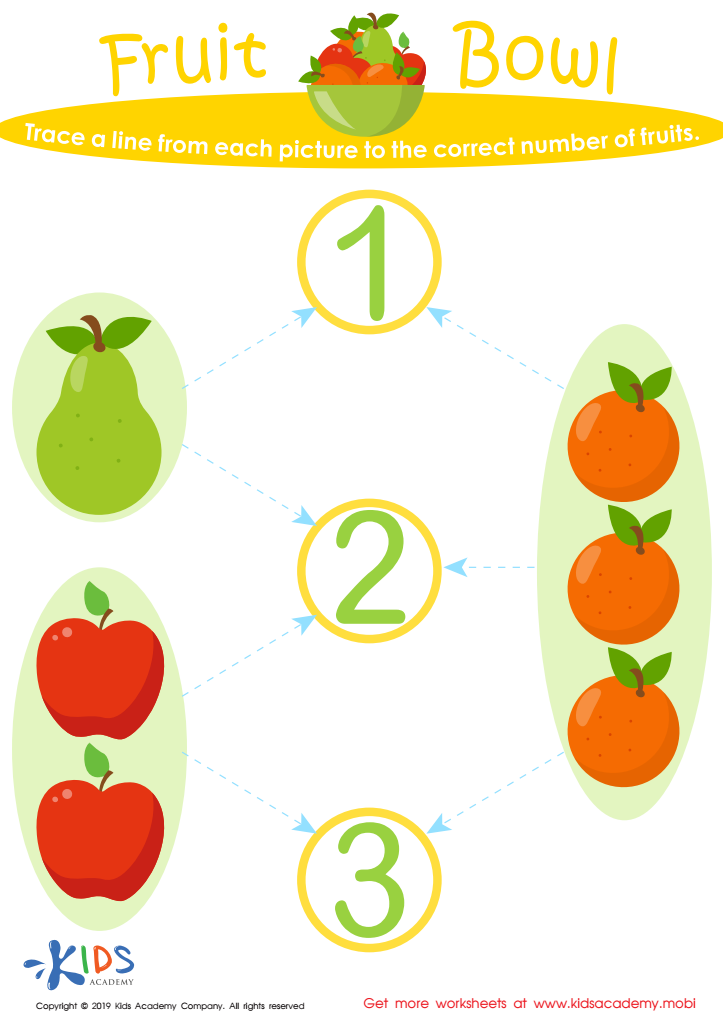
Fruit Bowl Worksheet
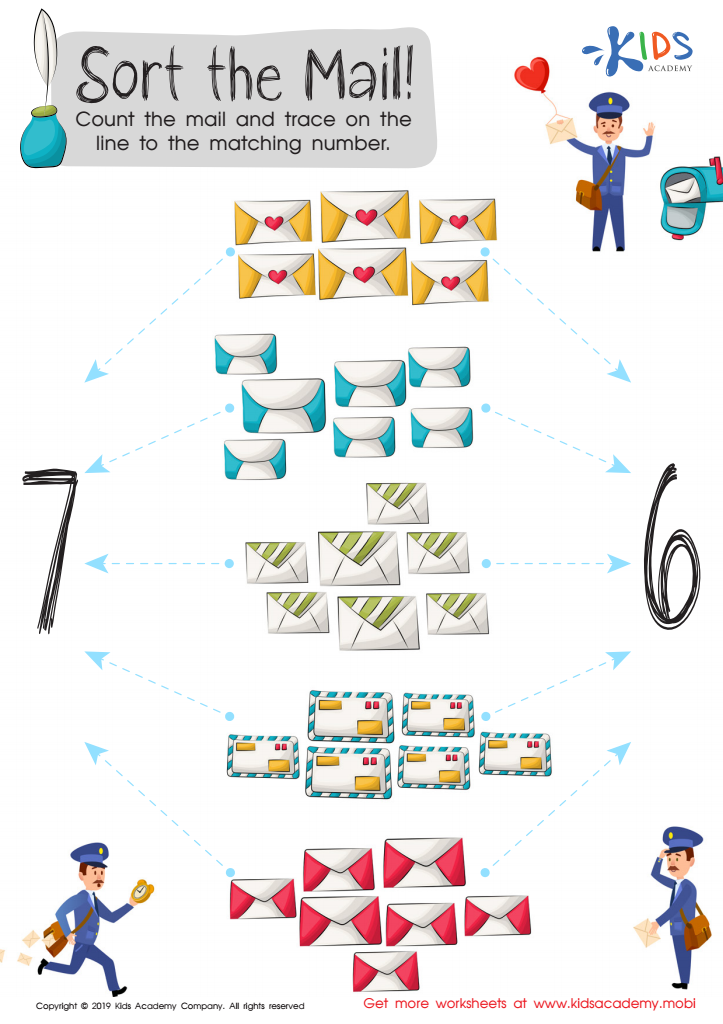
Sort the Mail Worksheet







Parents and teachers should place significant importance on sorting skills for children aged 4-6, as these foundational abilities are a cornerstone of early cognitive development. Sorting teaches young children how to analyze similarities and differences, a critical skill in fostering logical thinking and problem-solving. These activities help youngsters grasp essential mathematical concepts such as patterns, categorization, and organizing data—a precursor to understanding numbers and operations.
By engaging in sorting activities, children also enhance their attention to detail and improve their concentration. It aids in vocabulary expansion by introducing descriptive language (big/small, color names, shapes) essential for effective communication. Sorting can develop fine motor skills as children manipulate small items.
Moreover, engaging young children in sorting helps promote their independence and decision-making skills, laying a foundation for critical thinking. In terms of numerical understanding, sorting everyday objects by characteristic builds their readiness for recognizing numerical order and creates a basic understanding of sorting a sequence of numbers.
Structured and guided sorting activities, combined with exploration and play, form an enriching, hands-on learning experience. This integrated approach ensures children build the cognitive and motor skills necessary for future academic success in more complex subjects, fostering a love for learning and discovery from an early age.








