Understanding graphs Numbers Worksheets for Ages 4-6
3 filtered results
-
From - To
Enhance your child's math skills with our "Understanding Graphs Numbers Worksheets for Ages 4-6." These engaging worksheets are designed to make learning about graphs fun and interactive for young children. They cover essential skills such as identifying, interpreting, and creating various types of graphs, including bar graphs and pictograms. Perfect for developing critical thinking and data analysis abilities, these resources are an excellent addition to any early math curriculum. With colorful graphics and easy-to-follow instructions, your child will find joy in exploring the world of graphs while building a strong foundation in numbers. Ideal for home or classroom use!
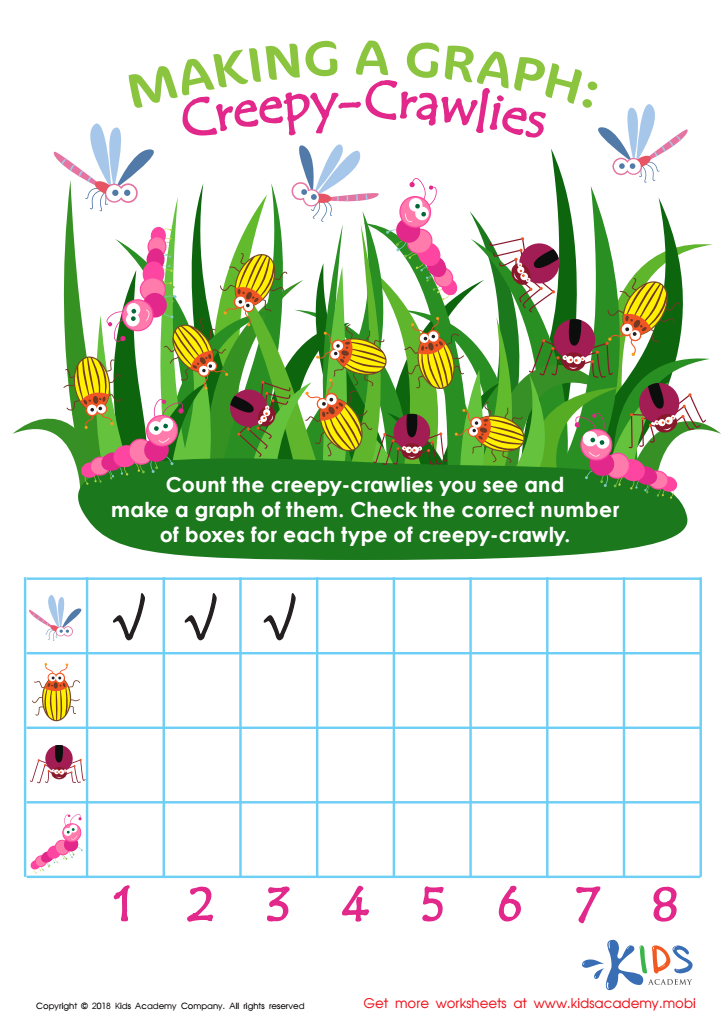
Making a Graph: Creepy Crawlies Worksheet
 Assign to My Students
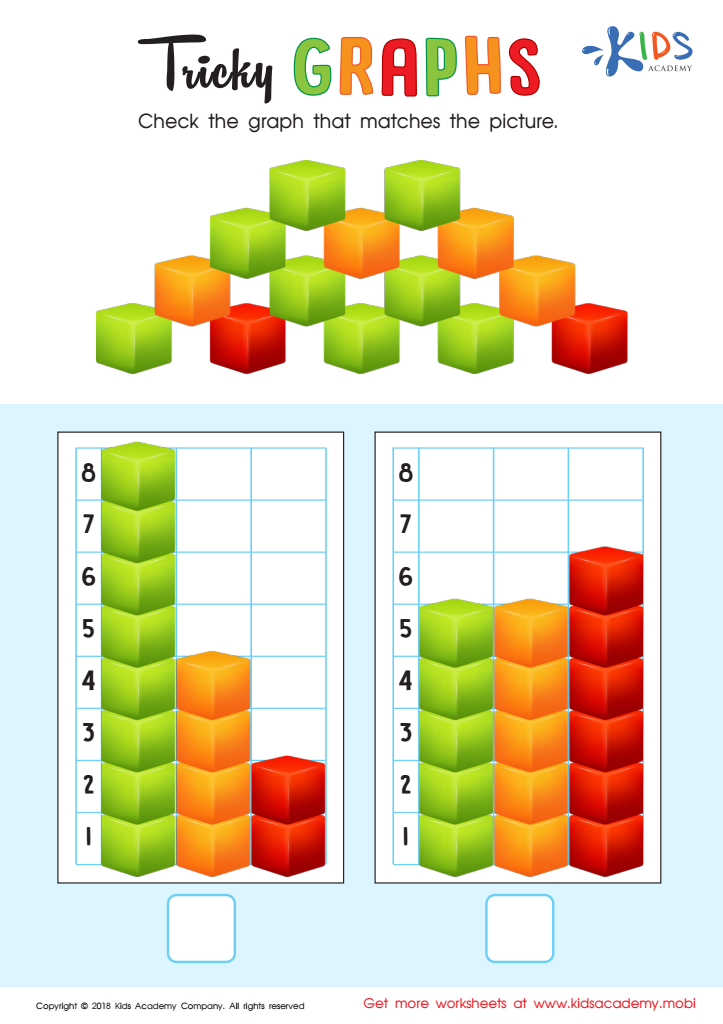
Tricky Graphs Worksheet
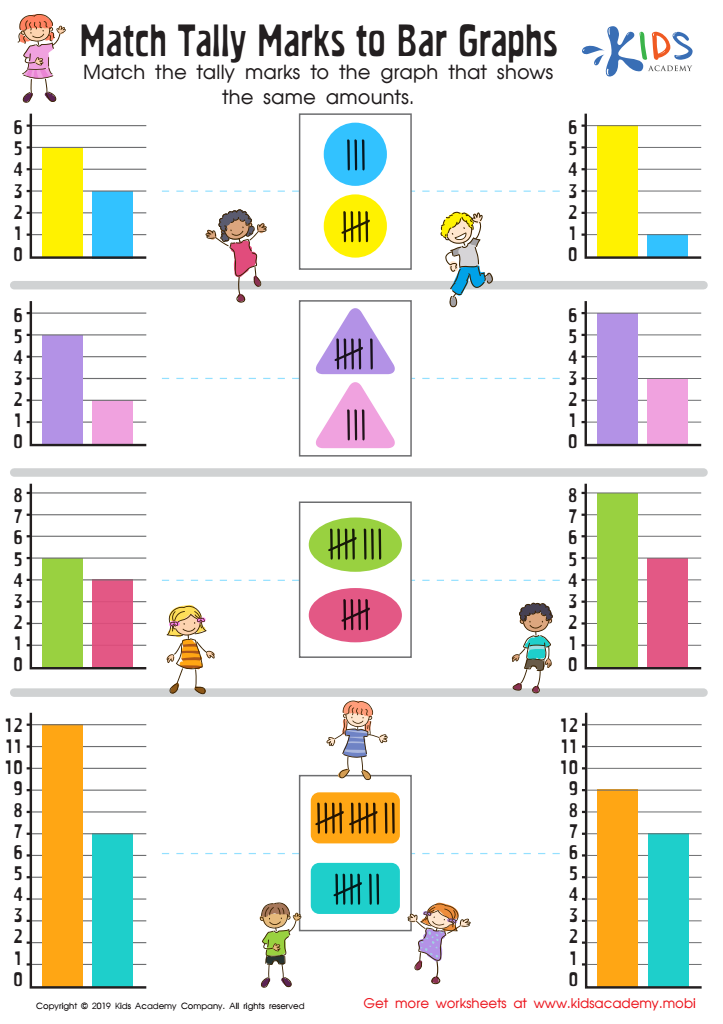
Match Tally Marks to Bar Graphs Worksheet








Understanding graphs and numbers at an early age (4-6 years) plays an essential role in developing foundational math skills and cognitive abilities. Introducing young children to these concepts can enhance their problem-solving skills and critical thinking. Graphs and numbers are everywhere in daily life, from reading temperature charts to understanding game scores. When children become comfortable with these tools early on, it eases their transition to more complex mathematical concepts later in school.
For teachers and parents, focusing on these skills means building a solid learning foundation. Children who understand basic graphs can better comprehend visual data. They learn to recognize patterns and relationships, which are crucial skills not just in math, but in science and other subjects. Moreover, engaging children with graphs and numbers through fun activities like counting objects and creating simple bar charts can make learning enjoyable and foster a positive attitude toward math.
Being proficient with numbers and graphs also improves children's ability to follow and give directions, understand time, and make informed decisions. For instance, when a child learns how to read a simple weather chart, they can decide if they need to wear a coat or carry an umbrella. Thus, early exposure to these concepts is vital for academic success and practical day-to-day problem-solving skills.








