Animal identification Math Worksheets for Ages 4-6 - Page 2
32 filtered results
-
From - To





.jpg)

%20(1).jpg)
Animal identification math is an engaging way for young children, ages 4 to 6, to develop foundational math skills while fostering a love for animals and nature. Parents and teachers should care about this educational approach for several reasons.
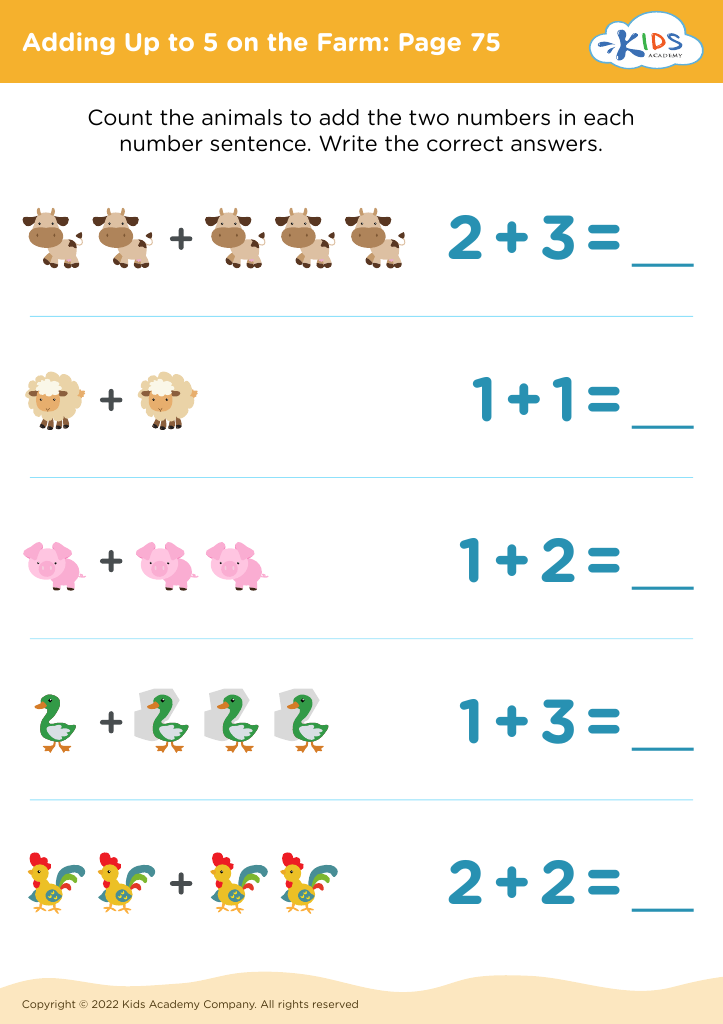
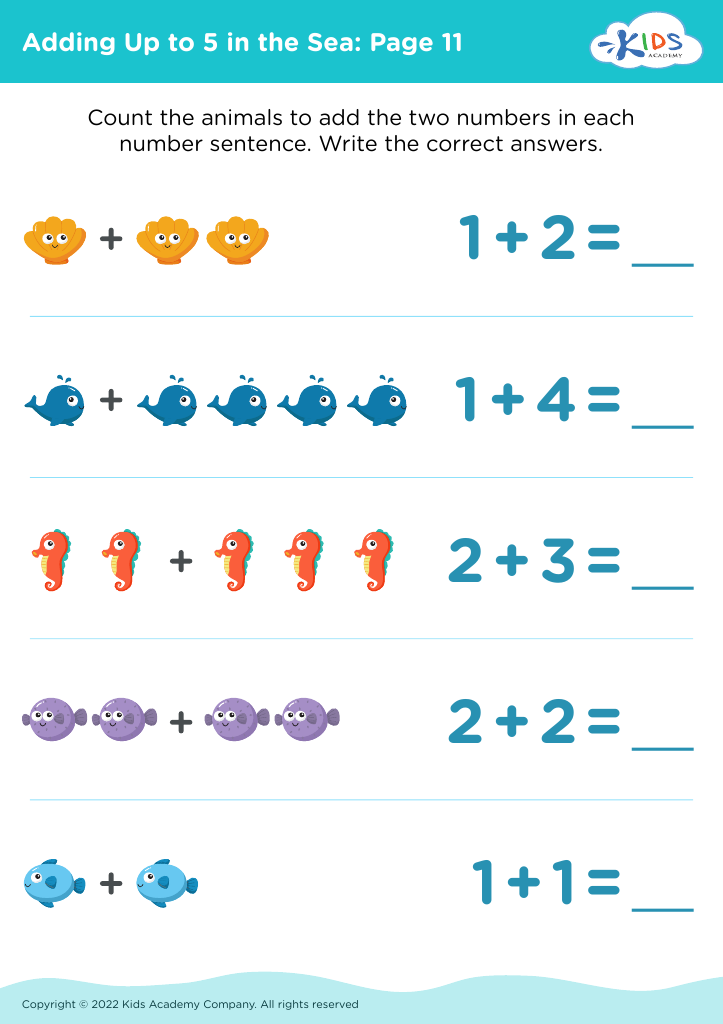
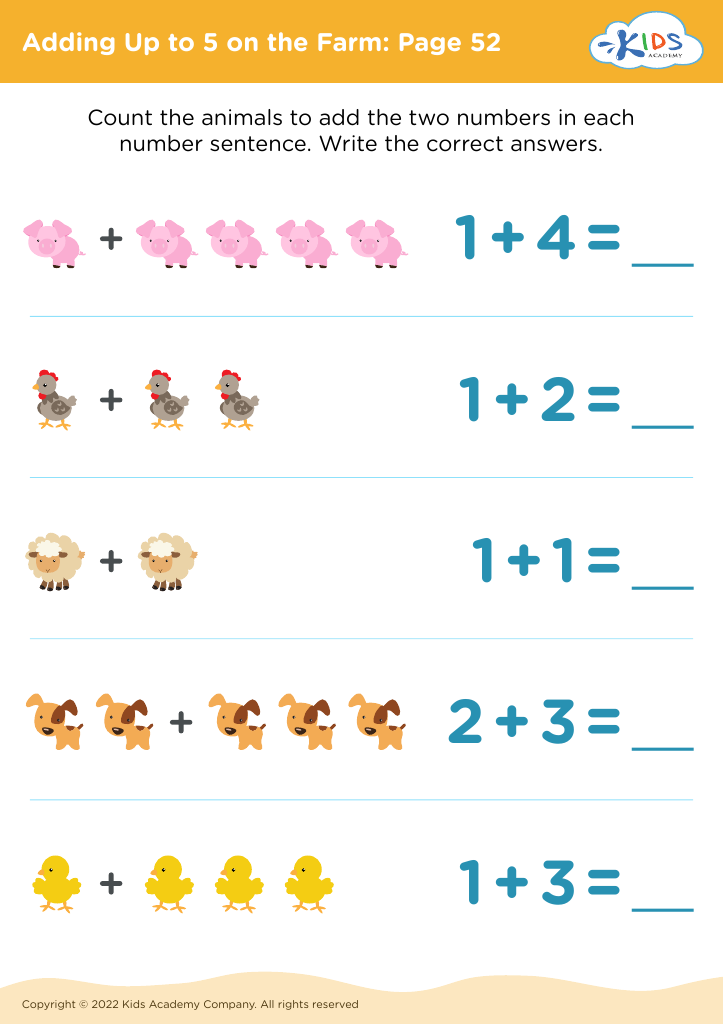
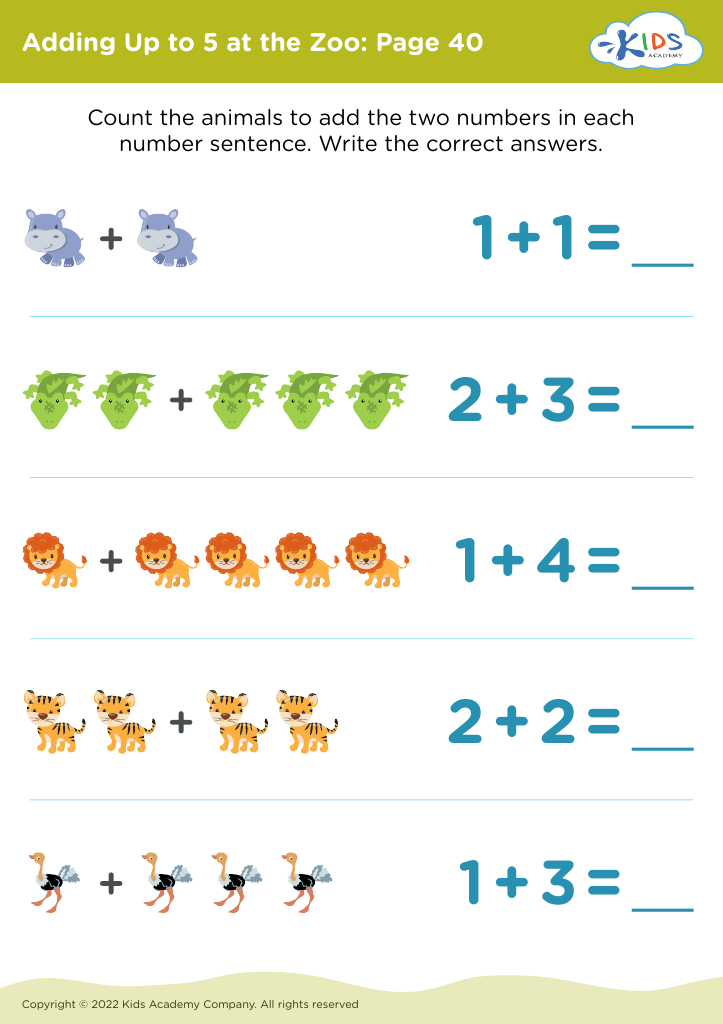
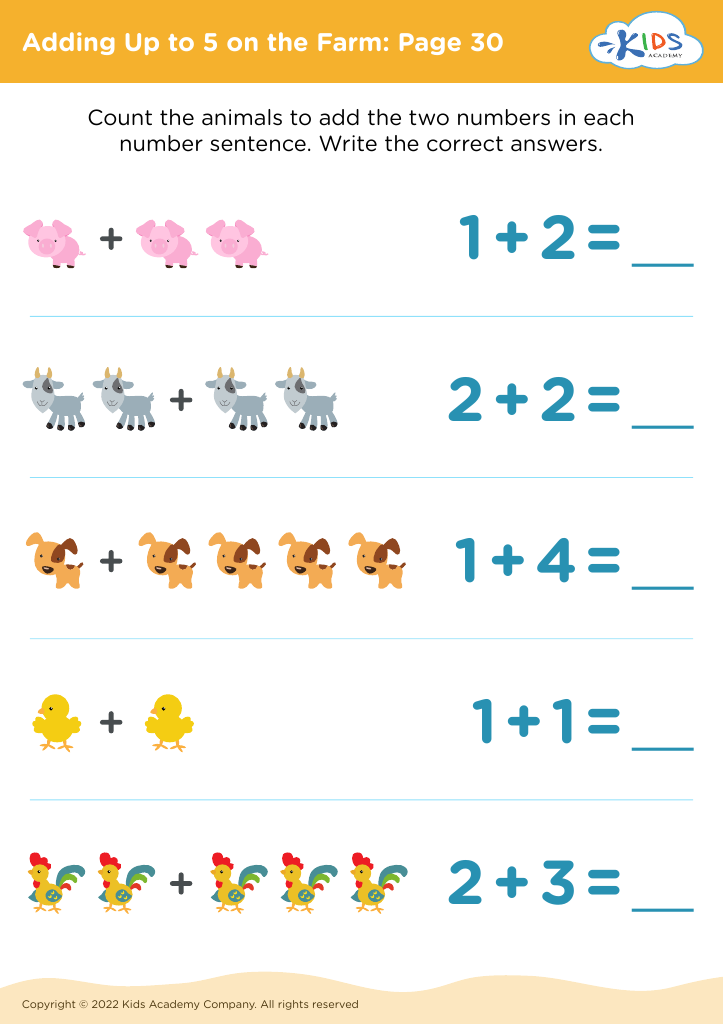
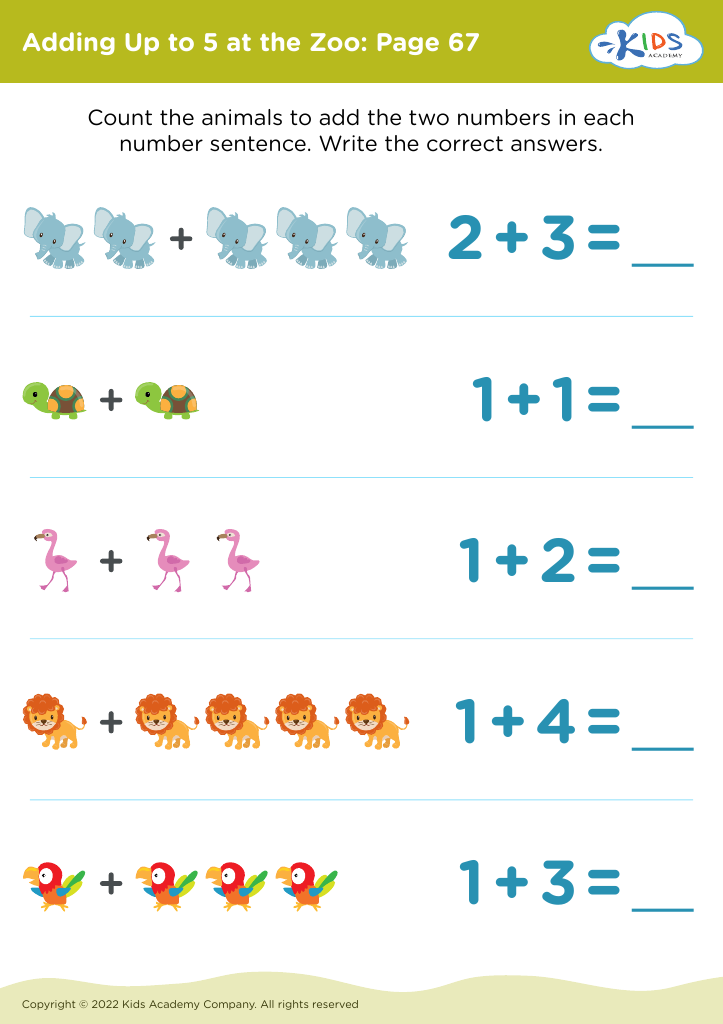
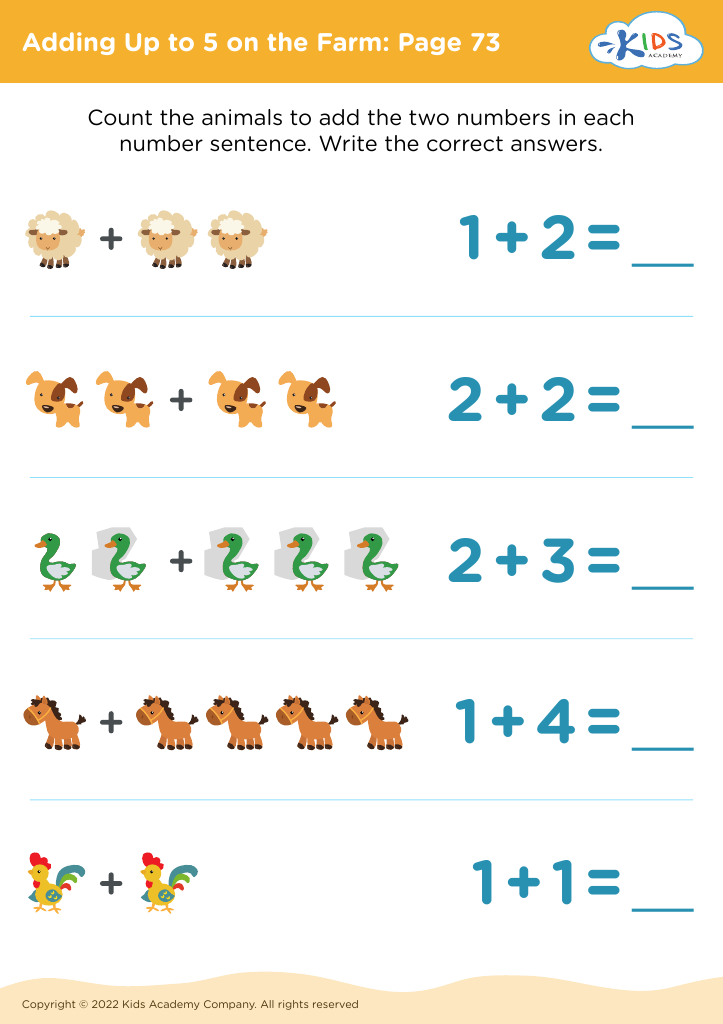
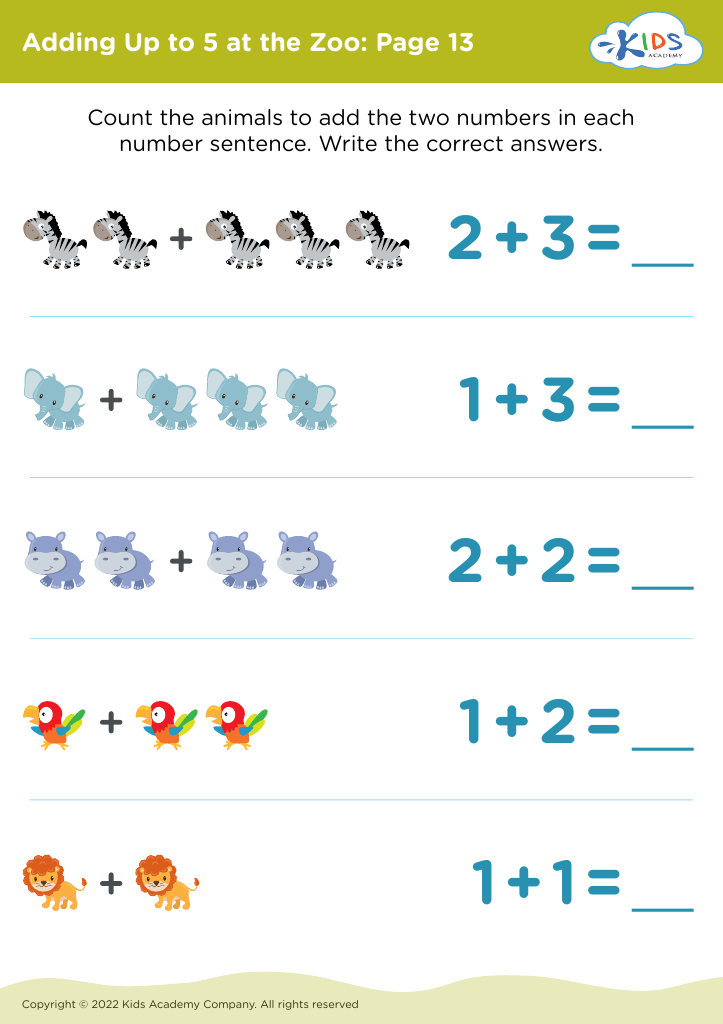
Firstly, it builds crucial early math skills. Through activities like sorting animals by size, counting them, or identifying shapes in animal pictures, children learn to recognize patterns, enhance their numeracy, and develop logical thinking—all skills essential for academic success. Furthermore, incorporating animals into math activities tends to capture the imagination of young learners, making math more relatable and enjoyable.
Secondly, promoting animal identification nurtures curiosity and appreciation for the natural world. As children learn to identify different species, they also cultivate observational skills and a sense of wonder. This can spark wider interest in biology, wildlife conservation, and environmental responsibility from an early age.
Lastly, it provides opportunities for collaborative learning. Parents and teachers can facilitate discussions, group activities, and even games involving animals, promoting social skills and teamwork in a fun context. By integrating math with engaging themes like animals, parents and teachers foster a holistic learning environment that supports numerous developmental milestones.








