Check out this FREE Trial Lesson on Math for age 4-6!

Short and Long Vowel Sort

Favorites
With answer key
Interactive
  • 4-6
  • Basic Addition Skills
  • Math
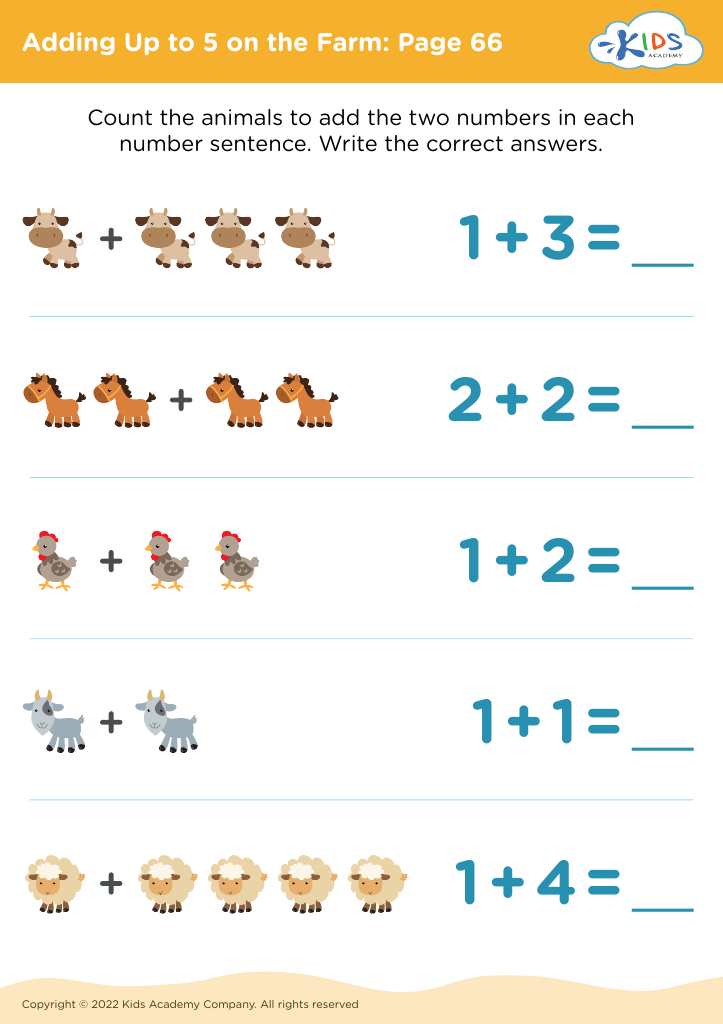
Adding Up to 5 on the Farm: Page 66
Worksheet
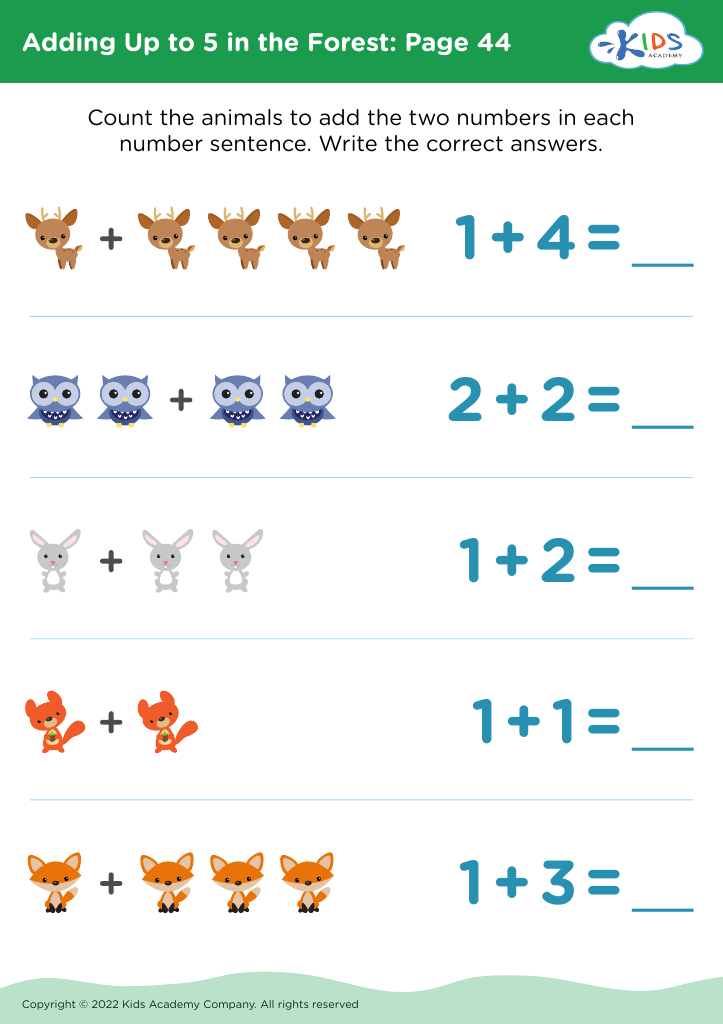
Adding Up to 5 in the Forest: Page 44
Worksheet
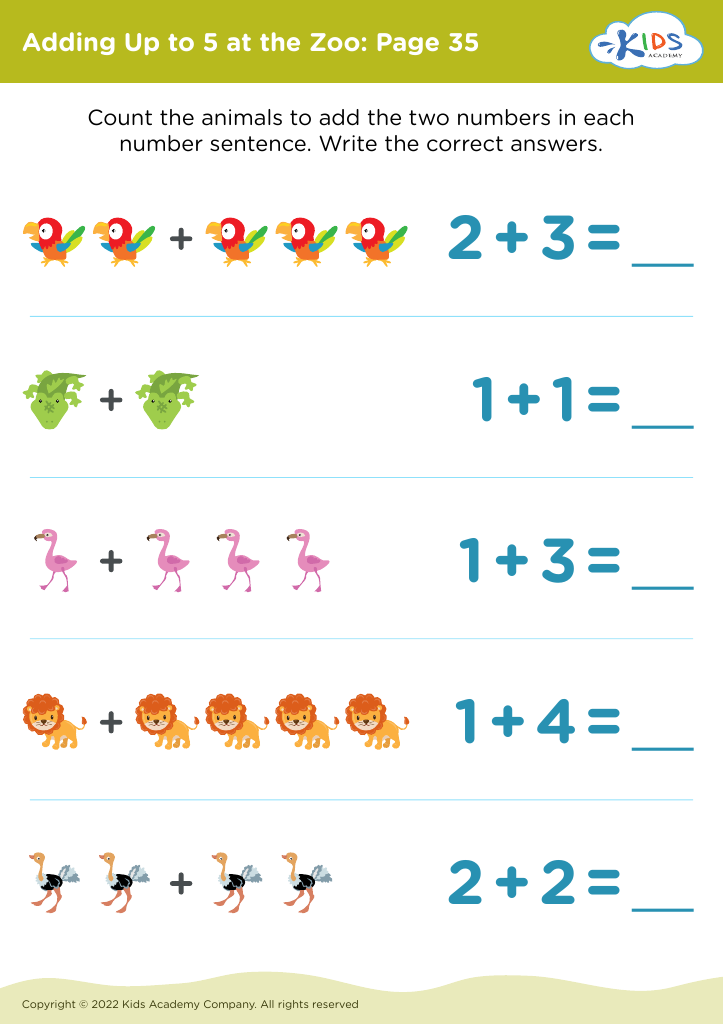
Adding Up to 5 at the Zoo: Page 35
Worksheet
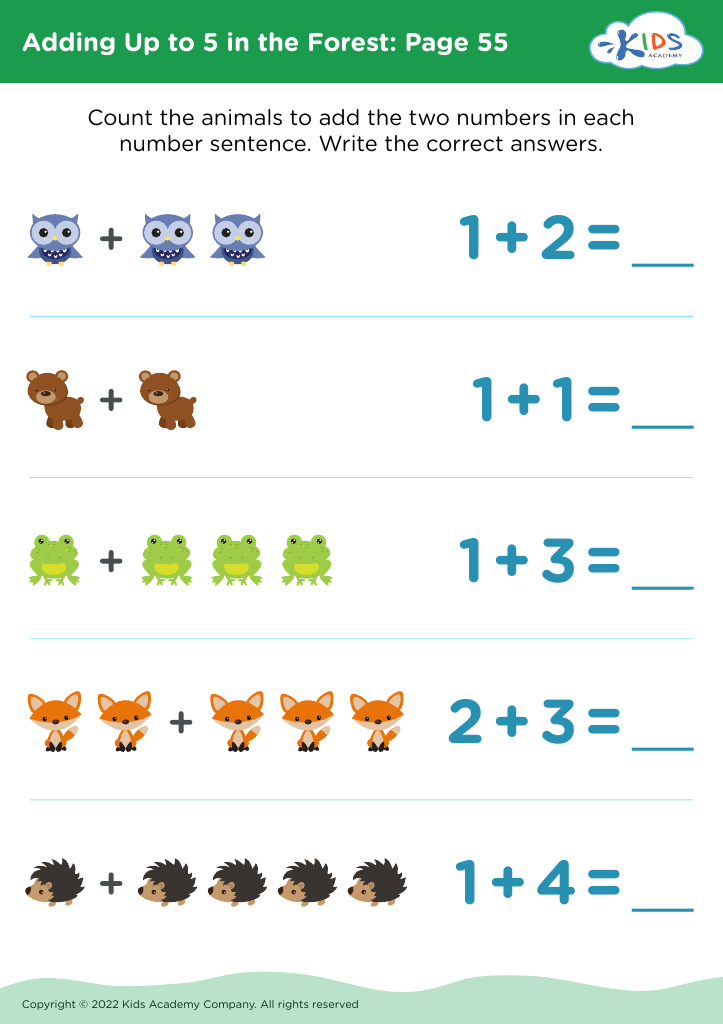
Adding Up to 5 in the Forest: Page 55
Worksheet
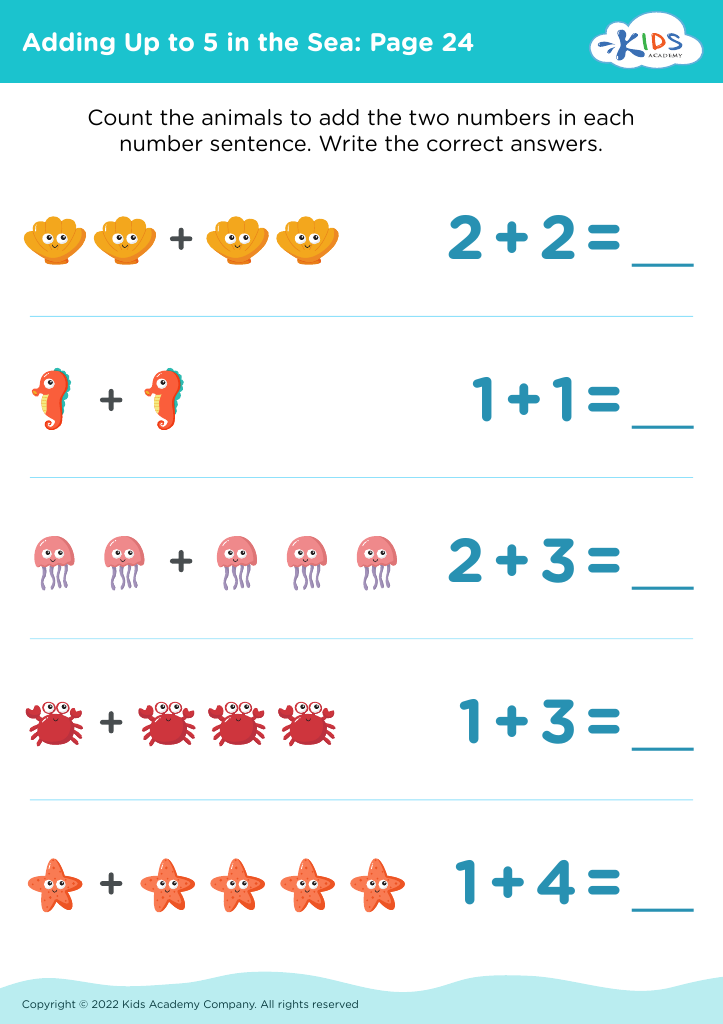
Adding Up to 5 in the Sea: Page 24
Worksheet
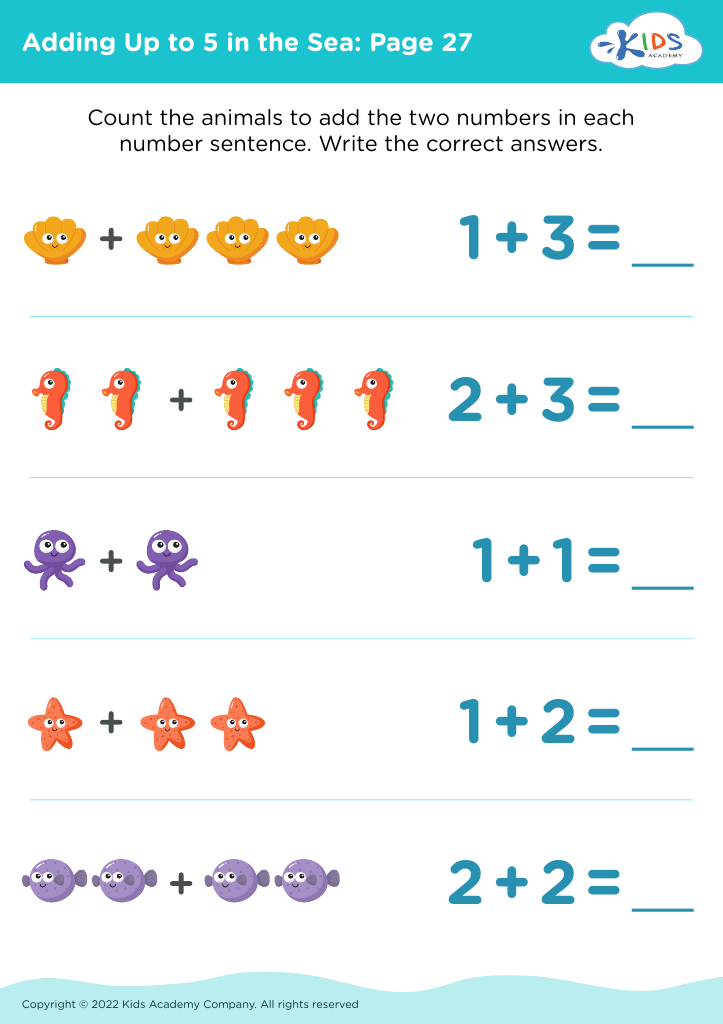
Adding Up to 5 in the Sea: Page 27
Worksheet
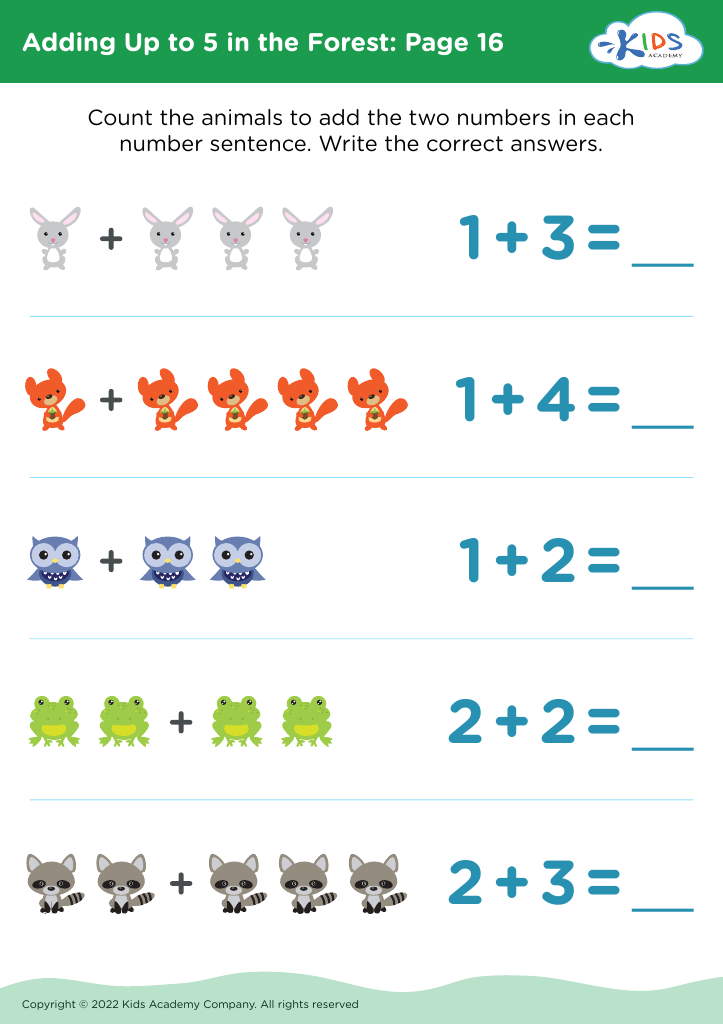
Adding Up to 5 in the Forest: Page 16
Worksheet
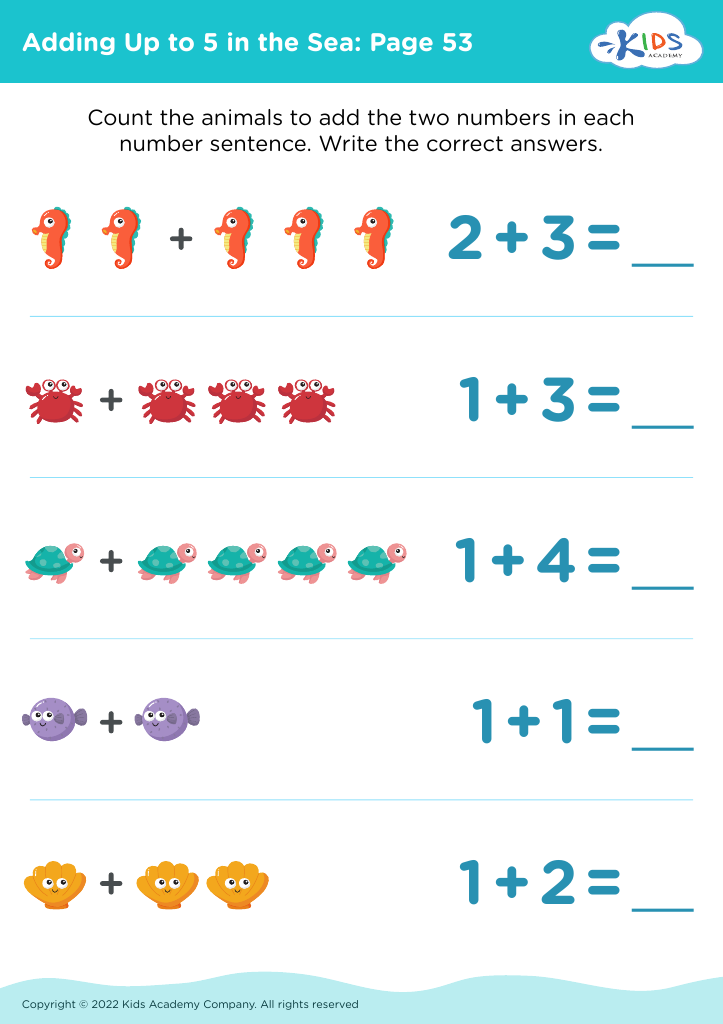
Adding Up to 5 in the Sea: Page 53
Worksheet
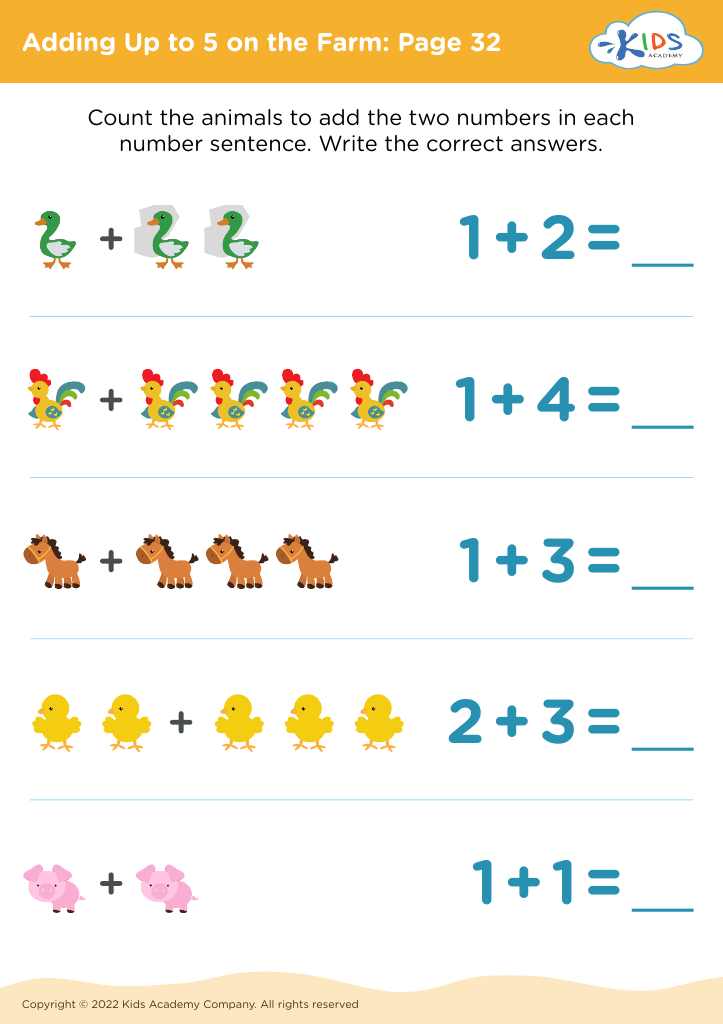
Adding Up to 5 on the Farm: Page 32
Worksheet
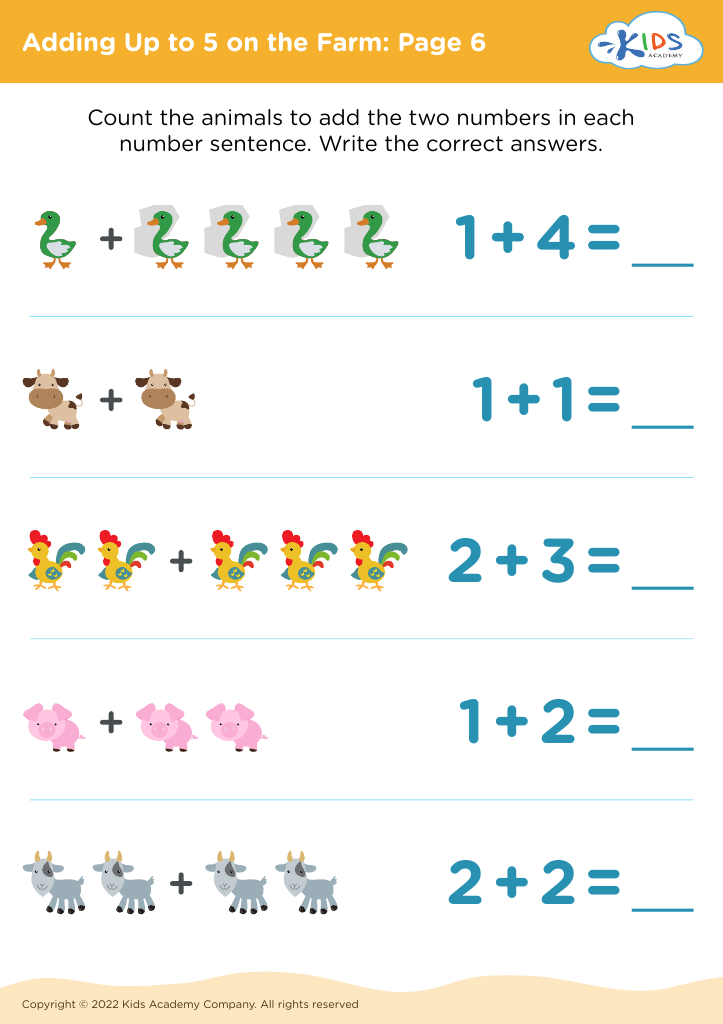
Adding Up to 5 on the Farm: Page 6
Worksheet
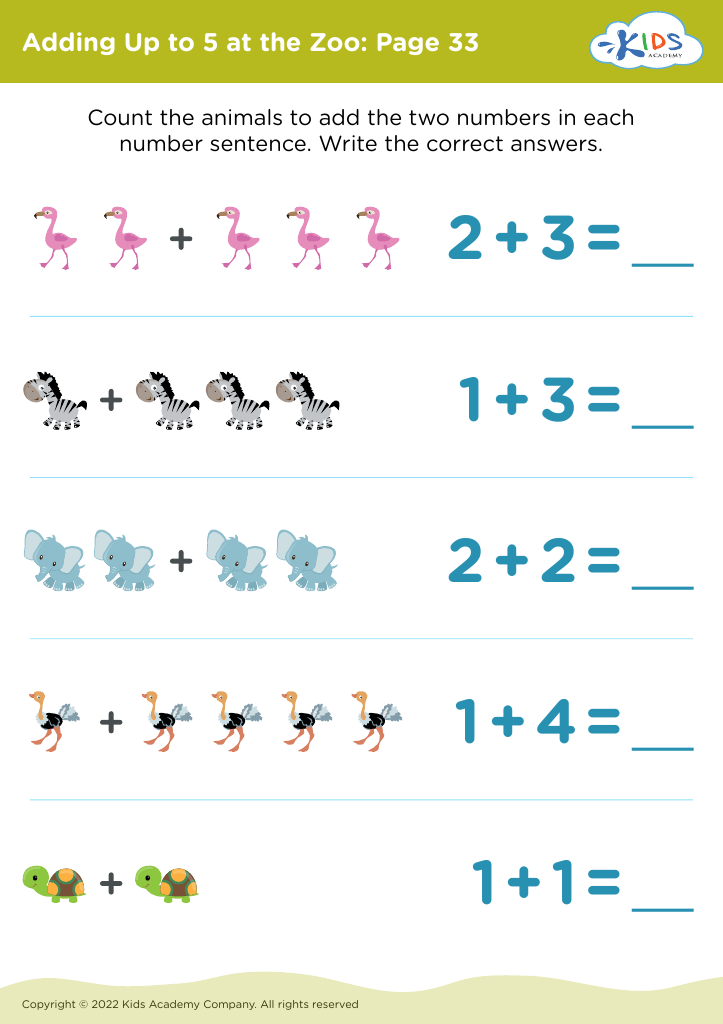
Adding Up to 5 at the Zoo: Page 33
Worksheet
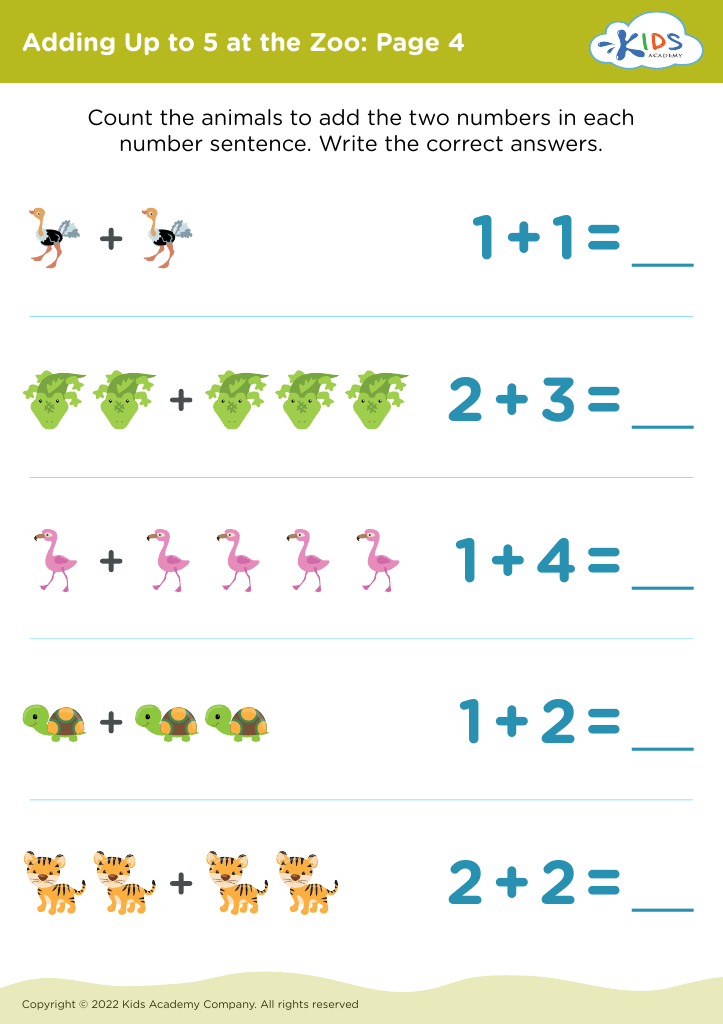
Adding Up to 5 at the Zoo: Page 4

Adding Up to 5 at the Zoo: Page 4

Adding Up to 5 at the Zoo: Page 4
Worksheet
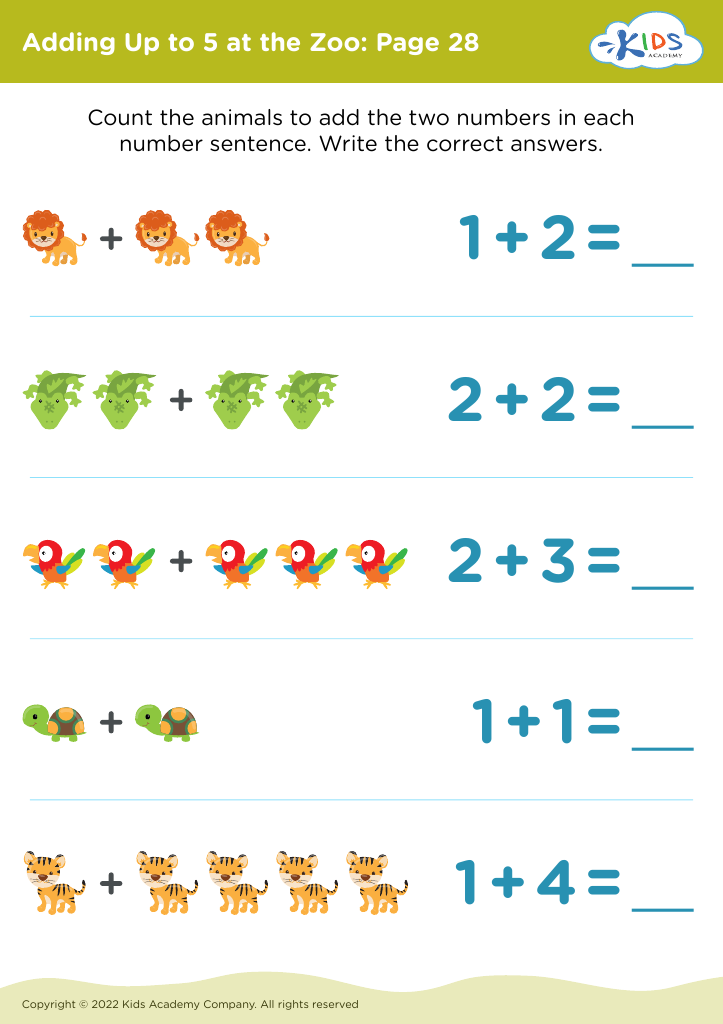
Adding Up to 5 at the Zoo: Page 28
Worksheet
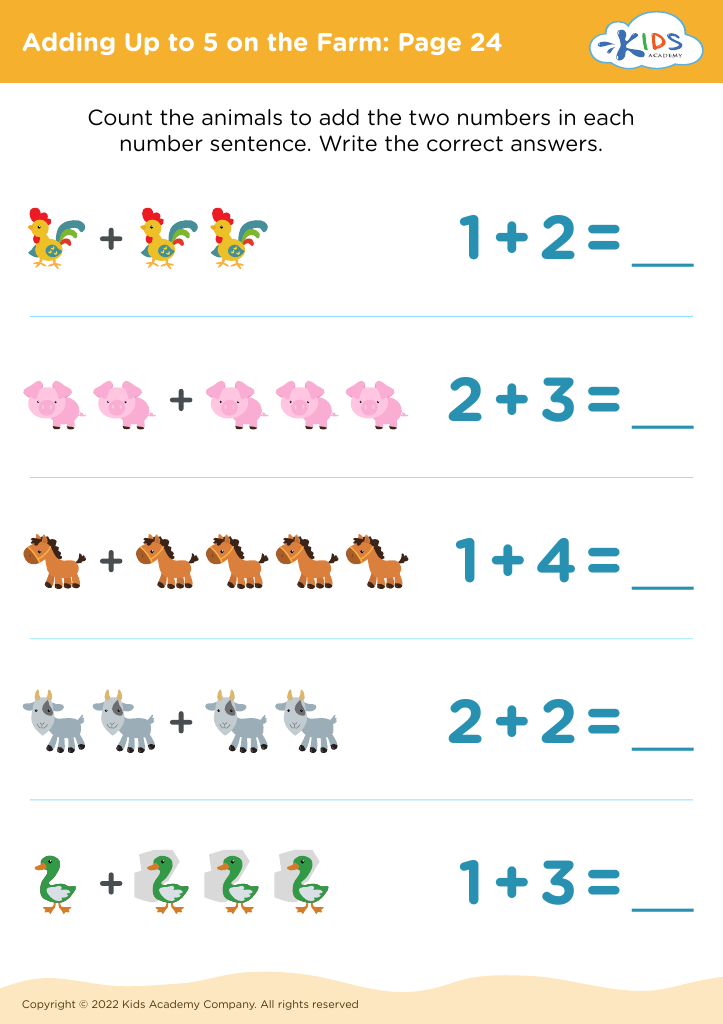
Adding Up to 5 on the Farm: Page 24
Worksheet
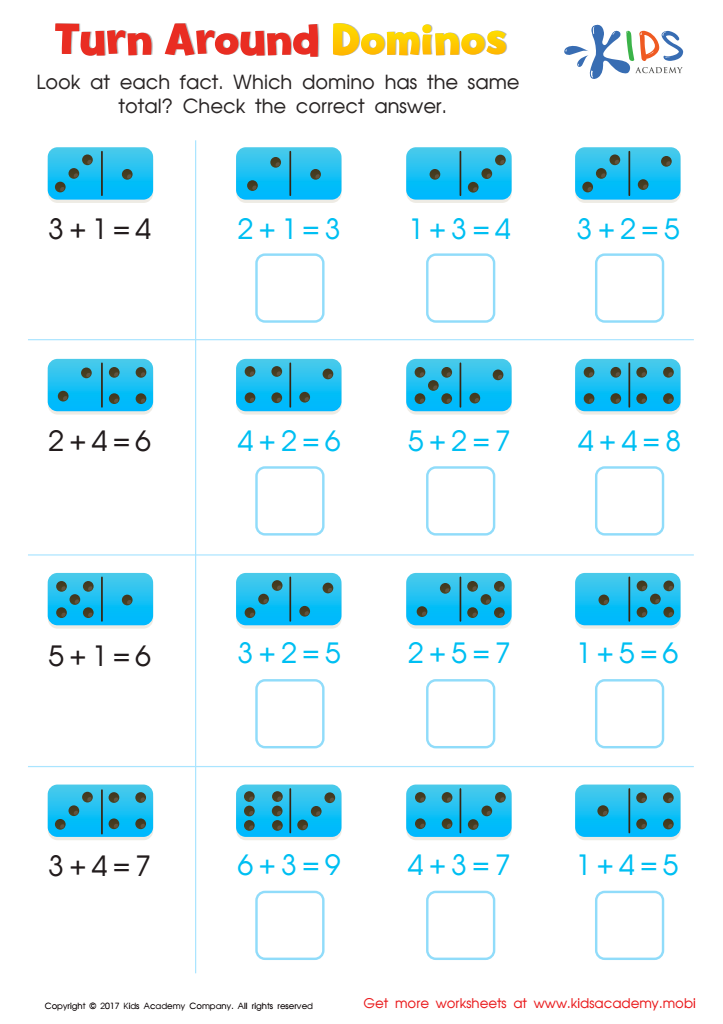
Turn Around Dominos Worksheet

Turn Around Dominos Worksheet

Encourage your child to flex their mental muscles with this math worksheet. Look through the left side's dominos and their values and then check the three boxes on the right. Ask your child if any of the right box's dominos are similar. This requires focus and careful observation.
Turn Around Dominos Worksheet
Worksheet
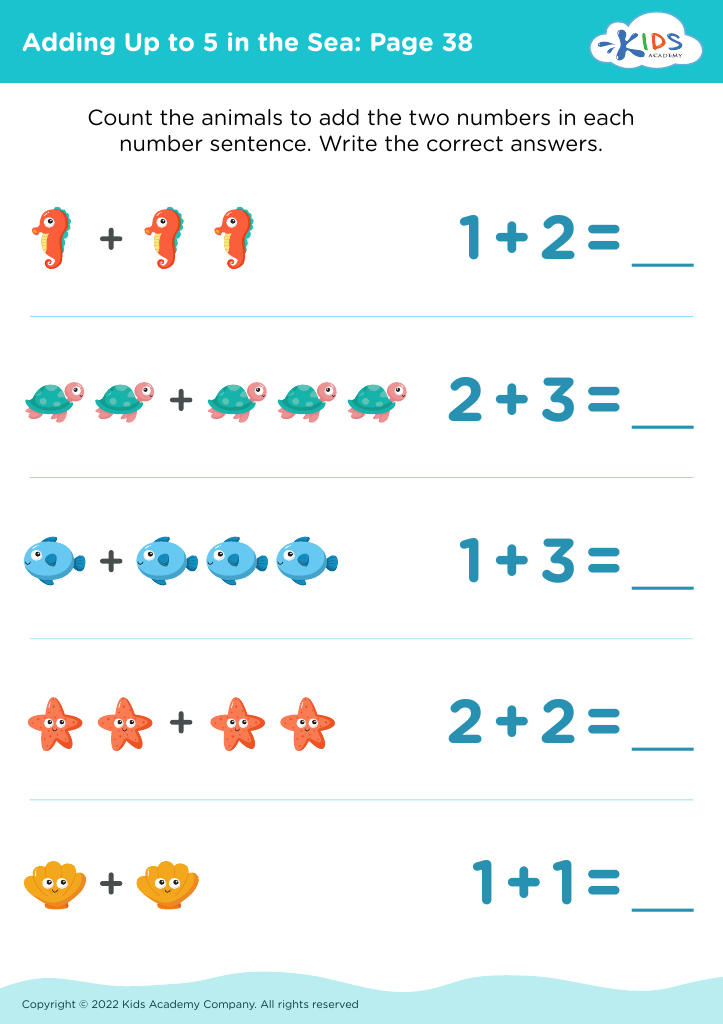
Adding Up to 5 in the Sea: Page 38
Worksheet
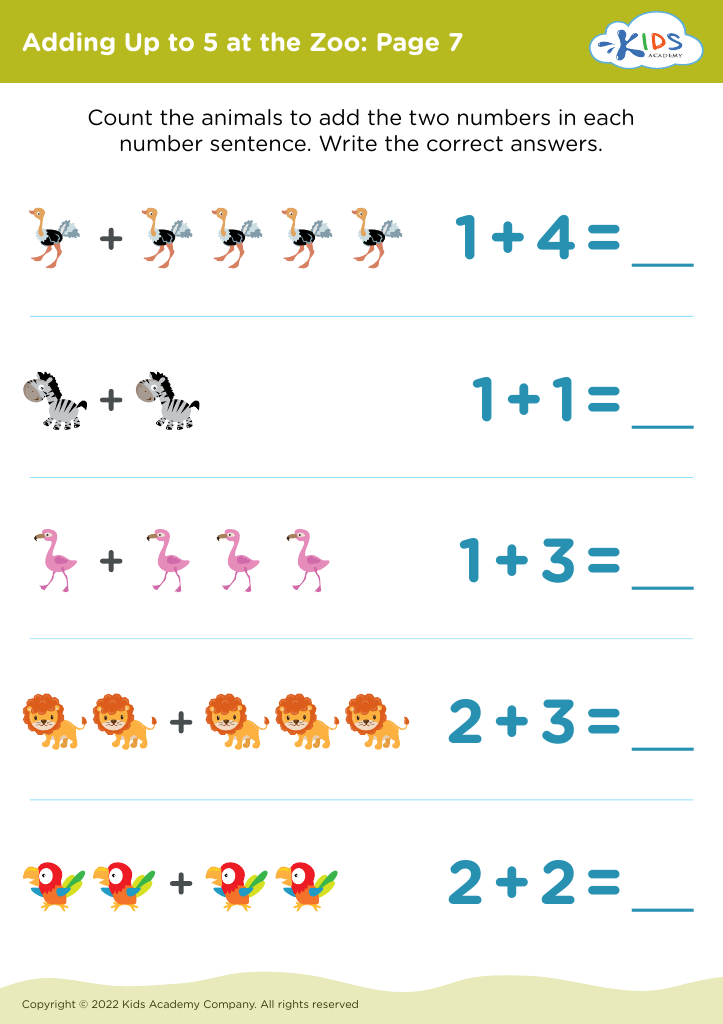
Adding Up to 5 at the Zoo: Page 7

Adding Up to 5 at the Zoo: Page 7

Adding Up to 5 at the Zoo: Page 7
Worksheet
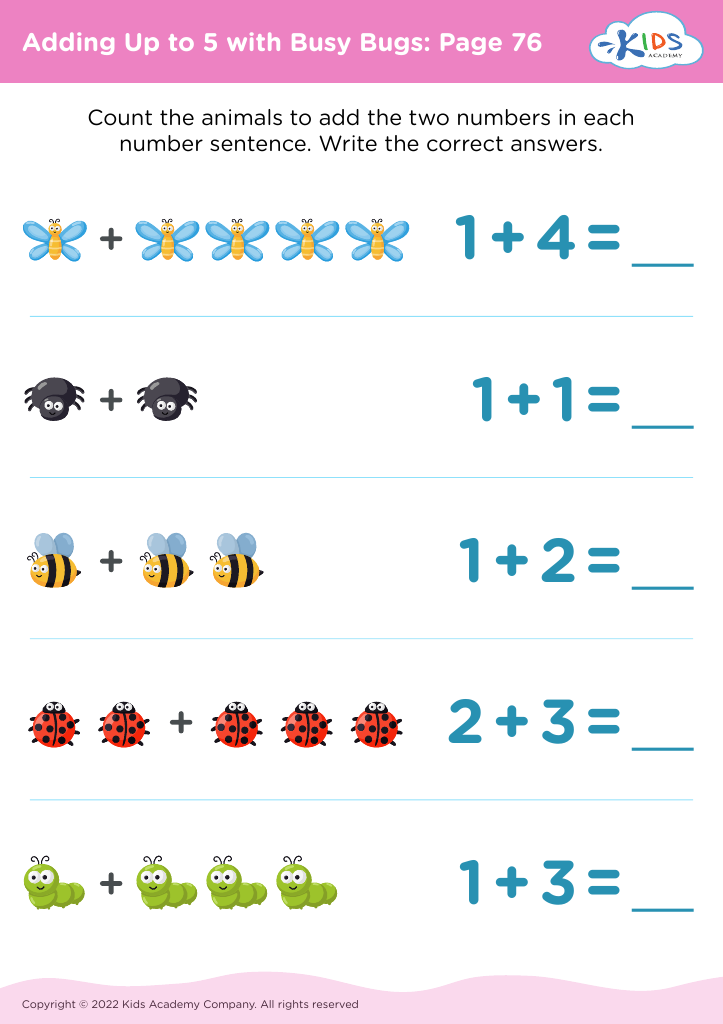
Adding Up to 5 with Busy Bugs: Page 76
Worksheet
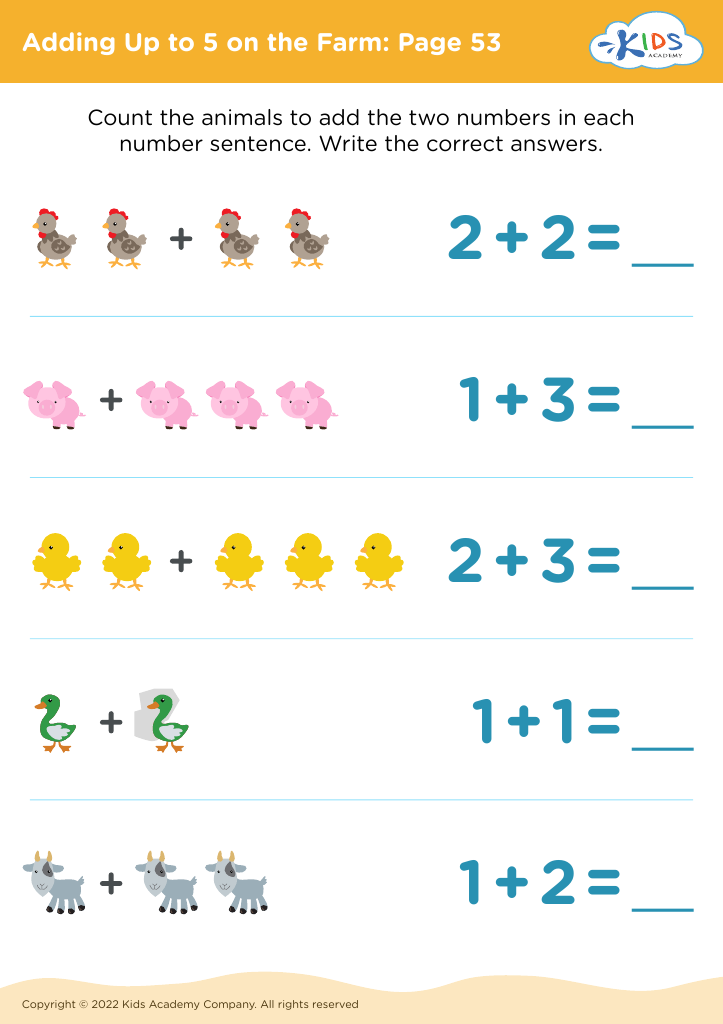
Adding Up to 5 on the Farm: Page 53
Worksheet
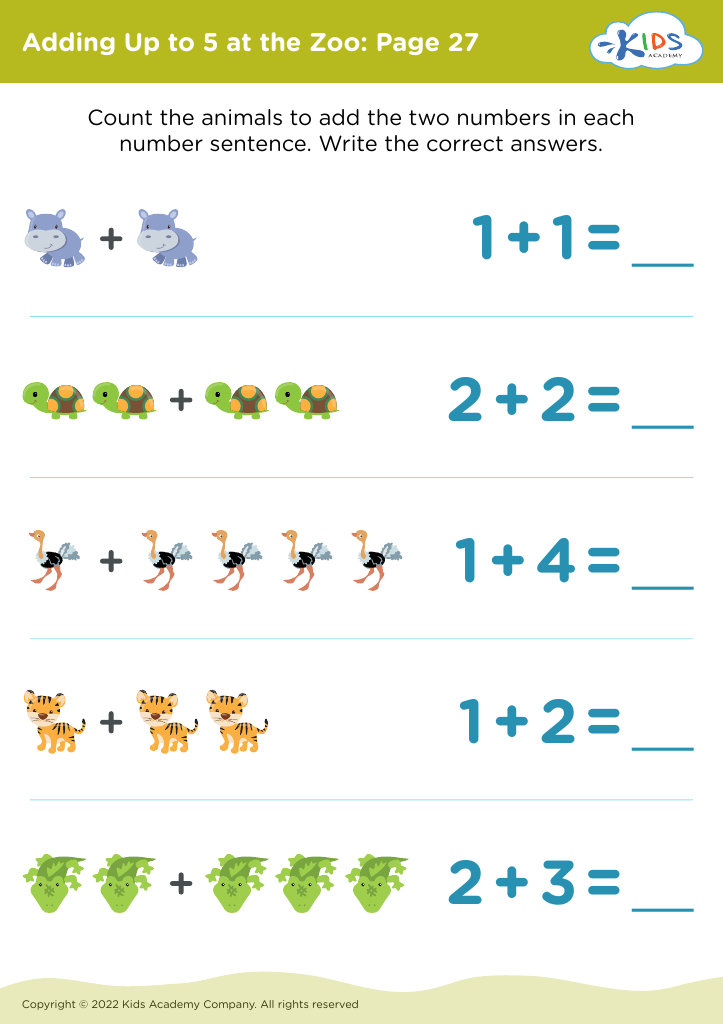
Adding Up to 5 at the Zoo: Page 27
Worksheet
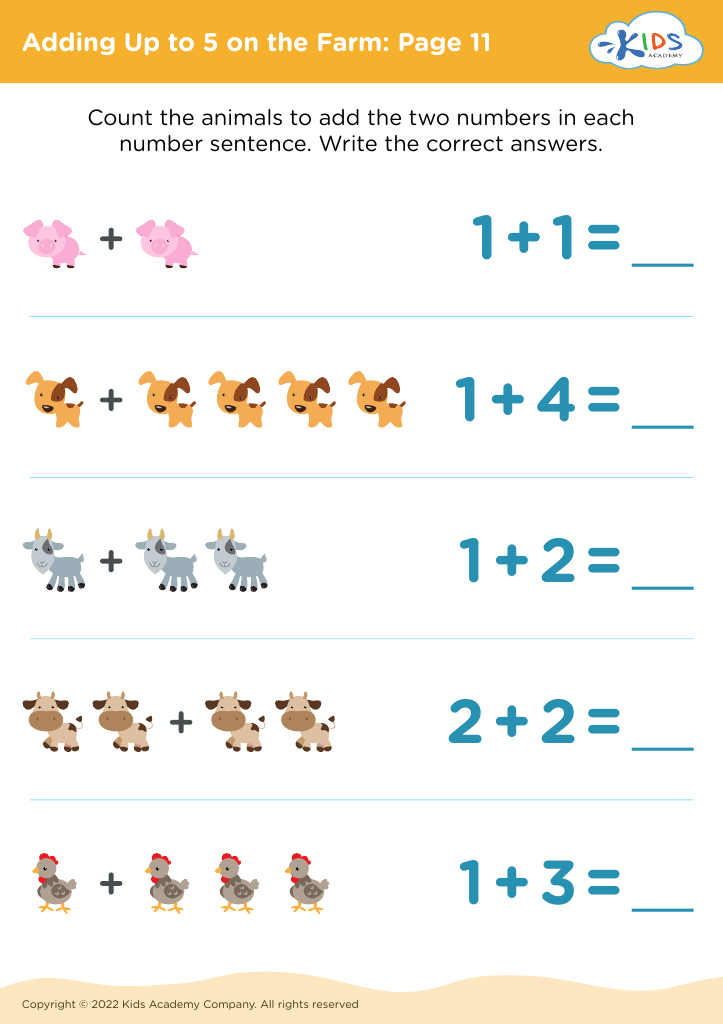
Adding Up to 5 on the Farm: Page 11
Worksheet
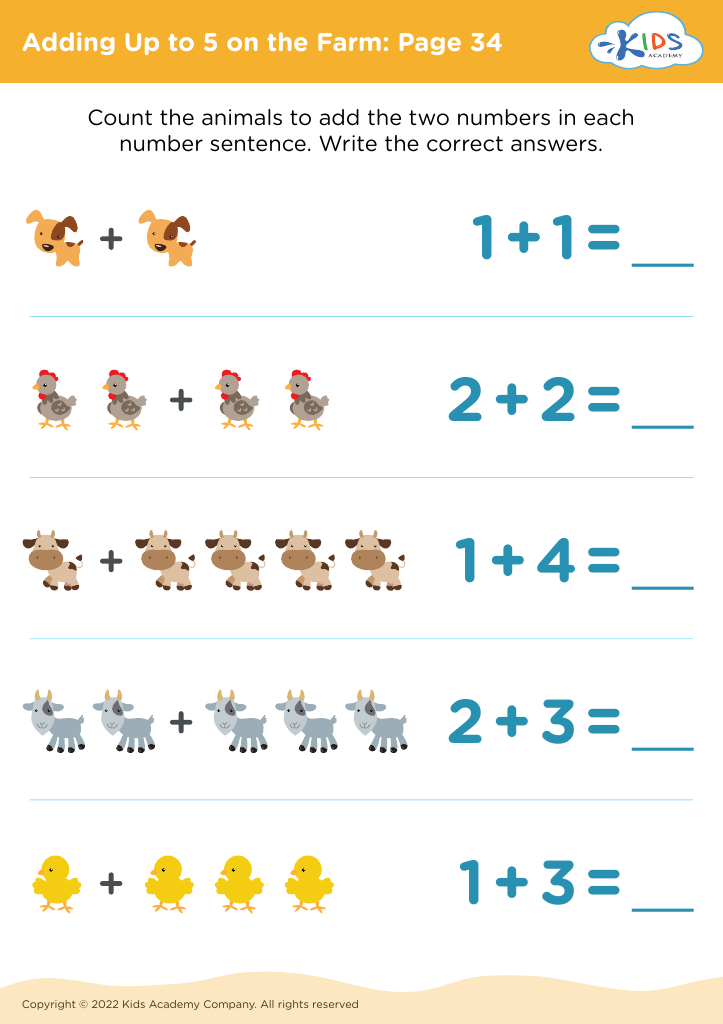
Adding Up to 5 on the Farm: Page 34
Worksheet
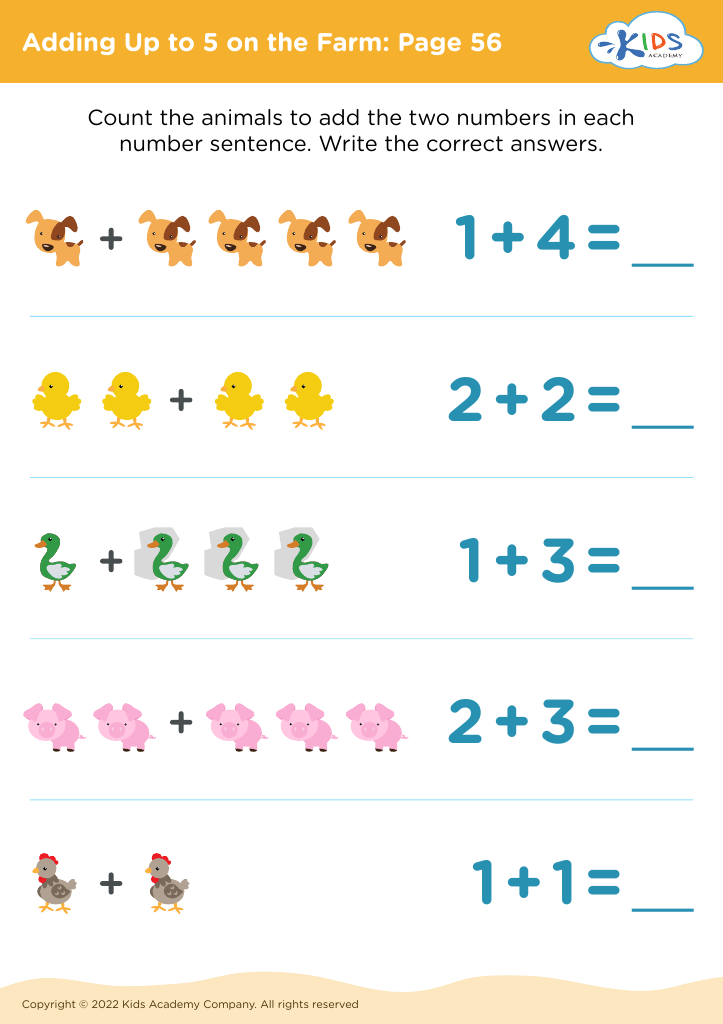
Adding Up to 5 on the Farm: Page 56
Worksheet
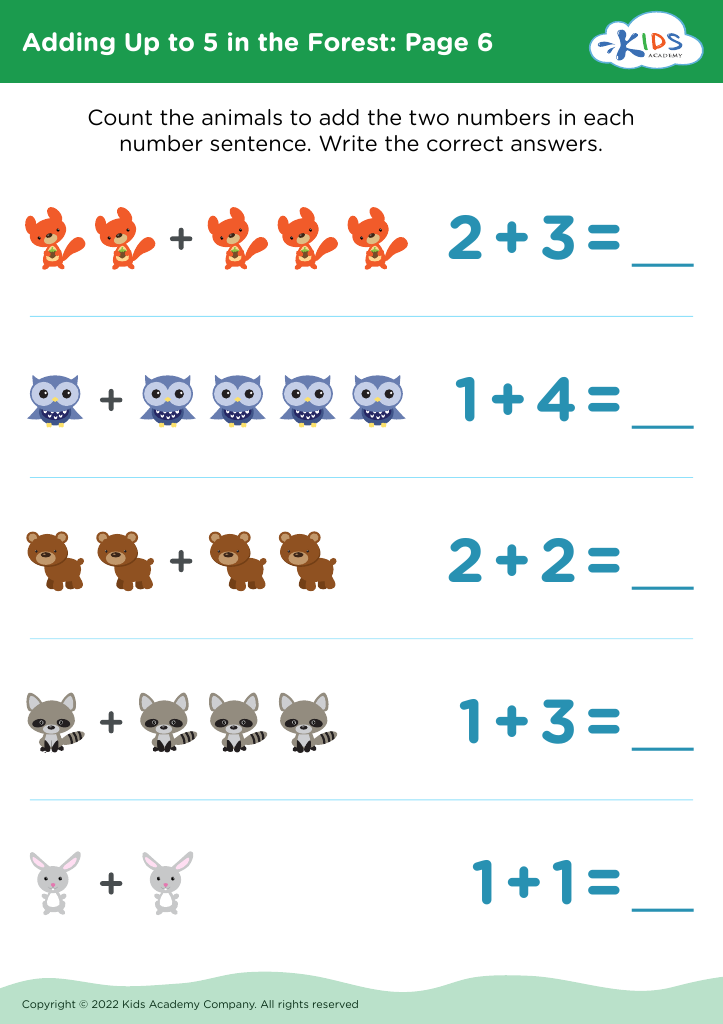
Adding Up to 5 in the Forest: Page 6
Worksheet


Parents and teachers should place a strong emphasis on developing basic addition skills in children aged 4-6 because these early math skills form the foundation for future learning and cognitive development. At this young age, children's brains are exceptionally receptive to new information, making it an ideal time to build a solid grounding in basic arithmetic.

Firstly, mastering simple addition helps to enhance a child’s number sense, an essential skill that will benefit them in both their academic and everyday life. A strong grasp of addition sets the stage for learning more complex mathematical concepts, such as subtraction, multiplication, and division. Without proficiency in these fundamental skills, children may struggle with higher-level math in later grades, which could affect their overall academic performance and self-confidence.

Secondly, practicing addition enhances problem-solving abilities and logical thinking. It encourages children to identify patterns, make connections, and approach tasks systematically. These critical thinking skills are not only relevant to math but are also transferable to other subjects and real-life situations.

Finally, an early victory in mastering addition fosters a positive attitude towards learning and school. It instills a sense of achievement and builds confidence, motivating children to tackle new challenges with enthusiasm. Thus, cultivating basic addition skills at this developmental stage is crucial for both academic success and overall cognitive growth.