Basic subtraction skills Math Worksheets for Ages 4-6
6 filtered results
-
From - To
Help young learners grasp essential subtraction skills with our Basic Subtraction Skills Math Worksheets designed for ages 4-6. These engaging and educational worksheets feature a variety of fun exercises that simplify subtraction concepts, making them ideal for preschool and kindergarten children. Through visually appealing activities, including counting objects, number lines, and simple word problems, our worksheets promote critical thinking and build a strong mathematical foundation. Perfect for classroom use or at-home practice, these printable worksheets are a great way to boost your child's confidence and proficiency in basic subtraction. Discover the joy of learning with our carefully curated resources!
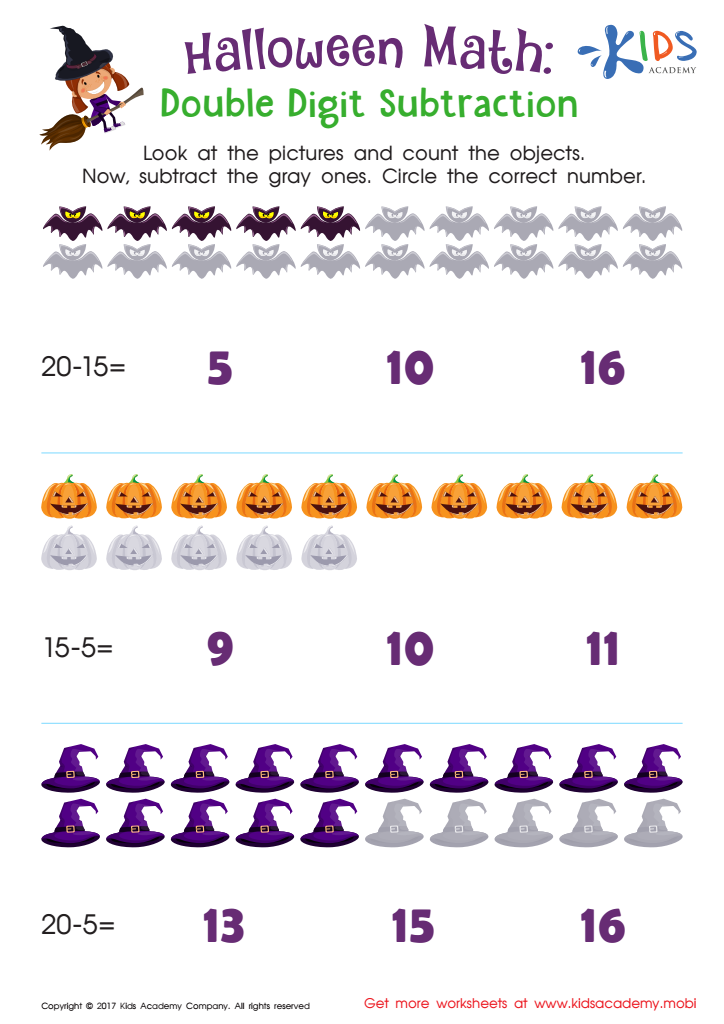
Halloween Math Subtraction Worksheet
 Assign to My Students
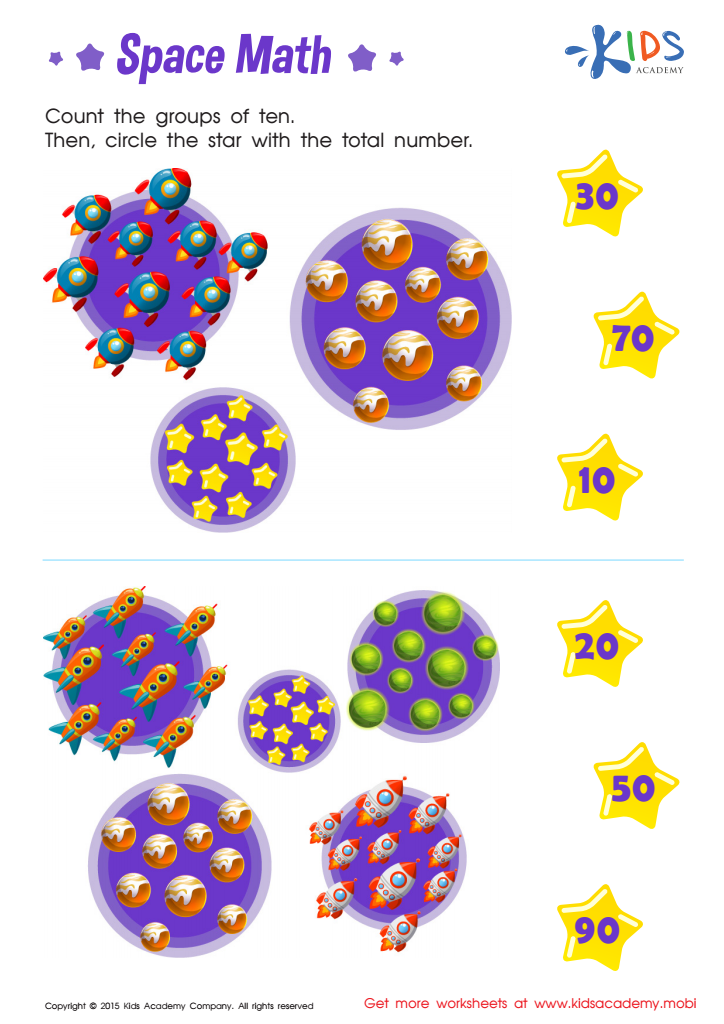
Learn dozens: Space math Worksheet
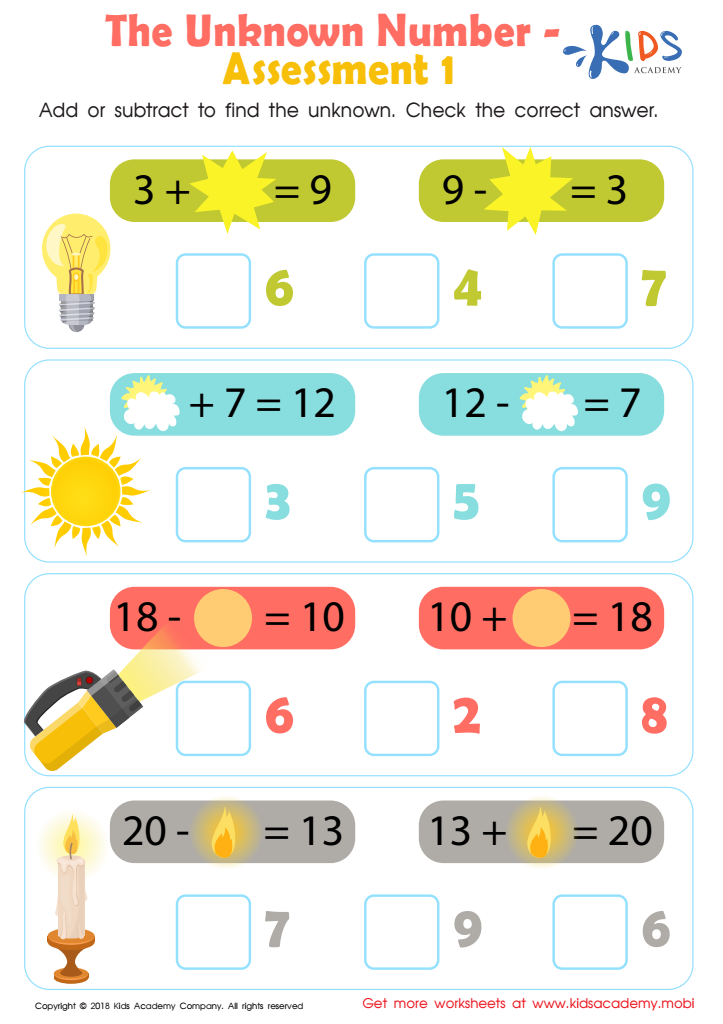
The Unknown Number: Assessment 1 Worksheet
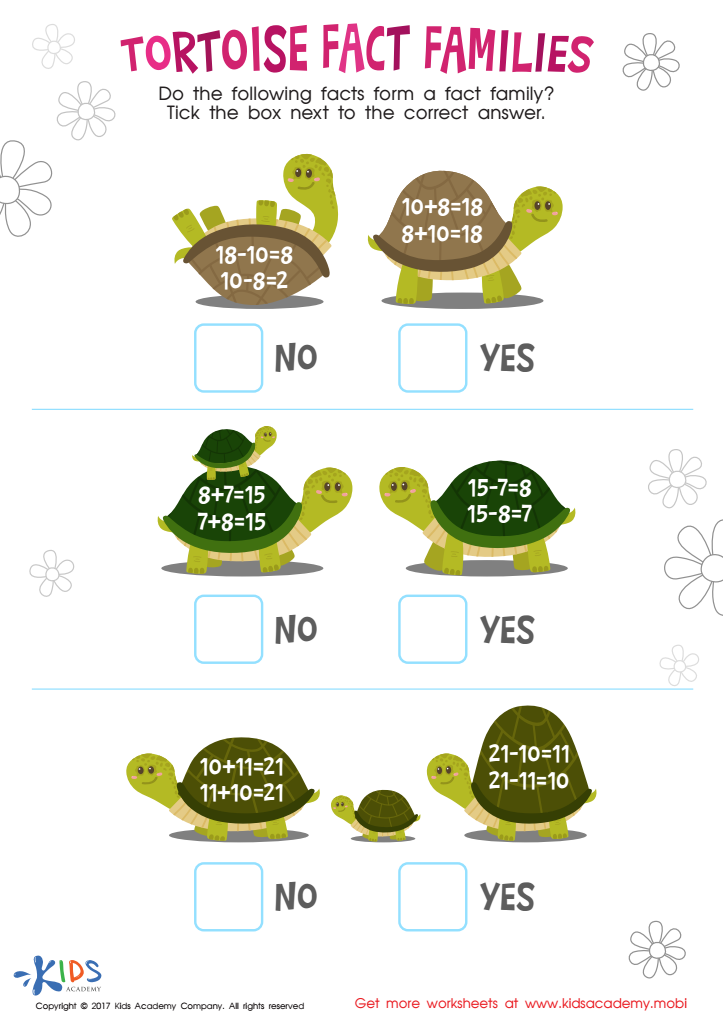
Tortoise Fact Families Printable
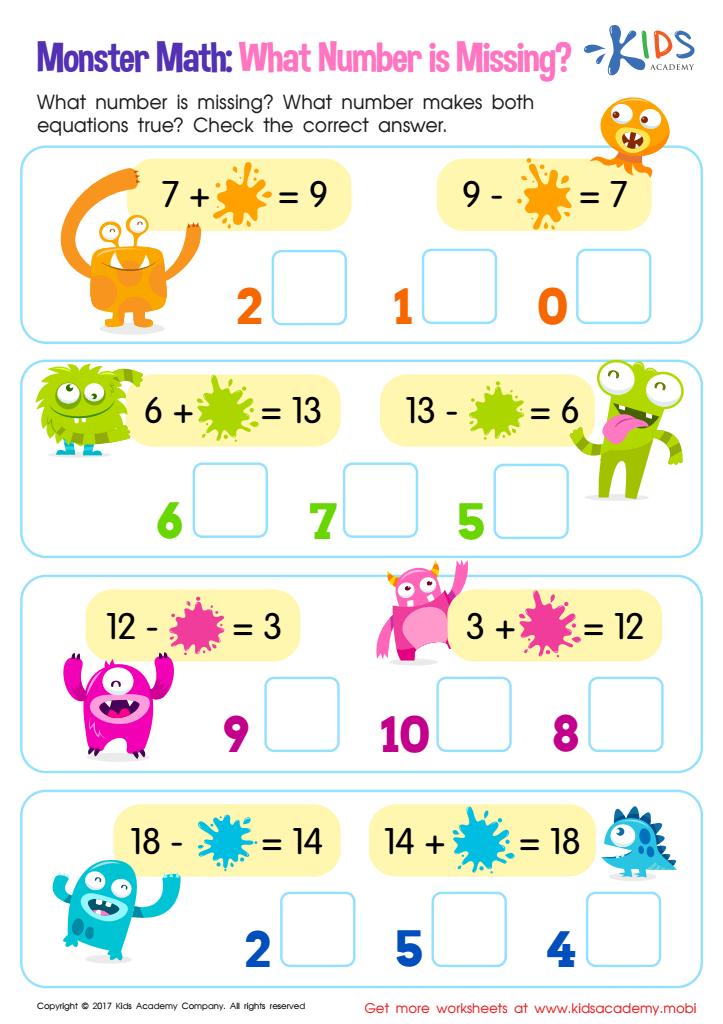
Missing Number: Monster Math Worksheet
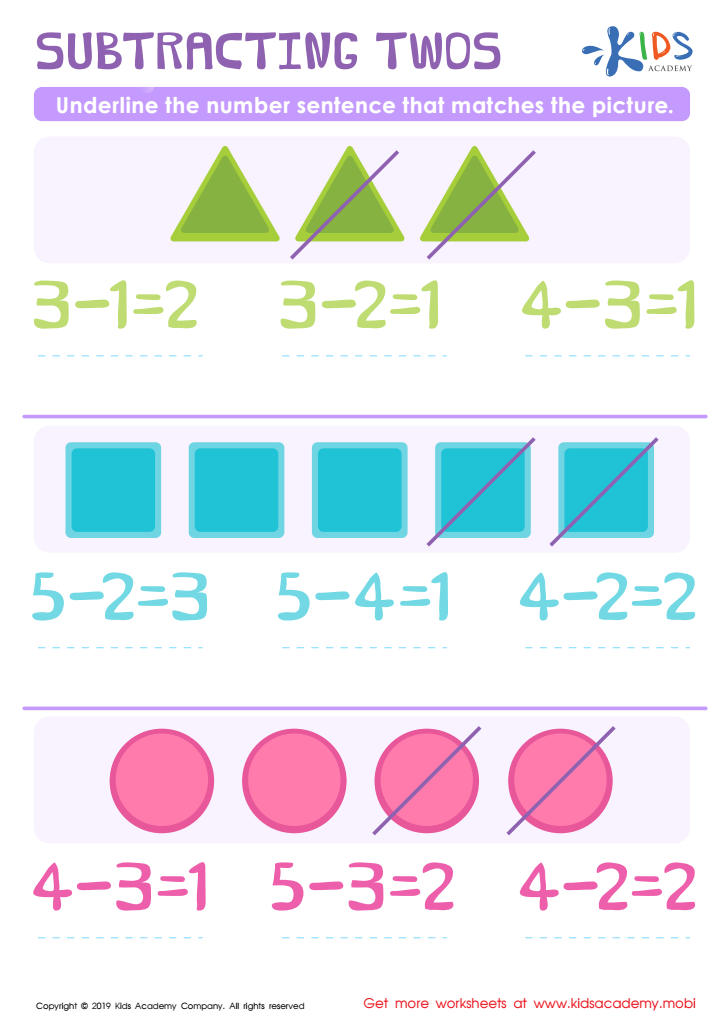
Subtracting Twos Worksheet








Basic subtraction skills are essential for young children, ages 4-6, as these foundational math concepts pave the way for more complex mathematical understanding later on. At this age, children's brains are highly malleable, which means that the skills they develop now can set the stage for future academic success.
Subtraction isn't just about taking one number away from another; it helps kids understand the principle of how numbers relate to each other, enhance problem-solving abilities, and build critical thinking. Learning subtraction also supports the development of logical reasoning, as children begin to understand that subtracting one number from another results in a smaller number, which is crucial for number sense.
Furthermore, mastering subtraction improves other essential life skills such as money handling, time management, and decision-making. For instance, figuring out change returned while buying something or understanding how much time they have left before their next activity. Competence in basic subtraction also boosts children’s confidence in their ability to tackle other academic challenges, making them more eager and less anxious about learning new concepts.
Therefore, parents and teachers should pay close attention to teaching subtraction in playful, engaging, and practical ways, ensuring that foundational math skills are not only learned but retained for future academic endeavors. By doing so, they help create a strong mathematical foundation that benefits children in both their academic and everyday lives.








