Mathematical reasoning Math Worksheets for Ages 4-6 - Page 2
31 filtered results
-
From - To
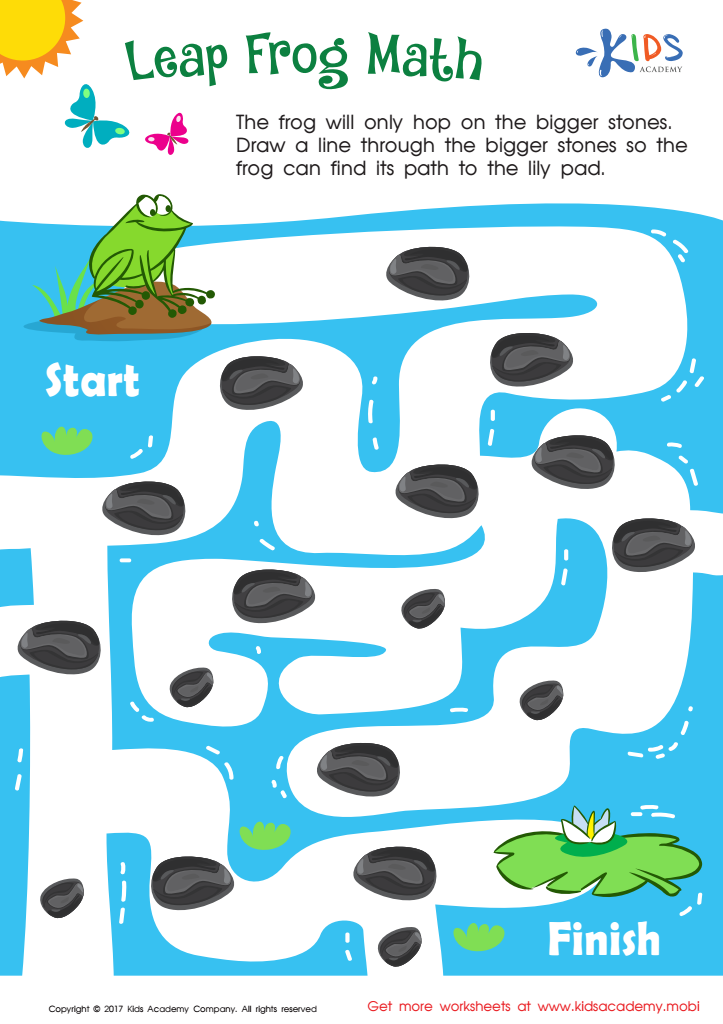
Math Puzzle Worksheet
 Assign to My Students
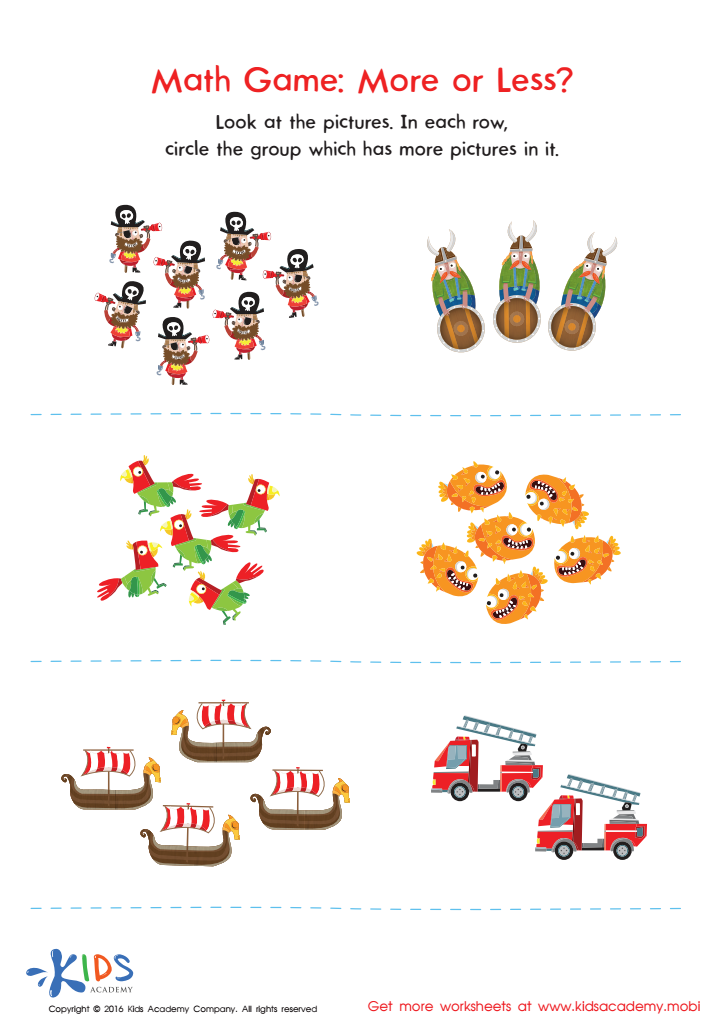
More or Less Worksheet
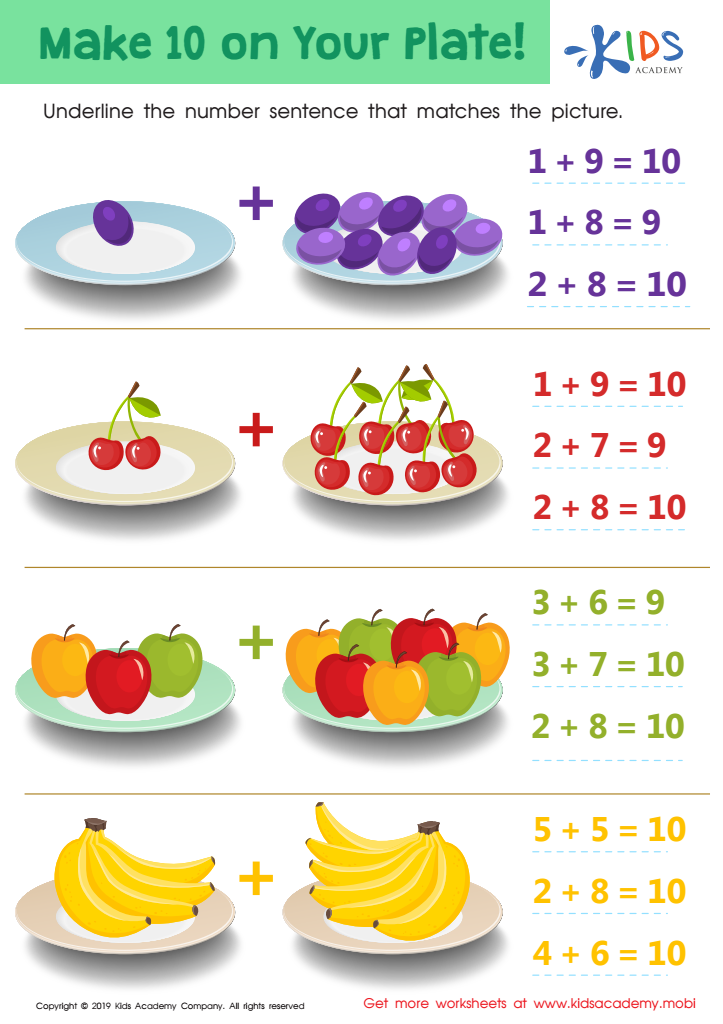
Make 10 on Your Plate! Worksheet
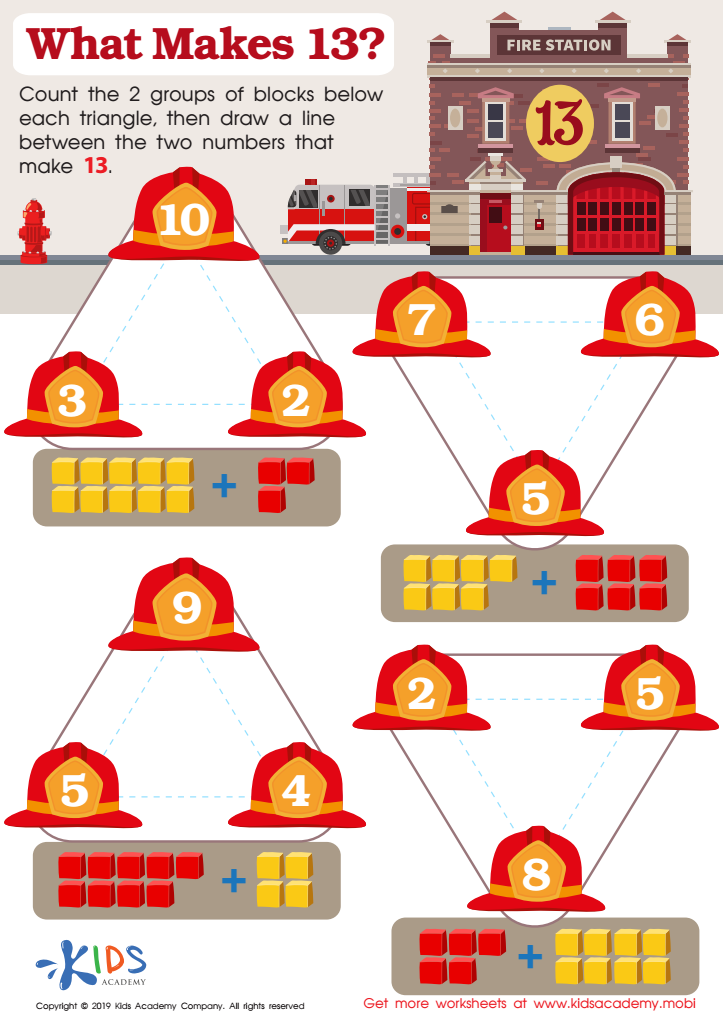
What Makes 13 Worksheet
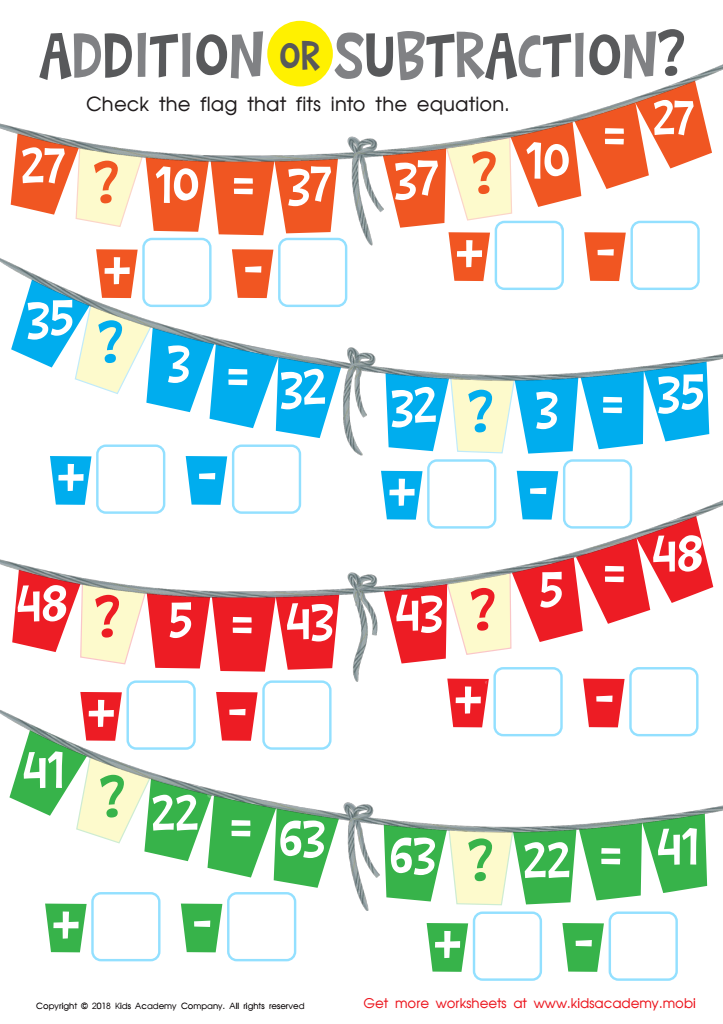
Addition or Subtraction? Worksheet
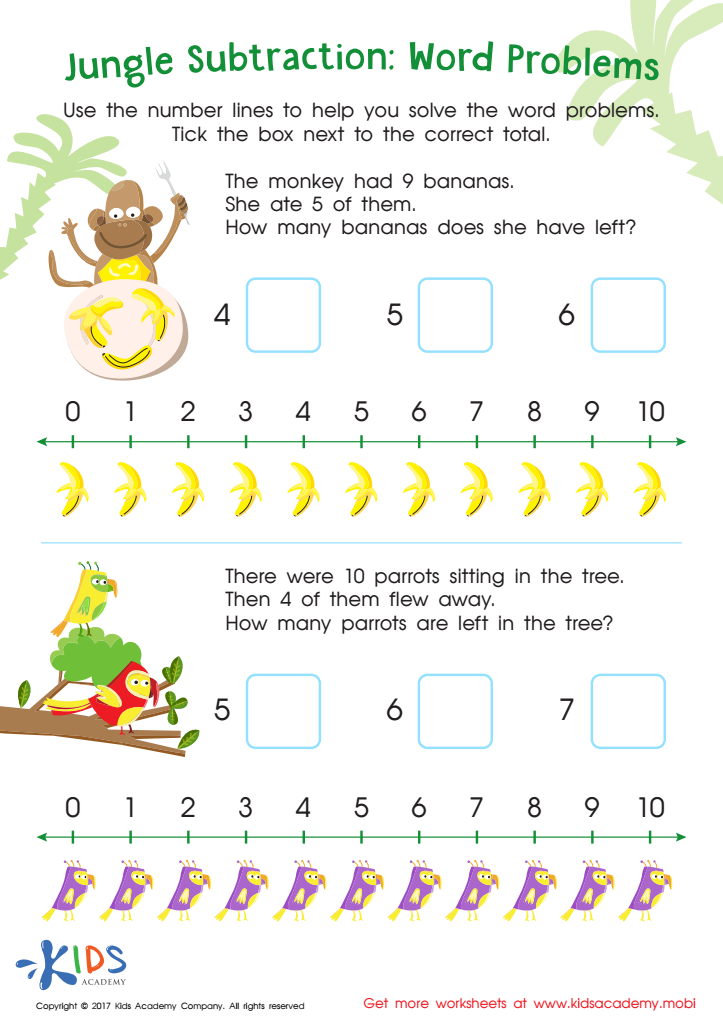
Jungle Subtraction Word Problems Substraction Worksheet








Mathematical reasoning is crucial for children aged 4-6, as it lays the foundation for future cognitive and academic success. At this developmental stage, kids are naturally curious and eager to engage with their surroundings, making it the perfect time to introduce mathematical concepts. By fostering mathematical reasoning, parents and teachers can enhance children’s problem-solving skills, critical thinking, and logical reasoning—abilities that extend far beyond mathematics.
Encouraging mathematical reasoning helps children develop a strong number sense, allowing them to understand relationships between quantities, recognize patterns, and solve basic mathematical problems. This groundwork increases confidence and reduces math anxiety, paving the way for a positive attitude toward learning. Moreover, engaging kids in conversations about math—through sorting, counting, and comparing—reinforces their ability to reason numerically and apply these skills in everyday life.
Additionally, the skills developed through mathematical reasoning extend to other subjects and areas of life, cultivating a holistic approach to learning. By prioritizing math reasoning in early childhood, parents and teachers contribute significantly to children’s overall cognitive development, setting them up for a bright and successful future. Thus, understanding the importance of mathematical reasoning is essential for encouraging a lifetime of curiosity and analytical thinking.








