Problem-solving development Math Worksheets for Ages 4-6
3 filtered results
-
From - To
Unlock your child's potential with our Problem-Solving Development Math Worksheets for ages 4-6! These expertly designed worksheets foster critical thinking and analytical skills, essential for early childhood development. Engaging activities make learning math fun and interactive, helping kids master essential concepts such as patterns, sequencing, and measurements. Our vibrant, child-friendly sheets are crafted to ignite curiosity and boost confidence in solving problems, while also enhancing cognitive abilities. Perfect for both home and classroom use, they offer diverse challenges tailored to young learners. Equip your child with the tools for future academic success with our comprehensive math resources. Explore today!
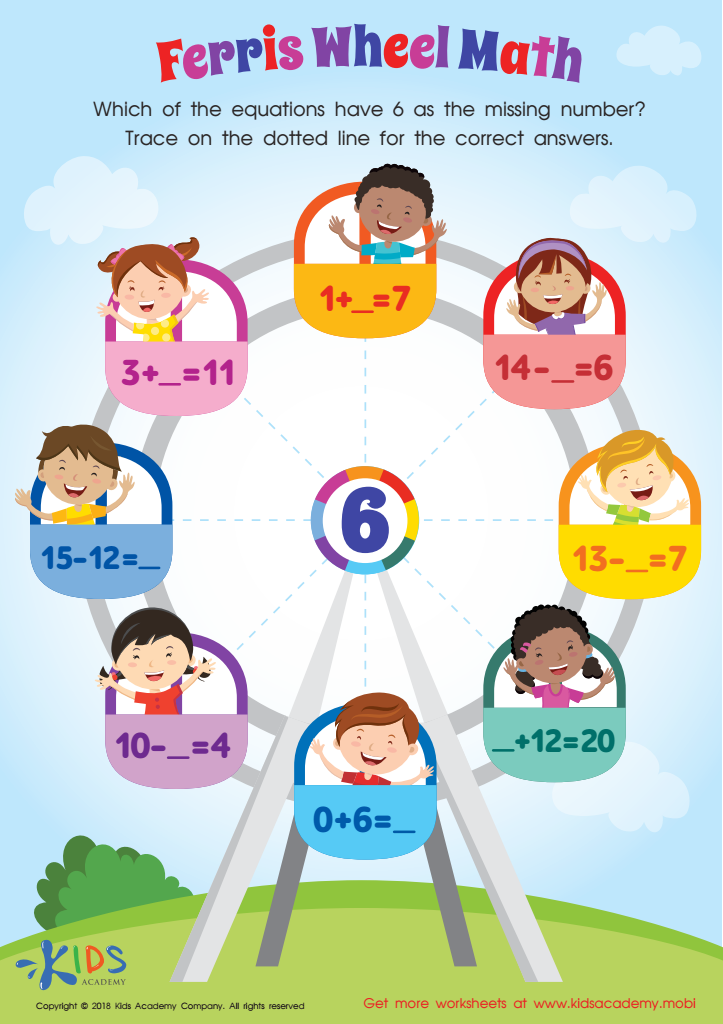
Missing Number: Ferris Wheel Math Worksheet
 Assign to My Students
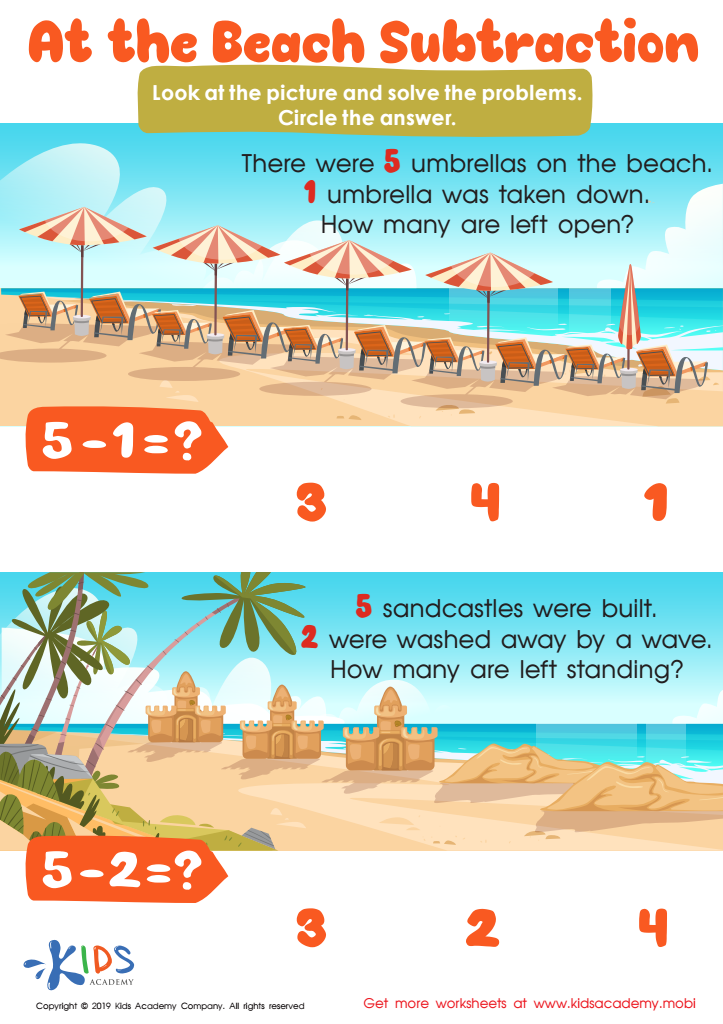
At the Beach Subtraction Worksheet
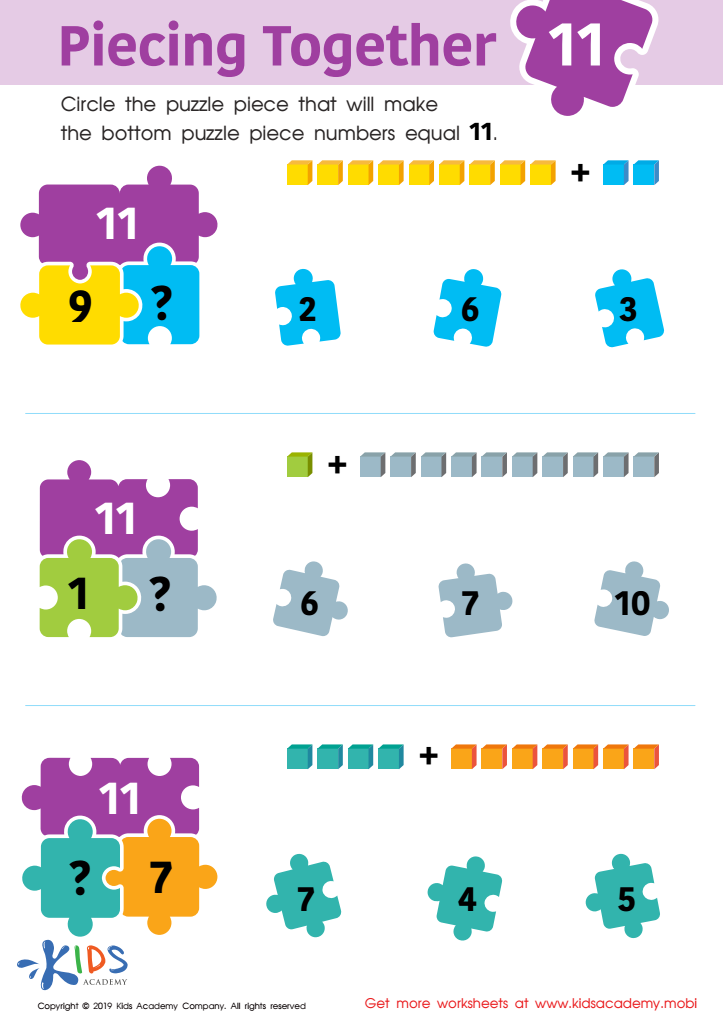
Piecing Together 11 Worksheet








Problem-solving development in math for children aged 4-6 is critical for several key reasons. During these formative years, children's brains are highly receptive and adaptable, making it an ideal period to introduce foundational skills. Early exposure to math problem-solving fosters cognitive development, encouraging children to think logically and develop critical thinking skills.
Engaging young minds in math challenges helps them understand and apply basic mathematical concepts such as numbers, patterns, shapes, and measurements. These skills are not just about learning math; they also enhance overall academic readiness and set the stage for future learning across subjects. For instance, problem-solving tasks help improve attention spans, boost memory, and build resilience as children learn to tackle tough problems without giving up.
Moreover, developing these skills early can cultivate a positive attitude toward math, countering the common fear or anxiety related to the subject. When children view math as an exciting and manageable challenge, they are more likely to continue pursuing it with enthusiasm throughout their school years and beyond.
For parents and teachers, investing time and energy into building these skills helps create a robust educational foundation. This foundation is vital for future personalized learning pathways and supports not only academic success but also functional life skills, including financial literacy and logical reasoning.








