Discover our engaging Problem-Solving Practice Math Worksheets designed specifically for children ages 4-6! These fun and interactive worksheets encourage young learners to develop critical thinking and analytical skills through enjoyable math activities. Covering essential concepts like counting, addition, and subtraction, each worksheet promotes independent problem-solving by presenting age-appropriate challenges. Perfect for home or classroom use, our worksheets make foundational math skills accessible and entertaining. With colorful illustrations and relatable scenarios, kids will love honing their problem-solving abilities while boosting their confidence in math. Explore our selection today and watch your child's math skills soar!

Check out this FREE Trial Lesson on Math for age 4-6!

Count by 10's

Favorites
With answer key
Interactive
  • 4-6
  • Problem-solving practice
  • Math
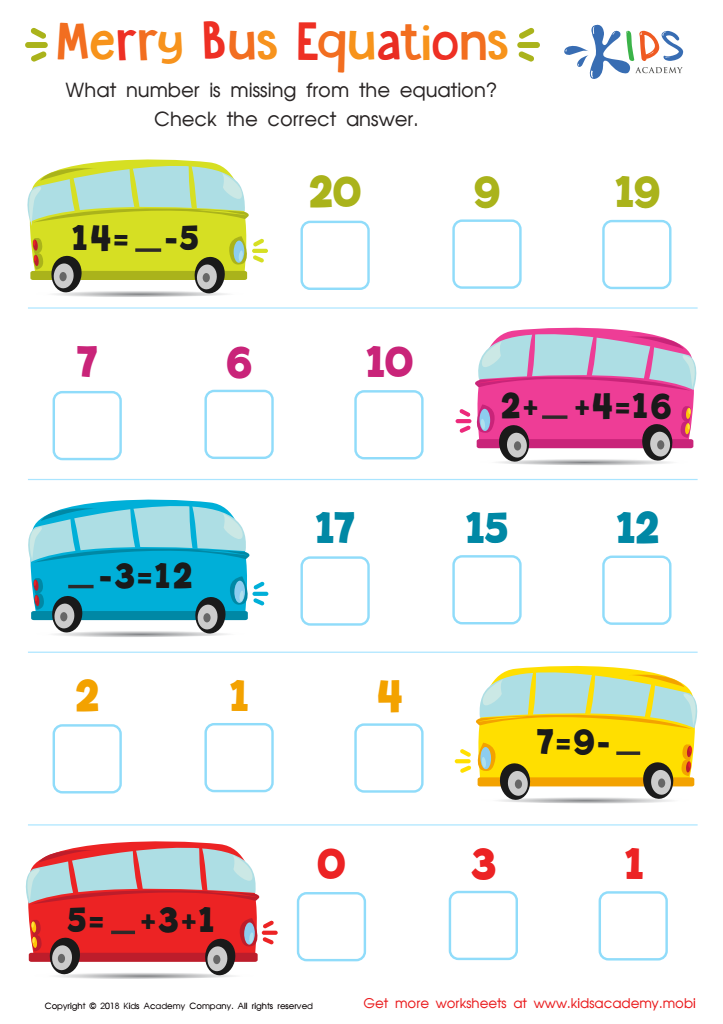
Merry Bus Equations Worksheet

Merry Bus Equations Worksheet

Help your child master elementary math with this fun worksheet! Featuring colorful buses and a variety of addition and subtraction equations, some with 3-digit numbers, it encourages kids to find the missing number and choose the correct answer. Give them the practice they need for success!
Merry Bus Equations Worksheet
Worksheet
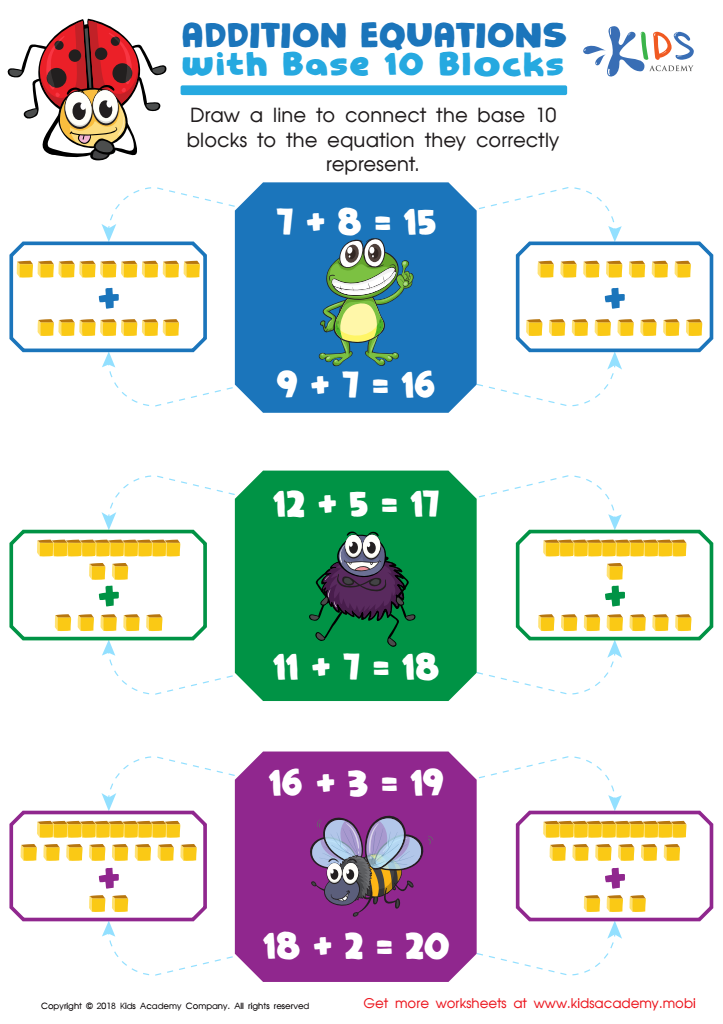
Addition Equations With Base 10 Blocks Worksheet
Addition Equations With Base 10 Blocks Worksheet

If your students are struggling with base 10 addition, this worksheet is here to help. Guide them with connecting the blocks to the equation with a line. It's a fun and colourful way to encourage learning.
Addition Equations With Base 10 Blocks Worksheet
Worksheet
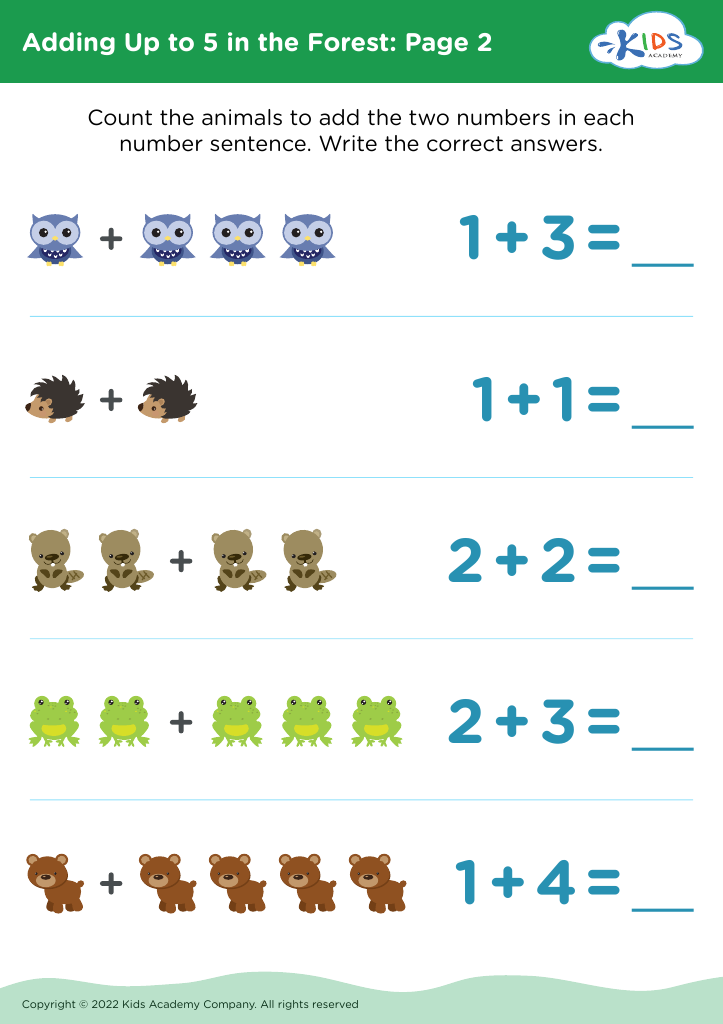
Adding Up to 5 in the Forest: Page 2
Worksheet
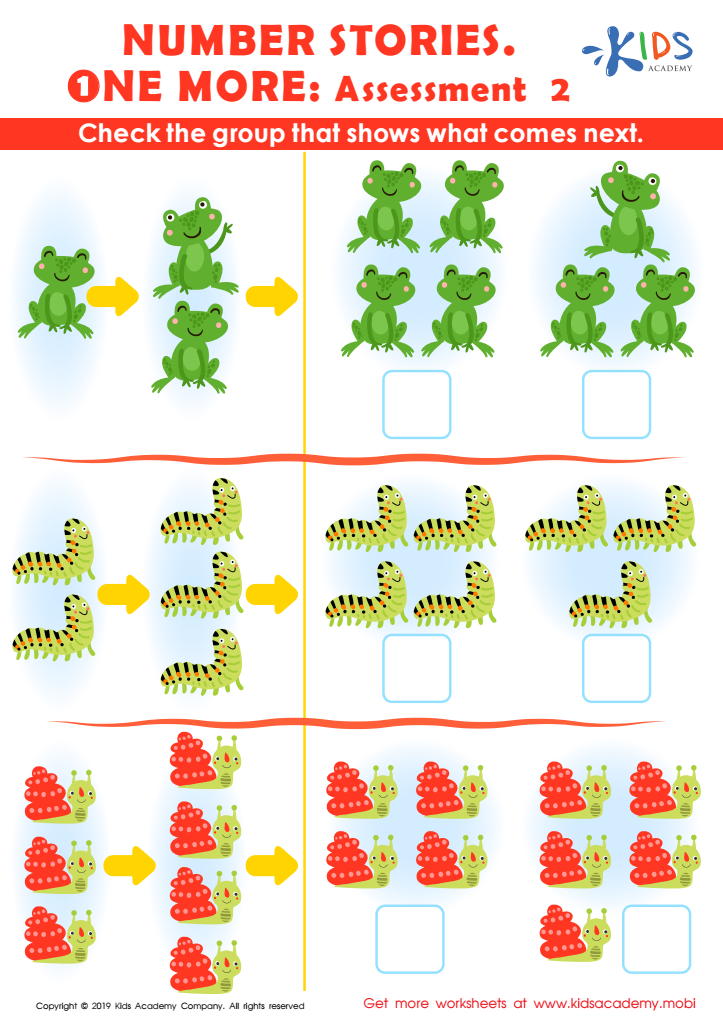
Number Stories One More - Assessment 2 Worksheet Preview

Number Stories One More – Assessment 2 Worksheet
Tracing is a great activity for kids. They can count and trace numbers, recognize animals, and practice drawing on dotted lines. It's entertaining and educational, helping children learn valuable counting skills.
Number Stories One More – Assessment 2 Worksheet
Worksheet
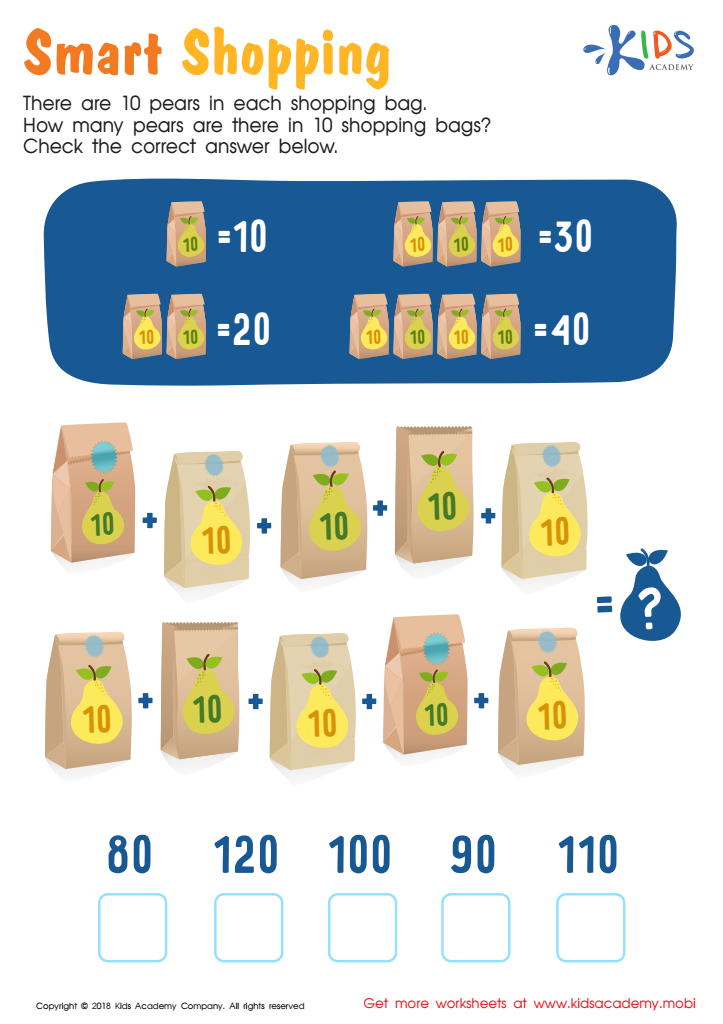
Smart Shopping: Trade Tens for a Hundred Worksheet

Smart Shopping: Trade Tens for a Hundred Worksheet

Use this worksheet to test counting skills: each bag has 10 pears. Ask your child how many pears are in 10 bags. Guide them as they count through the printout and check the answer below. See if they got it right!
Smart Shopping: Trade Tens for a Hundred Worksheet
Worksheet
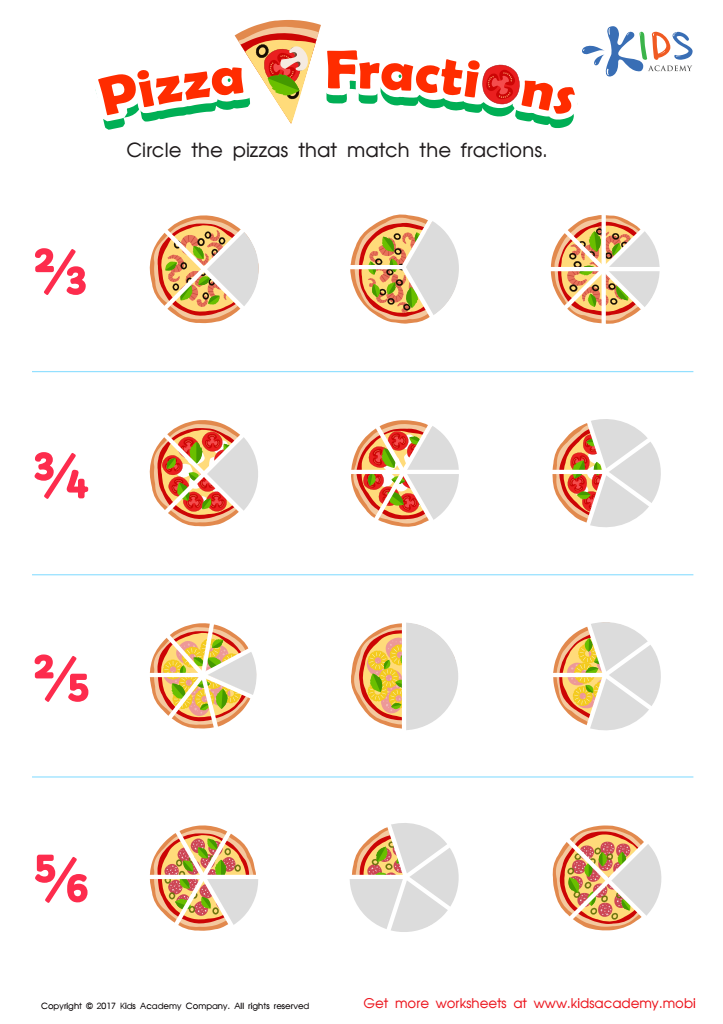
Pizza Fraction Printable

Fractions: Pizza Printable

Fractions can be tricky for kids, but this pizza fractions printable can help! Kids can understand fractions by seeing them, as they use one of their favorite foods. It helps them grasp the concept and gain a deeper understanding of what fractions represent. Extend their learning by quizzing them when you order pizza next time.
Fractions: Pizza Printable
Worksheet
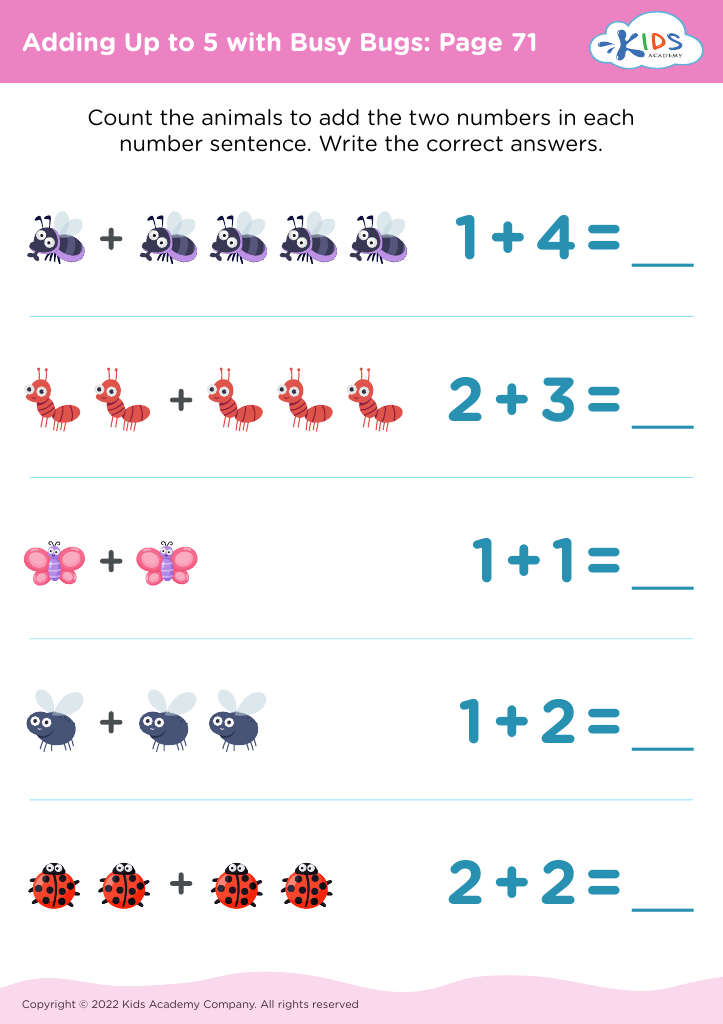
Adding Up to 5 with Busy Bugs: Page 71
Worksheet
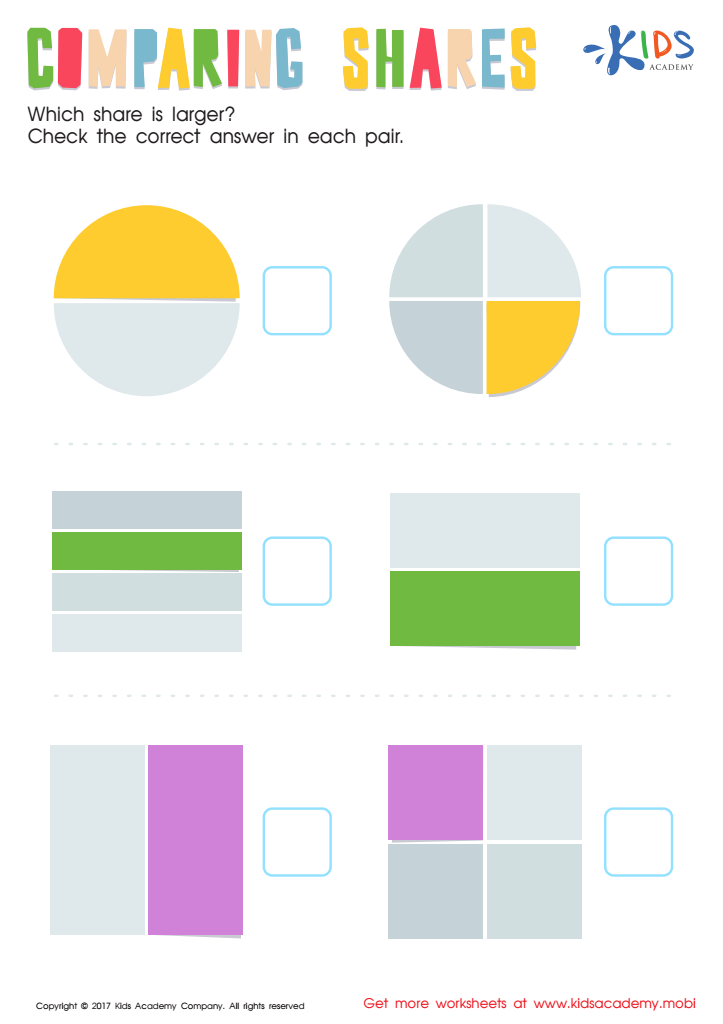
Comparing Shares Worksheet

Comparing Shares Worksheet

Can your students identify and draw shapes correctly? If so, this exercise may be too easy. For those who are still learning, extra help may be needed. The worksheet requires students to select which shape is larger in each pair; circles and squares are included.
Comparing Shares Worksheet
Worksheet


Problem-solving practice in math for ages 4-6 is crucial for several reasons. First, it nurtures critical thinking skills that are essential for lifelong learning. Early exposure to problem-solving helps children learn how to approach challenges systematically, fostering resilience and creativity. Instead of simply memorizing facts or procedures, they learn to analyze problems and devise strategies to tackle them, leading to a deeper understanding of mathematical concepts.

Secondly, engaging in problem-solving activities enhances children’s verbal skills as they describe their thought processes. This communication not only develops their language skills but also enables them to articulate their reasoning and collaborate with peers, creating a supportive learning environment.

Moreover, math problem-solving cultivates an enthusiasm for learning. When children actively engage in hands-on problem-solving, they experience the joy of discovery and achievement, essential components of a positive attitude towards mathematics. Finally, early math skills are indicative of later academic success. By prioritizing problem-solving practice in early education, parents and teachers set a foundation that can influence children's confidence and ability in math throughout their schooling years and beyond, ultimately empowering them for future challenges in various subjects and real-life situations.