Understanding tens Math Worksheets for Ages 4-6
4 filtered results
-
From - To
Welcome to our “Understanding Tens” Math Worksheets for ages 4-6! Designed to make learning fun, these worksheets help young learners grasp the concept of tens through engaging activities and colorful illustrations. Children will explore counting, grouping, and recognizing tens, building a strong foundation for future math skills. Our carefully crafted exercises cater to various learning styles, ensuring each child can thrive. Parents and educators can easily access and print these resources, making math practice at home or in the classroom enjoyable. Let’s embark on an exciting math journey and empower your little ones with essential numeracy skills today!
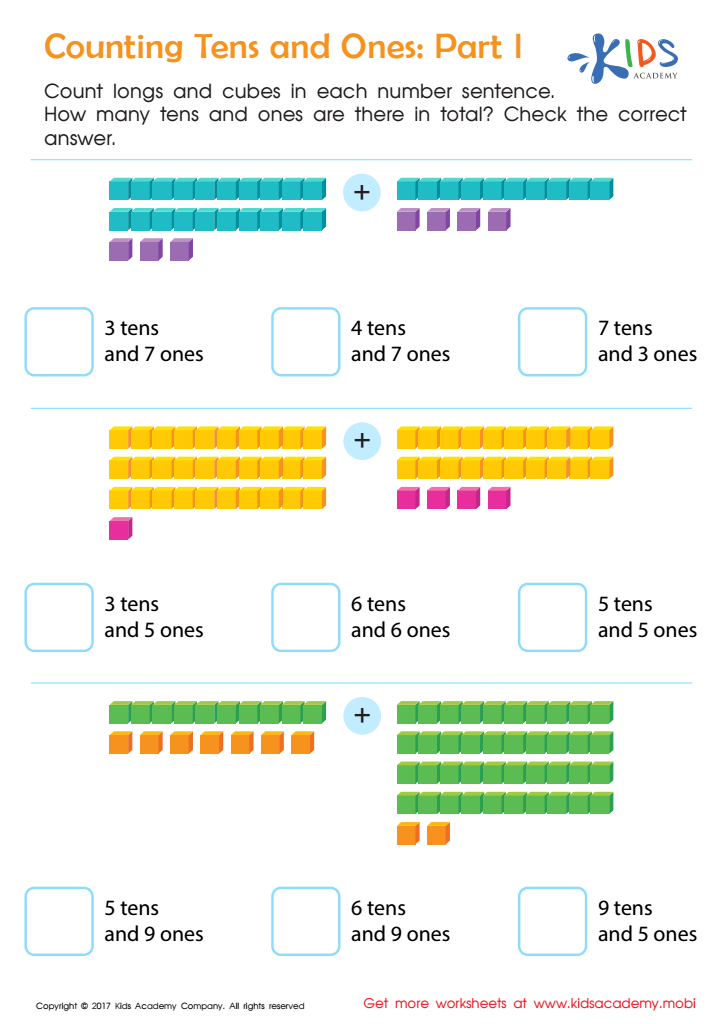
Counting Tens and Ones: Part 1 Worksheet
 Assign to My Students
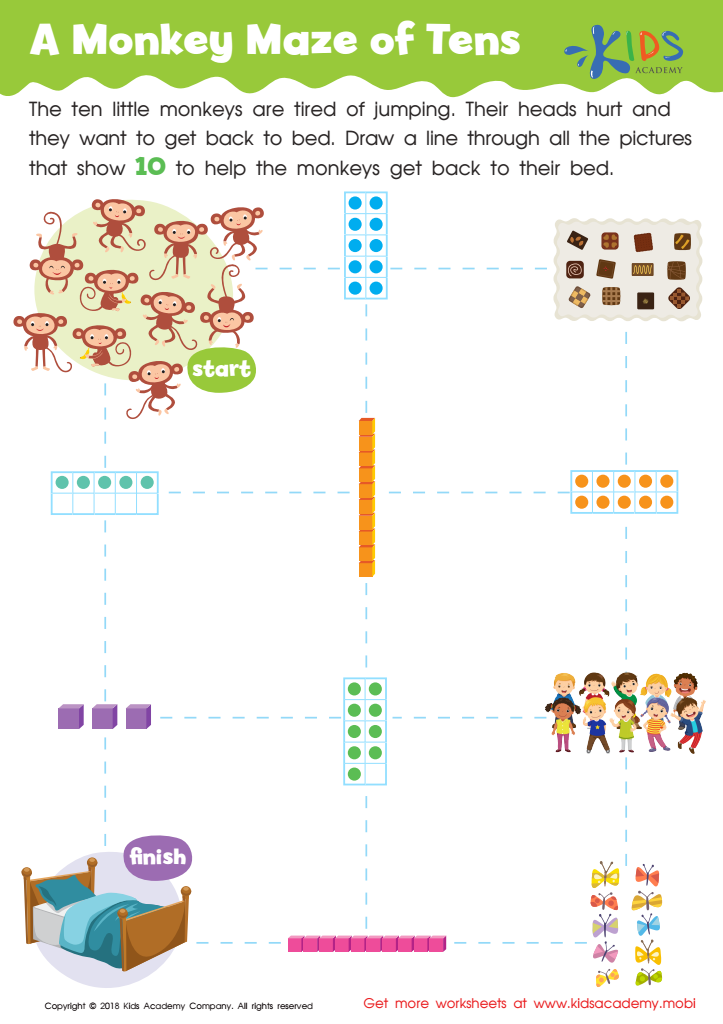
A Monkey Maze of Tens Worksheet
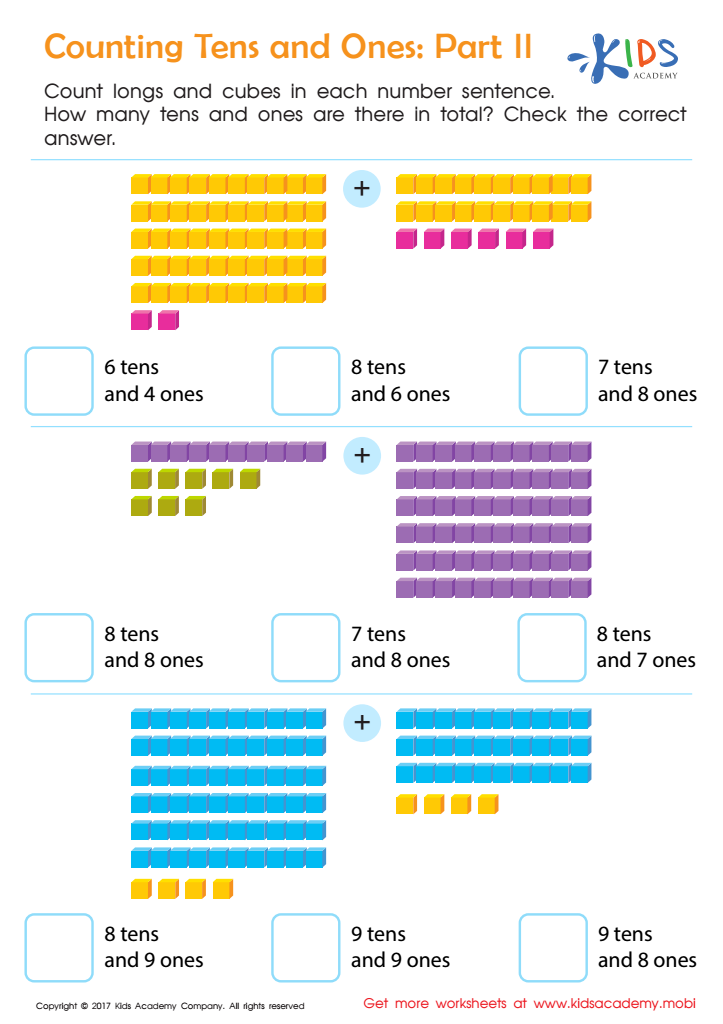
Counting Tens and Ones: Part 2 Worksheet
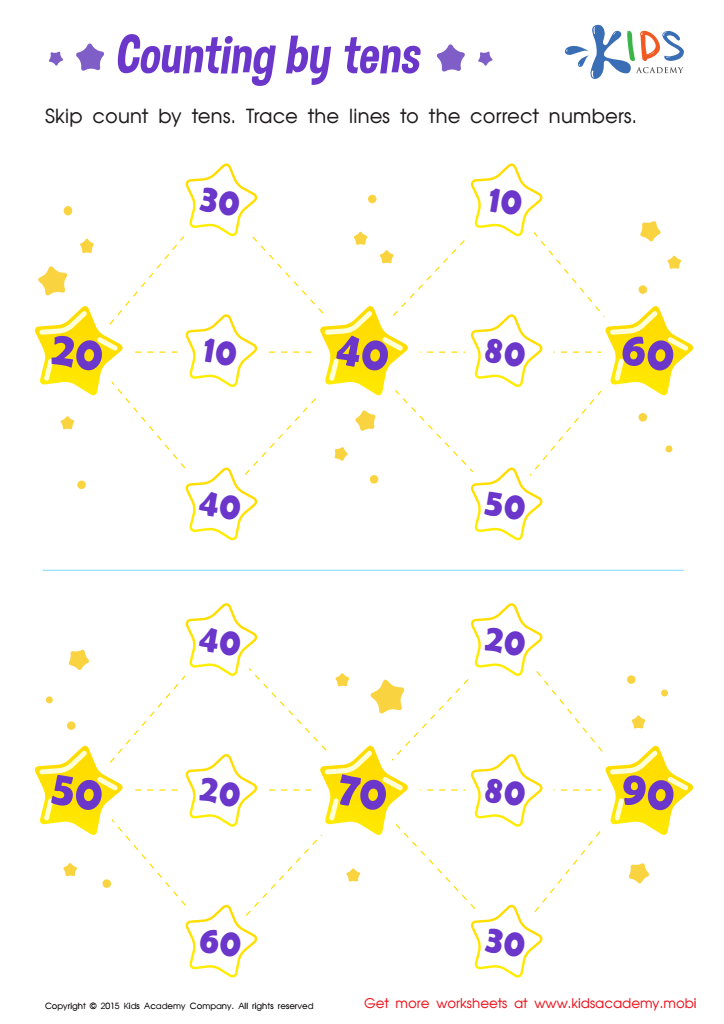
Learn Dozens: Counting by Tens Printable






Understanding tens math is crucial for children ages 4-6, as it lays the foundation for their numerical fluency and overall mathematical skills. At this developmental stage, children are beginning to explore numbers and understand the concepts of addition and subtraction. Recognizing and working with tens helps them grasp place value, which is fundamental for future arithmetic operations.
When parents and teachers emphasize tens math, they introduce children to the importance of grouping, simplifying calculations, and recognizing patterns in numbers. This understanding enhances their ability to perform mental math, as they learn to chunk numbers into manageable parts—making calculations more accessible. Moreover, grasping the concept of tens fosters critical thinking and problem-solving skills, enabling children to make connections between math and real-world situations.
Additionally, early exposure to tens encourages engagement and confidence in math, reducing anxiety and paving the way for a positive attitude towards the subject. As children become comfortable with these concepts, they are better equipped to tackle more complex math in later grades, ultimately supporting their academic success. Therefore, both parents and teachers play a vital role in nurturing this early understanding, setting the stage for lifelong learning and curiosity in mathematics.








