Comparing object weights Measurement Worksheets for Ages 4-6
3 filtered results
-
From - To
Discover our engaging "Comparing Object Weights Measurement Worksheets" designed specifically for children aged 4-6! These interactive worksheets help young learners develop critical thinking skills as they explore weight comparison through fun activities. Kids will enjoy sorting objects by weight, using visual prompts, and engaging with hands-on exercises that enhance their understanding of heavier vs. lighter. Ideal for classroom use or at-home learning, these worksheets promote early math skills while inspiring curiosity and hands-on problem-solving. Foster a love for learning as your child grasps essential measurement concepts in an enjoyable and accessible way. Download your worksheets today to make math fun!
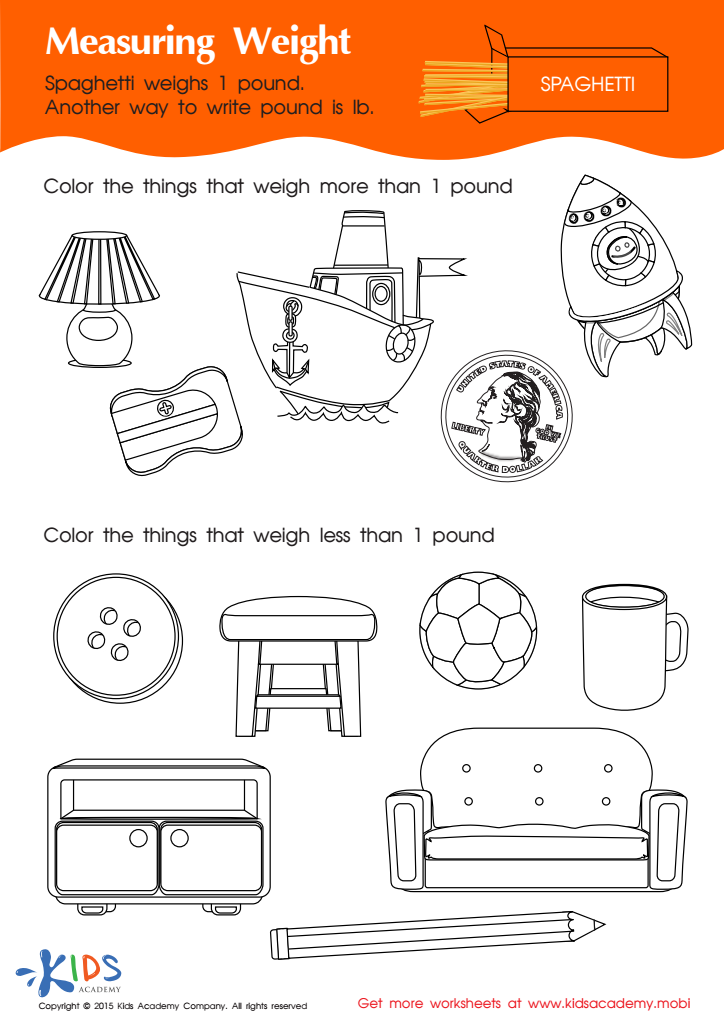
 Assign to My Students
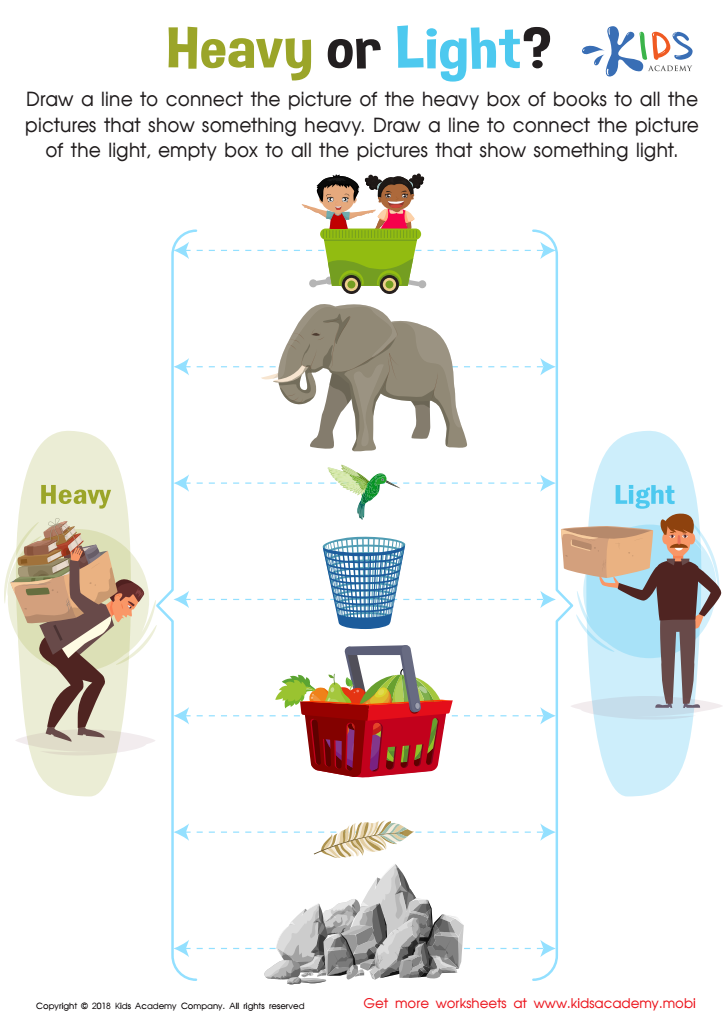
Heavy or Light? Worksheet
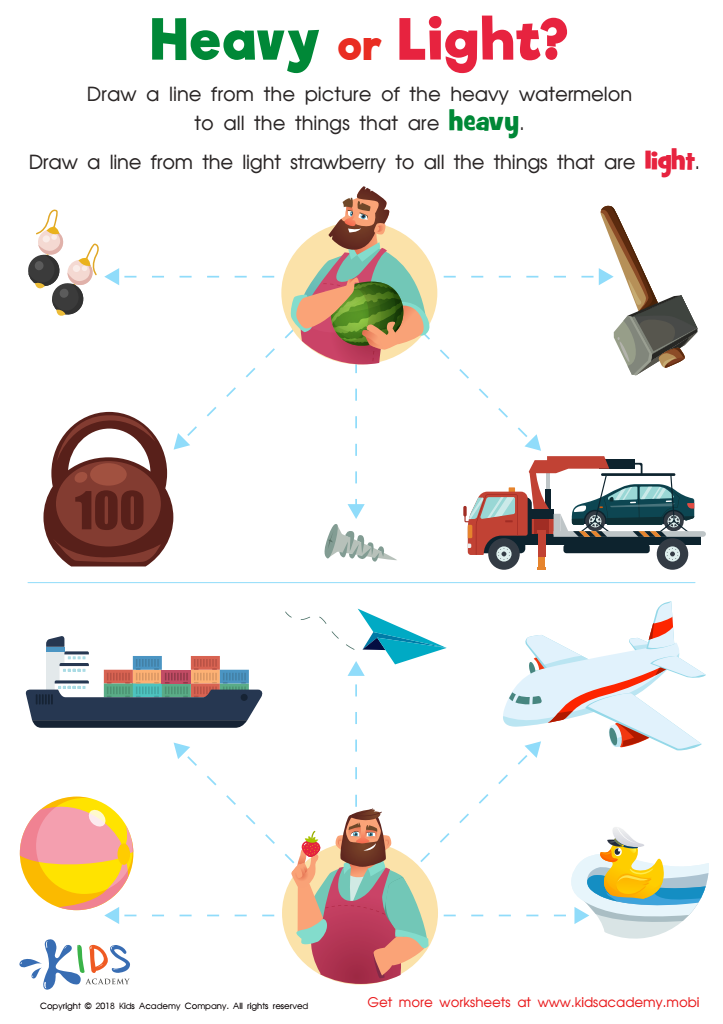
Heavy or Light? Worksheet








Comparing object weights is a fundamental aspect of early childhood education that plays a crucial role in developing essential cognitive and motor skills. For children ages 4-6, engaging in weight comparison activities fosters curiosity and promotes hands-on learning. It enables young learners to understand basic scientific concepts such as heavier, lighter, balance, and measurement.
Parents and teachers should care about this skill because it enhances critical thinking and problem-solving abilities. When children compare weights, they practice reasoning—deciding which object is heavier or lighter, and why that might be the case. This not only solidifies mathematical concepts but also encourages communication skills as children describe their observations and conclusions.
Moreover, weight comparison nurtures fine motor skills through activities like using scales or balancing objects, which are crucial for tasks such as writing and self-care later on. It also integrates concepts of fairness and equality as children learn to share and take turns with different items.
Ultimately, introducing the concept of weight comparison in early education lays a strong foundation for future learning in science and mathematics, making it an essential focus for both parents and educators. Through this interactive and playful approach to learning, children engage meaningfully with the world around them.








