Comparing sizes Measurement Worksheets for Ages 4-6
8 filtered results
-
From - To
Explore our engaging Comparing Sizes Measurement Worksheets for children ages 4-6, designed to make learning fun and interactive. These worksheets help young learners develop essential skills in identifying and comparing different sizes through vibrant illustrations and age-appropriate activities. Perfect for home or classroom use, our resources encourage hands-on practice and reinforce measurement concepts. Kids will enjoy tasks that foster critical thinking while building foundational math skills. Download and watch your little ones thrive as they learn to compare sizes of objects in a playful and supportive environment! Start their measurement journey today with our thoughtfully crafted worksheets!
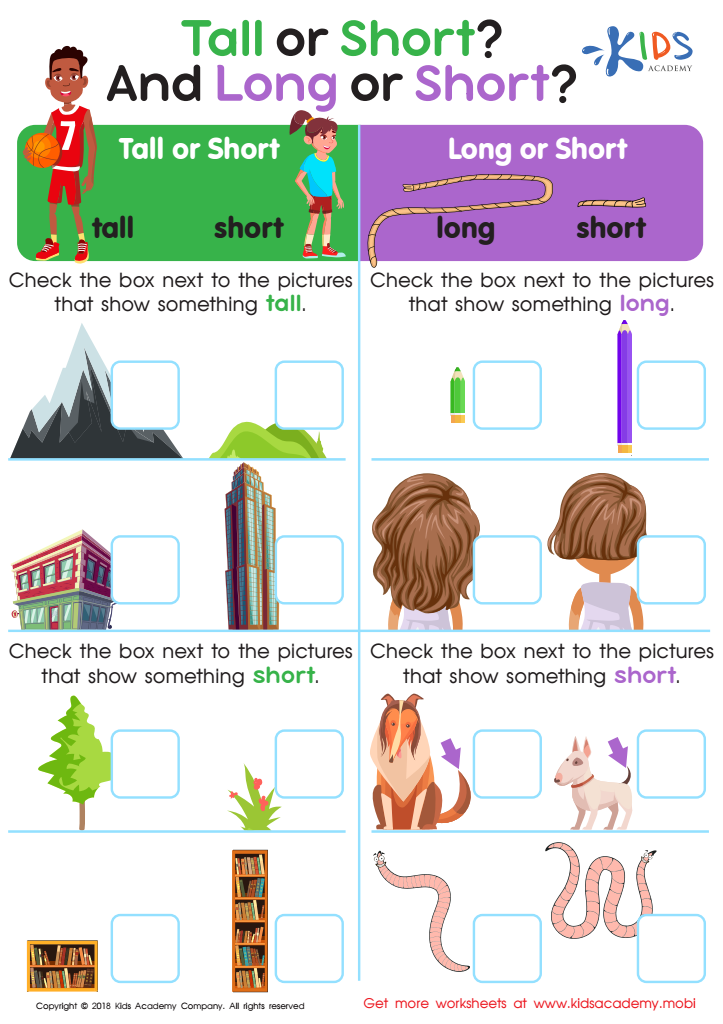
Tall or Short and Long or Short? Worksheet
 Assign to My Students
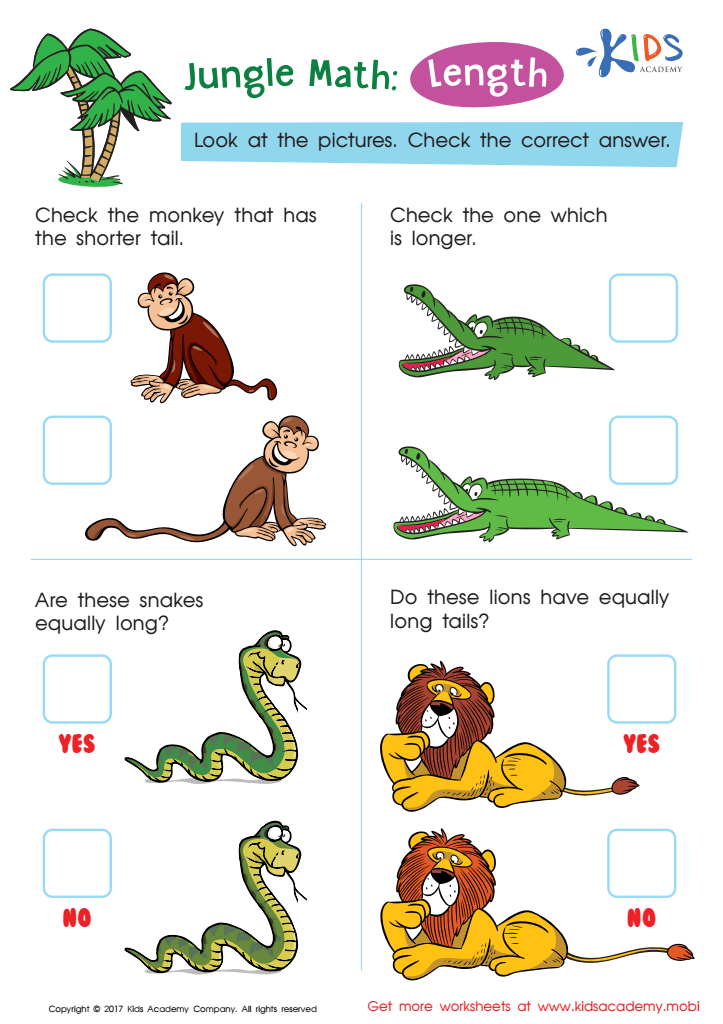
Which One Is Longer - Length Worksheet
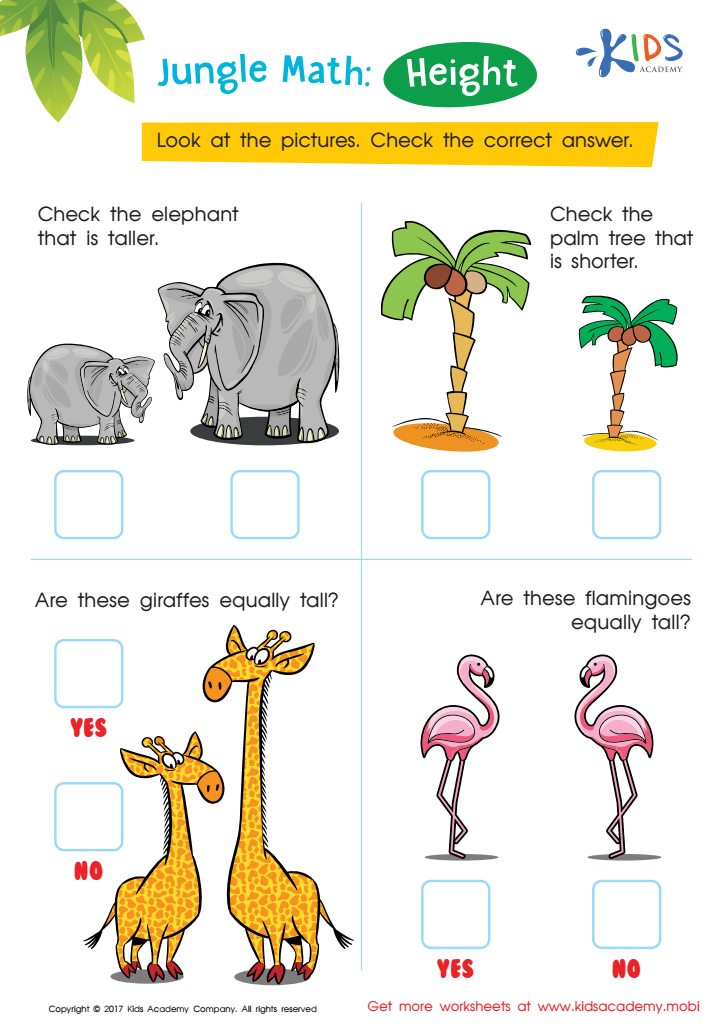
Which Is Taller Worksheet
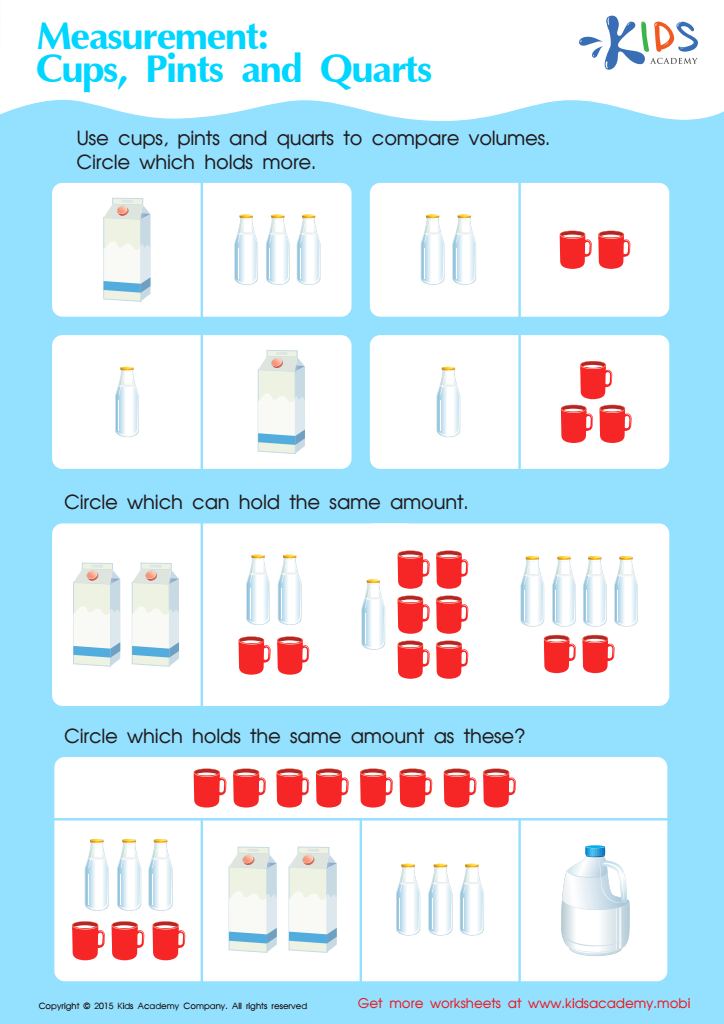
Measurement: Compare Volumes Worksheet
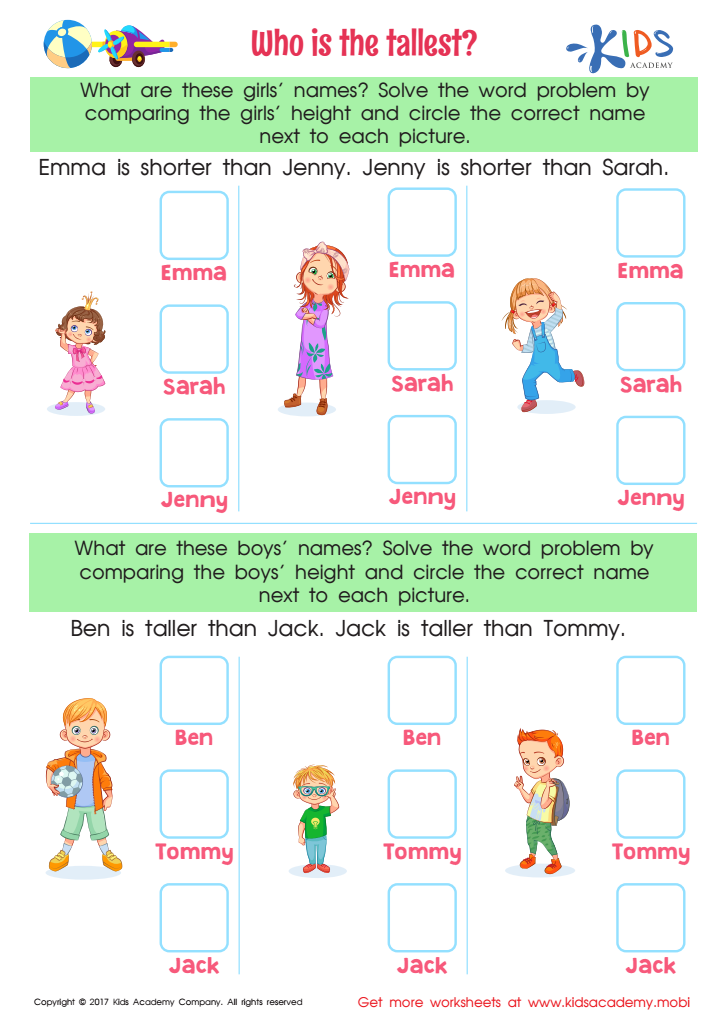
Who Tallest Printable
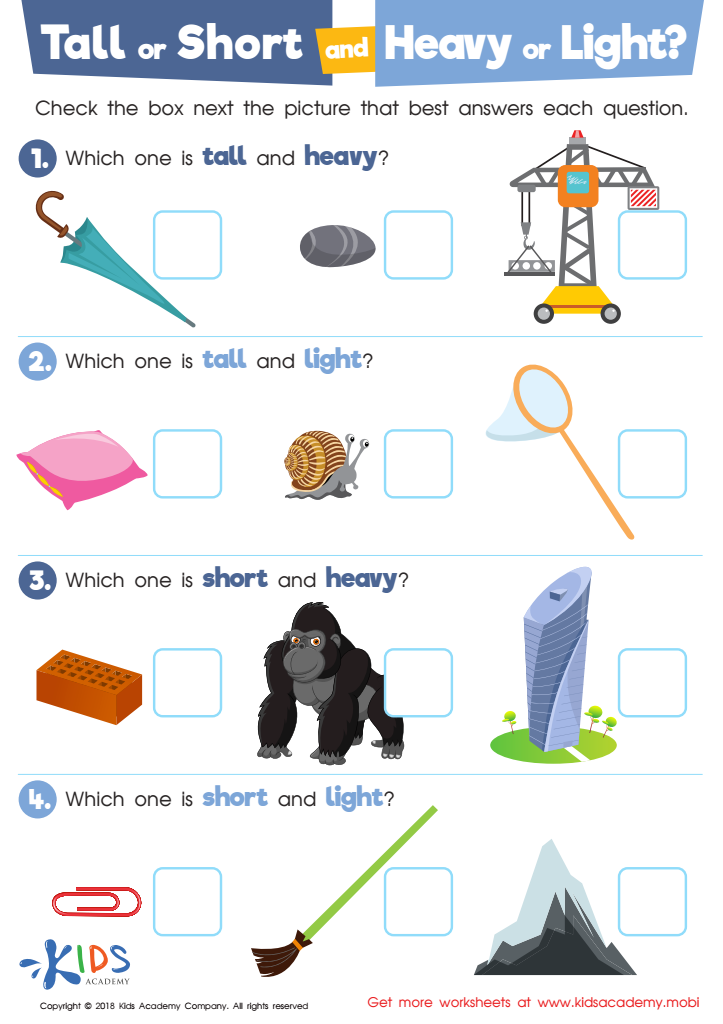
Tall or Short and Heavy or Light? Worksheet
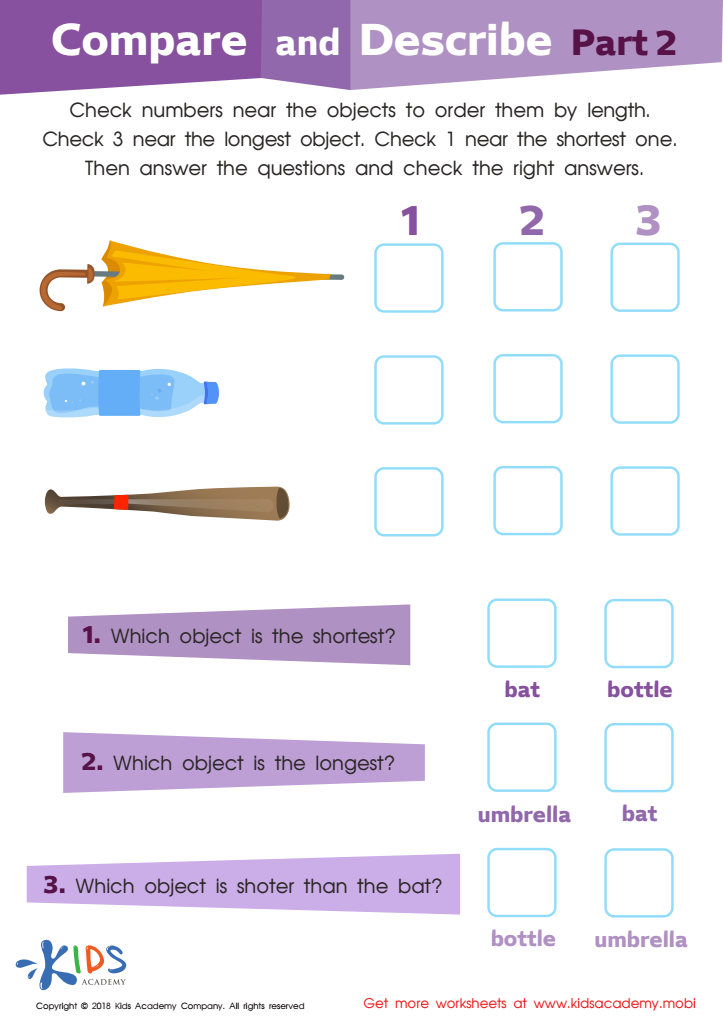
Compare and Describe: Part 2 Worksheet
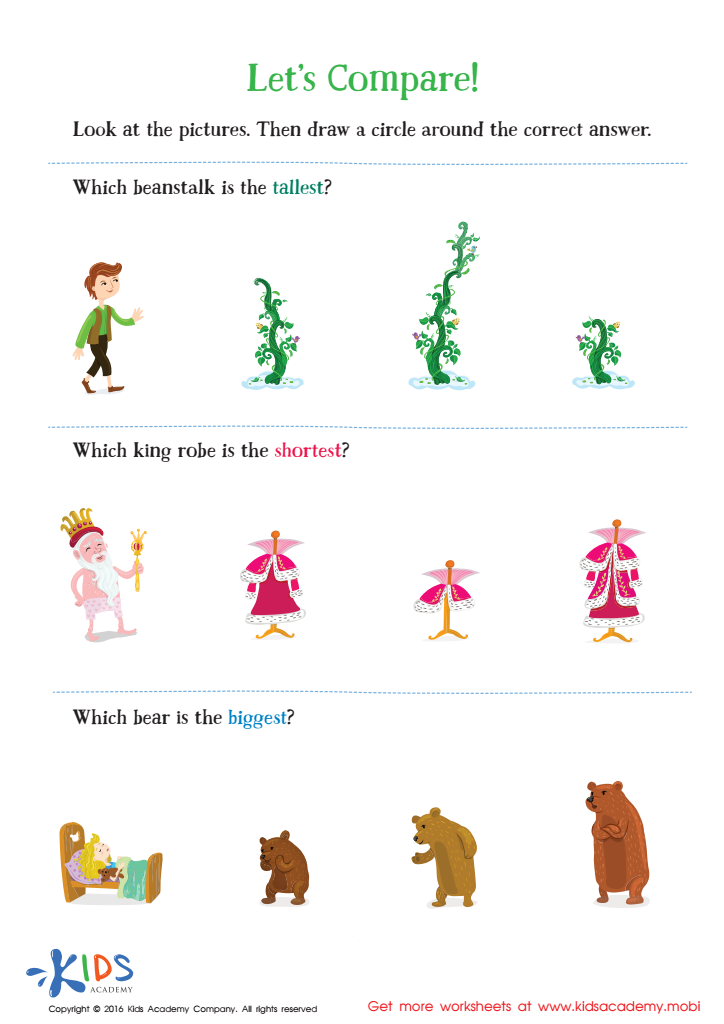
Fairy Tale Worksheet: Let's Compare








Comparing sizes and understanding measurement are fundamental concepts for children aged 4-6, laying the groundwork for their mathematical and cognitive development. At this age, children are naturally curious and eager to explore their environment, and incorporating size comparison activities can enhance their learning experiences.
Teaching children about comparing sizes helps them develop critical thinking and observational skills. They learn to identify differences between objects, categorize them, and articulate their thoughts, fostering language development. This knowledge is not just academic; it helps children make sense of the world around them, as they routinely encounter situations requiring these skills, like sharing, arranging, or organizing everyday items.
Moreover, measurement introduces concepts of quantity and distance, promoting an understanding of spatial relationships. Engaging in measurement activities, like measuring ingredients for a simple recipe or comparing heights of plants, allows children to gain practical experience. It builds a foundation for more complex mathematical concepts they'll encounter later in their education.
Ultimately, parents and teachers who prioritize size comparison and measurement can empower children with essential skills while nurturing their natural curiosity. This playful, engaging approach to learning supports children's social, emotional, and cognitive growth, ensuring they become confident learners as they progress through their formative years.








