
Basic Math Skills Sorting Worksheets for Ages 4-6
4 filtered results
Difficulty Level
Grade
Age
-
From - To
Subject
Activity
Standards
Enhance your child's foundational math skills with our engaging Basic Math Skills Sorting Worksheets, designed specifically for ages 4-6. These worksheets offer a fun and interactive way for young learners to practice sorting objects based on various attributes, such as size, color, and shape. By promoting critical thinking and observational skills, these activities lay the groundwork for essential math concepts. Each worksheet encourages creativity and helps children build confidence as they complete sorting tasks. Perfect for home or classroom use, our resources make learning math a delightful experience. Start fostering your child's mathematical journey today!
Favorites
With answer key
Interactive
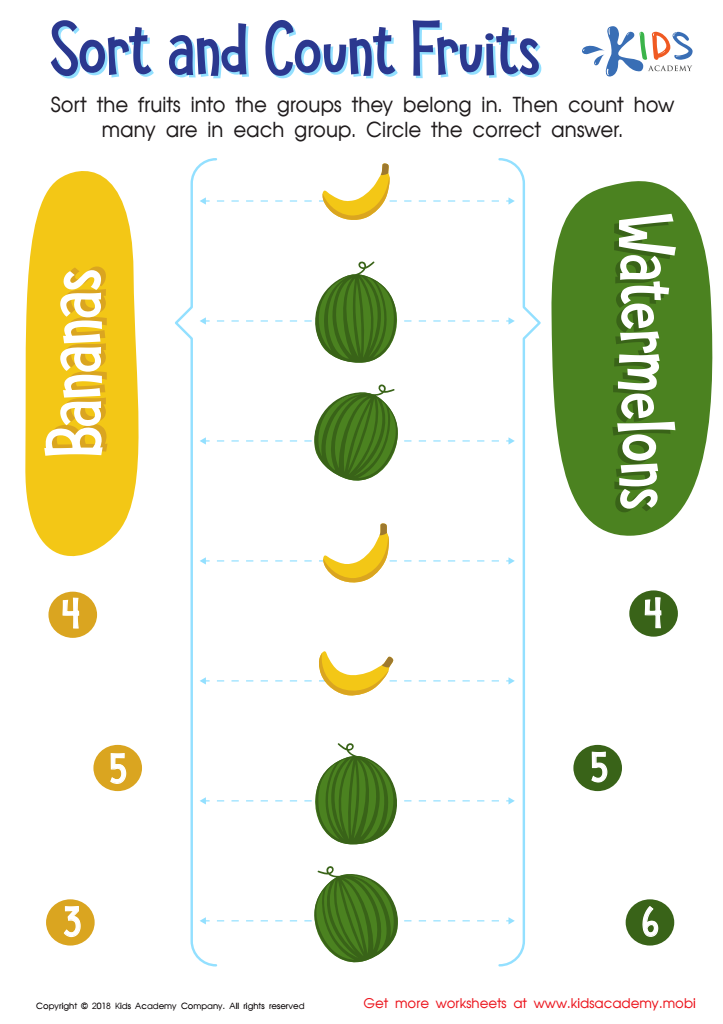
Sort and Count Fruits Worksheet
Allow your children to hone their critical thinking and number reasoning skills with this free worksheet. They'll sort, count, and trace fruits while learning basic number sense. A fun, delicious learning experience with familiar pictures they'll love.
 Assign to My Students
Sort and Count Fruits Worksheet
Worksheet
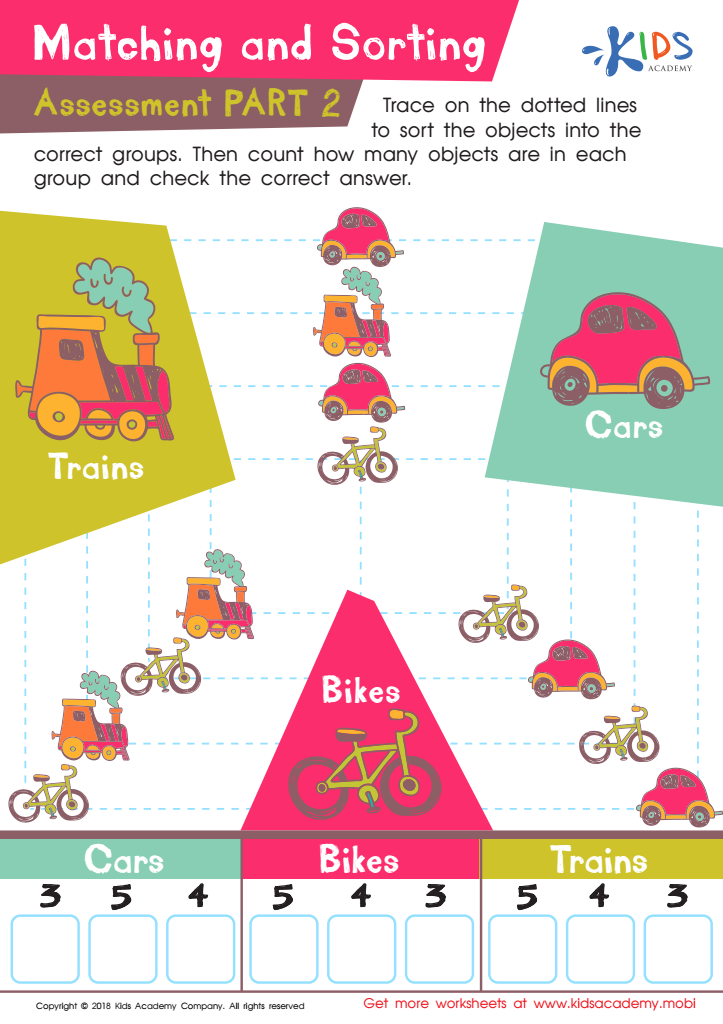
Matching and Sorting for Kindergarten: Assessment 2 Worksheet
This assessment tests matching, sorting and fine motor skills. It challenges kids to identify properties and attributes of pictures, trace guidelines and count the types of vehicles. It's a great way to practice basic number sense and hone in on important foundational skills.
Matching and Sorting for Kindergarten: Assessment 2 Worksheet
Worksheet
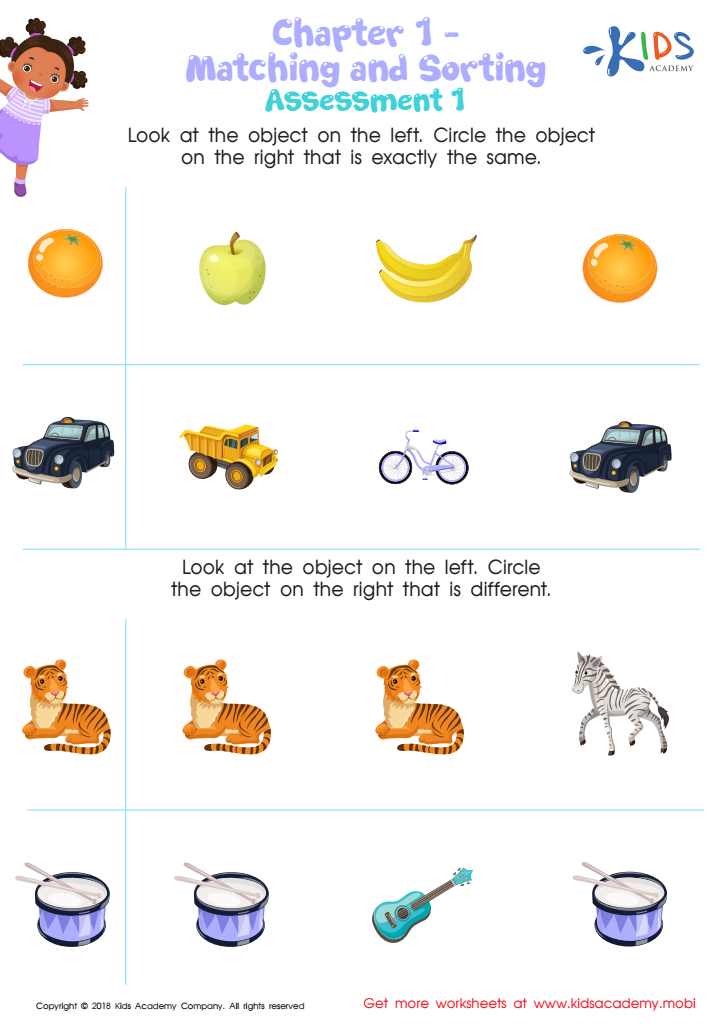
Matching and Sorting for Preschool: Assessment 1 Worksheet
Test your child's matching skills with this worksheet! Ask them to name each of the objects pictured, then circle the ones that are the same. Repeat for the second task. It's a great way to assess their skills and have fun at the same time!
Matching and Sorting for Preschool: Assessment 1 Worksheet
Worksheet
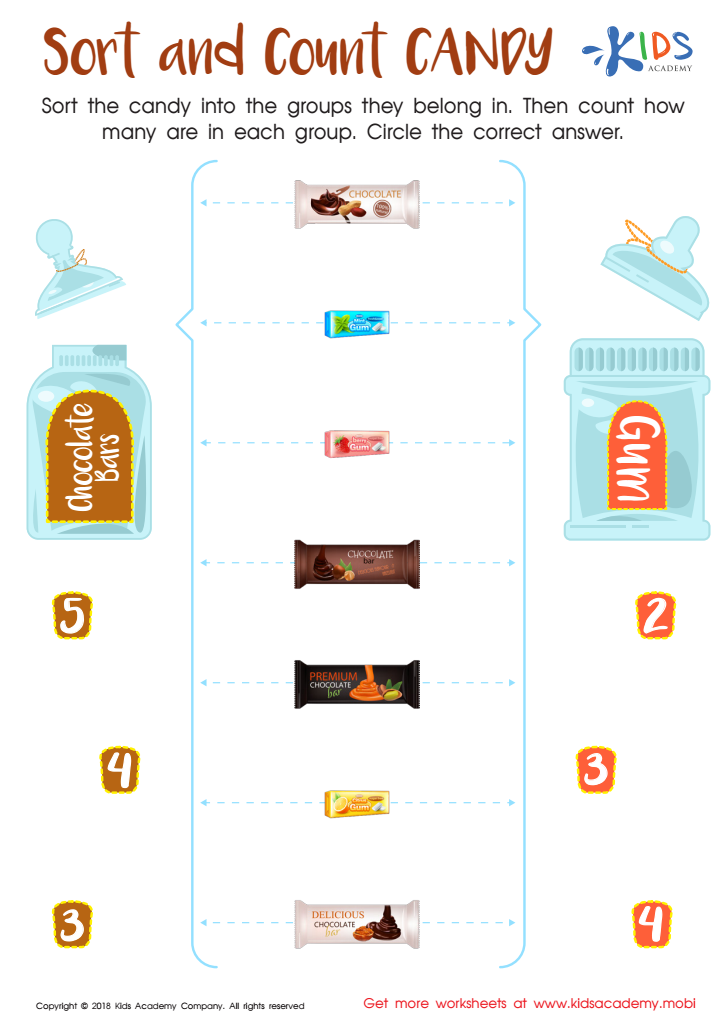
Sort and Count Candy Worksheet
Sort chocolate and candy with your kids! Help them use recognizable items and pictures to sort, practice counting with one-to-one representation, and develop their fine motor skills with the traceable lines. Download this free worksheet to get started. Yum!
Sort and Count Candy Worksheet
Worksheet
Join Kids Academy for Free
Who is primarily going to use this learning content?






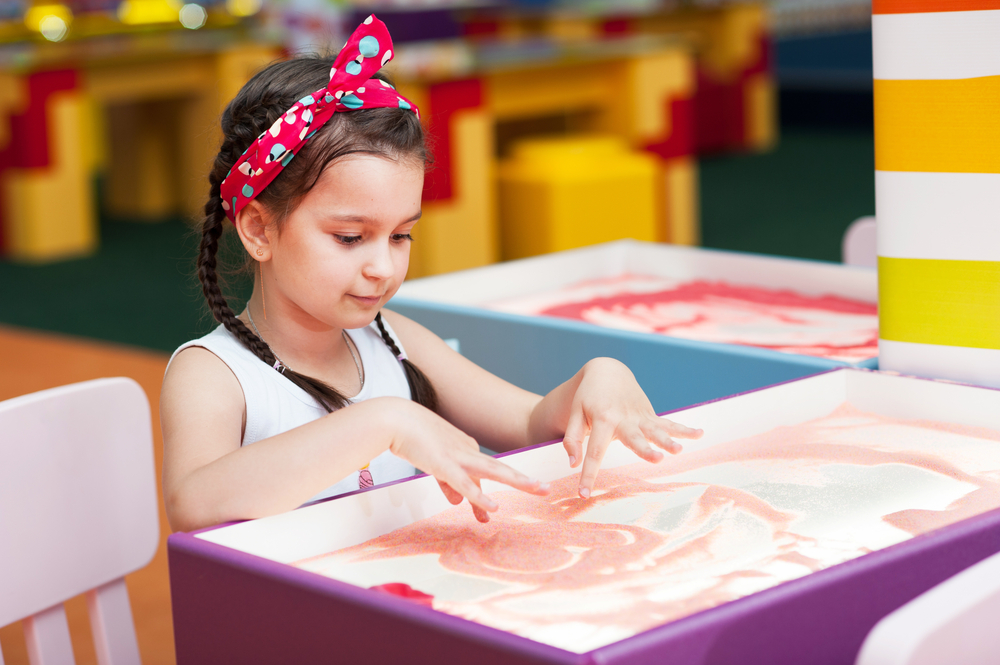

Basic math skills, particularly sorting, are foundational for children aged 4 to 6. During these early years, children are developing critical cognitive skills, and sorting activities enhance their ability to recognize patterns, categorize objects, and understand relationships. Parents and teachers should care about sorting because it not only lays the groundwork for more advanced math concepts but also helps children build problem-solving abilities.
Sorting encourages children to think analytically and improves their observational skills, teaching them how to discern differences and similarities among various items. This categorization process fosters not just math skills, but also language development, as children learn to articulate their reasoning and describe their categories. Engaging in sorting activities can also promote social skills through cooperative play, where children engage in sorting games together.
Moreover, sorting contributes to executive functioning skills—like memory and focus—that are crucial for later academic success. The foundational experience of sorting can lead to increased confidence in young learners as they become familiar with mathematical concepts, making them better prepared for formal education. Ultimately, prioritizing sorting skills in early childhood education can help ensure a smoother transition into more complex mathematical ideas in later years.








